

Advertisement

Overview
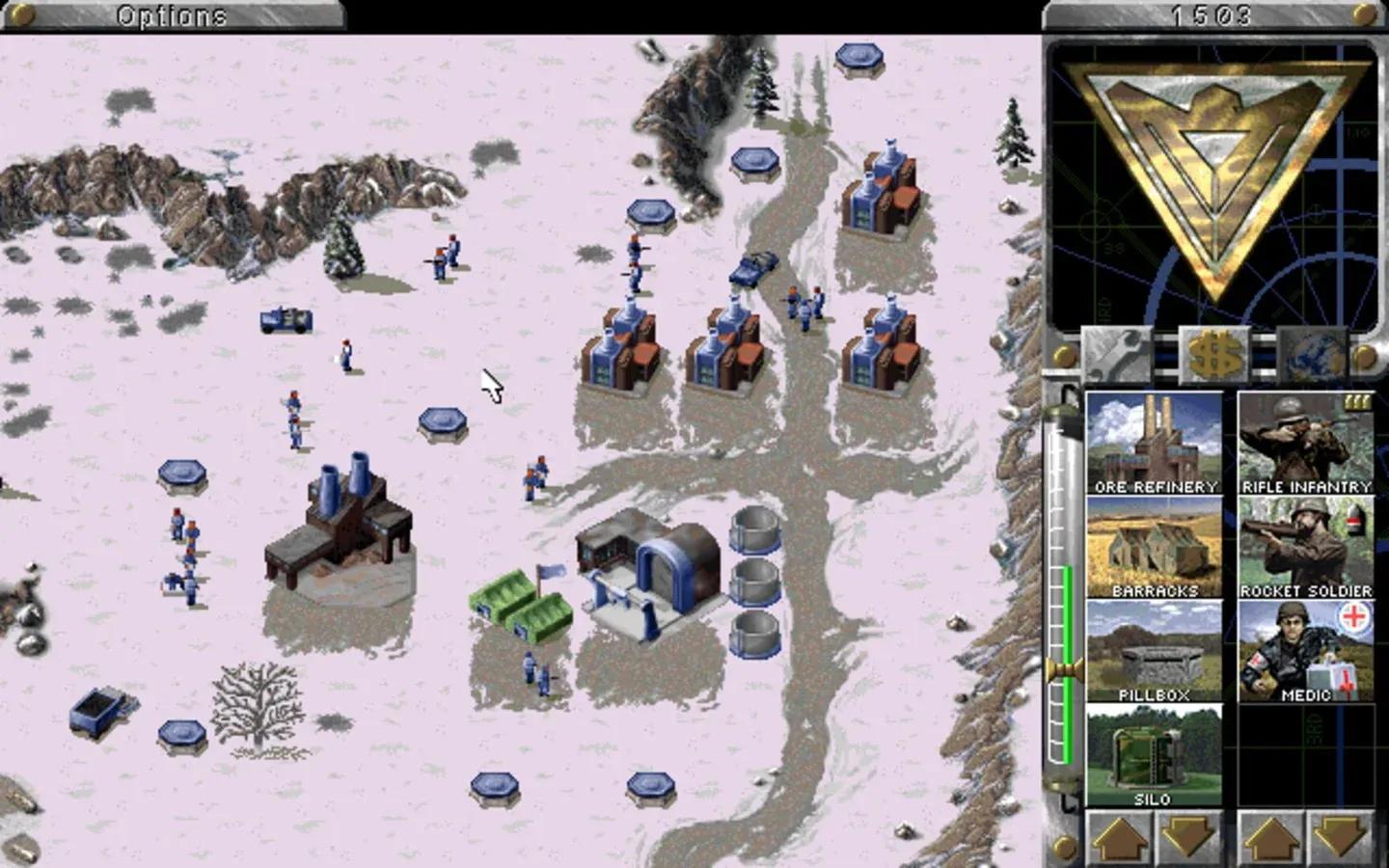
Released in November 1996, Command & Conquer: Red Alert is the second major entry from Westwood Studios in the Command & Conquer series, and it runs on a premise that still feels audacious thirty years later. Einstein uses a time machine called the Chronosphere to erase Adolf Hitler from history, which sounds like a solution until the Soviet Union, unchecked and hungry, begins steamrolling Europe. Players command either the Allied forces scrambling to hold the line or the Soviet Empire pushing westward with overwhelming armored might.
The game ships two full campaigns, one per faction, each running through roughly 14 missions. That is not a small amount of content for a mid-90s RTS, and both sides feel genuinely distinct. Soviet commanders get brute-force tools: heavy tanks, Tesla coils, and the Mammoth Tank, which is exactly as unstoppable as it sounds. Allied players work with subtlety, deploying spies to infiltrate enemy buildings, chronoshifting units across the map, and using naval power to shell coastal targets from safety.
Command & Conquer: Red Alert content image
Gameplay and mechanics
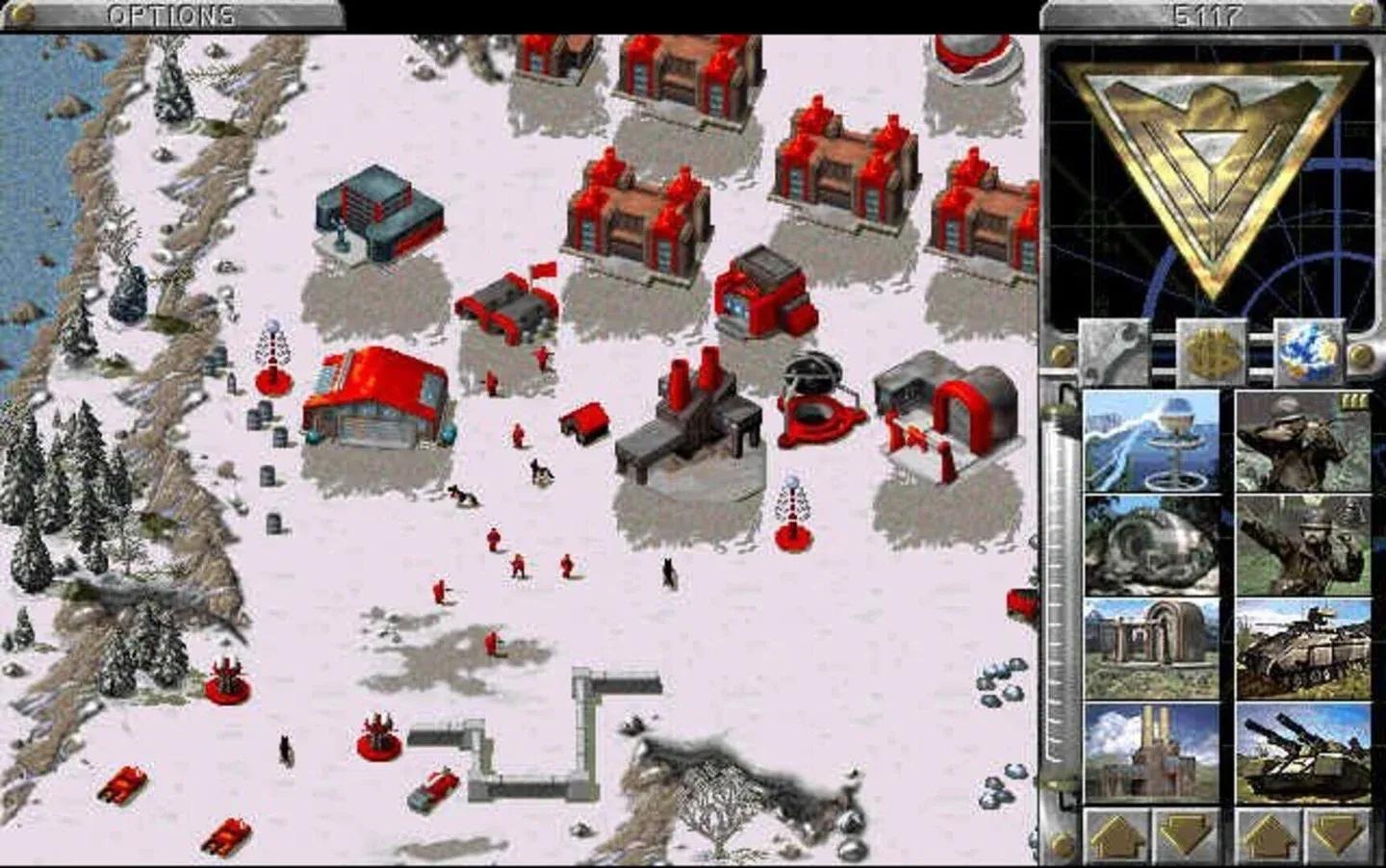
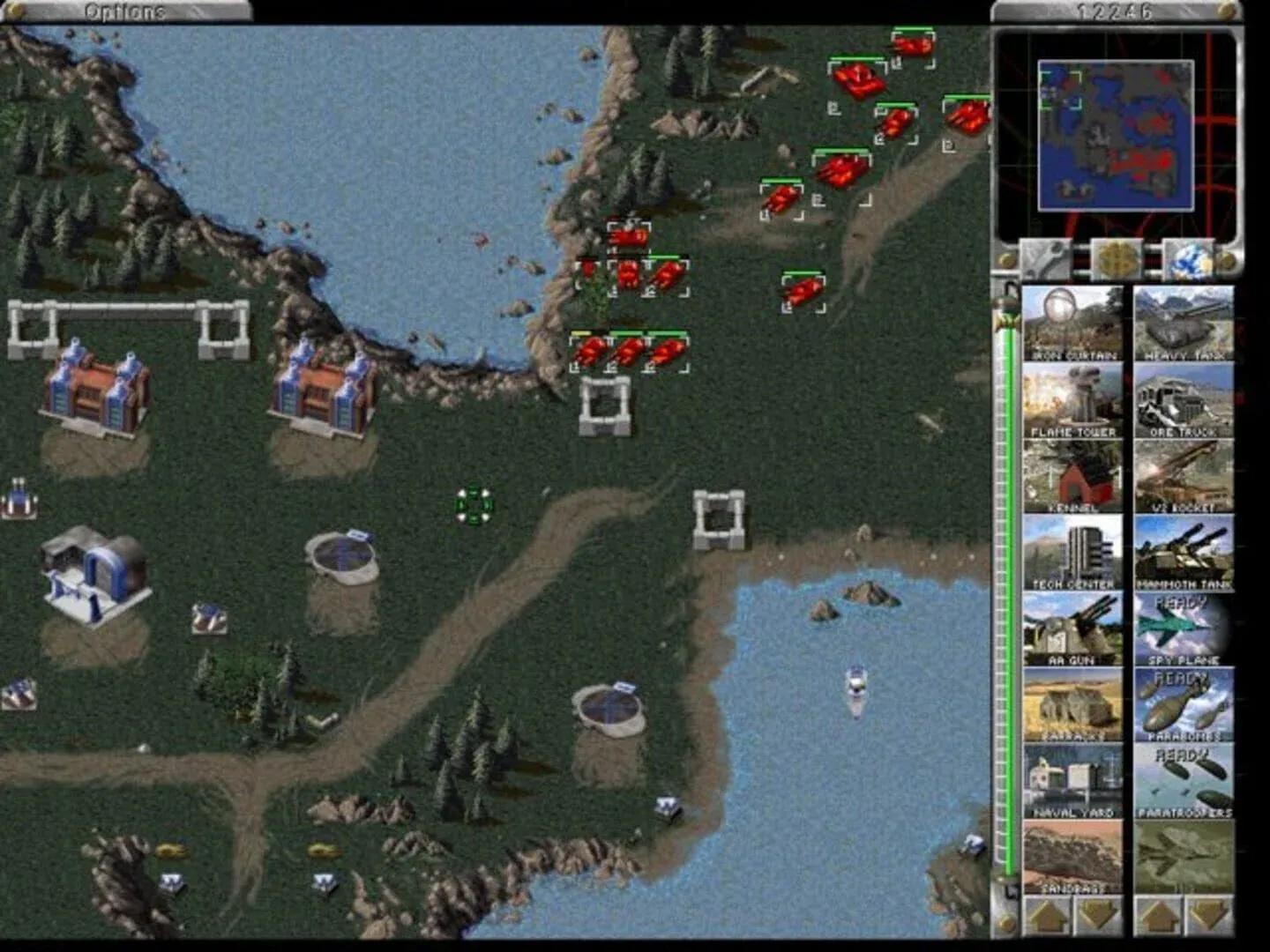
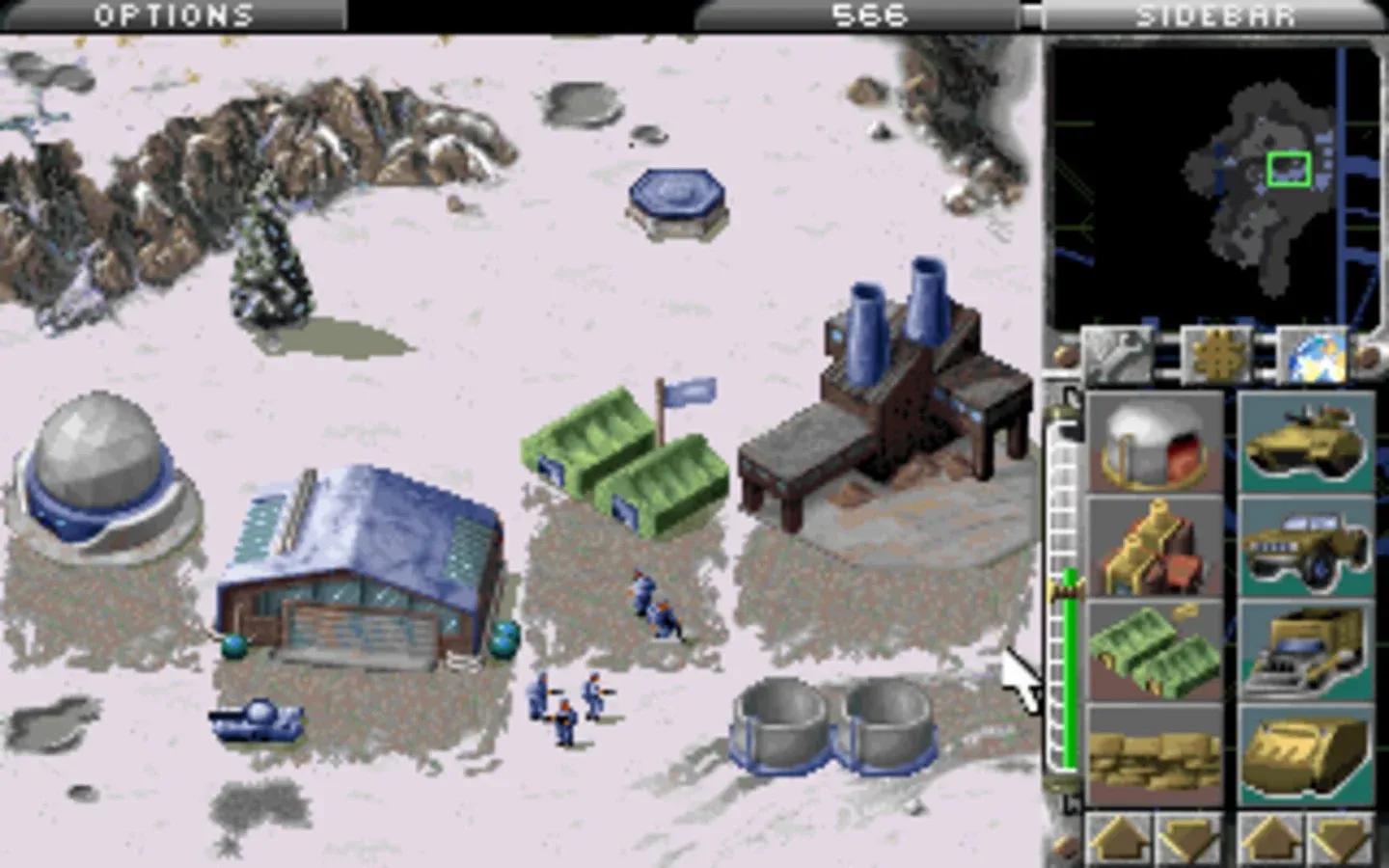
Red Alert's core loop is classic base-building RTS. Harvest ore, build a power grid, construct unit-producing structures, and push into enemy territory before they do the same to you. The pacing is deliberate but never slow, and the map design consistently forces decisions rather than letting players turtle indefinitely.
Command & Conquer: Red Alert content image
Key mechanics that define the experience:
- Ore and gem harvesting for economy
- Faction-specific superweapons (Iron Curtain, Chronosphere)
- Spy infiltration to steal tech or sabotage power
- Naval combat with destroyers and submarines
- Landmine placement for defensive play
The two superweapons deserve special mention. The Allied Chronosphere teleports any unit anywhere on the map instantly, opening attack angles that feel almost unfair. The Soviet Iron Curtain renders a group of units temporarily invincible. Both have long cooldowns, so timing their use becomes one of the highest-skill decisions in any match.
What makes Red Alert stand out from other 90s RTS games?
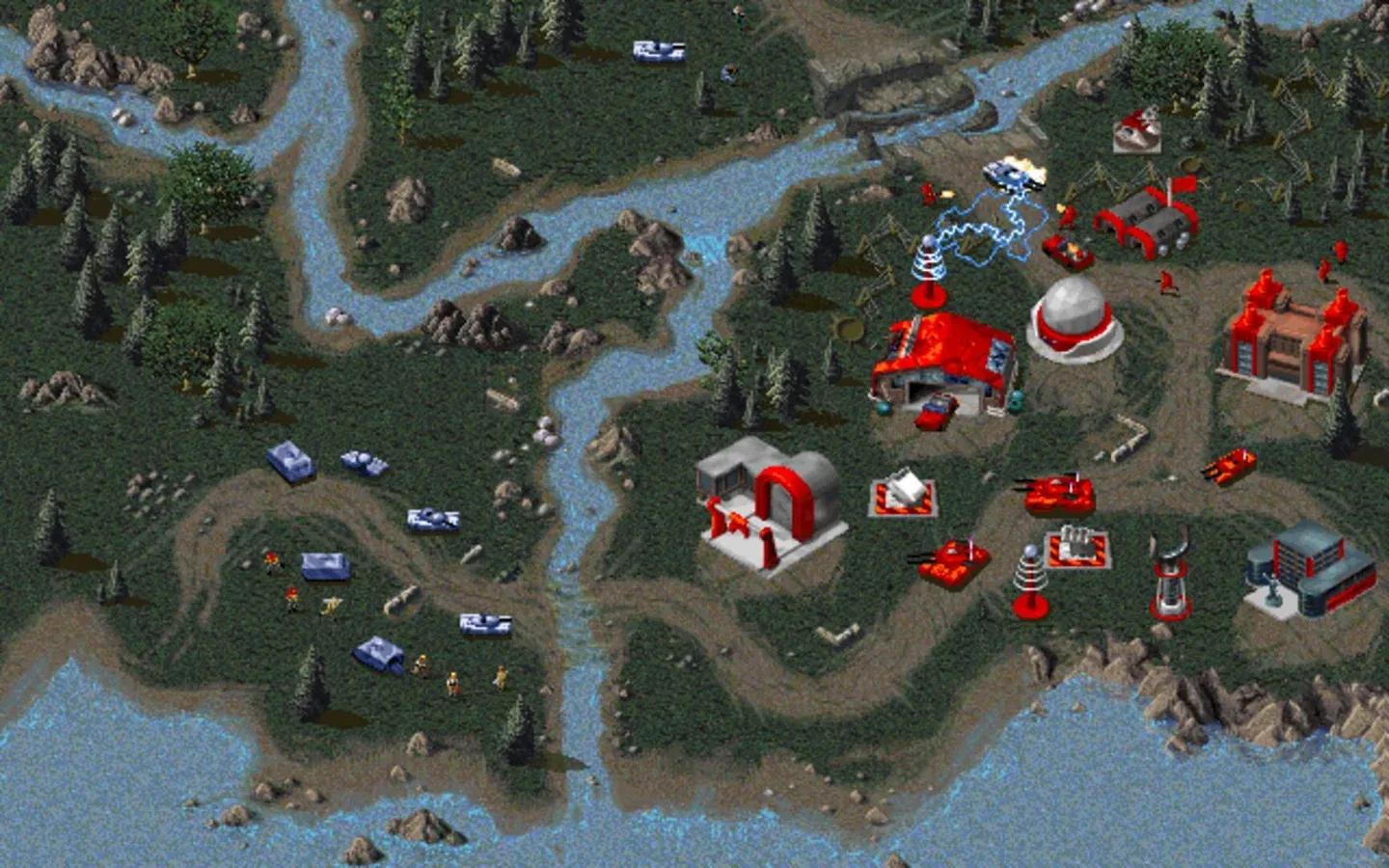
Red Alert arrives one year after the original Command & Conquer and improves on it in nearly every dimension. The alternate-history setting gives Westwood license to design units that have no real-world constraints, which results in a roster that is more creative than anything a strictly realistic World War II game could produce. Tesla coils, attack dogs, and gap generators sit alongside conventional tanks and infantry without feeling out of place.
The live-action cutscenes, a Westwood signature, lean hard into Cold War B-movie aesthetics. Actors in military uniforms deliver briefings with complete sincerity, and the tonal contrast between the campy presentation and the genuinely tense strategic gameplay gives Red Alert a personality that few RTS games have matched.
Command & Conquer: Red Alert content image
Impact and legacy
Red Alert shipped on both Windows and PlayStation, which was an unusual platform split for an RTS in 1996. The PlayStation version adapts the controls competently for a gamepad, though the PC version remains the definitive way to play. The game sold millions of copies and spawned two direct sequels, Red Alert 2 in 2000 and Red Alert 3 in 2008, each expanding the alternate-history premise further.
The original Red Alert was made available as a free download by EA in 2008, and it remains playable today through fan-maintained patches and the OpenRA engine, which modernizes the netcode and resolution support without touching the core design. For anyone serious about RTS history or Cold War strategy games, Red Alert is not optional reading.
Command & Conquer: Red Alert content image