

Advertisement

Overview
Day of the Tentacle is a graphic adventure game developed and published by LucasArts, originally released on June 25, 1993. It serves as the sequel to the 1987 game Maniac Mansion and follows Bernard Bernoulli alongside his friends Hoagie and Laverne as they scramble to prevent Purple Tentacle, a newly sentient and power-hungry disembodied tentacle, from taking over the world. The catch: stopping him requires manipulating events across three different time periods simultaneously.
The game runs on LucasArts' SCUMM engine, the same system that powered classics like Monkey Island and Indiana Jones and the Fate of Atlantis. Day of the Tentacle holds a specific milestone in the company's history as the first LucasArts title to feature full voice acting, delivered via the CD-ROM version that shipped alongside the floppy disk release. Tim Schafer and Dave Grossman co-directed the project, marking the first time either had led a game's development.
Gameplay and mechanics
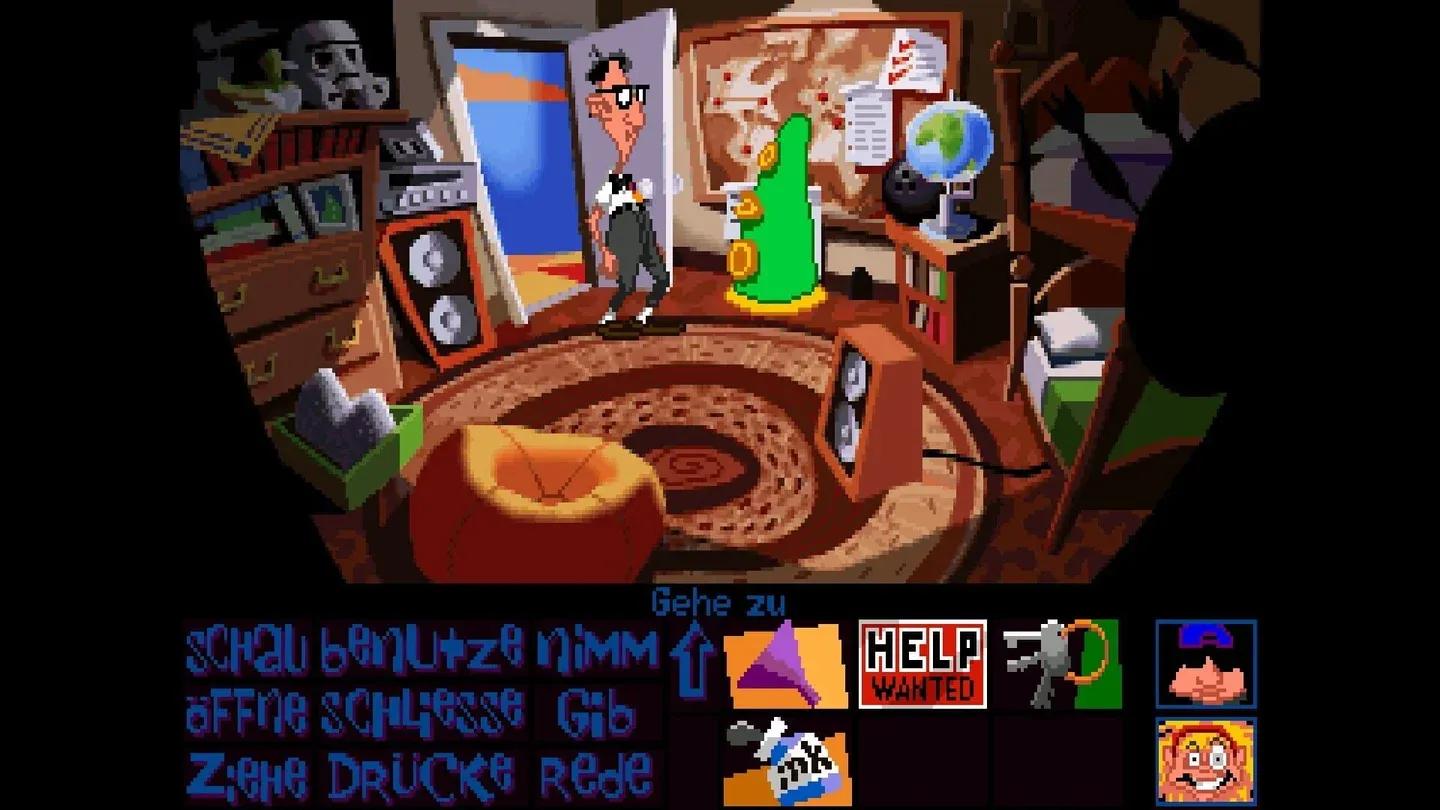
The core puzzle design is where Day of the Tentacle earns its reputation. Players switch between all three characters, each stranded in a different era: Hoagie in colonial America, Laverne in a future ruled by tentacles, and Bernard in the present. Actions taken in the past can change the state of objects in the future, which forms the backbone of the game's most satisfying puzzles.
Day of the Tentacle content image
Key mechanics include:
- Switching between three playable characters
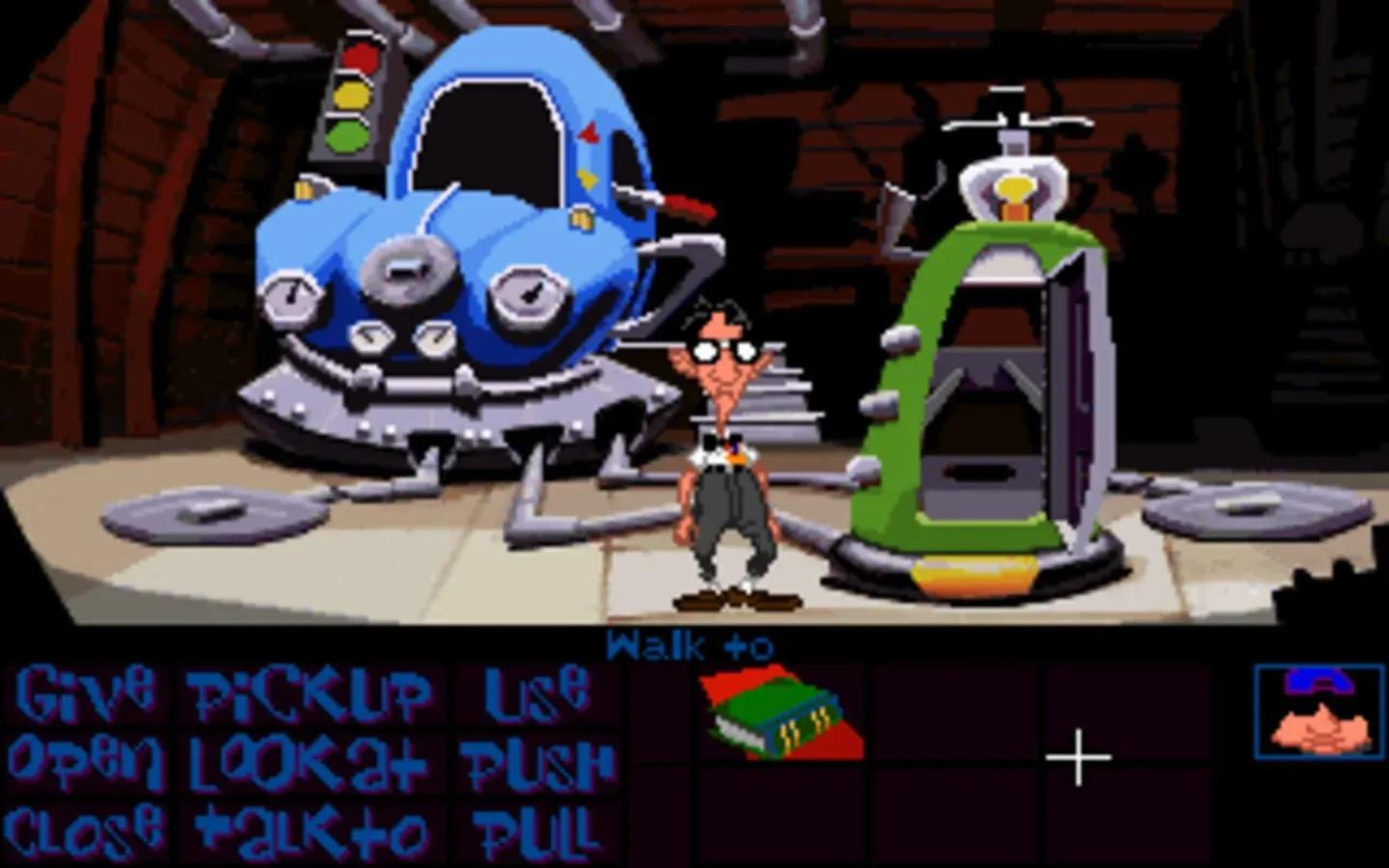
- Sending items through time via Chron-O-Johns
- Interacting with historical figures to alter the timeline
- Classic verb-based SCUMM point-and-click controls
- Context-driven inventory puzzles
Day of the Tentacle content image
The puzzle logic is inventive without crossing into frustrating territory most of the time. Changing the course of history to, say, ensure a specific object ends up in the right location centuries later requires thinking across time in ways that feel genuinely satisfying when they click. The game never demands pixel-perfect clicking or obscure moon-logic leaps, which puts it among the more accessible adventure games of its era.
World and setting
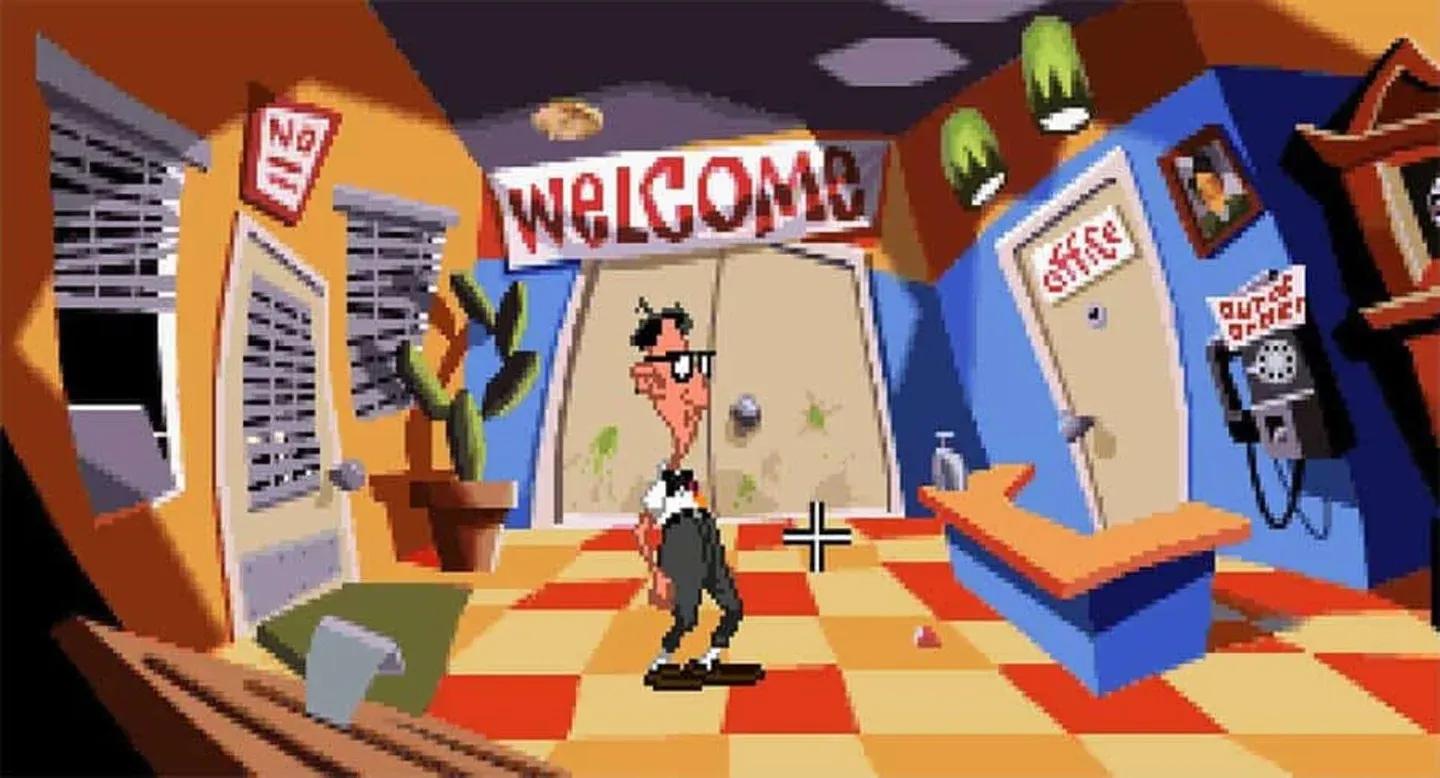
The world of Day of the Tentacle draws heavily from Chuck Jones cartoons and American history. Each time period has its own visual identity and cast of characters, including a full lineup of Founding Fathers portrayed as bumbling, comedic figures rather than stoic monuments. George Washington, Benjamin Franklin, and Thomas Jefferson all appear, each serving as puzzle fodder in ways that manage to be irreverent without feeling mean-spirited.
Day of the Tentacle content image
The future timeline, controlled by sentient tentacles who have enslaved humanity, flips the visual language into something stranger and more surreal. The contrast between the three eras gives the game a constantly shifting tone that keeps things from going stale across its roughly six-hour runtime.
Impact and legacy
Day of the Tentacle sits on a short list of games that critics and players have continuously cited across more than three decades. The Remastered version, released in 2016 for PC and PlayStation platforms, updated the visuals and audio while preserving the original game in full, allowing players to toggle between the two versions at any time. That level of respect for the source material made the remaster one of the better examples of how to handle a classic.
Day of the Tentacle content image
The game's influence on the point-and-click adventure genre is hard to overstate. Its approach to multi-character puzzle design, comedic writing, and cartoon art direction set a template that later adventure games have referenced repeatedly. For anyone interested in where adventure game design peaked before the genre went dormant in the late 1990s, this is the clearest place to start.