
Five weather types are confirmed for Grand Theft Auto 6: sunshine, rain, sea fog, tropical storms, and hurricanes. Leonida's Florida-inspired setting uses a rebuilt weather system with moving clouds, different conditions across the map, and wet ground that outlasts a shower. For planning your activities, the important question is whether those environmental effects also change driving, flying, or police pursuits. The checklist below covers every confirmed condition, followed by how to read the weather without assuming it grants unconfirmed advantages or penalties.
What weather types are confirmed in GTA 6?
The complete confirmed checklist contains five weather types. Sea fog expands the earlier lineup of sunshine, rain, tropical storms, and hurricanes with a distinct coastal condition.
| Checklist | Weather type | Confirmed characteristics |
|---|---|---|
| [x] | Sunshine | Clear blue skies and no rainfall |
| [x] | Rain | Localized showers, including heavy rain in the Leonida Keys |
| [x] | Sea fog | Coastal fog approaching South Ocean Beach |
| [x] | Tropical storms | Heavy clouds, strong winds, dense atmospheric effects, and substantial rainfall |
| [x] | Hurricanes | Severe storm conditions featuring thunder, lightning, and water streaming from structures |
Tropical storms and hurricanes are named separately, although their environmental descriptions overlap. Lightning, rainbows, and puddles are supporting effects, not additional entries in this weather-type count.
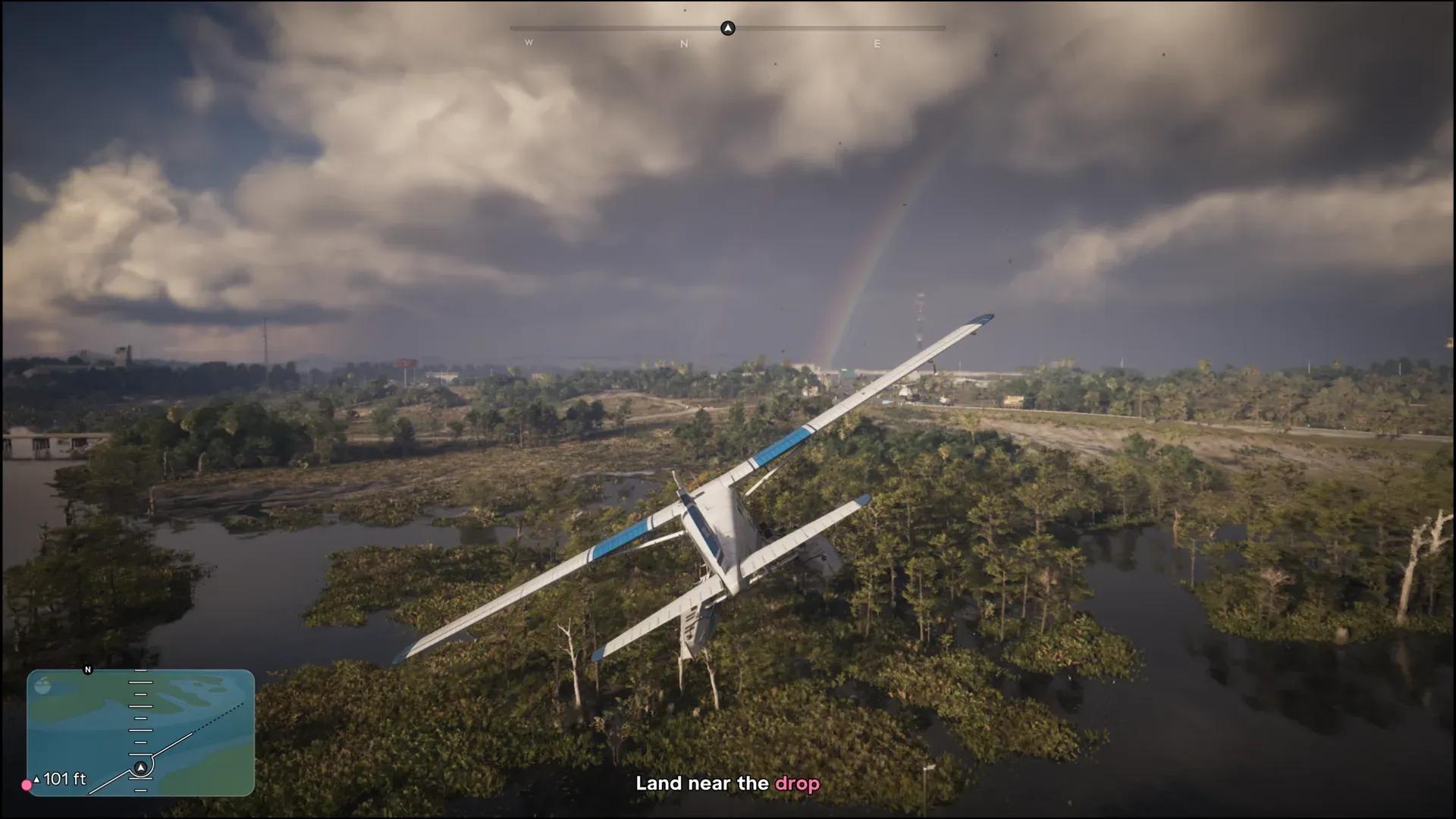
A rainbow in the sky over a swamp, seen from a seaplane.
Sea fog has been shown approaching the oceanfront buildings at South Ocean Beach. It belongs in the checklist separately from rainfall and the towering clouds associated with storms.


How does the localized weather system actually work?
The rebuilt system has two central features: localization and persistence. Localization controls where conditions occur. Persistence describes the visible effects left behind after the weather changes.
Conditions vary across Leonida
Rain does not have to cover the entire map. One area can receive a shower while another stays sunny, so clear skies in Vice City do not describe conditions across the other Grand Theft Auto 6 locations in Leonida.
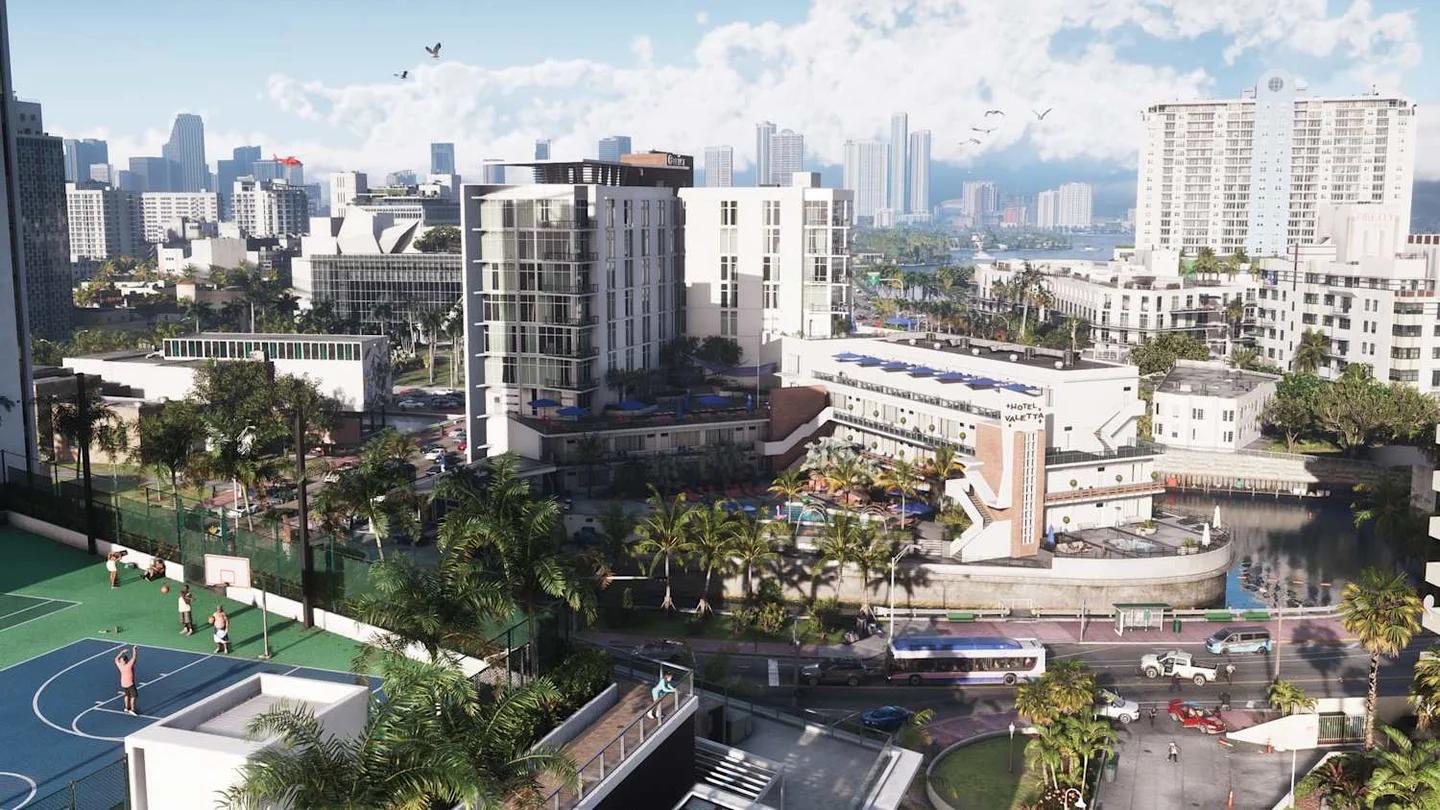
The Vice City skyline
Cloud formations move across the map, and distant lightning can illuminate storm clouds beyond your current location. You can see storm activity without standing beneath the rainfall itself.
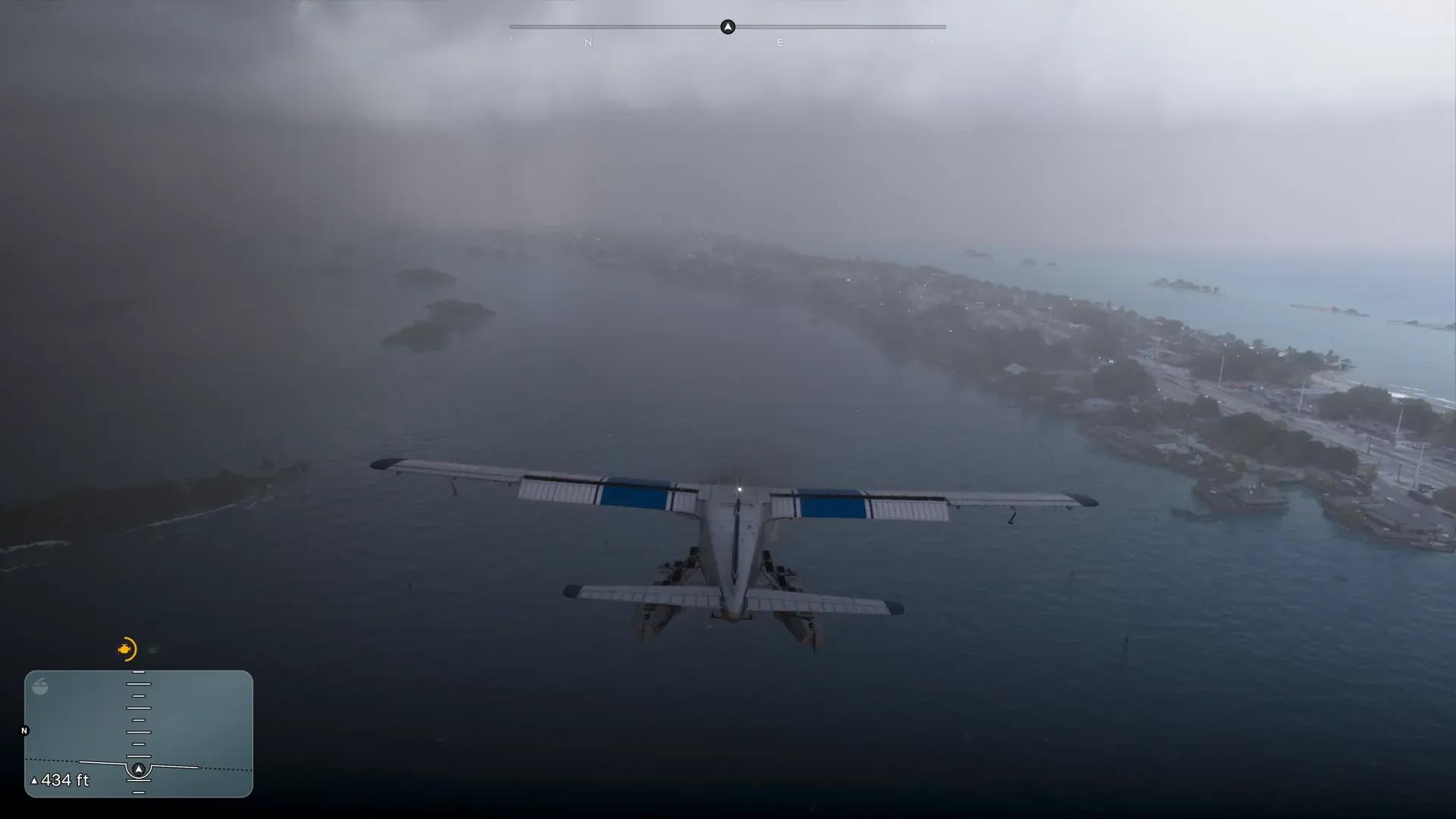
Dark clouds over the coast
The sky's visual references include Florida's clear winter days and the towering cumulonimbus clouds associated with summer and autumn afternoons. Those references describe weather appearances, not a confirmed calendar-based season system.
Wet ground outlasts the shower
Recently showered ground stays wet after rainfall ends. An area can retain evidence of a storm even after its clouds have moved elsewhere.
A wet street consequently does not prove rain is still falling there. Look at the sky for current conditions and the ground for the aftermath of recent weather. Moving into a clear area and returning to a recently drenched one can present different combinations of sky and surface conditions.
Persistence does not establish permanent environmental changes. Lingering surface wetness describes the aftermath of rainfall, without confirming that a storm can permanently alter a building or road.
What do hurricanes and tropical storms look like in GTA 6?
Both major storm types combine rainfall with heavy cloud cover and strong winds. Their presentation extends beyond rain falling in front of the camera to include thoroughly wet streets, buildings, and surrounding objects.
Water gushes from roof edges and lampposts. Thunder accompanies the storm, while lightning illuminates cloud formations from within. These details communicate storm intensity through structures, sound, and lighting as well as precipitation.
Heavy rain does not identify a hurricane
The Leonida Keys has confirmed heavy-rain imagery, but a downpour alone is not enough to identify a hurricane. The named storm categories share several environmental effects.
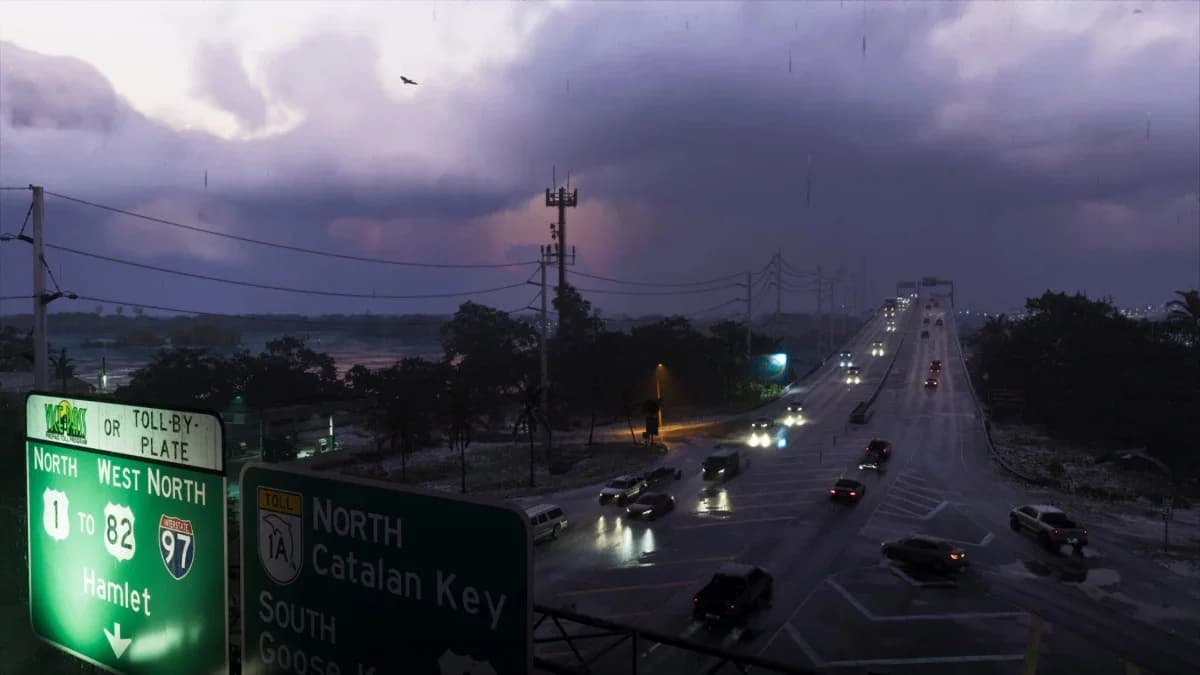
Rain over the Leonida Keys
Treat tropical storms and hurricanes as separate named conditions without assigning invented wind speeds or numerical categories. Their shared visual description does not establish a gameplay rule for distinguishing them.
Could storms actually affect gameplay?
Environmental reactions are separate from Grand Theft Auto 6's crime, combat, and driving mechanics. Detailed storm effects do not establish bonuses or penalties for those player systems.
Reduced tire grip, harder aircraft handling, and weaker police detection during storms remain unconfirmed. Do not choose a getaway route or vehicle on the assumption that rain will make pursuing officers less effective.
Flood-blocked roads, damaged properties, and tasks such as boarding up a safehouse are also unconfirmed weather mechanics. Water flowing from a roof demonstrates runoff, not a flood simulation or a property-protection requirement.
Console presentation and controller feedback are separate considerations. The Grand Theft Auto 6 PS5 exclusive features guide covers features such as DualSense haptics, without establishing additional storm-related gameplay rules.
All confirmed weather effects
The moving clouds, localized conditions, lingering ground wetness, coastal fog, and major-storm effects described above are accompanied by six supporting features. These add detail within the weather system, not six more weather types.
| Checklist | Supporting effect | Confirmed behavior |
|---|---|---|
| [x] | Persistent puddles | Water collects near lampposts and street corners after rain |
| [x] | Conditional rainbows | Rainbows appear when rainfall and lighting conditions align |
| [x] | Offshore evening breezes | Offshore breezes develop after sunset |
| [x] | Daytime updrafts | Convectional updrafts form during the day |
| [x] | Building wind occlusion | Buildings affect how wind moves through streets |
| [x] | Wind-reactive surroundings | Hair and debris swirl on rooftops, water surfaces ripple, and swamp grass bends |
Wind extends beyond severe storms
Wind has behavior tied to the time of day and surrounding structures. It is part of Leonida's everyday environmental simulation, not an effect reserved for hurricanes.
Its visible reactions extend across urban surroundings, open water, and wetland vegetation. Grassrivers provides one of Leonida's swamp settings, where vegetation is part of the environment affected by wind.
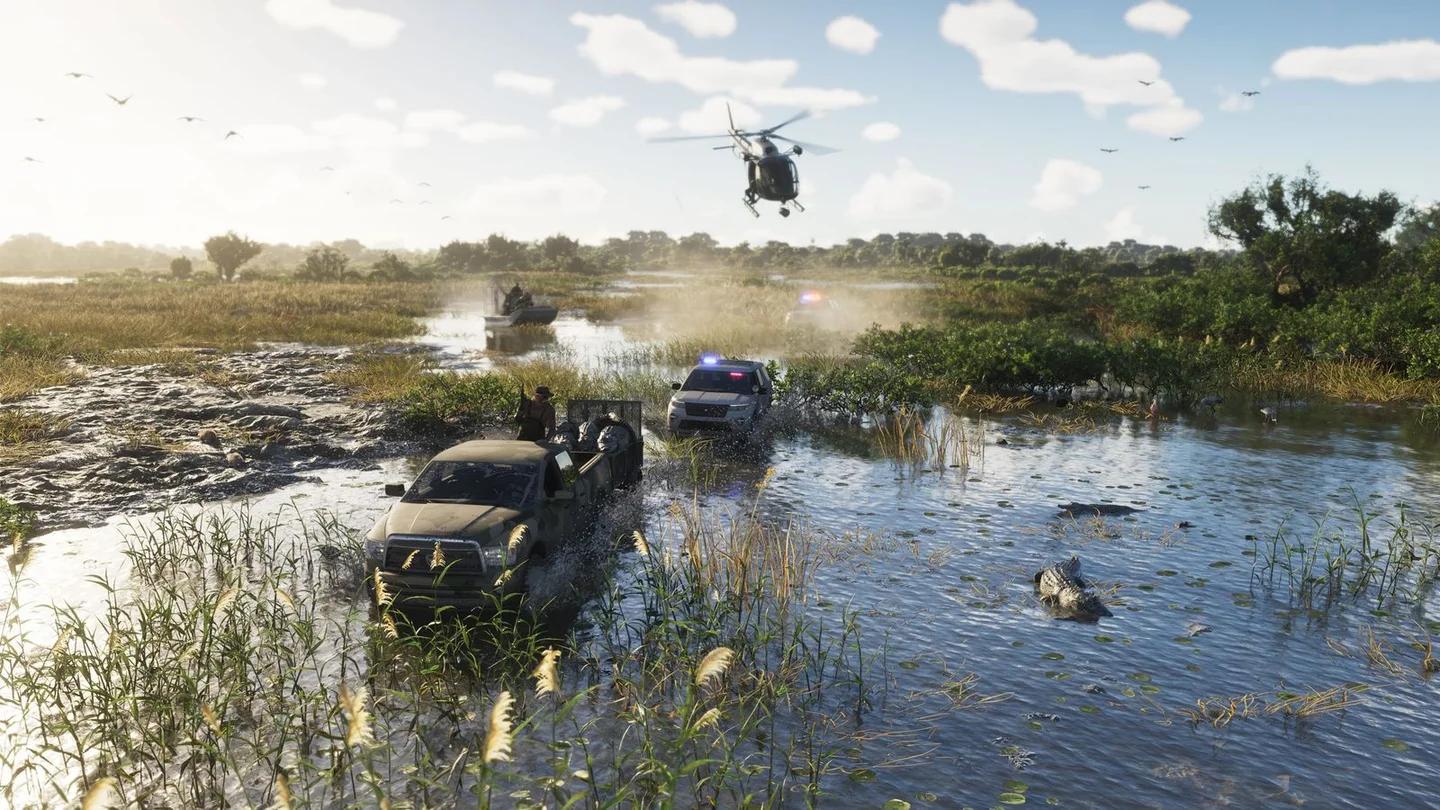
Grassrivers swamp vegetation
How does this compare to GTA 5's weather?
Grand Theft Auto 5 already included sunshine and rain. Grand Theft Auto 6's rebuild focuses on moving, localized conditions and their visible aftermath, with tropical storms and hurricanes expanding the named weather events.
Leonida's map is estimated to be nearly twice the size of Grand Theft Auto 5's. That estimate describes the world, not an individual storm's coverage or the distance between weather boundaries.
The practical change is spatial: leaving a rainy area and waiting for its rain to stop are different situations. Local sunshine does not describe the whole state, and lingering wetness does not mean a storm is still overhead. Use those environmental cues to understand the weather around you without treating them as proof of changes to vehicle performance or police behavior.