

Overview
Hillthorn is a dark puzzle adventure from developer Fool Moon and publisher Raw Fury. A detective searches for a missing child on a secluded mountain, pursuing a case that reaches into both its dangerous trails and the secrets of a nearby village.
The game takes the form of a short, atmospheric mystery, keeping its scope centered on one disappearance. Hillthorn is available on Windows, macOS, Nintendo Switch, Android, and iOS, with deduction and discovery forming the core of its investigation.
How does the card-based investigation work?
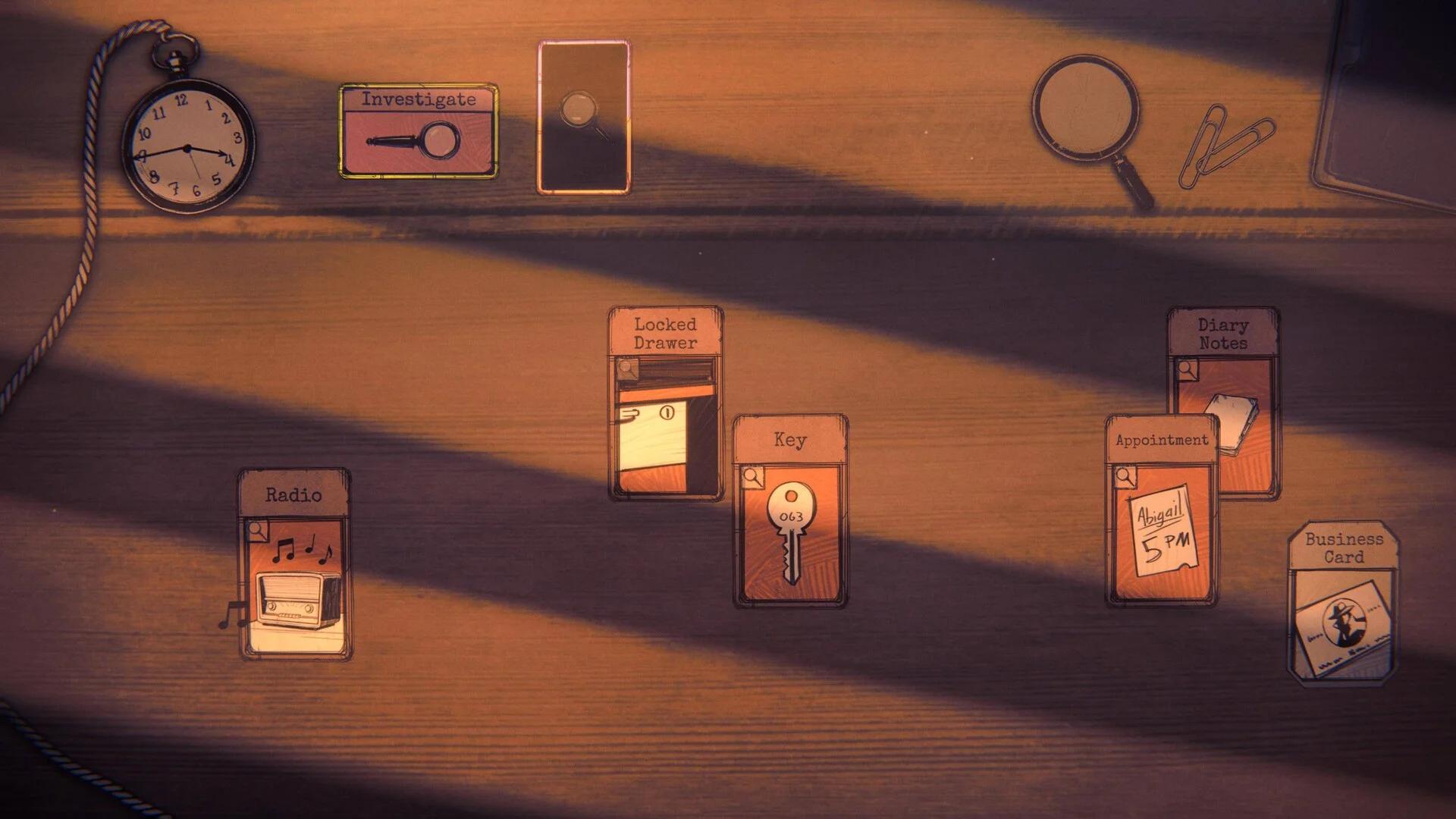
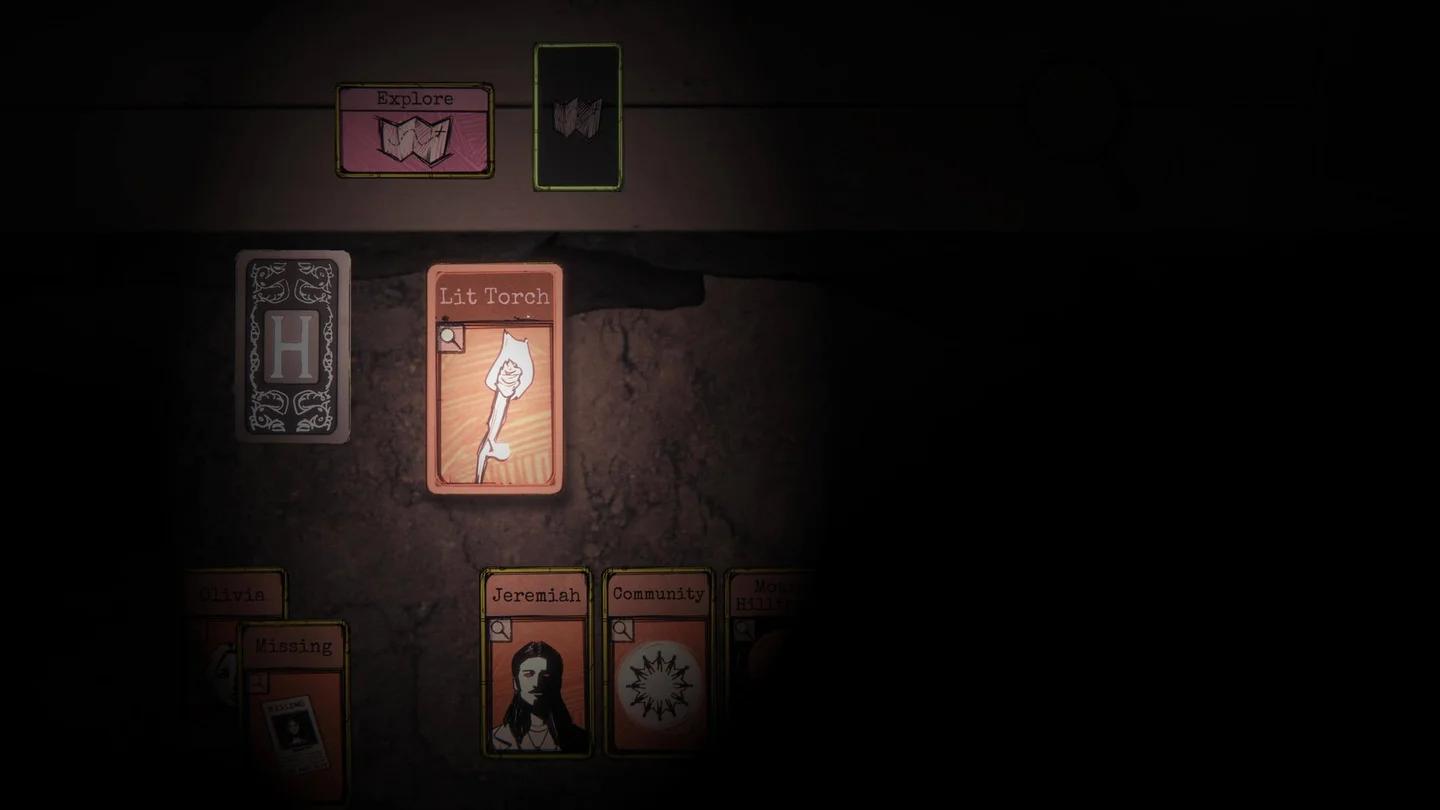
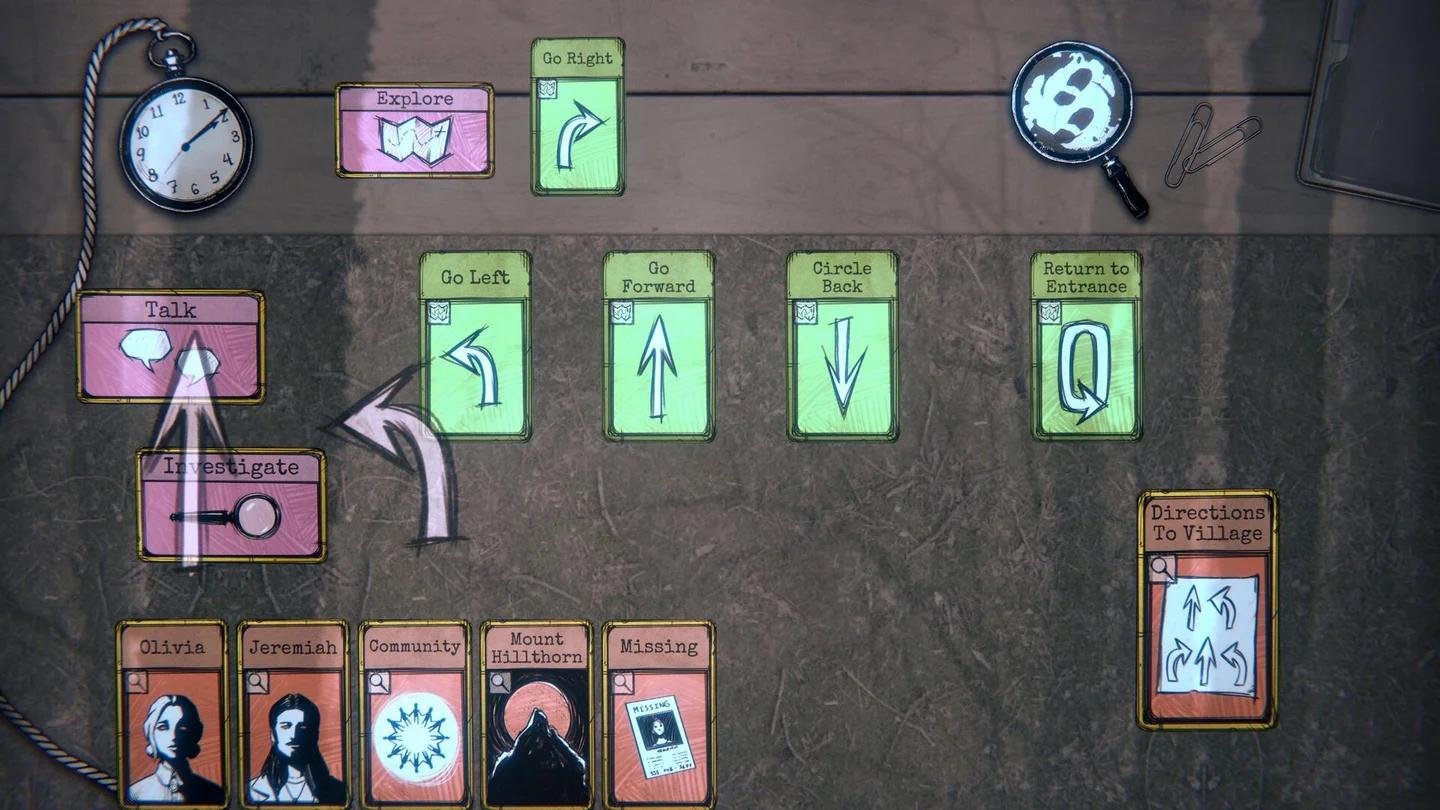
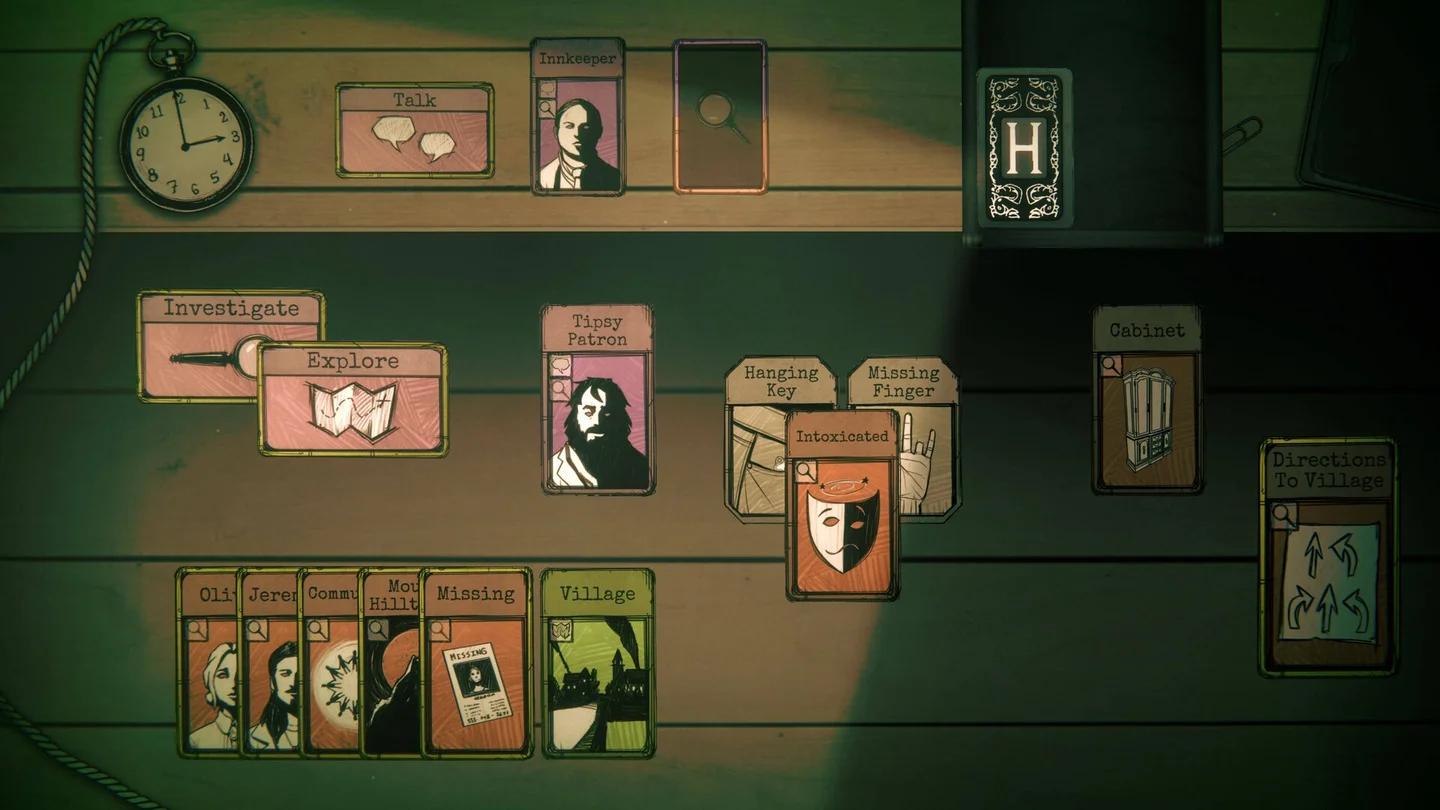
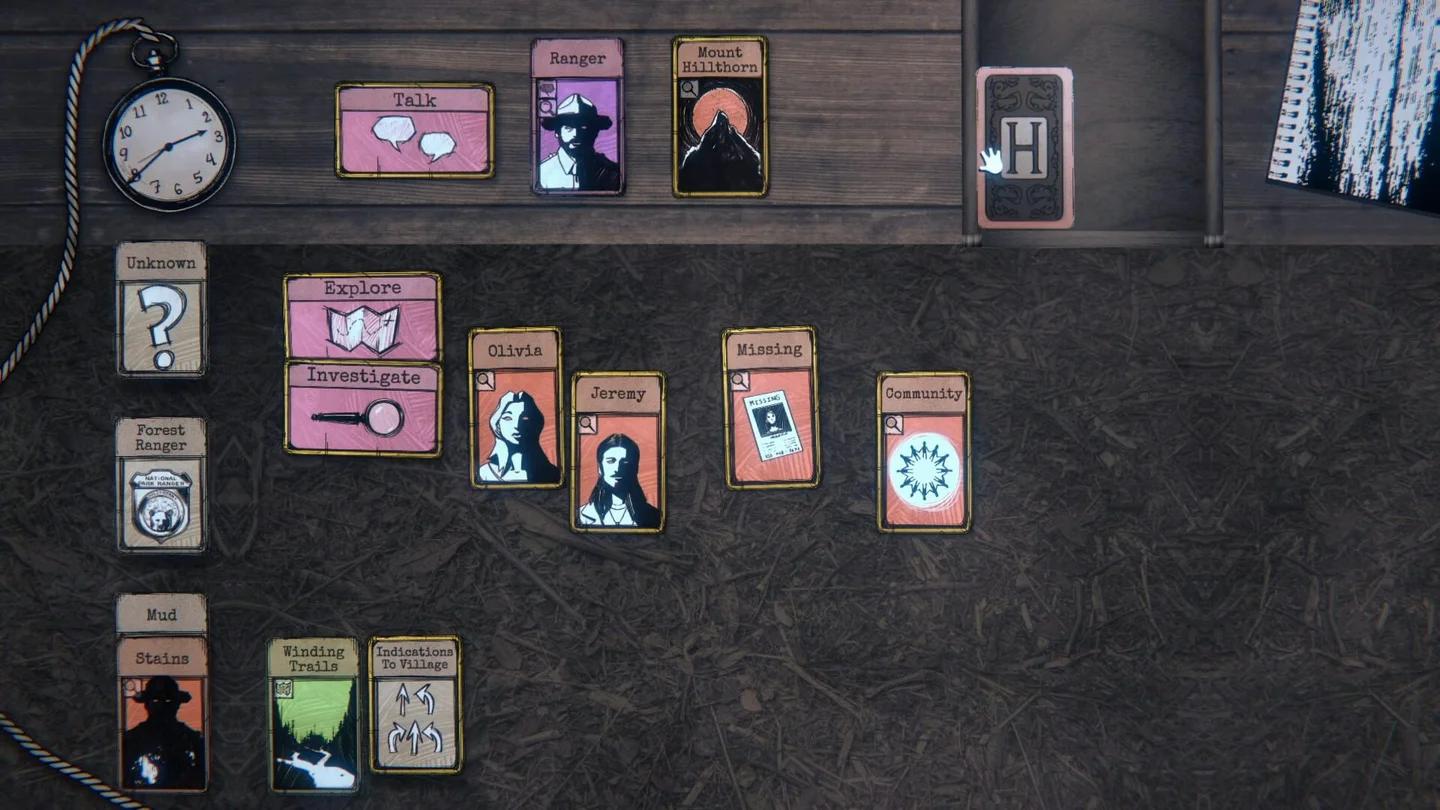
Hillthorn presents its story through Clue cards. Players combine actions, clues, and characters to uncover connections, making the cards the means of conducting the investigation as well as revealing its details.

The main interactions establish a small vocabulary for approaching the case:
- Investigate Clue cards
- Explore Clue cards
- Talk when available
Choosing a relevant action requires attention to what a clue represents and how it might connect to another part of the mystery. Logic helps establish promising connections, while imaginative combinations create room to test less obvious possibilities. The challenge lies in applying these simple interactions to the right pieces of evidence.

The story contains no dialogue. Even talking to a character operates through the card-based investigation, so social encounters remain part of the same system as examining evidence and exploring leads.

A mountain closed to outsiders
Hillthorn's setting puts physical and social obstacles around the search. Its maze-like trails make the mountain difficult to navigate, and dangerous wildlife adds a threat beyond the disappearance itself. The terrain is part of the mystery's hostile atmosphere.
The village offers no easy refuge from that uncertainty. Residents hesitate to share details with someone outside their community, leaving the detective to draw information from people who do not readily cooperate.
The missing-child premise makes those guarded encounters uncomfortable. Information has an immediate purpose, but the investigator's assignment does not automatically earn local trust. Finding a useful lead means dealing with the community as well as searching the mountain.

Time, knowledge, and multiple endings
Every action advances Hillthorn's clock. The investigation contains more threads than the available time allows, making the choice of what to pursue part of the puzzle. Testing an idea spends time even when its value remains uncertain.
Knowledge serves as progression, and the mystery allows paths left unexplored to be revisited. Understanding gained through investigation can inform later decisions, giving discoveries a use beyond the moment they first appear.
Multiple endings give that learning process different outcomes to pursue. Hillthorn's replayability rests on understanding its clues more clearly and applying that knowledge under pressure, tying card-based deduction to the practical problem of deciding which lead deserves the next action.