
Advertisement

Overview
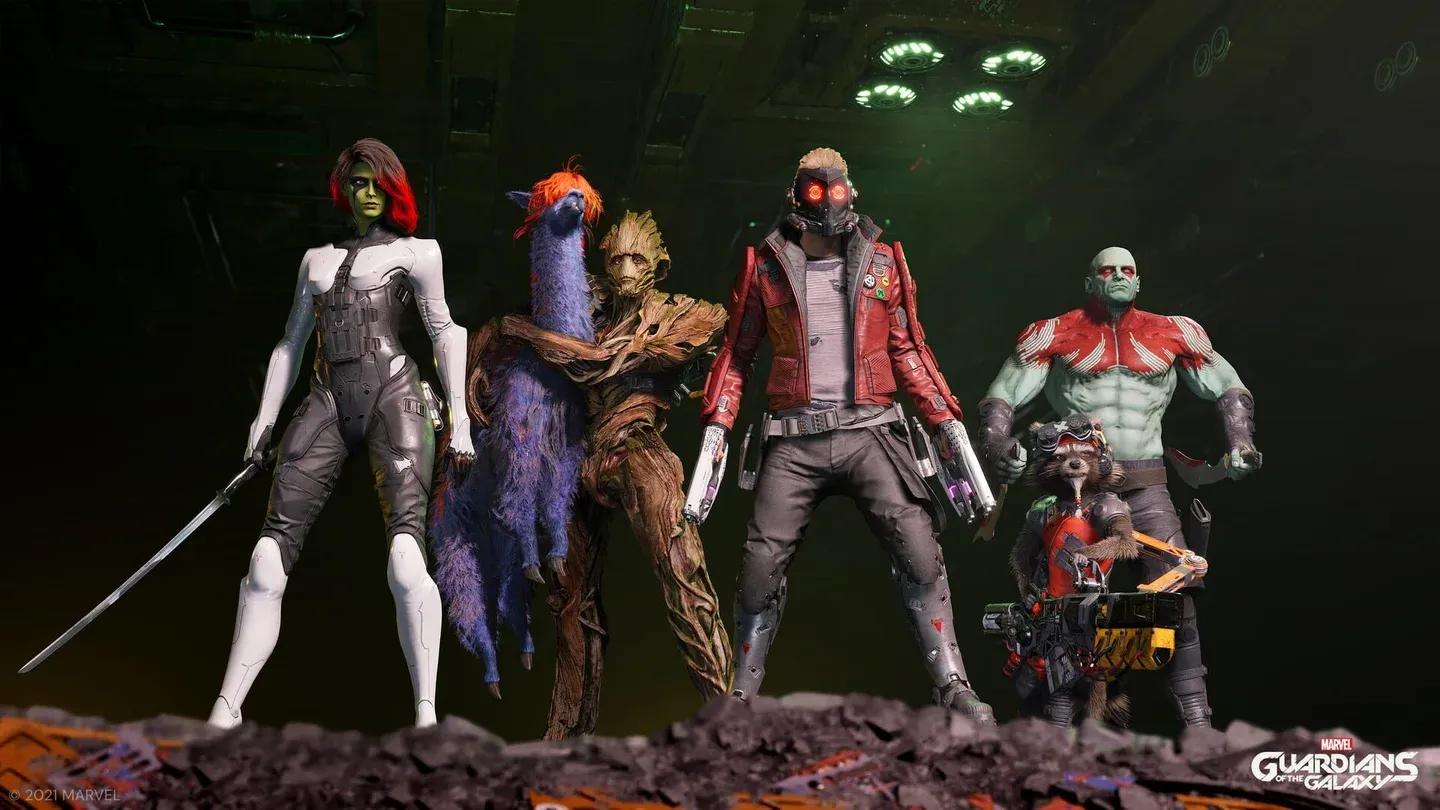
Marvel's Guardians of the Galaxy is a third-person action-adventure game developed by Eidos Montréal and published by Square Enix, released on October 26, 2021. The game puts you in the boots of Peter Quill, better known as Star-Lord, as he drags his reluctant crew through an original story set in the Marvel cosmos. This is not a retelling of the films. It's its own thing, built around squad commands, element-based combat, and a surprisingly sharp script.
The game runs as a single-player experience from start to finish, which is a deliberate choice that shapes everything about how the story lands. Every conversation, every argument between Rocket and Drax, every moment where Groot says exactly three words and somehow means all of them, is authored and controlled. Eidos Montréal had a clear vision and committed to it completely.
Marvel's Guardians of the Galaxy content image
Gameplay and mechanics
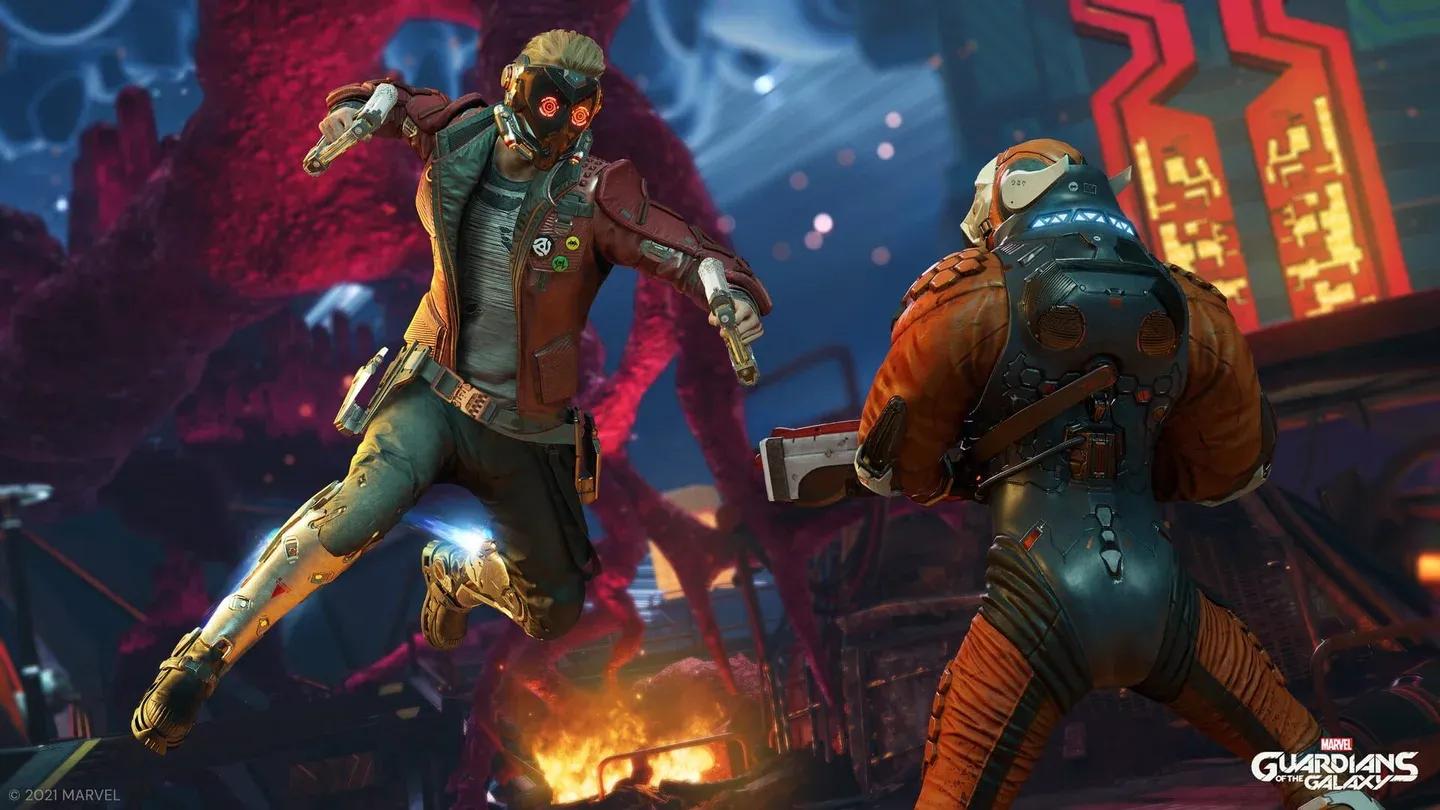
Combat in Guardians of the Galaxy sits in an interesting space. You control Star-Lord directly, firing dual element blasters that can be upgraded with different elemental properties like ice, plasma, and wind. The real depth comes from directing your teammates:
Marvel's Guardians of the Galaxy content image
- Tag Drax into a stagger combo
- Freeze groups with Mantis's abilities
- Use Groot to bind enemies in place
- Rocket handles area damage and gadget support
- Chain team abilities for bigger payoffs
The Huddle mechanic is worth mentioning on its own. At certain points mid-fight, Star-Lord calls a team huddle and picks a motivational speech from a short list of options. Pick the right one based on what's been said in conversation earlier, and the team gets a significant combat boost. It's a small system that ties narrative and gameplay together in a way most action games don't bother attempting.
Marvel's Guardians of the Galaxy content image
World and setting
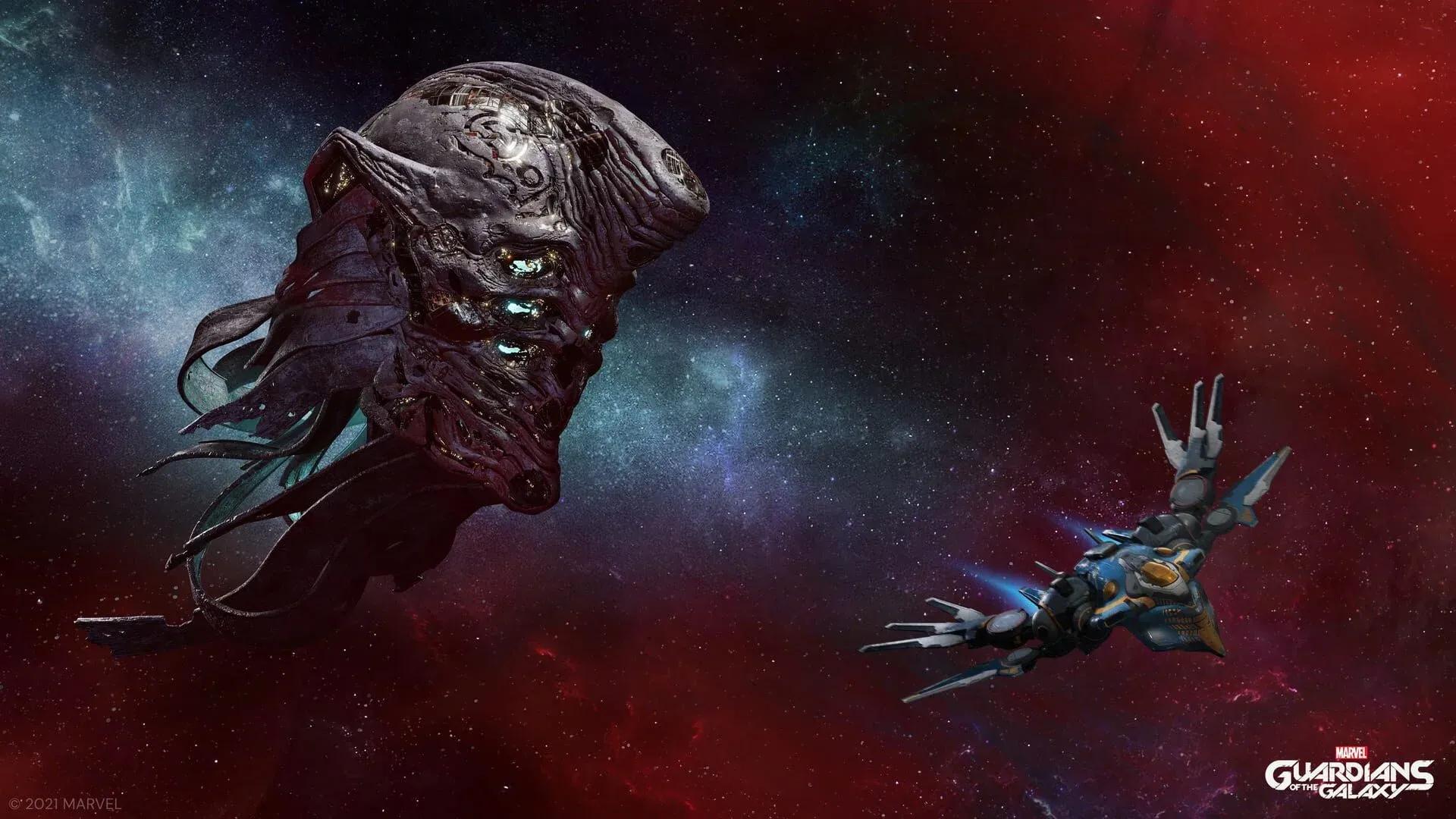
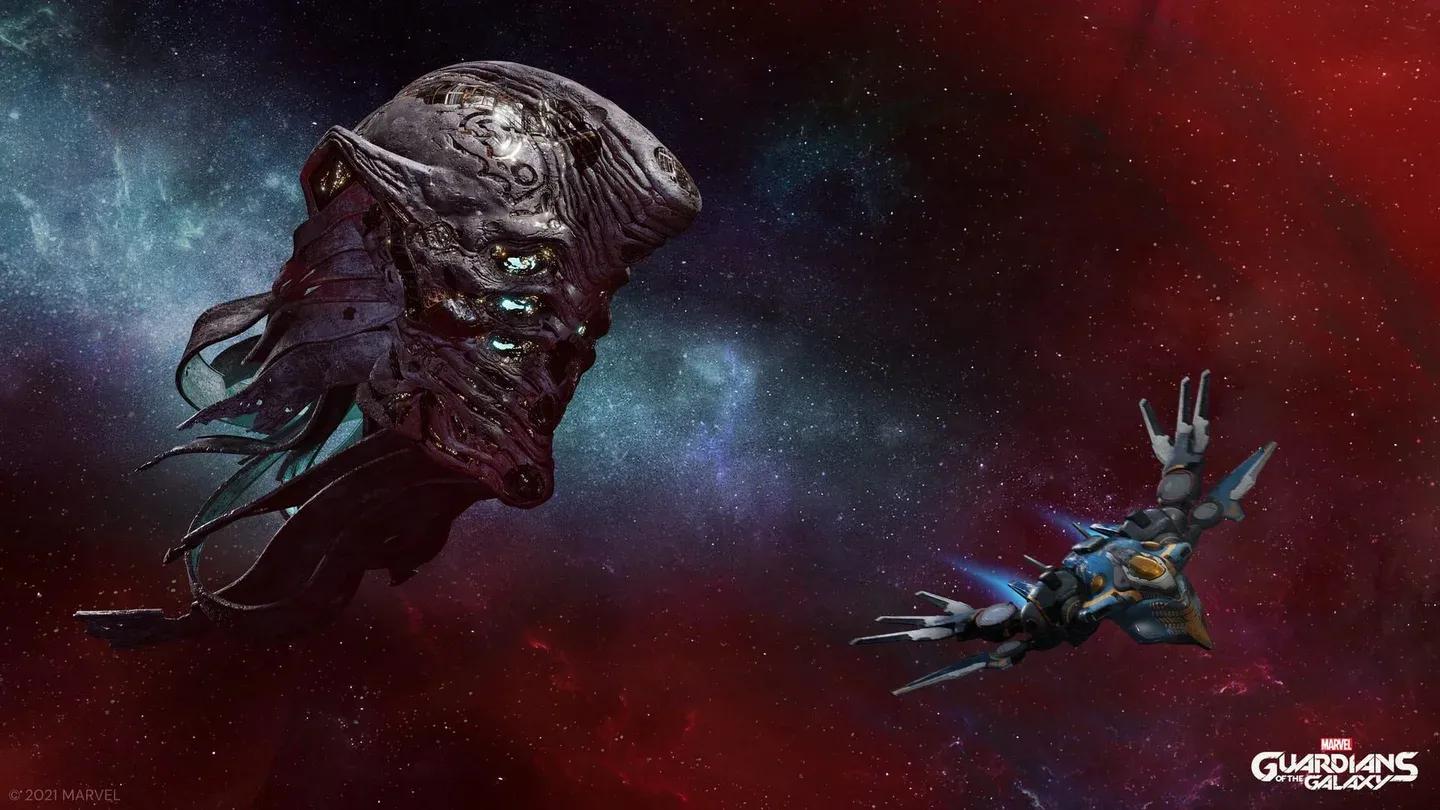
The game moves through a wide variety of environments across the Marvel cosmos, from the Nova Corps archives to alien jungles and the interior of massive cosmic entities. Each location has a distinct visual identity, and the production design leans hard into the weird end of Marvel's catalogue rather than the cinematic universe's cleaner aesthetic.
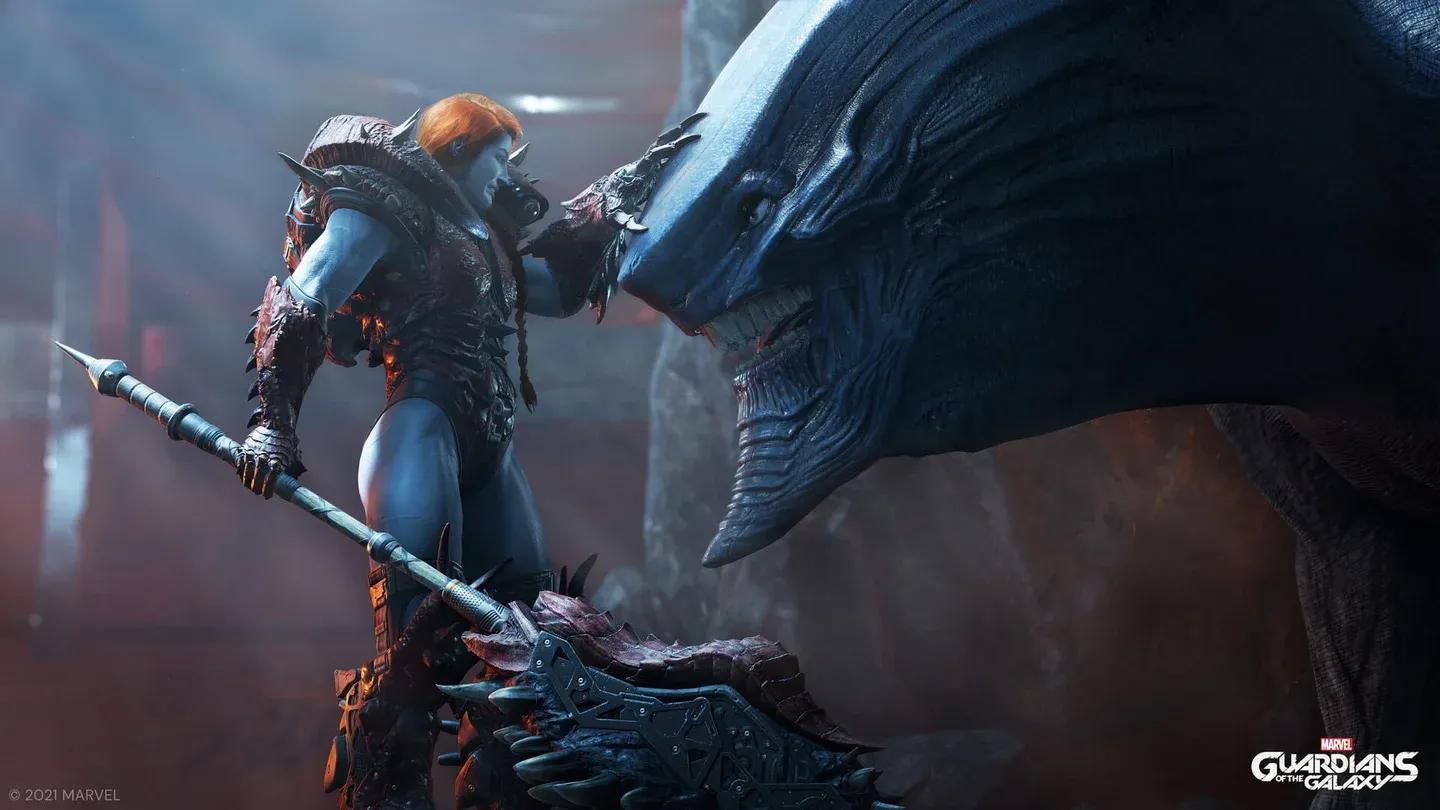
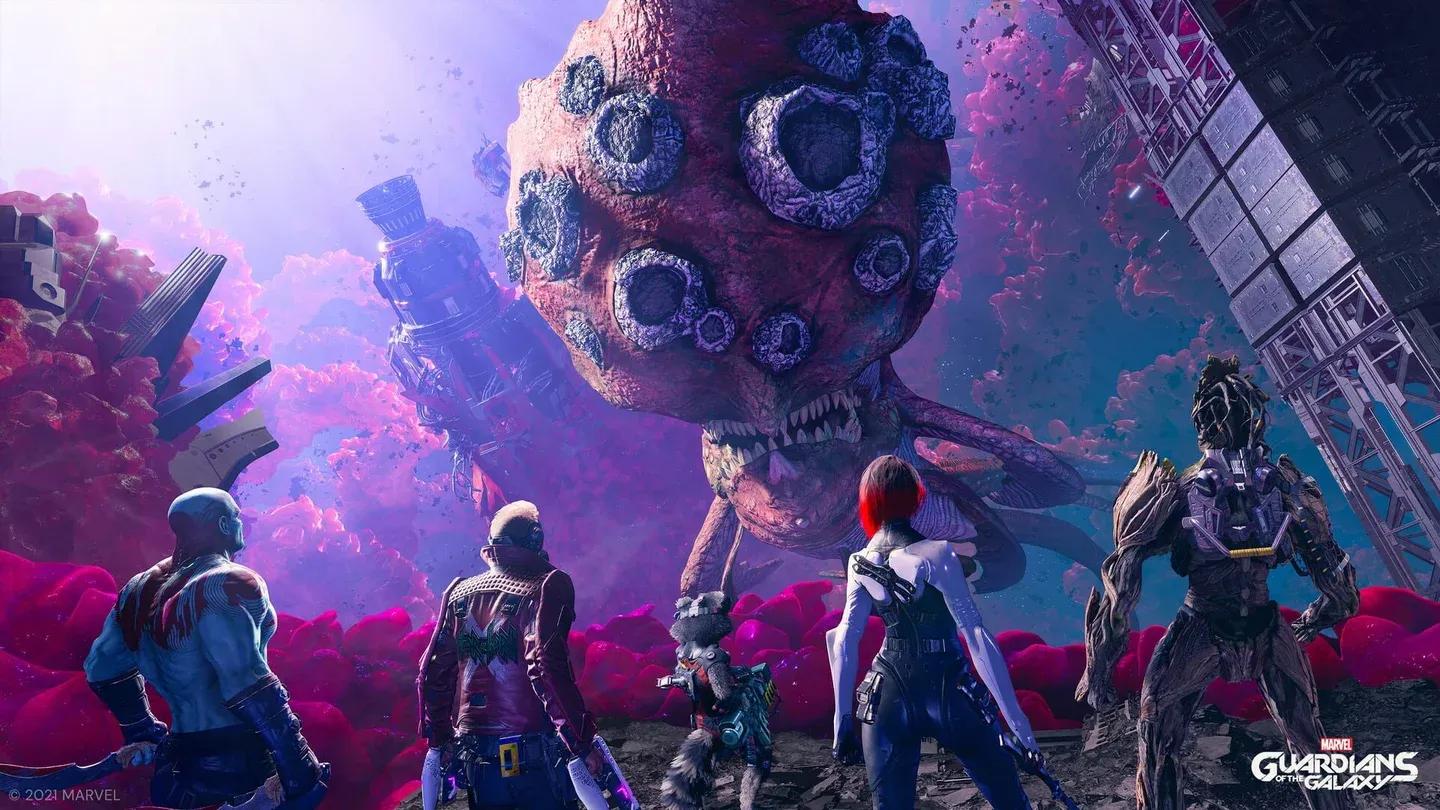
The story involves a chain of catastrophic events set off (probably by you) that threatens total interplanetary collapse. Along the way, the game introduces original characters alongside recognizable faces, all written with enough specificity that they feel like actual people rather than IP placeholders. The relationship between the five Guardians carries the whole thing.
Visual and audio design
The '80s soundtrack is not background decoration. Songs from bands like Rick Springfield and Bonnie Tyler show up at key moments, and the game commits to making those moments land. The combat music system shifts dynamically, and the voice performances across the entire cast are strong enough that cutscenes rarely feel like interruptions.
Visually, the game holds up well across platforms. The Nintendo Switch version runs as a cloud title, which comes with the usual caveats about streaming latency, but the PC and current-gen console versions deliver solid performance with detailed character models and expressive animation work that makes the dialogue scenes worth watching.
Marvel's Guardians of the Galaxy content image
Is this the best single-player Marvel game available?
For story-driven Marvel content, Guardians of the Galaxy makes a strong case. The single-player focus means there's no live-service padding, no battle pass, and no artificial reason to keep logging in. The game has a beginning, a middle, and an end, and it earns all three. Players who bounced off Marvel's Avengers due to its live-service structure tend to find this one considerably more satisfying.
The squad-based action-adventure formula Eidos Montréal built here gives the game a distinct identity in a crowded genre. It rewards players who pay attention to conversations, punishes those who skip dialogue by making the Huddle system less effective, and trusts the audience enough to let the quieter character moments breathe alongside the chaos.