

Advertisement




Overview
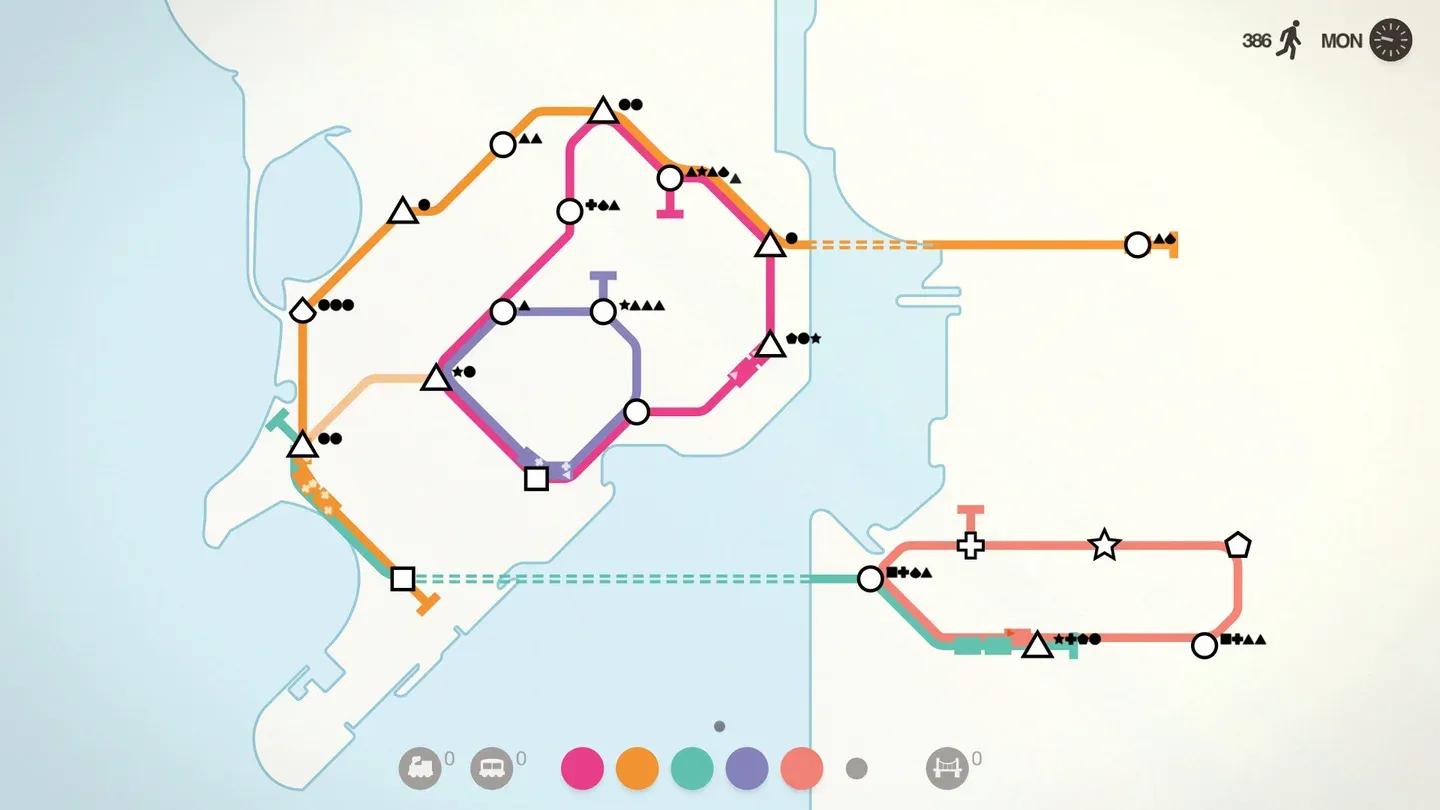
Mini Metro is a strategy simulation game developed and published by Dinosaur Polo Club, released in November 2015. Players design subway networks for growing cities, drawing lines between stations and redistributing resources as commuter demand escalates. The goal is never to win outright but to survive as long as possible before the system collapses under its own weight.
The game opens with three stations and a handful of commuters. Within minutes, new stations appear, passenger shapes multiply, and the network that worked five minutes ago suddenly needs a complete rethink. That constant pressure to adapt is Mini Metro's core tension, and it never lets up. The randomized city growth means no two runs play out identically, which keeps the puzzle fresh across dozens of sessions.

Mini Metro content image
Gameplay and mechanics
The core loop is deceptively simple: draw lines, assign trains, and reshuffle when things go sideways. Every week in-game, players receive new assets, including extra train carriages, additional lines, or tunnels that let routes cross rivers and obstacles. Choosing what to take and where to deploy it is where the real strategy lives.

Mini Metro content image
Key mechanics include:
- Line drawing and real-time rerouting
- Weekly resource allocation choices
- Station capacity management
- Commuter shape-matching across station types
- Randomized city growth per run
Commuters are represented as geometric shapes, and they will only board trains heading to stations that match their shape. Managing that flow without creating bottlenecks is the central puzzle, and it gets genuinely difficult as cities scale.

Mini Metro content image
How many cities and modes does Mini Metro include?
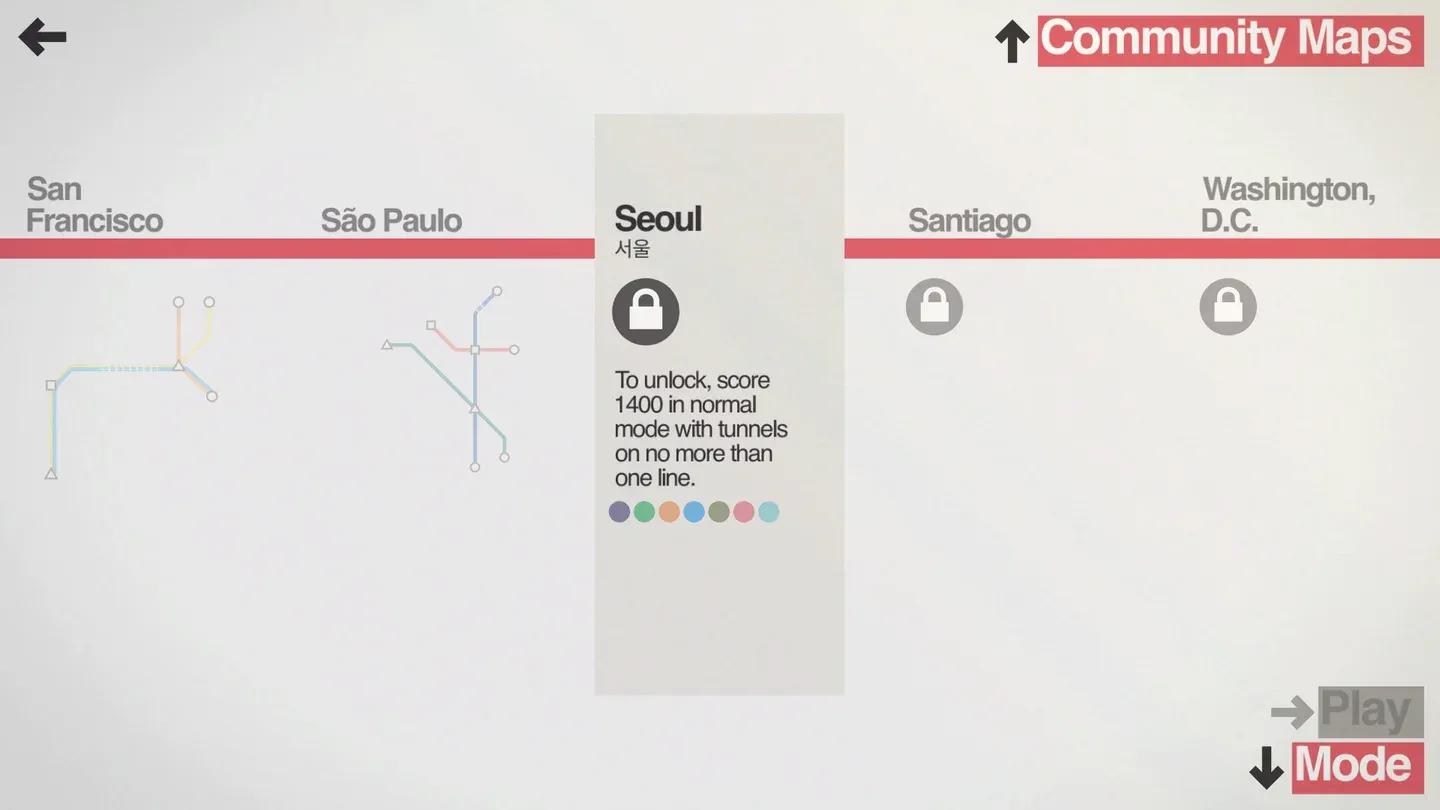
Mini Metro features over two dozen real-world cities, each with a distinct color scheme, geographic obstacles, and population growth pace. London plays differently from São Paulo, and Osaka's layout creates entirely different routing problems than New York City. The variety gives the game significant longevity beyond any single city mastery.
Three primary game modes cover most player preferences. Normal mode runs scored sessions with a definitive end state. Endless mode removes the failure condition for stress-free experimentation. Extreme mode strips away the safety margins and demands near-perfect network design from the start. A Creative mode lets players build freely without pressure, functioning as a sandbox for experimenting with layouts.
Visual and audio design
The art style draws directly from Harry Beck's iconic 1933 London Underground diagram, reducing cities to clean geometric lines on minimal backgrounds. Every completed network looks like a genuine transit map, which makes saving and sharing runs feel satisfying rather than gimmicky. Night mode and colorblind mode ensure the visual clarity that the design depends on remains accessible.
The soundtrack, engineered by Disasterpeace, responds dynamically to the state of the network. Trains generate musical tones as they move, so a well-optimized system produces something close to ambient music while a chaotic one sounds appropriately frantic. It's one of the more effective uses of reactive audio in a puzzle game.

Mini Metro content image
Content and replayability
Mini Metro's replayability comes from the intersection of randomized city growth, flexible resource allocation, and the sheer number of cities available. Steam Workshop support adds a library of player-created maps that extends the content well beyond the base game. Each city has its own high-score leaderboard, giving competitive players a concrete target to chase.
The game's staying power comes down to one thing: every run teaches something new about network efficiency. A strategy that clears 500 commuters in London might collapse immediately in Auckland. That constant recalibration, combined with runs short enough to fit into a spare 20 minutes, makes Mini Metro the kind of simulation puzzle game that stays installed for years.