Digital advertising has become a dominant force in the global economy, with revenues projected to grow from $484 billion in 2022 to $663 billion by 2027. This sector accounts for approximately 65% of total advertising spending and represents a notable portion of the United States' GDP, contributing between 0.6% and 1.1%. Consumers are exposed to a vast number of advertisements daily, with estimates ranging from 4,000 to 10,000. Major technology companies, including Alphabet, Meta, and Amazon, continue to hold a significant share of the market, reinforcing the role of digital advertising in shaping consumer behavior and driving economic activity.

Agentic Advertising and the Future of Digital Marketing
How Digital Advertising Works
Today's digital advertising ecosystem depends on cookies and user data to serve personalized content. Cookies — small data files stored on your device — let websites track your behavior and preferences. First-party cookies come from the site you're visiting. Third-party cookies follow you across the web, letting advertisers build profiles and target you with ads based on what you've browsed.
Privacy concerns and new regulations have forced the industry to rethink this model. Browsers are blocking third-party cookies, pushing companies toward first-party data and less invasive tracking methods. The next phase of digital advertising will likely lean on AI-driven personalization that respects user privacy instead of surveillance-style data collection.
The Shift Toward Agentic Advertising
Agentic Advertising flips the script. Instead of passively absorbing whatever ads get served to you, an AI-powered personal agent acts as your filter and negotiator. Think of it like an ad blocker that doesn't just hide ads — it curates them. The agent decides which ads you see based on your actual preferences, and advertisers have to bid for its approval.
This could start as a browser extension but evolve into something more integrated. Ad networks would negotiate with your AI agent in real time, competing to show you relevant offers. If you're actively shopping for something, your agent could surface the best deals and even negotiate discounts. It's a fundamentally different relationship: advertisers serve the agent, and the agent serves you.
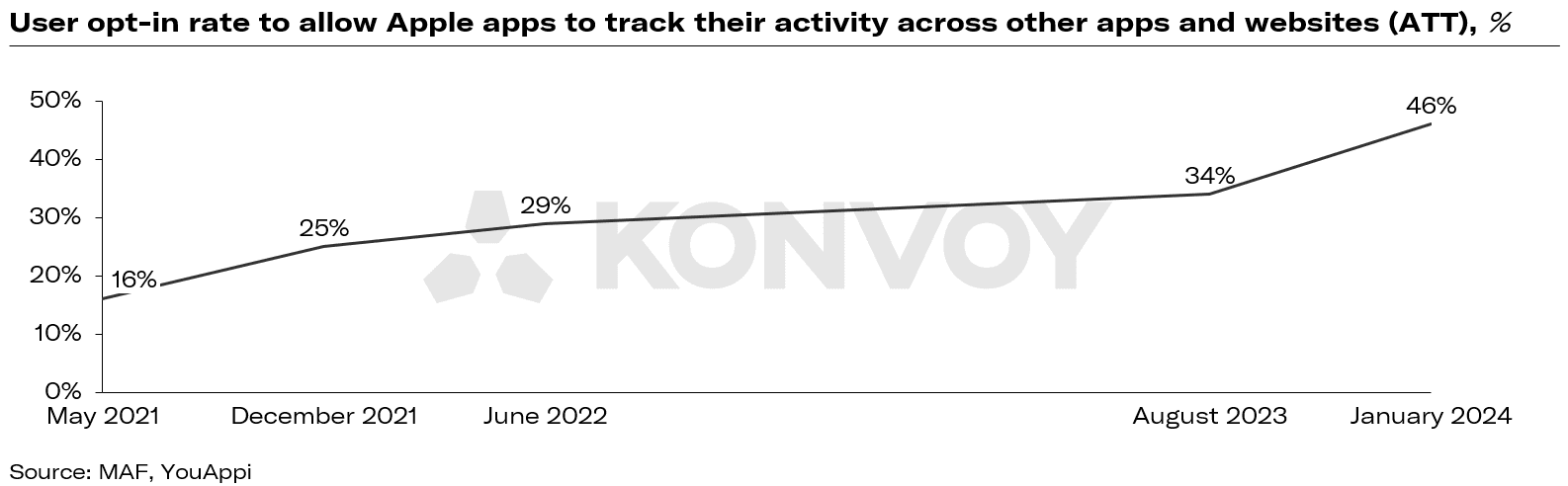
User Opt-In Rate to Allow Apple Apps to Track Activity
The Role of AI Agents and Industry Adoption
AI agents in advertising will probably follow the same path as Consent Management platforms — tools that let users control how their data gets shared. Companies like OpenAI and Google are already building the infrastructure for this. Apple and Google could bake AI agents directly into their ecosystems, giving users seamless control across devices.
The business model is straightforward. AI agent developers could act as middlemen, taking a cut when advertisers bid for exposure or when users convert. Some agents might charge users a success fee for securing discounts, or operate on affiliate commissions where brands pay for completed purchases. It's a hybrid of ad networks and personal shopping assistants.
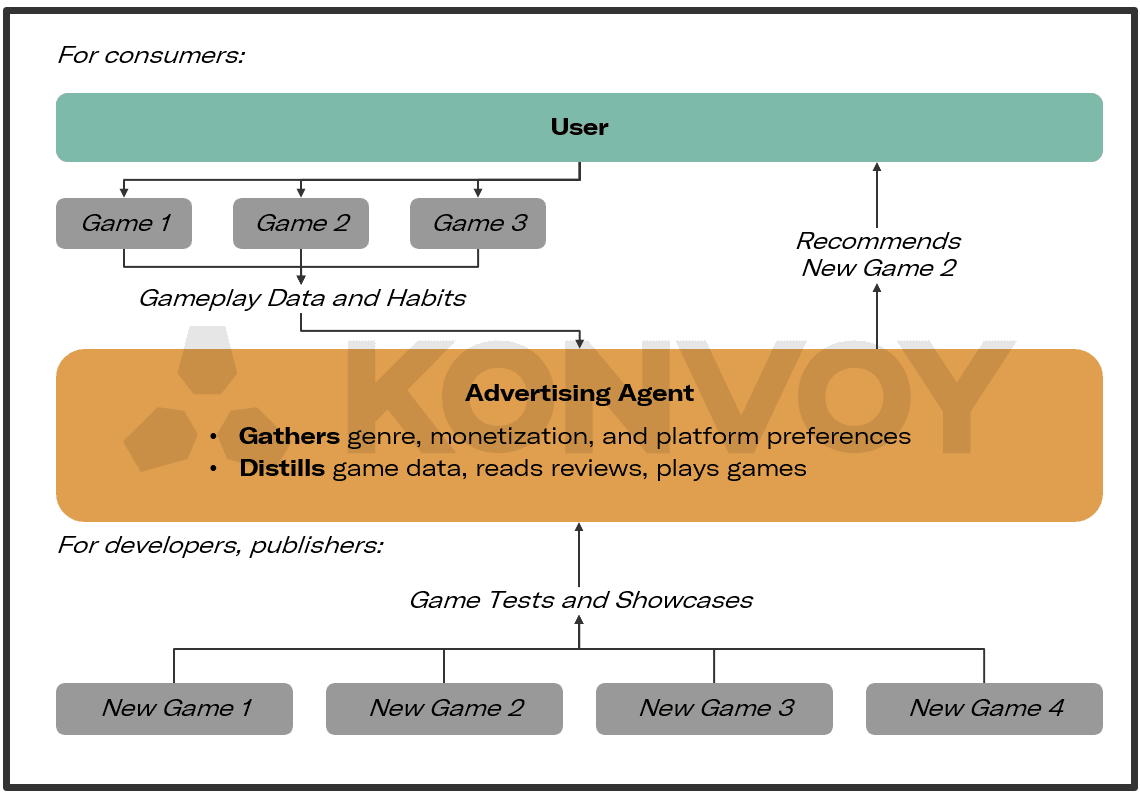
Advertising Agent Model By Konvoy
Agentic Advertising in the Gaming Industry
Free-to-play gaming runs on ads and user acquisition. Agentic Advertising could make both more efficient. Instead of random game ads, your AI agent recommends games based on what you actually play — your preferred genres, spending habits, and engagement patterns. No more mobile puzzle ads when you only play shooters.
AI agents could also help with retention. If your playtime drops, the agent might negotiate with publishers on your behalf to offer in-game rewards or discounts to pull you back in. On the developer side, aggregated insights from AI agents could inform game design decisions — what mechanics work, what doesn't, and where trends are heading. It's a feedback loop that benefits both players and studios.
The Future of Digital Advertising
Agentic Advertising changes who holds the power. Brands won't compete for ad space on massive platforms that blast content at users. They'll negotiate with AI agents that filter for relevance and user intent. Advertising becomes less about volume and more about quality — earning a recommendation instead of buying visibility.
As AI agents get smarter, the industry will have to adapt. Success won't come from outspending competitors. It'll come from building products that AI agents actually want to recommend. If this model takes hold, digital marketing could become more personalized, less intrusive, and genuinely useful instead of just omnipresent.