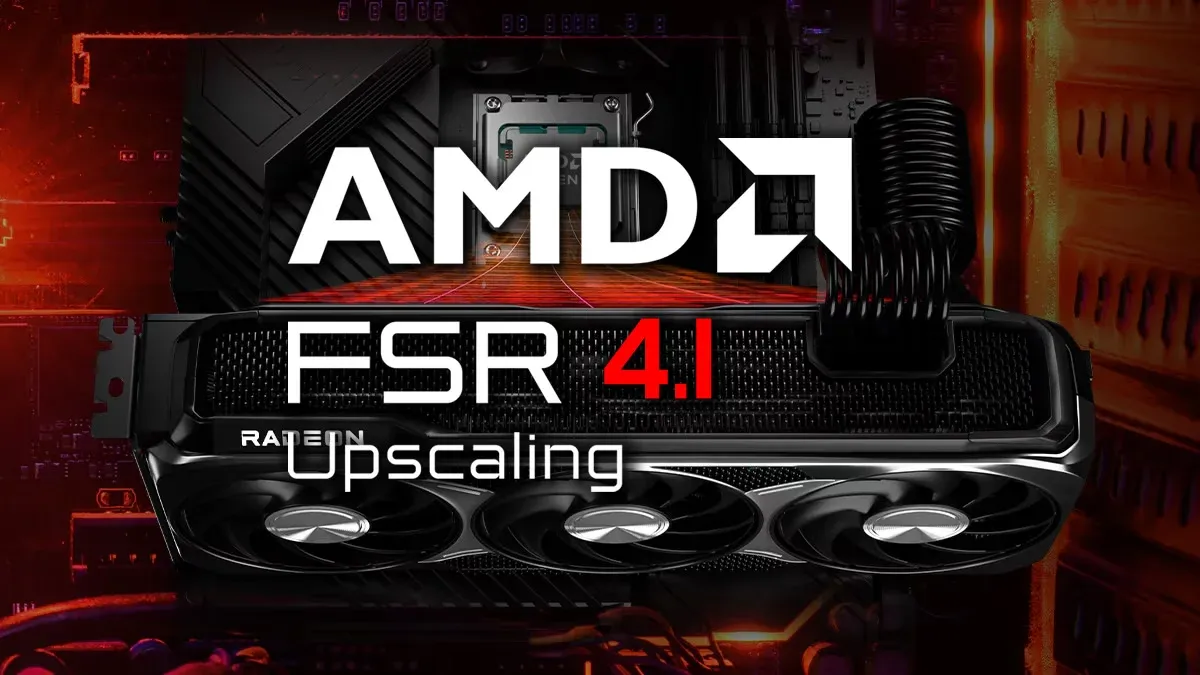


If you own an RX 7800 XT, an RX 7900 XTX, or pretty much any other RDNA 3 card, your GPU just got a meaningful upgrade without a single hardware change. AMD has rolled out FSR Upscaling 4.1 to the full Radeon RX 7000 Series lineup, arriving a few weeks ahead of its original July estimate.

Use code TRYHARD33 at checkout to redeem this offer before code expires again.
Get 33% Off GAMES+ Subscription
What changed for RDNA 3 owners
Until now, FSR 4.1 was locked to AMD's newest cards, the RX 9070 and RX 9070 XT. That exclusivity window is over. The same machine learning-powered upscaling that launched on those cards is now accessible to a much wider audience, covering the bulk of AMD's current-gen GPU install base.
Here's the thing: FSR 4.1 represents a genuine step up from older FSR iterations. It closes the gap with Nvidia's DLSS more convincingly than previous versions, and it shares the same underlying technology that powers the PlayStation 5 Pro's PSSR 2, with Sony building additional layers on top of AMD's core engineering. To access it, you'll need to update to the latest AMD Adrenalin 26.6.2 software release.
The devices still waiting in line
The expansion does not stop at discrete GPUs. AMD has confirmed that devices running RDNA 3.5 APUs will also receive FSR 4.1 support, though not immediately. That means Valve's Steam Machine and the Xbox ROG Ally X are both on the roadmap. The delay comes down to a technical challenge: AMD is developing lightweight AI models tuned specifically for the lower memory bandwidth that APU-based handhelds and portables operate within.
For players squeezing performance out of the ROG Xbox Ally X, this is worth watching closely. The device already benefits from targeted optimization work, and if you want the best settings in the meantime, the ROG Xbox Ally X settings guide for ChainStaff covers tested power profiles for both 900p and 1080p handheld play.
RDNA 2 is coming, but not the Steam Deck
AMD has also committed to bringing FSR 4.1 to RDNA 2 cards sometime in 2027. That is a notable promise for owners of cards like the RX 6700 XT or RX 6800 XT who have been sitting on older hardware.
What most players miss in this announcement is the Steam Deck footnote. Valve's Steam Deck uses an RDNA 2 APU, but AMD has indicated the lightweight AI models being built for RDNA 3.5 APU devices will not extend to the Steam Deck's older silicon. That stings a little, especially given the Steam Deck has already seen a significant price increase recently, making the hardware feel like it is aging faster than expected.
For PC players dealing with performance issues on current hardware while waiting for FSR 4.1 to land, the Road to Vostok PC performance guide has tested Godot 4 engine tweaks that help on all hardware levels right now.
The bigger picture for AMD's upscaling push
Jack Huynh, AMD's head of gaming, framed the rollout around scale, noting that AMD powers over 1 billion gaming devices worldwide and that expanding access to its latest AI upscaling is a direct consequence of that reach. The ambition here is clear: get FSR 4.1 running on as much AMD hardware as possible, from high-end desktop GPUs down to portable APUs, even if the timeline stretches into 2027 for the oldest supported hardware.
The key here is that this is not just a feature drop for new hardware buyers. It is a retroactive upgrade for a large installed base, and the roadmap suggests AMD intends to keep pushing that coverage further. Players on RDNA 3 can update and start testing today. Everyone else has a timeline to track.
For more performance tips and hardware-specific optimization guides across a range of titles, our guides hub is the place to bookmark.