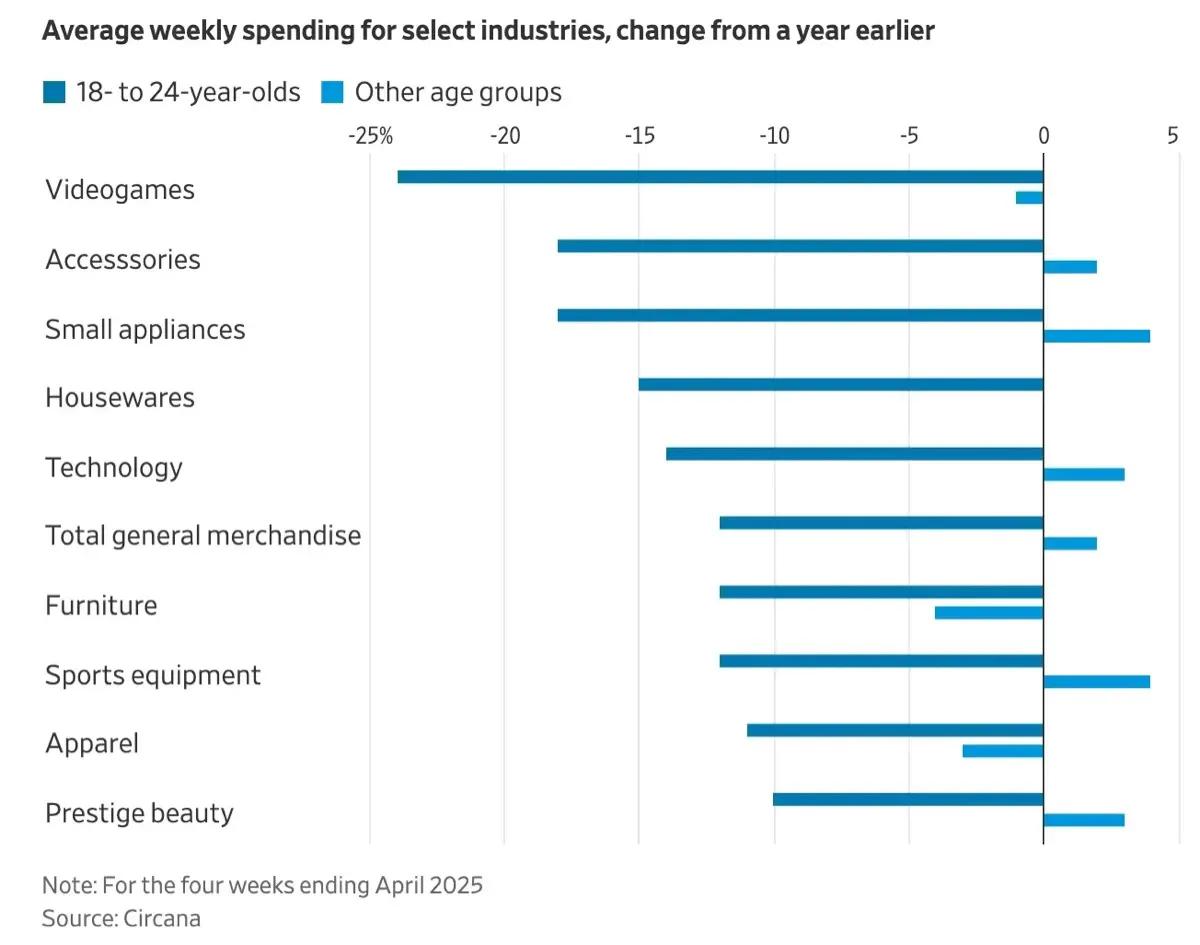
Spending on video games by young Americans has declined sharply in early 2025. Individuals aged 18 to 24 in the United States spent nearly 25 percent less on video games between January and April 2025 compared to the same period last year.
This group experienced the most significant reduction in gaming-related expenses compared to other age demographics, which saw only slight declines of a few percentage points. The figures suggest that young adults are facing unique economic challenges that are prompting them to scale back on non-essential spending.

Americans Cut Game Spending by 25%
Economic pressures hit younger gamers hardest
The drop in spending appears tied to several ongoing financial pressures. Many young people are dealing with a difficult labor market, where job opportunities remain limited and wages have stagnated. At the same time, the resumption of student loan payments and mounting credit card debt are eating into disposable income that might otherwise go toward entertainment, including games.
The pullback extends beyond gaming. Young consumers are also cutting back on clothing, accessories, and other entertainment categories. These shifts reflect a broader reordering of financial priorities, with more young adults focusing on essential expenses and managing debt rather than discretionary purchases.
Americans Cut Game Spending by 25%
A reversal of long-term trends
Consumer spending in the 18 to 24 age group has historically risen year over year. The current decline breaks from that pattern and suggests deeper structural issues within the economy. Young consumers appear to be feeling the effects of broader financial pressures more acutely than other age groups, marking an unusual shift in spending behavior.
Rising costs threaten to compound the problem
Additional factors could make the situation worse. New tariffs have the potential to raise the cost of gaming consoles and related hardware in the United States. Video game prices have also been climbing, which may discourage purchases among budget-conscious consumers who are already cutting back.
The gaming industry, which has long relied on engagement from younger audiences, may need to rethink its approach. Companies could face increased pressure to offer more affordable products or alternative purchasing models to maintain interest as economic conditions continue to squeeze this demographic.

Americans Cut Game Spending by 25%
What this means for the industry
The 25 percent drop in video game spending among young Americans isn't just a blip. It reflects a fundamental shift in how this demographic manages money. For years, the 18 to 24 age group has been one of the most reliable spending bases for gaming and entertainment. That reliability is now in question.
Student loan payments, credit card debt, and a stagnant job market are forcing young people to make hard choices about where their money goes. Entertainment, once a given for this group, is now competing with rent, debt payments, and basic necessities.
For gaming companies, this is a warning. Rising prices, whether from inflation or tariffs, are making it harder for young consumers to justify purchases. If the industry wants to keep this audience engaged, it will need to focus on accessibility and affordability rather than pushing premium products at ever-higher price points.