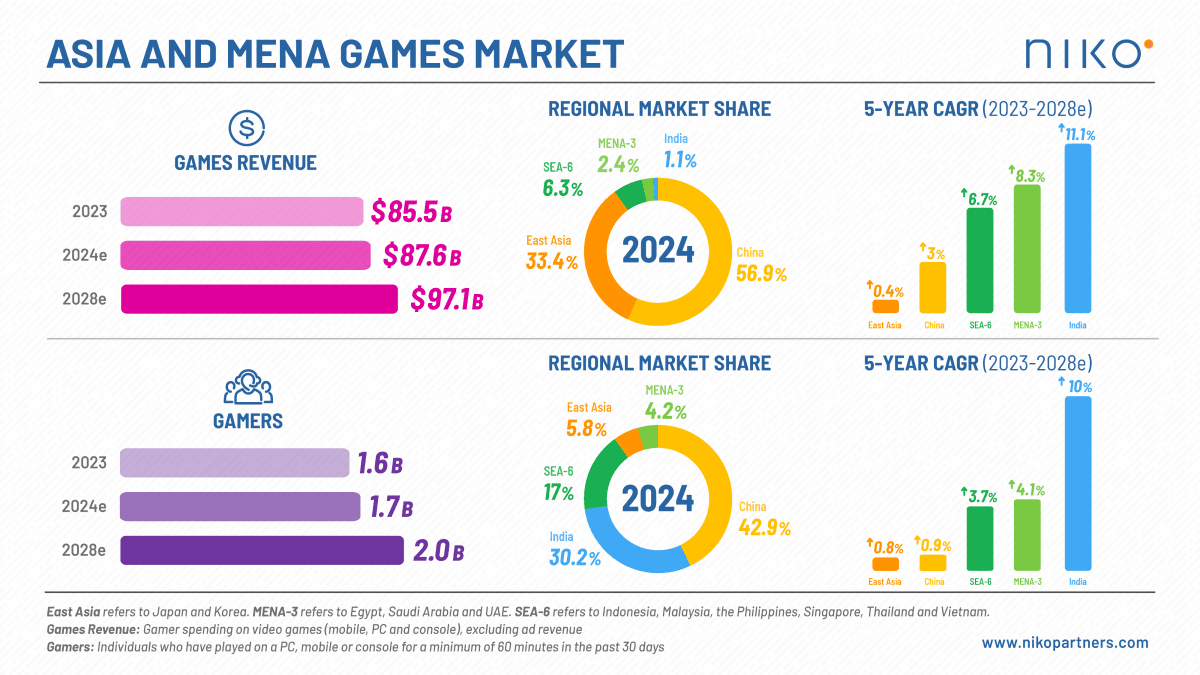
Recent data shows that Steam, Valve's leading PC gaming platform, is seeing steady growth in traffic from Asian regions. Analysis of Steam's publicly available 7-day global bandwidth map reveals that Asia's share of global Steam traffic has expanded over the past year. The shift, while measured in single-digit percentage points, signals a meaningful change in where the platform's most active users are located.

Use code TRYHARD33 at checkout to redeem this offer before code expires again.
Get 33% Off GAMES+ Subscription
Asia's Growing Share of Global Steam Activity
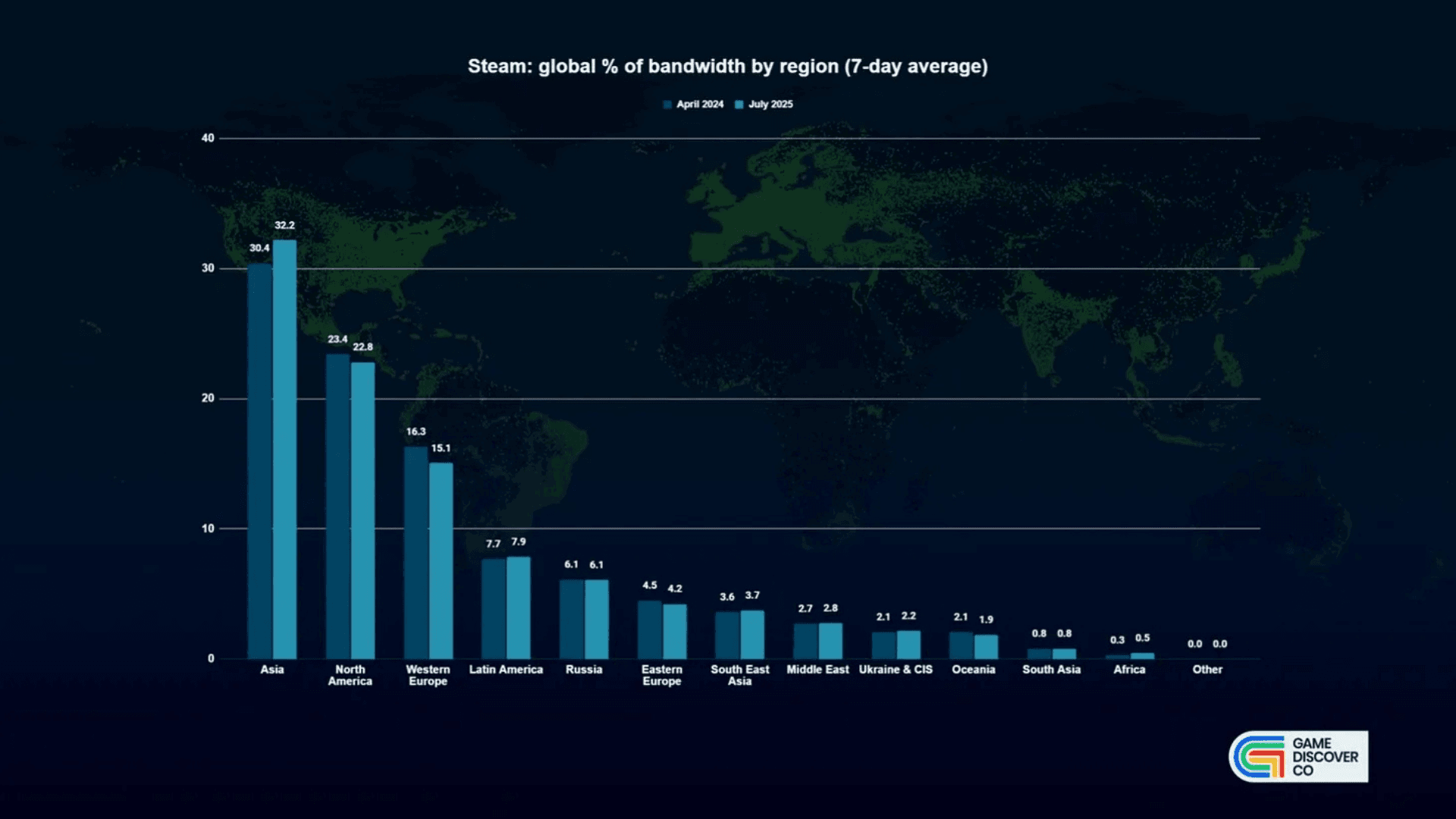
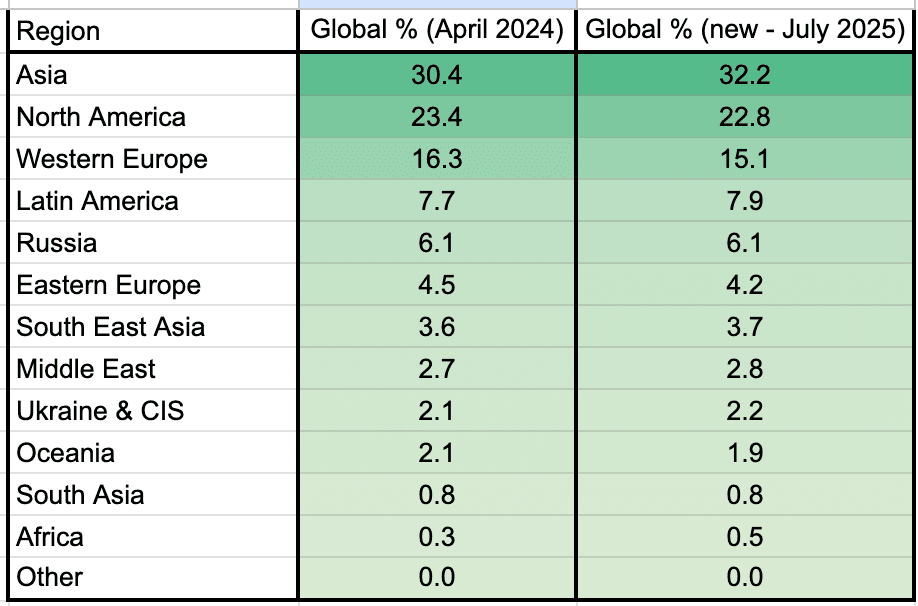
Between April 2024 and July 2025, the proportion of Steam traffic originating from Asia climbed from 30.4 percent to 32.2 percent. China's share edged up from 25.6 percent to 26.1 percent during that window. Japan saw a more pronounced jump, rising from 1.9 percent to 2.5 percent, while Taiwan increased from 0.8 percent to 1.0 percent. These aren't explosive gains, but they add up to a clear directional trend: more players in the region are downloading, updating, and playing games through Steam.
Asia Dominates Global Steam Activity
Relative Declines in Western Markets
As Asia's slice of the pie has grown, North America and Western Europe have seen their proportional shares shrink. North America dropped from 23.4 percent to 22.8 percent, with the United States slipping from 20.6 percent to 20.4 percent. Western Europe saw a steeper decline, falling from 16.3 percent to 15.1 percent. That doesn't mean fewer people in those regions are using Steam — total bandwidth consumption is still up — but it does mean they represent a smaller fraction of global activity than they did a year ago.
Stability in Latin America, Russia, and Eastern Europe
Other regions have held relatively steady. Latin America ticked up slightly from 7.7 percent to 7.9 percent. Russia stayed flat at 6.1 percent, and Eastern Europe dipped from 4.5 percent to 4.2 percent. No individual country in these areas showed dramatic movement, suggesting consistent engagement without major shifts in user behavior.
Asia Dominates Global Steam Activity
Bandwidth Growth Reflects Rising Engagement
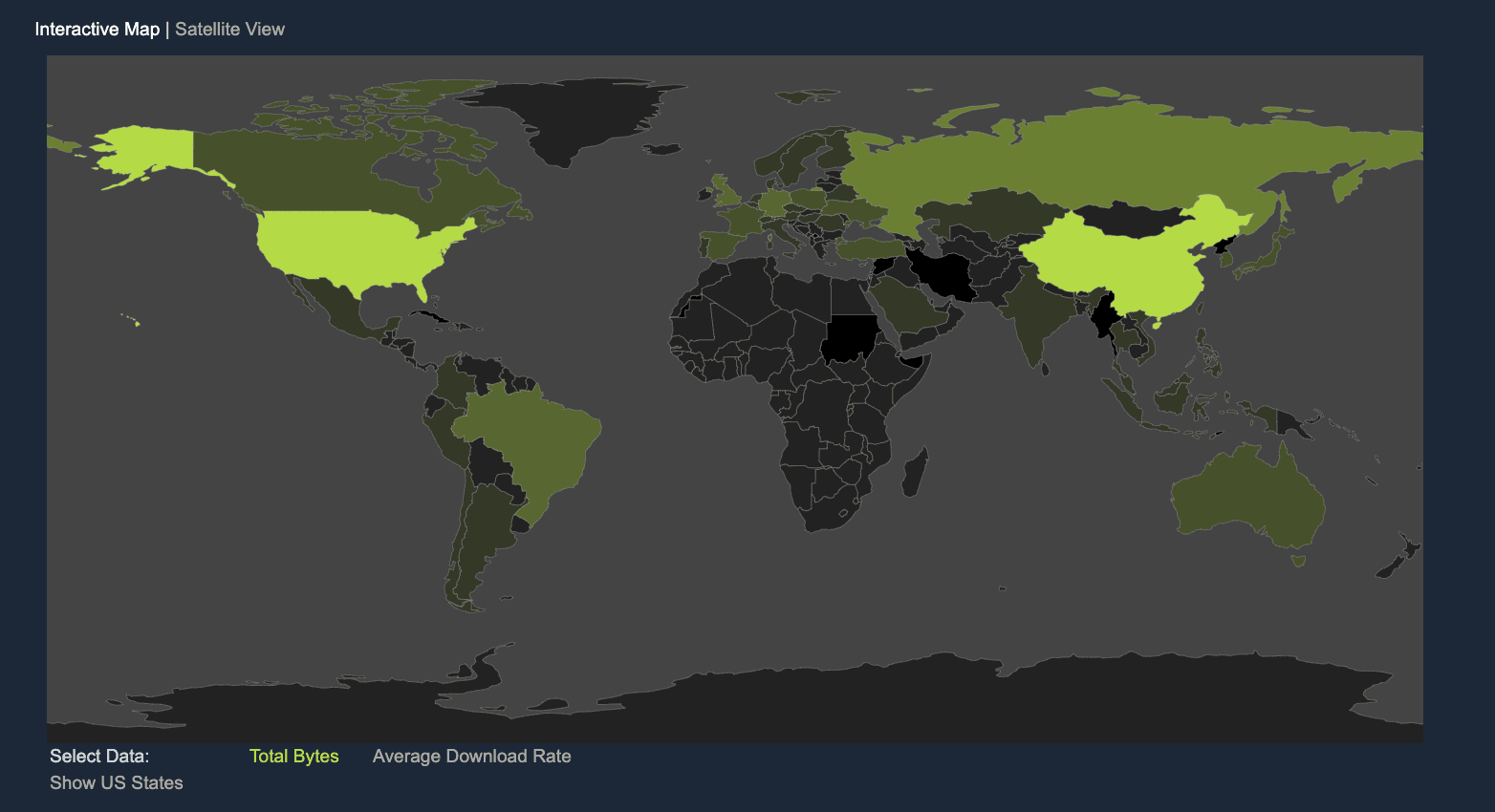
This analysis tracks bandwidth, not direct user counts or sales figures, but it's still a useful proxy for regional engagement. Both China and the United States posted large increases in absolute bandwidth usage. In the United States, traffic jumped from 255.9 petabytes in April 2024 to 404.8 petabytes in July 2025. China saw an even bigger surge, climbing from 251.4 petabytes to 518.7 petabytes over the same stretch. The reasons are likely a mix of bigger game files, cheaper internet access, and seasonal spikes tied to summer holidays.
Asia Dominates Global Steam Activity
Steam's Global Expansion and Implications for Developers
Bandwidth data isn't a perfect stand-in for revenue or user count, but it paints a clear picture: Steam's growth is increasingly driven by players outside its traditional Western base. The catch for developers is that average spending per user in many Asian markets tends to be lower, which complicates revenue projections. For studios planning releases or marketing campaigns, this shift highlights the need to account for regional preferences, pricing strategies, and economic realities. The platform's audience is changing, and the games industry will need to adjust accordingly.