


Use code TRYHARD33 at checkout to redeem this offer before code expires again.
Get 33% Off GAMES+ Subscription
A $1,300 monitor just crossed below $900
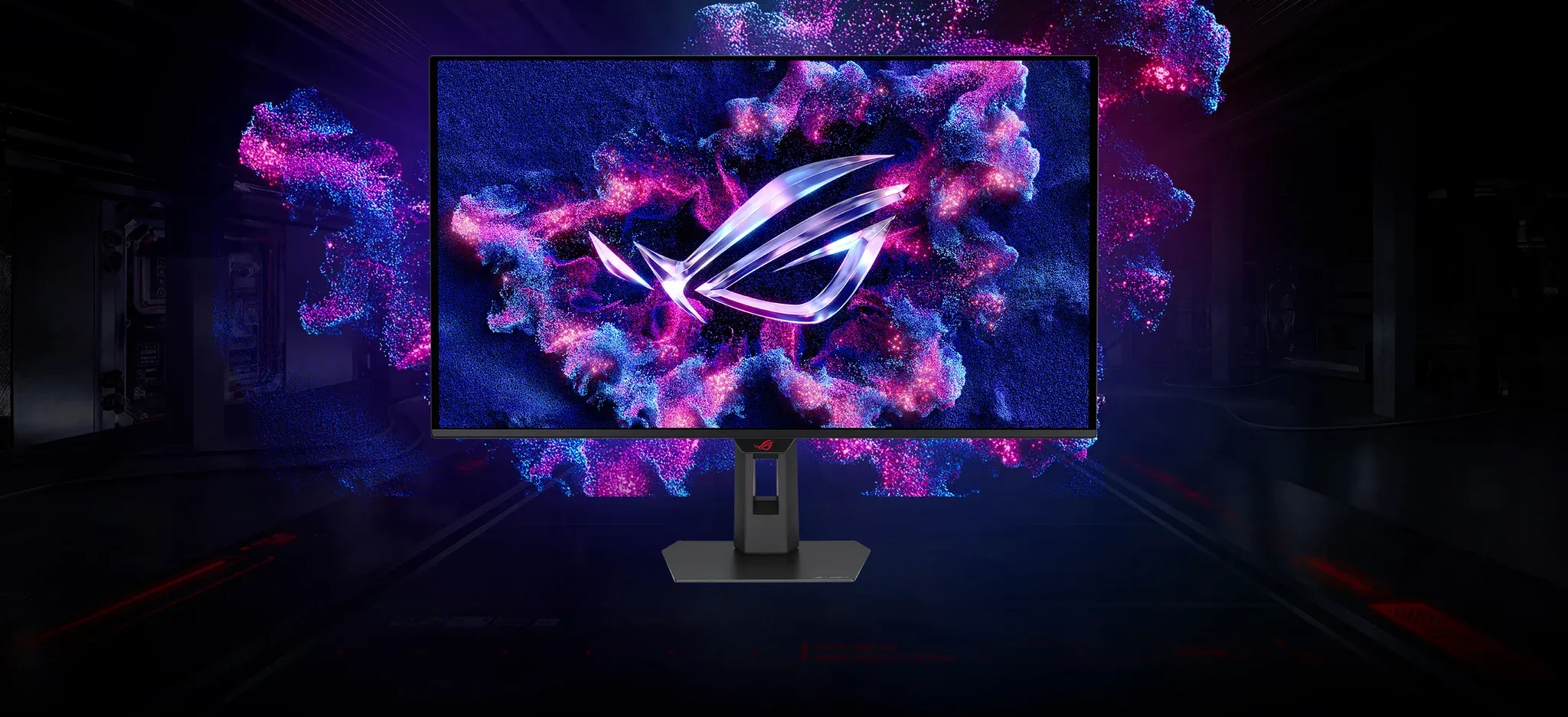
Four-figure gaming monitors are a tough sell even when the specs justify the price. The ASUS ROG Swift PG32UCDMR has always been one of the easier ones to justify, but $1,299.99 still puts it out of reach for most setups. That barrier just got a lot lower.
The 32-inch 4K QD-OLED is currently sitting at $899 on Amazon, marking a $400.99 cut from its standard list price. Price tracking data confirms this is the monitor's lowest recorded price, making it a genuinely rare window for anyone who has been watching this display.
What you actually get for $899
Here's the thing: combining 4K resolution, QD-OLED panel technology, and a 240Hz refresh rate in a single monitor almost always pushes the price past $1,000. The PG32UCDMR does all three on a 31.5-inch panel with a 0.03ms response time, which is about as fast as consumer displays get right now.
G-SYNC compatibility is baked in, so frame rate fluctuations in fast multiplayer titles stay smooth without tearing. The panel covers 99% of the DCI-P3 colour gamut, supports true 10-bit colour, and carries VESA DisplayHDR 400 True Black certification. That last spec matters more than the headline number suggests: True Black certification means the display is measured against actual black levels rather than peak brightness alone, which is where OLED panels genuinely separate themselves from IPS alternatives.
Connectivity covers the full modern spec sheet: DisplayPort 2.1, HDMI 2.1, and USB-C with 90W Power Delivery. The USB-C alone makes this a viable single-cable option for laptops, which is a setup detail that gets overlooked when people focus purely on refresh rate.
The burn-in question, answered upfront
OLED burn-in anxiety is real, and ASUS has addressed it directly with OLED Care Pro features built into the PG32UCDMR. The standout is a Neo Proximity Sensor that detects when you step away from your desk and switches the panel to a black screen automatically, reducing static image retention risk during idle periods.
The warranty backs this up: a three-year coverage period with explicit burn-in protection included. That is not standard across the OLED monitor market, and it removes one of the last genuine objections to going OLED for a primary gaming display.
The box ships with DisplayPort, HDMI, USB-C, and USB 3.2 cables alongside a VESA mount kit and ROG accessories pouch, so there is nothing missing from the package on day one.
Why this price point changes the conversation
At $1,299.99, the PG32UCDMR was competing against a crowded premium tier where buyers had real alternatives. At $899, it moves into a different bracket entirely. Most 4K 144Hz IPS monitors sit between $400 and $700. Paying $200 to $500 more for QD-OLED, 240Hz, and true 10-bit colour is a much easier case to make than paying double.
What most players miss when evaluating monitors at this level is that the refresh rate ceiling matters less than the panel's motion handling. A QD-OLED at 240Hz produces visibly cleaner fast motion than an IPS at the same spec, because the self-emissive pixels switch without the backlight bleed that creates ghosting on edge-lit displays. For competitive play in titles with fast movement, that difference is visible.
For anyone already squeezing performance out of demanding games, the Directive 8020 PC settings optimization guide covers Unreal Engine 5 upscaling and ray tracing settings worth revisiting if you're upgrading your display resolution.
Deals at this discount level on flagship OLED monitors rarely stay live for extended periods. If the price holds through the week, this is the kind of opportunity that typically resurfaces only around major sale events. Check our gaming guides for more ways to get the most out of your upgraded setup once the monitor arrives.