

Cozy games have evolved from a niche corner of the industry into one of the most recognizable categories in modern gaming. Players searching for alternatives to high-intensity combat and competitive pressure have driven the genre's expansion. What started as informal online terminology has become a full-blown movement that reflects changing attitudes about what games can offer.

How the Genre Found Its Audience
The global lockdowns of early 2020 created ideal conditions for a particular style of game to break through. Animal Crossing: New Horizons launched just as millions of people were stuck at home craving routine and comfort. The island simulator became the fastest-selling Switch title at launch and brought the concept of cozy gaming into mainstream conversation.
Researchers like Dr. Rachel Kowert observed that gaming's cultural perception shifted during that period. Rather than focusing on violence or addiction concerns, families embraced games as shared spaces for connection. Cozy titles became proof that digital worlds could provide stability and emotional support during chaotic times.
Origins of the Cozy Movement
The phrase "cozy games" only gained traction in the past decade, but players have gravitated toward low-stress experiences for much longer. Reddit communities helped crystallize the language around the genre, though its roots echo cozy mystery novels - stories that avoid graphic violence and instead prioritize atmosphere, problem-solving, and gentle character work.
That comparison fits titles like The Sims 4, Stardew Valley, and Donut County, which helped define cozy play in the modern era. Even decades-old games like Little Computer People from 1985 share these qualities through simple daily activities and understated storytelling.
Dr. Kowert identifies three core qualities in cozy games: safety, abundance, and softness. These experiences create spaces where basic needs are always met, the emotional tone stays predictable, and the audiovisual design avoids anything harsh or jarring. Together, these elements prioritize comfort over challenge.
Pacing That Rejects Urgency
Cozy games handle time differently than most genres. Instead of pushing players forward with timers or fail states, they eliminate pressure entirely. Developers Rob and John Donkin of Bad Viking describe cozy pacing as the freedom to explore without stress. Their games aim to create "quiet focus," letting players slow down and stay present.
Kyle Keersemaker of Cosmic Coop believes cozy games encourage a relaxed mindset that extends beyond the screen. Without combat, countdowns, or punishment for mistakes, players can focus on creativity and light character expression.
The design challenge becomes keeping players engaged without traditional stakes. Developers lean on discovery, customization, narrative breadcrumbs, and atmospheric detail to build satisfying loops that never feel rushed.
Environments Designed for Inhabiting
Visual design carries significant weight in cozy games. Many titles use warm color schemes, autumn palettes, or hand-drawn art styles to lower visual tension. Tobias Schnackenberg, developer of Outbound, focuses on cohesive color choices and organic shapes to establish calm in every scene. For him, consistent aesthetics are essential to creating emotional safety.
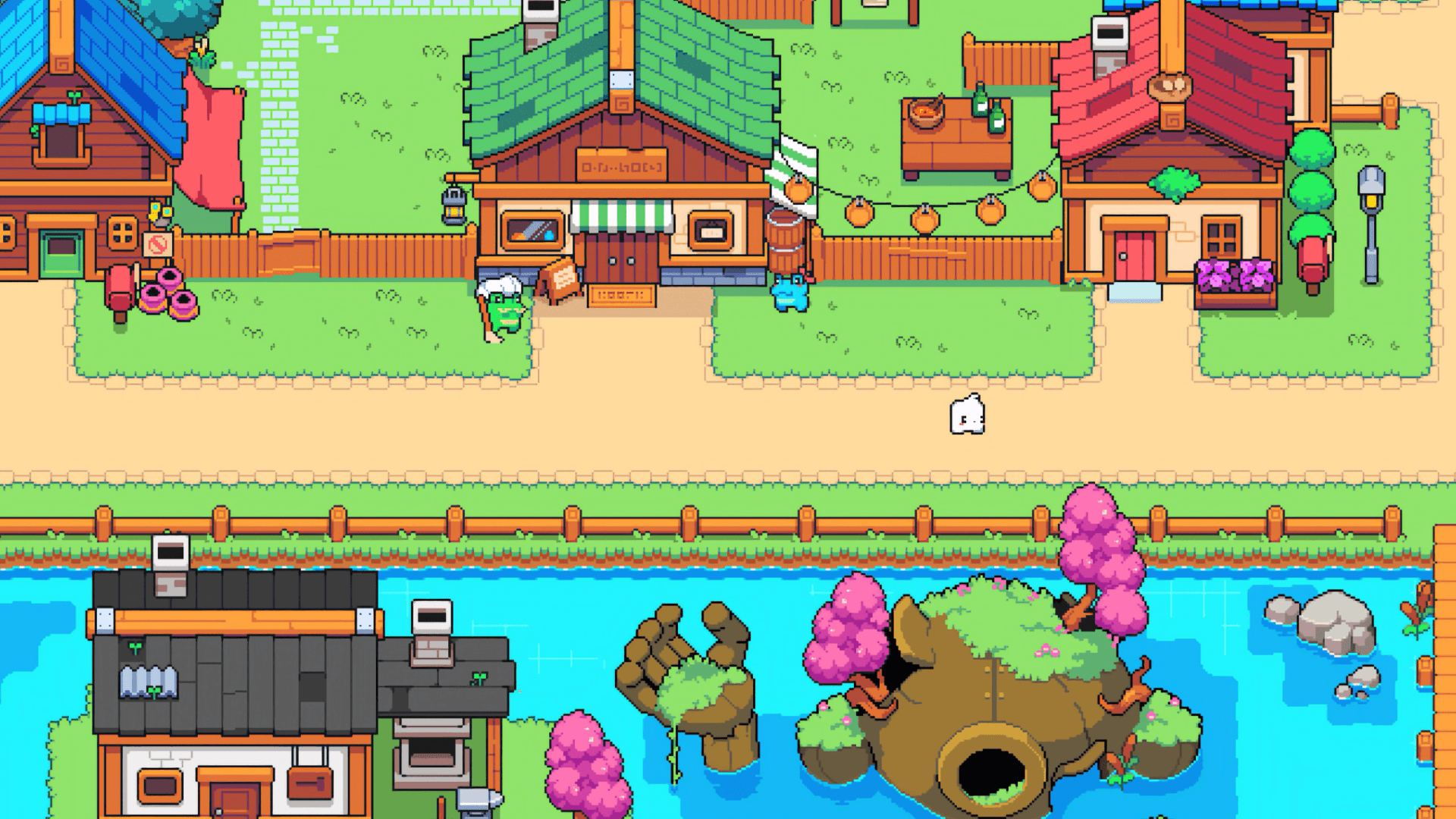
Keersemaker's Cosmic Coop uses vibrant pixel art and expressive animations to create playful familiarity. As alien Critterlings populate the player's farm, the world gains color and life, reinforcing themes of growth and connection.
Other developers prove cozy doesn't require brightness or cuteness. The Donkin brothers' Strange Horticulture and Strange Antiquities use darker Victorian aesthetics to show how atmospheric coziness can coexist with mystery, demonstrating the genre's flexibility.
Sound Design That Reinforces Calm
Audio strengthens the sense of comfort cozy games provide. Nature sounds, gentle instrumentation, and soft musical themes help set the tempo of each session. Schnackenberg incorporates outdoor ambience in Outbound to anchor players in peaceful settings. Donut County builds on Daniel Koestner's relaxed soundtrack to guide pacing and character personality.
In Cosmic Coop, distinct audio cues help players understand their alien creatures' personalities, while the music remains unobtrusive enough to fade into the background. Across these projects, developers treat audio as a subtle but critical element that shapes the emotional foundation of cozy play.
The Appeal Behind Cozy Experiences
Cozy games attract wide audiences because they offer relief from competitive or action-heavy titles. Many players treat them as a form of decompression. Cinteza from Gummy Cat connects this comfort to childhood memories, suggesting that emotional safety makes players more receptive to stories and mechanics.
Dr. Kowert points out that cozy games align with core psychological motivations. They support autonomy, provide achievable goals, and foster connection - factors linked to improved mood. Diary studies consistently show players report feeling more relaxed after sessions, highlighting the restorative quality of cozy gameplay.
While not therapeutic interventions in a clinical sense, cozy games can help manage everyday stress by offering structured, low-pressure spaces.
Misconceptions and the Genre's Evolution
Despite growing popularity, cozy games still face misunderstandings. Some players assume gentle visuals mean simplicity or that the games target only children. Jenny Windom of Wholesome Games pushes back on this, emphasizing that cozy games require the same design complexity found in any other genre.
Colangelo from Universe for Sale notes that the genre's subtlety can be mistaken for shallowness. In reality, pacing and mood demand careful calibration. Schnackenberg adds that cozy games can feature meaningful progression and intricate systems as long as they avoid unnecessary stress.
For many developers, the goal is expanding players' understanding of what cozy can be without abandoning the tone that defines the genre.
Where the Genre Goes Next
The cozy genre's future involves experimentation and expanded social features. Keersemaker predicts more co-op and voice chat integration as players seek shared, low-pressure spaces. The Donkin brothers hope to see more hybrids blending coziness with elements like tension or melancholy, allowing developers to challenge conventions without sacrificing tone.
Schnackenberg believes personalization will stay central. As more players seek digital places where they can simply exist without competition, cozy games will continue building deeper customization tools, world-shaping systems, and open-ended narratives.
The genre's growth reflects a broader shift in player expectations. In a fast-paced world, cozy titles offer a rare invitation to slow down - and many players are taking it.
Source: Dave Tach
Frequently Asked Questions (FAQs)
What is a cozy game?
A cozy game is a low-pressure experience defined by safety, comfort, predictable systems, and gentle audiovisual design. These games avoid combat-focused mechanics and prioritize relaxation, creativity, and exploration.
Why are cozy games so popular now?
Cozy games gained mainstream attention during the COVID-19 pandemic, when players sought calming environments and routine. Their popularity continues as more players look for stress-free alternatives to traditional action genres.
Are cozy games only for casual players?
No. While accessible, cozy games often include deep mechanics, layered progression, and rich world-building. Many experienced players enjoy them as a break from high-intensity gameplay.
Do cozy games have to be cute or colorful?
Not necessarily. While many cozy titles use bright palettes, others use darker or moodier tones. The core requirement is emotional safety and low-stress pacing, not a specific visual style.
Can cozy games improve mental health?
Cozy games are not a form of therapy, but research suggests they can support relaxation, mood management, and emotional decompression by providing safe and predictable digital spaces.
Do cozy games exist in web3 or emerging platforms?
Yes. Some developers are experimenting with cozy experiences in web3 environments, though the genre's core design principles remain the same regardless of platform.
What are some examples of modern cozy games?
Popular titles include Animal Crossing: New Horizons, Stardew Valley, The Sims 4, Donut County, Bear and Breakfast, Strange Horticulture, and upcoming releases like Outbound and Universe for Sale.