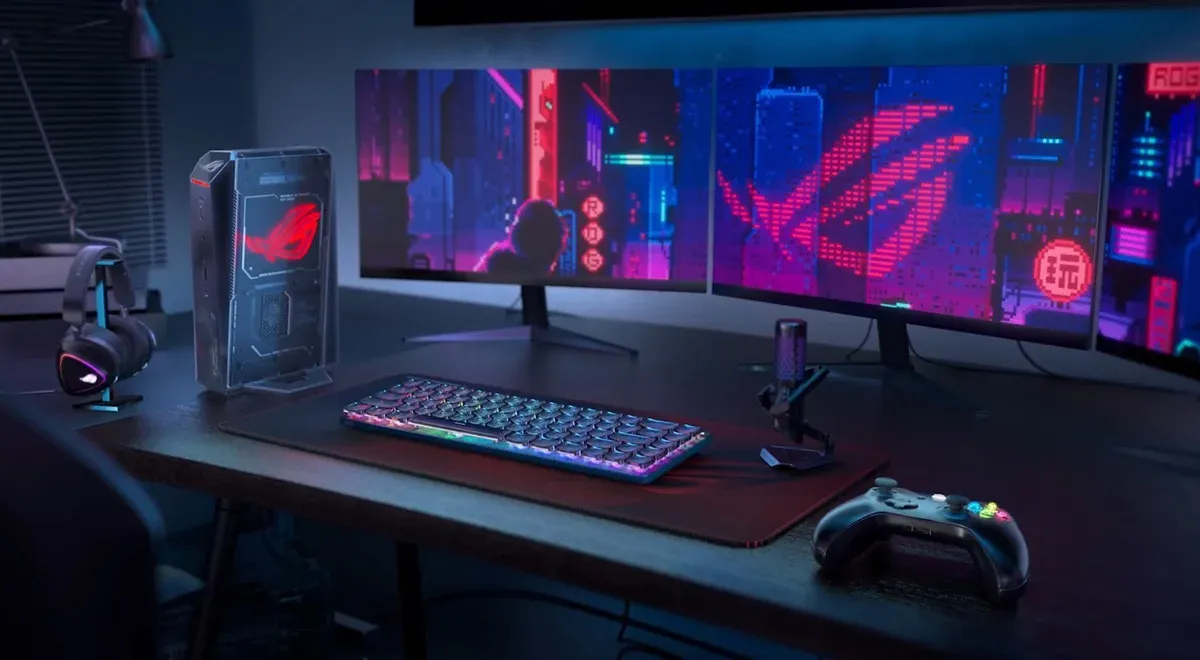


A few years ago, mini PCs were basically glorified streaming sticks with a fan. You bought one to browse the web, maybe run a spreadsheet, and call it a day. That era is over. In mid-2026, the mini PC market has matured to the point where some of these palm-sized machines can genuinely handle gaming workloads, and the pricing has gotten aggressive enough to make them worth a serious look.
The key here is knowing what you're actually buying. Mini PCs are not gaming desktops. They run mobile-class processors, share memory between the CPU and GPU, and have real thermal limits. But for the right use case, especially light gaming, game streaming, or as a secondary rig, they punch well above their weight class in 2026.

Use code TRYHARD33 at checkout to redeem this offer before code expires again.
Get 33% Off GAMES+ Subscription
The standout options right now
The GMKtec M8 is the mini PC getting the most attention among budget-conscious gamers at the moment, and the hype is mostly earned. It runs on a Ryzen Pro 6650H paired with 16GB of DDR5 memory and a 512GB SSD, which puts it in solid territory for light gaming and productivity. At around $390 after a 19% discount, the value proposition is real.
What most players miss about the M8, though, is the Oculink port. That single feature transforms this little box from a casual machine into something with genuine long-term potential. Oculink gives you the ability to connect an external GPU enclosure later, which means the M8 can grow with you. Buy it now as a productivity machine, add an eGPU down the road, and suddenly you have a compact gaming setup that cost a fraction of a traditional tower build.
The Kamrui E3B takes a slightly different angle. It slots in at $359 with a 32% discount applied, running a Ryzen 7 7735HS with 16GB of LPDDR5 RAM and 512GB of storage. There's no Oculink here, so the upgrade ceiling is lower, but for pure everyday performance and light gaming, the 7735HS is a genuinely fast chip. Triple 4K display support is a bonus for anyone running a multi-monitor home office setup on the side.
Step up to the Kamrui Hyper H2 and the picture changes considerably. This one carries an Intel Core i5-14450HX, which is a high-performance laptop-class chip with a meaningful multi-core advantage over the Ryzen options below it. Pair that with 32GB of RAM and a 1TB SSD at $568 after a 19% discount, and you have a mini PC that can genuinely handle demanding multitasking, light content creation, and some gaming without breaking a sweat.
The GMKtec M2 Pro S rounds out the Intel side at $470, running a Core i7-1185G7 with 16GB of RAM and 512GB storage. The i7-1185G7 is a generation behind the Hyper H2's chip, so if you're choosing between the two, the Hyper H2 is the better spend. The M2 Pro S still makes sense if you find a steeper discount or specifically need its form factor.
What gaming actually looks like on these machines
Here's the thing: none of these mini PCs are going to run Forza Horizon 6 at 4K ultra settings. If that's your goal, you'll want to check out the Forza Horizon 6 PC system requirements before committing to any compact build, because the GPU demands are real and integrated graphics won't cut it for modern open-world racers at high fidelity.
What mini PCs do well is lighter titles, older games, and anything that runs well on integrated Radeon graphics. The Ryzen 7000-series chips in the GMKtec and Kamrui units include RDNA 2-based integrated graphics, which can handle games like Minecraft, Hades, Stardew Valley, and even some older AAA titles at 1080p medium settings. For a machine that costs under $400, that's a legitimate gaming option for a lot of players.
The eGPU route via Oculink on the GMKtec M8 is the more interesting story. Connect an RTX 4060 or RX 7600 in an external enclosure and you have a machine that can run most modern games at 1080p high settings. The bandwidth isn't quite PCIe x16, so there's a small performance penalty compared to a traditional desktop, but for a compact setup the trade-off is reasonable.
Who these machines are actually for
Mini PCs make the most sense as secondary gaming rigs, living room machines connected to a TV, or setups where desk space is genuinely limited. They're also worth considering for anyone who wants a capable PC for productivity and light gaming without spending $1,000 or more on a full tower.
For heavier gaming workloads, the compact desktop category is where things get more interesting. Machines like the ZOTAC MEK with a Ryzen 7 9700X and RTX 5070 Ti show what a slightly larger small-form-factor build can do, though at $2,340 you're firmly in enthusiast territory.
The mini PC sweet spot right now sits between $350 and $570. The GMKtec M8 is the pick for anyone who wants an upgrade path via eGPU. The Kamrui Hyper H2 is the pick for raw performance and productivity. Both are genuinely good value at their current discounted prices.
For players who want to squeeze more performance out of whatever machine they end up with, the Forza Horizon 6 PC settings guide is a solid reference point for understanding how to balance graphics quality against frame rate on mid-range hardware. The same optimization principles apply whether you're on a compact build or a full tower. Browse the full gaming guides hub for more hardware and game-specific optimization coverage as the mid-2026 release slate continues to build.