The realm of on-chain gaming is fraught with challenges that both developers and players must contend with, leading to a landscape marked by technical constraints and intricate user experiences. Despite these hurdles, the on-chain gaming ecosystem presents a spectrum of benefits that resonate closely with the underlying principles of blockchains and smart contracts.
In this article, we explore the intricate world of on-chain gaming, navigating challenges such as blockchain limitations while delving into benefits like digital permanence and low-risk innovation. We also dive into the roots of on-chain gaming, notable examples include the pioneering HunterCoin in 2013 and the more recent Dark Forest.

Challenges of On-Chain Gaming
(1) Blockchain Speed and Scalability:
On-chain games grapple with the inherent sluggishness and scalability issues of blockchains, which function as shared global computers operated by a multitude of individuals. This limitation confines on-chain gaming to turn-based genres like TCGs and strategy games, as the current speed of smart contracts is inadequate for fast-paced games such as MOBA, FPS, or RTS.
(2) Transparent Player Actions:
The transparency inherent in smart contracts and their transactions poses a challenge to game design by eliminating privacy. Implementing game mechanics like fog of war in MOBA or RTS becomes nearly impossible as these games rely on players having incomplete information, a feature compromised by transparent actions.
(3) Botting:
On-chain game design facilitates the participation of bots alongside players without a central authority to enforce anti-cheating measures. This incentivizes bot activity, particularly when valuable digital assets like NFTs are at stake, potentially diminishing the overall player experience.
(4) Technical Limitations:
Inherent limitations of blockchains and smart contracts include difficulties in achieving tamper-proof randomness and automating game logic. These limitations hinder the seamless execution of certain tasks, such as ensuring fair randomness without manipulation and automating intermediary game actions. This is where a blockchain oracle network like Chainlink can play a pivotal role in expanding what’s possible with on-chain games. Chainlink provides secure, on-chain access to these necessary game features.
Benefits of On-Chain Gaming
(1) Composable, Open-Source Primitives:
The on-chain gaming ecosystem empowers players and developers to leverage reusable game logic, build diverse visual interfaces, and create applications to enhance gameplay. On-chain games can be viewed as composable primitives, akin to the enduring rules of tabletop games like Dungeons & Dragons.
(2) Decentralization, Digital Permanence, and Immutability:
Fully on-chain games exhibit a remarkable ability to function independently once deployed, benefitting from the resilience of blockchains. This digital permanence ensures that on-chain games can persist for as long as the underlying blockchain remains operational, offering players enduring experiences.
(3) Low-Risk Technical Innovation:
On-chain games provide a low-risk environment for researchers and developers to experiment with cutting-edge technologies like zero-knowledge proofs and homomorphic encryption. The shared infrastructure with other applications on the blockchain facilitates the testing of innovative solutions without compromising security.
(4) Aesthetic Diversity:
The backend nature of blockchains allows for diverse representations of on-chain game logic, offering players the flexibility to connect frontends in various ways. This enables a single on-chain game to support multiple user interfaces, fostering aesthetic diversity and player customization.
On-Chain Gaming Examples
Exploring the roots of on-chain gaming, notable examples include the pioneering HunterCoin in 2013 and the more recent Dark Forest, an RTS game set in space. These examples showcase the evolution of on-chain gaming and its capacity to incorporate innovative elements like decentralized game building and zero-knowledge technology.
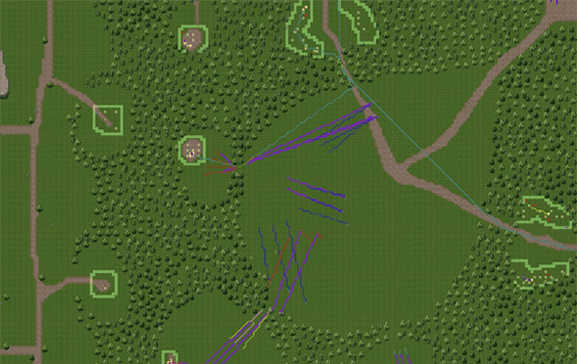
HunterCoin
HunterCoin is considered by many to be the first on-chain game, launching back in 2013. It was built as an experiment to demonstrate the potential for decentralized game building. The game itself was run on its own blockchain, and players queued transactions that doubled as orders for player actions such as moving, gathering, or attacking another hunter.
Dark Forest
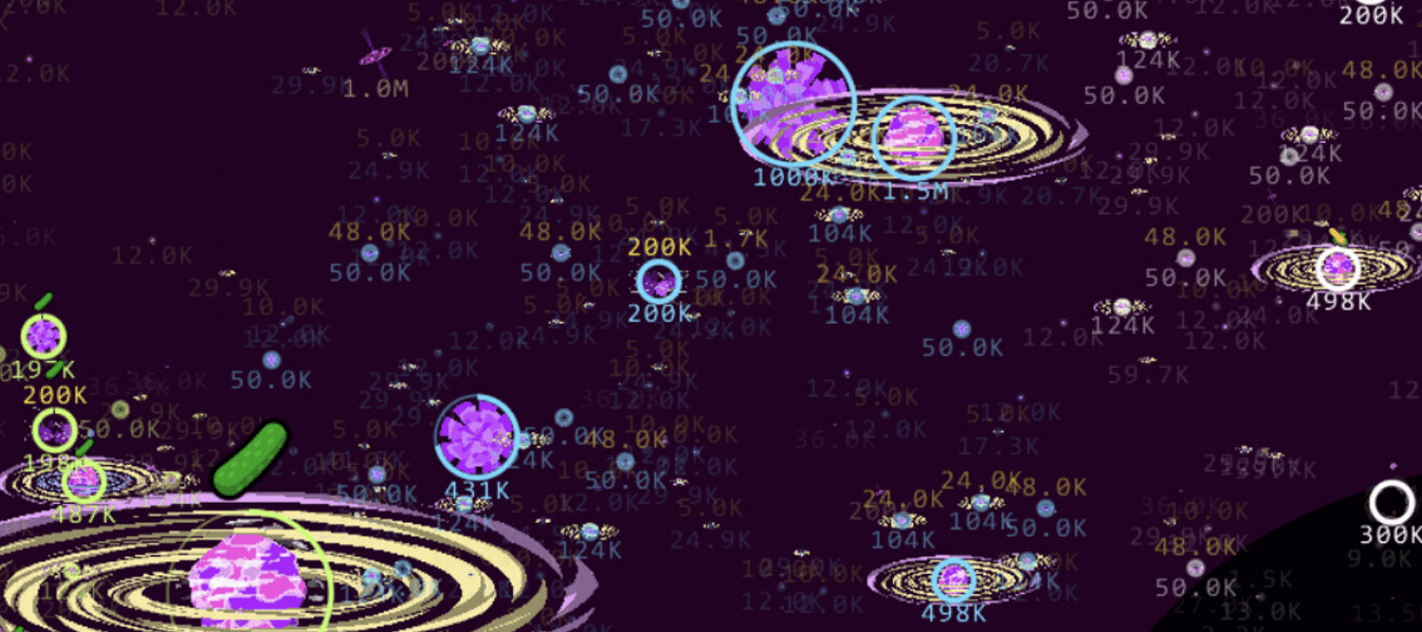
Dark Forest is a more recent example of an on-chain game. It is an RTS game set in space inspired by Cixin Liu’s popular sci-fi book "The Dark Forest". In the game, players are placed on an unknown planet in space and are tasked with gathering resources and expanding their territory to incorporate new planets.
Final Thoughts
While on-chain gaming remains a niche within the broader web3 ecosystem, passionate community members, researchers, and developers continue to push the boundaries of what's achievable by relying solely on blockchain technology. The interplay of challenges and benefits sets the stage for ongoing advancements in this intriguing sector of the gaming industry.
This article was inspired by an original blog post from Chainlink, you can read the full post on their website here for more information.