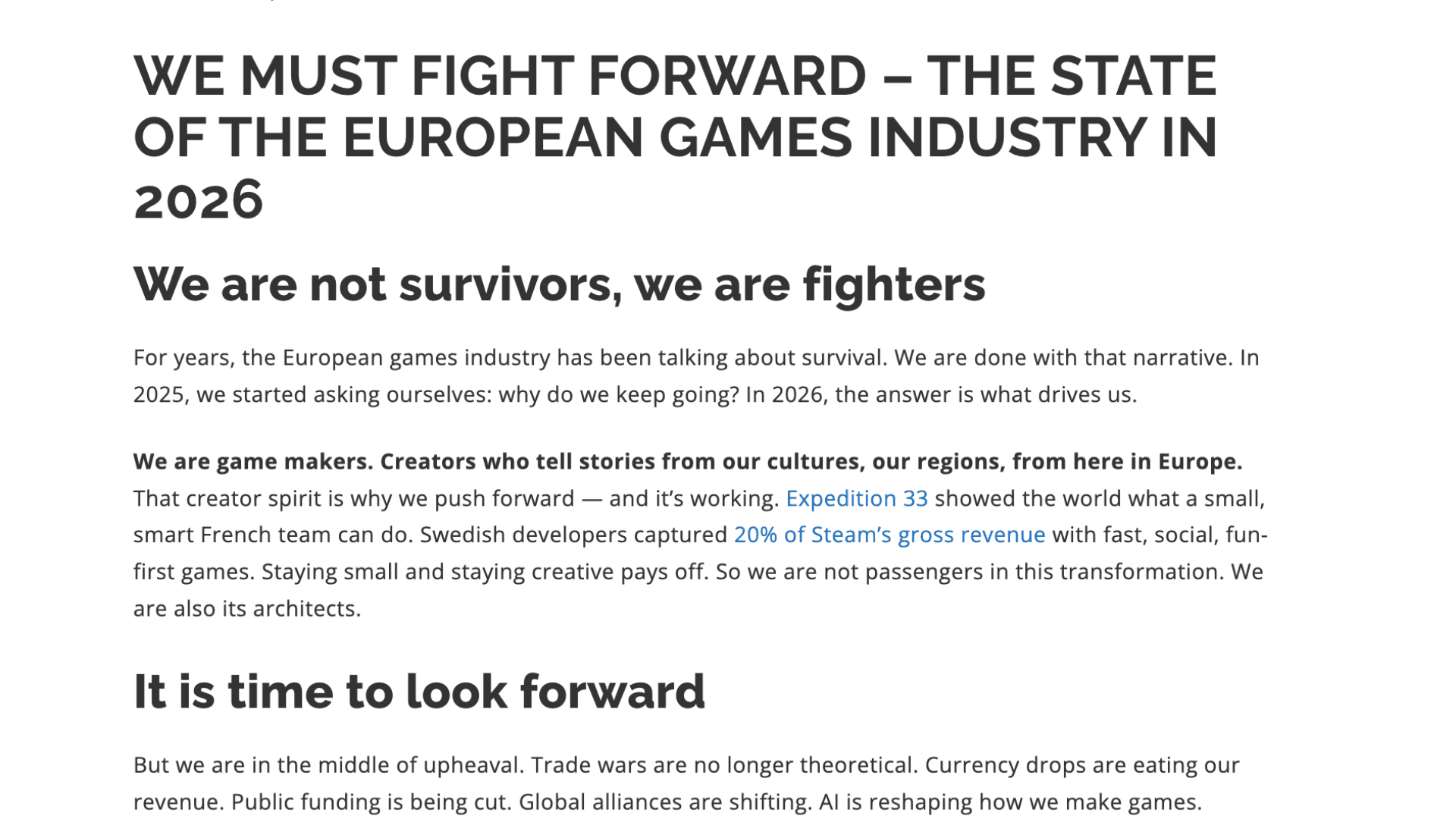


The European Games Developer Federation (EGDF) has outlined its strategic priorities for 2026, urging European studios and policymakers to think beyond immediate challenges and commit to long-term competitiveness. The federation's roadmap centers on innovation, sustainable growth, and positioning Europe's game industry as a global force rather than a reactive participant.
EGDF president Hendrik Lesser framed games as both cultural artifacts and technological drivers for Europe. He pointed to three pillars: backing creators with meaningful support, establishing fair market structures, and safeguarding the space for authentic European narratives. Lesser acknowledged headwinds like shrinking public budgets, volatile exchange rates, and geopolitical instability, but credited European developers with sustained resilience and entrepreneurial drive despite these obstacles.
Use code TRYHARD33 at checkout to redeem this offer before code expires again.
Get 33% Off GAMES+ Subscription
Human-Led AI in Game Development
The federation tackled AI's expanding role in game production, from code generation to asset creation and pipeline automation. EGDF recognizes AI's utility but insists that human judgment and creative leadership remain non-negotiable. Lesser warned that automating entry-level work risks closing the door on the next generation of industry leaders. Keeping humans in the loop, he argued, protects talent development and ensures European studios retain their creative edge rather than becoming assembly lines for algorithmically optimized content.
Fair Market Practices and Economic Stability
EGDF pressed for market conditions that don't punish European developers by default. Lesser flagged platform payment systems that convert European player revenue into U.S. dollars, leaving studios exposed to currency swings they can't control. The federation also noted that inconsistent consumer protection rules across EU member states hit smaller studios hardest, creating compliance burdens that larger competitors can absorb. The goal is policy coherence that lets European developers compete globally without built-in economic handicaps.
Preserving European Creativity and Sovereignty
EGDF's 2026 agenda includes strengthening Europe's cultural and technological independence in gaming. Lesser called for investment in local infrastructure and programs that enable distinctly European stories to reach global audiences. He stressed that developers need a seat at the table when regulations are drafted, ensuring policies reflect European priorities rather than importing frameworks designed for other markets. Lesser argued that protecting these qualities makes Europe a magnet for global talent, not just a defensive posture.
Lesser closed by emphasizing that collaboration between developers, trade groups, and policymakers is the only path to securing the industry's future. Without coordinated effort, he suggested, European studios risk being outpaced by competitors with stronger institutional backing.
Make sure to check out our articles about top games to play in 2026:
Best Nintendo Switch Games for 2026
Best First-Person Shooters for 2026
Best PlayStation Indie Games for 2026
Best Multiplayer Games for 2026
Most Anticipated Games of 2026
Top Game Releases for January 2026
Frequently Asked Questions (FAQs)
What is the EGDF?
The European Games Developer Federation represents game developers across Europe. The organization advocates for industry interests, provides policy guidance, and promotes practices that support sustainable growth.
What are EGDF's priorities for 2026?
The federation is targeting three areas: keeping AI development human-led, pushing for fair market structures, and building Europe's cultural and technological independence in gaming.
Why is human-led AI important for game development?
EGDF argues that AI should assist developers, not replace them. Human creative control protects innovation, maintains career pathways for new talent, and prevents studios from producing homogenized content.
What challenges do European game studios face?
Studios contend with shrinking public funding, currency volatility, fragmented regulations across EU states, and competition from larger markets like the U.S. and China. EGDF wants policies that address these structural disadvantages.
How does EGDF suggest strengthening European game sovereignty?
The federation backs investment in local infrastructure, support for authentic European storytelling, and developer participation in regulatory processes to ensure policies align with European industry needs.
How can European developers get involved?
Developers can join EGDF initiatives, work with trade associations, and engage in regulatory discussions to help build a competitive and sustainable European game industry.