A new analysis of 36 global markets and 42 well-known intellectual properties reveals how franchise recognition shapes player behavior across different regions. The data examines which IPs drive engagement and where cultural familiarity matters most.
Emerging markets show strongest IP response
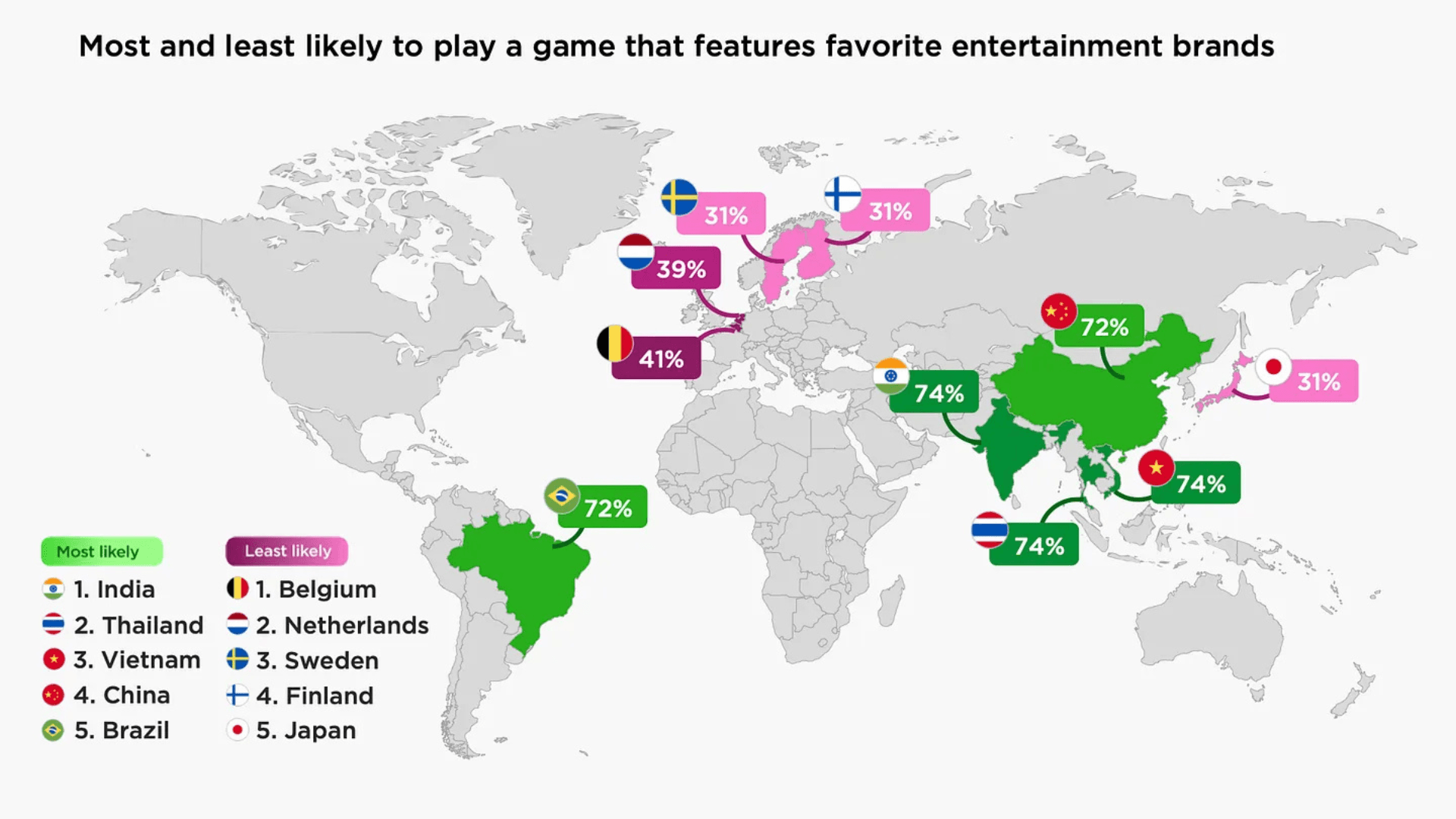
In China, India, Brazil, and Southeast Asia, over 70 percent of players report they're more likely to try a game built around a recognizable franchise. These markets demonstrate the clearest correlation between brand recognition and willingness to engage, making IP selection a critical factor for success in these territories.
Newzoo Report Analyzes Global Impact of IP on Game Preferences
Western Europe and Japan show muted IP influence
Belgium, the Netherlands, Finland, and Sweden register lower enthusiasm for IP-based games in survey responses. Japan presents an interesting contradiction: players report less IP influence in surveys, yet franchise titles consistently dominate sales charts. The gap between stated preference and purchasing behavior suggests surveys capture only part of the decision-making process.
Newzoo Report Analyzes Global Impact of IP on Game Preferences
Disney and Dragon Ball lead global recognition
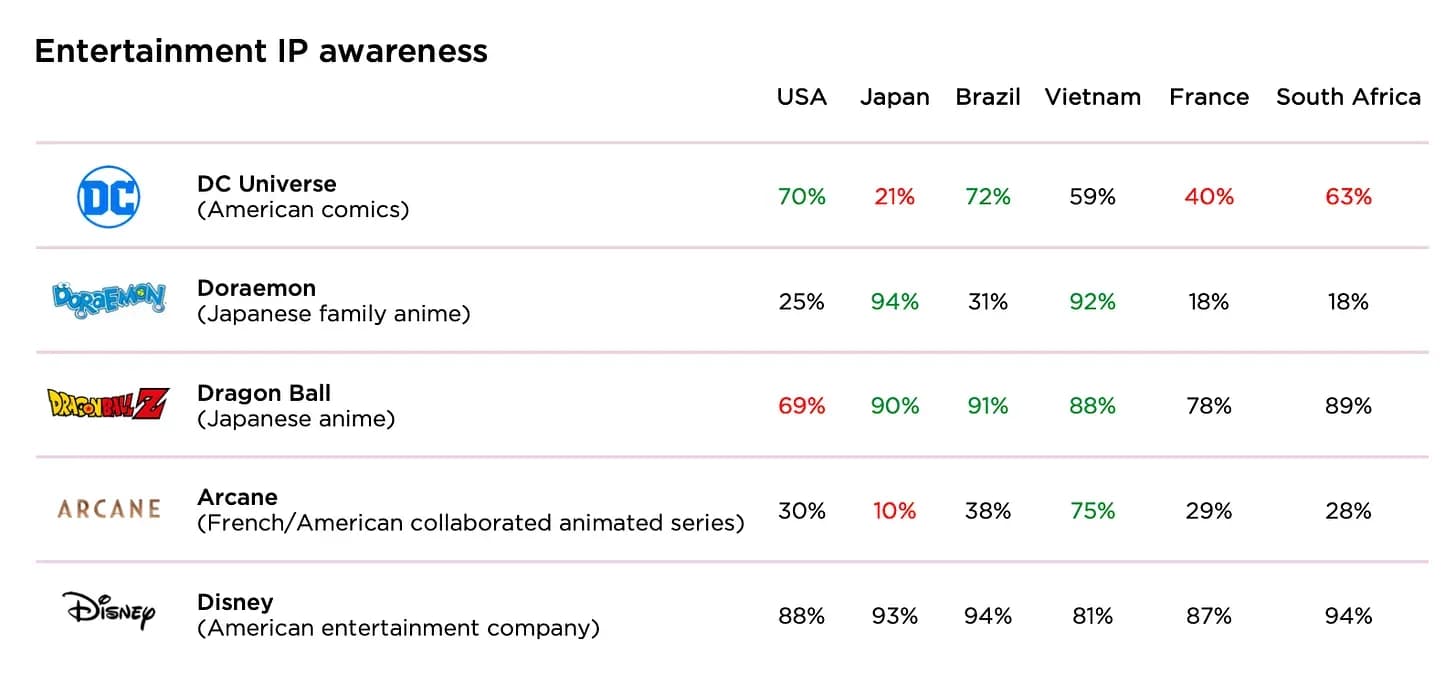
Disney ranks first in worldwide recognizability, with Dragon Ball close behind. Both franchises span multiple age groups and cultural contexts, giving them broader market applicability than properties with narrower demographic appeal. Universal recognition doesn't guarantee engagement, but it expands the potential audience pool.
Cultural origin predicts regional performance
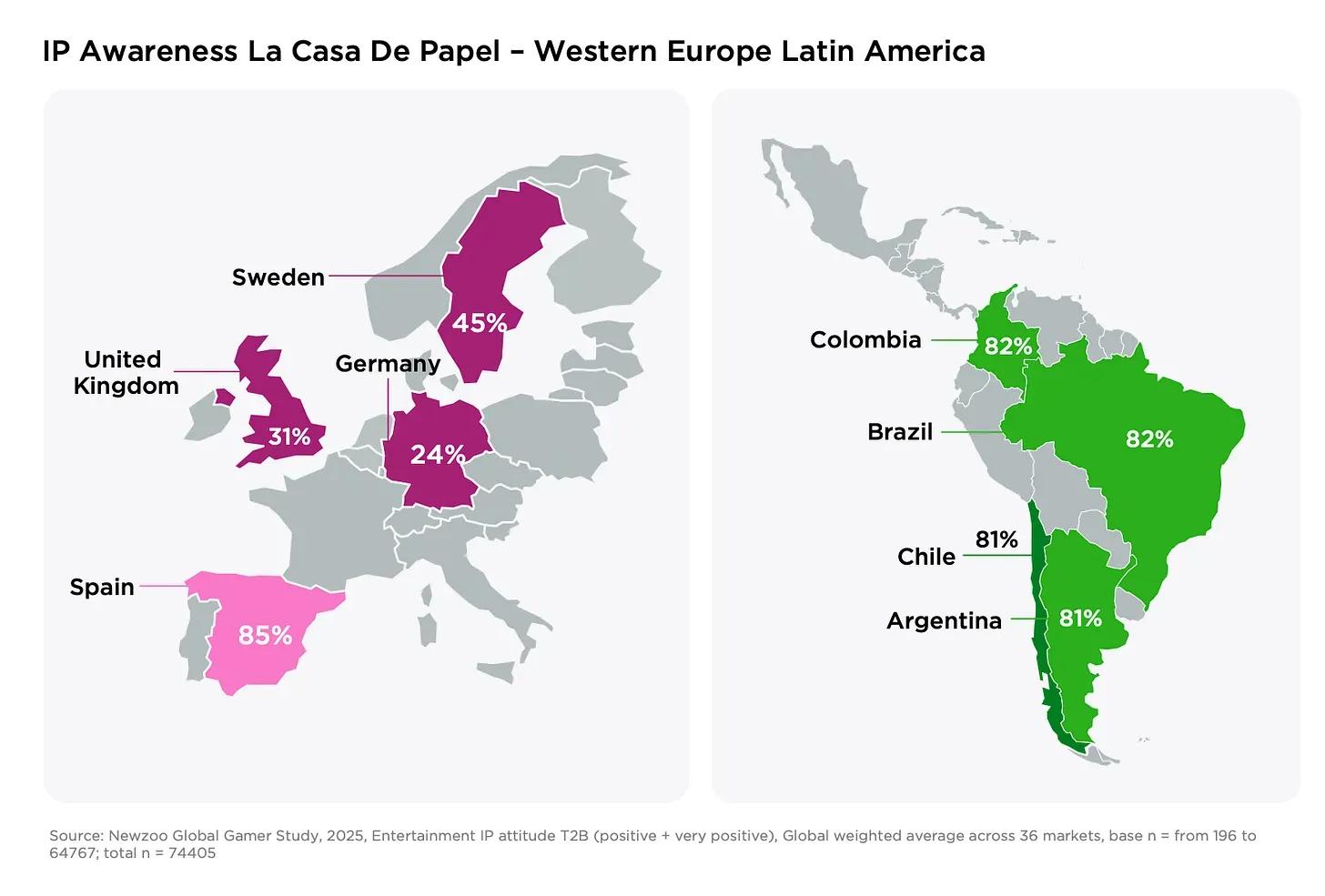
American IPs perform best in North America and Europe. Japanese properties find stronger reception in Japan and Southeast Asia. La Casa De Papel demonstrates how language and cultural alignment can extend an IP's reach beyond its home market — the Spanish series found significant traction in Latin America, particularly in Spanish- and Portuguese-speaking countries where shared cultural touchpoints made the property more accessible.
Newzoo Report Analyzes Global Impact of IP on Game Preferences
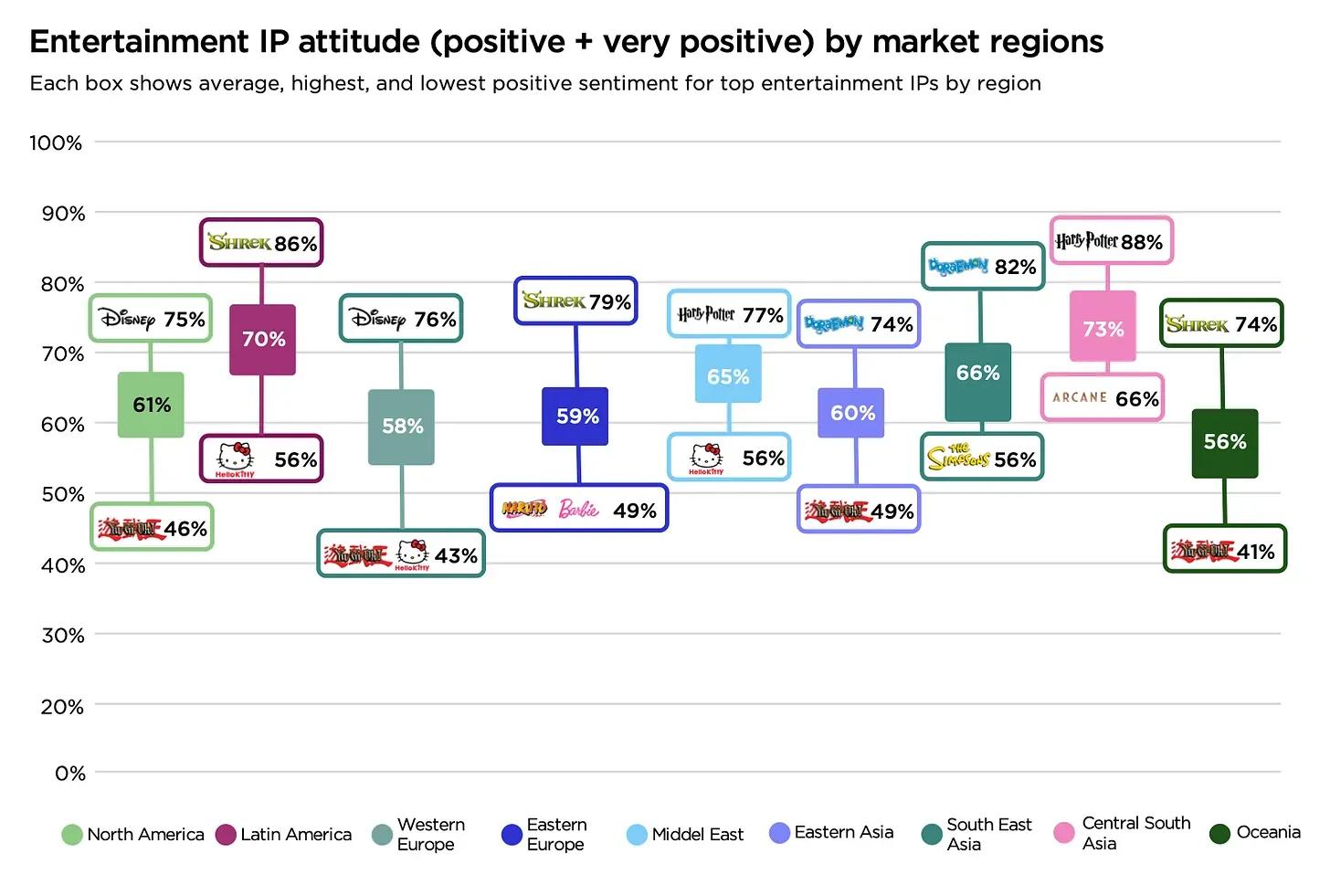
Shrek and Harry Potter top positive response
Shrek, Harry Potter, Disney cartoons, and Doraemon generated the most positive reactions across all surveyed markets. Hello Kitty, Yu-Gi-Oh!, Naruto, and Barbie ranked lower, though this reflects fewer strong positive responses rather than active dislike. The data measures enthusiasm intensity, not general awareness or acceptance.
Newzoo Report Analyzes Global Impact of IP on Game Preferences
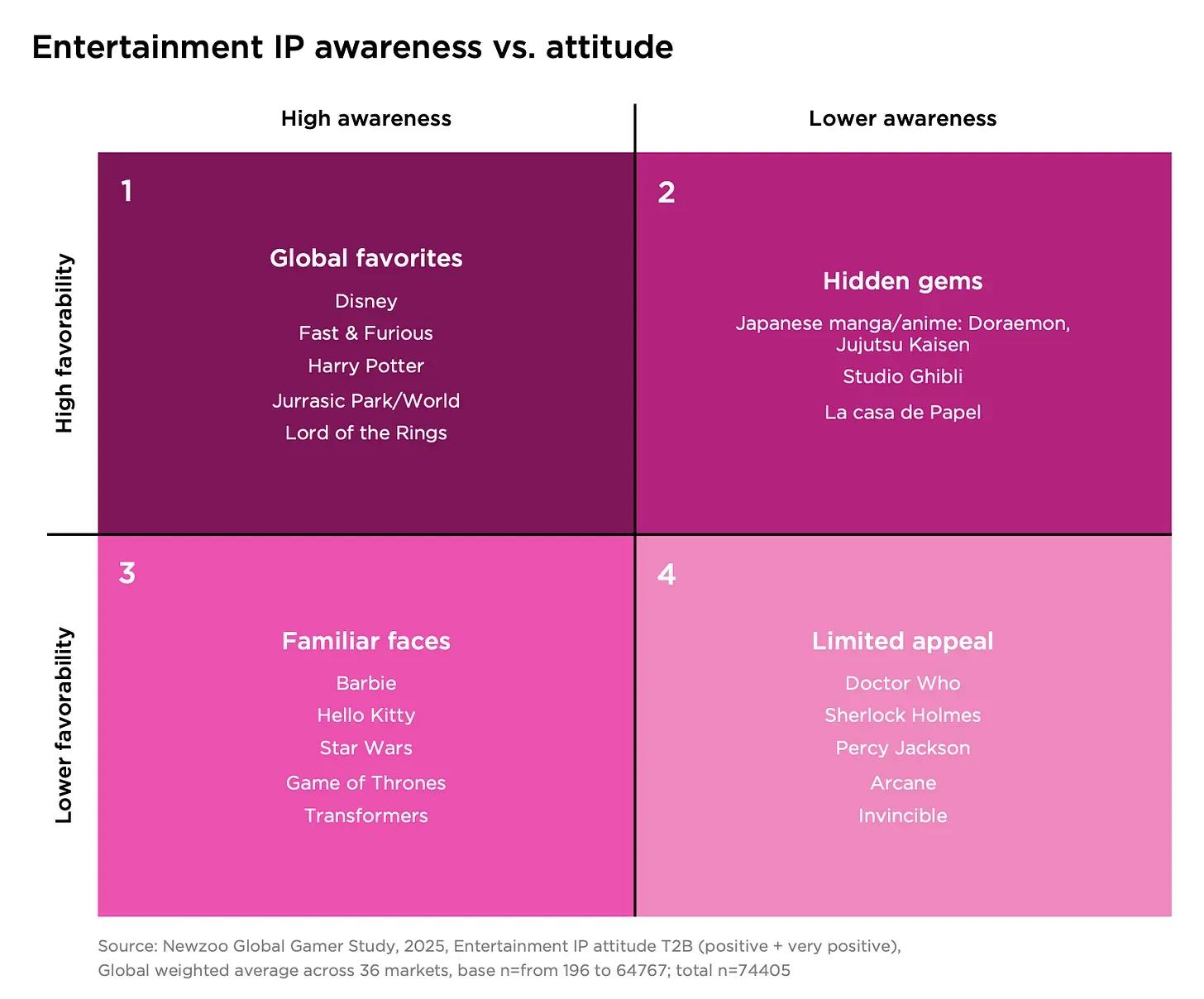
Four-quadrant framework maps IP potential
The analysis sorts IPs into four categories: high reach with strong support, strong support with limited reach, broad reach with weaker response, and low reach with low response. This framework helps developers and publishers identify which properties align with their target markets and budget constraints. High-reach, high-support IPs command premium licensing fees but offer the broadest potential audience.
Newzoo Report Analyzes Global Impact of IP on Game Preferences
Regional nuance matters more than global appeal
The findings show that IP strategy can't rely on global metrics alone. A franchise that tests well worldwide may underperform in specific high-value markets, while a regionally focused IP can deliver stronger engagement in targeted territories. Developers planning IP partnerships need to weigh global recognition against cultural fit and market-specific player behavior patterns.