
Loyalty platforms have moved rapidly from niche acquisition tools to major components of user acquisition strategies across the gaming industry. Their evolution has been driven by shifts in player behavior, more accurate personalization, and the rising need for reliable channels that deliver predictable returns on ad spend. What was once viewed as low-quality incentivized traffic has become a premium source of highly engaged users for studios of all sizes.

How Loyalty Apps Are Redefining User Acquisition
The image of incentivized traffic has long been shaped by early burst campaigns and low-cost installs that rarely produced meaningful retention. That era has largely ended. Modern loyalty apps acquire players who tend to progress quickly, spend at higher rates, and maintain long-term engagement when reward structures are designed responsibly. Studios now dedicate up to half of their UA budgets to loyalty platforms, reflecting a clear shift toward channels that recoup quickly and support continuous scaling.
The appeal is rooted in economics. Faster recouping unlocks healthier cash flow, allowing teams to reinvest at a pace that traditional channels cannot match. As a result, entire UA teams have emerged inside studios specifically to manage loyalty traffic, signaling the channel’s growing importance across mobile gaming.
What Sets Loyalty Platforms Apart from Traditional Offerwalls
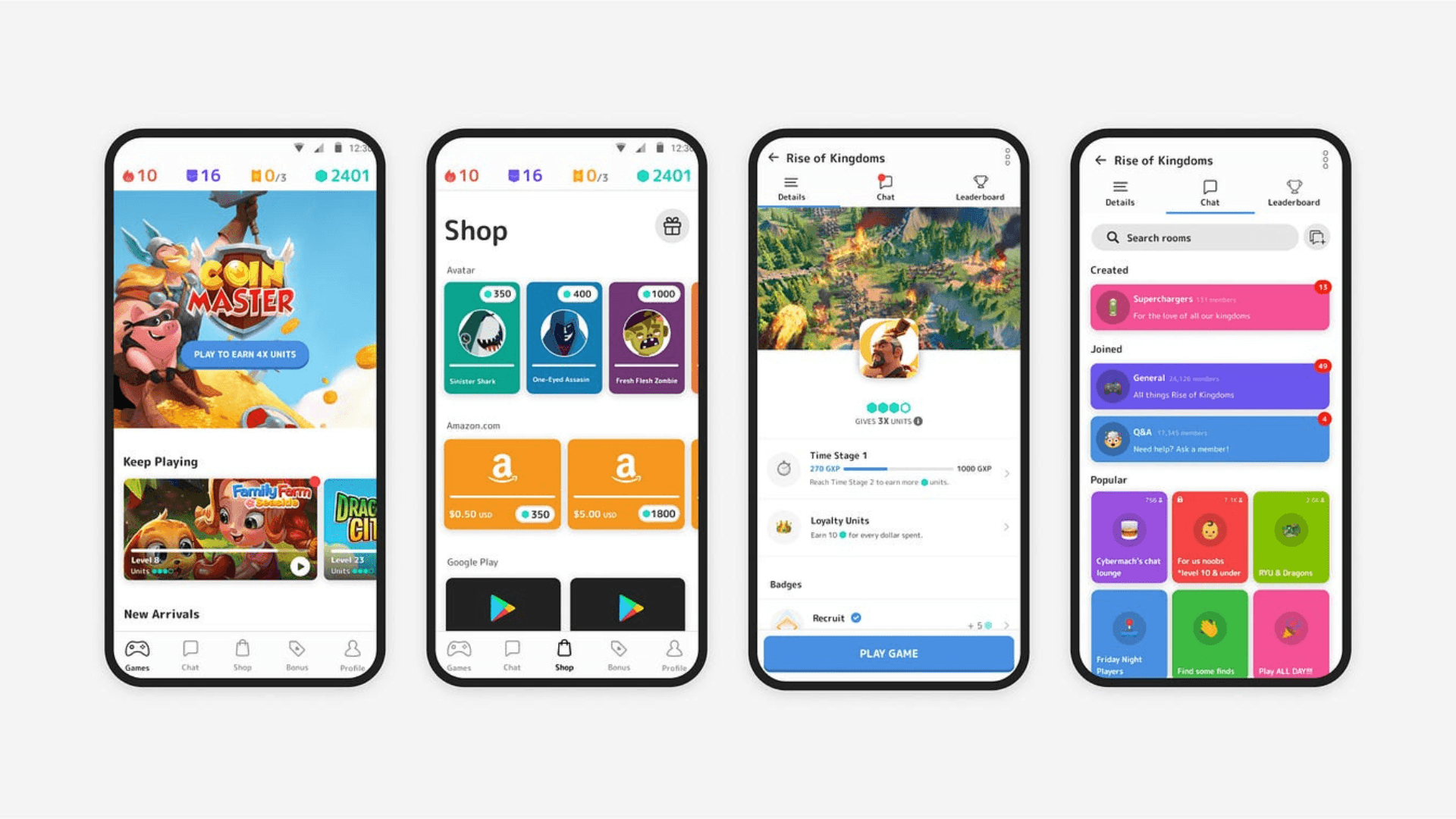
Loyalty platforms operate as standalone apps that players install directly on their devices. Users browse curated game recommendations, choose titles based on interest, and earn reward points by progressing through in-game objectives. These points can be exchanged for real-world prizes, giving players a clear reason to explore new games while staying engaged long enough to reach meaningful milestones.
This structure distinguishes loyalty platforms from offerwalls, which only function as advertising placements inside other games. Where offerwalls briefly redirect a user, loyalty apps act as an ongoing discovery hub. They promote continuous engagement and rely on personalization algorithms to match players with games that align with their preferred genres and play styles. The result is a more stable ecosystem with measurable retention and stronger long-term outcomes.
The Shift from CPI to ROAS and Its Industry Impact
As loyalty platforms matured, their business model shifted away from fixed CPI campaigns. Modern platforms operate on ROAS-driven frameworks that use predictive modeling to estimate lifetime value before setting price points. This approach allows for scalable user acquisition tied directly to performance rather than a fixed bid, creating more predictable results and expanding the channel’s potential for long-term growth.
For studios, the ROAS shift has opened new opportunities. While the effective CPI may be higher than other channels, the users acquired through loyalty apps often reach monetization milestones quickly. This shortens the overall payback period and gives studios more financial flexibility.
Understanding Player Quality Across Reward Structures
A core question surrounding loyalty platforms involves player motivation. Studios often wonder whether users continue playing once the reward cycle ends. Data from multiple developers suggests that while incentivized users tend to progress more aggressively in the early stages, those who remain active beyond the reward window eventually behave similarly to players from other UA channels. The determining factors involve the quality of reward design, the tone of the progression system, and the relevance of game recommendations.
Over-rewarding players can attract users who are motivated purely by payouts rather than the game itself. This leads to rapid drop-off and false impressions of feature performance. The ideal structure keeps rewards modest and treats them as supplemental to the core gameplay experience. When executed properly, loyalty users who stay past the initial cycle often retain well into the long term, making them competitive with audiences acquired through traditional campaigns.
Which Game Genres Benefit the Most
Loyalty platforms demonstrate strong performance across casual, mid-core, and core strategy titles. Casual games tend to see the most immediate benefit due to their shorter recoup cycles, which become even more compact with incentivized progression. The defining factor is less about genre and more about how well the studio understands the channel’s unique mechanics. Teams that design progression events specifically for loyalty users often see the most efficient outcomes.
When Studios Should Introduce Loyalty Platforms
Studios gain the most value when approaching loyalty platforms after building a solid content base and establishing reliable monetization. Introducing the channel too early can produce misleading signals, as incentivized players may appear stickier than they truly are. For smaller studios, loyalty platforms provide a faster route to recouping spending, making them a strong option for accelerating growth even if ROAS percentages are slightly lower than those achieved through other performance channels.
Tracking and Measuring Loyalty Users Separately
One of the most important practices for working with loyalty platforms is the separation of cohort data. Blending loyalty users with organic or traditional paid traffic can create false positives that influence product decisions. Tracking loyalty players independently gives teams a clearer understanding of engagement patterns and helps identify which events or tasks are driving the highest conversion rates.
Studios should examine progression speed and LTV curve shape rather than relying solely on early metrics like day-7 or day-14 performance. Some cohorts start slowly but continue rising consistently over time, making them more valuable than early-strong segments that eventually flatten out.
How Long It Takes to See Meaningful Results
Performance timelines vary widely. Some games see traction in a week, while others require multiple cycles of adjustment spanning several weeks. Many UA leaders make decisions too quickly, evaluating loyalty performance by short-term benchmarks rather than long-term signals. Patience and proper implementation are essential for determining whether the channel aligns with a studio’s audience and goals.
How Optimization Works on Loyalty Platforms
Unlike many UA channels that focus primarily on creative testing, loyalty platforms allow deeper optimization. Teams can adjust reward structures, align tasks with seasonal live events, and collaborate closely with platform partners to guide players toward specific in-game objectives. This hands-on approach creates room for experimentation and can significantly impact retention and monetization.
Common Pitfalls for Teams New to Loyalty UA
Studios often face predictable challenges when entering the loyalty space. Unrealistic KPIs can strain the ecosystem and attract low-quality traffic from networks attempting to meet impractical goals. Failure to separate cohort data leads to inaccurate product decisions. Misinterpreting early drop-off or expecting immediate returns can cause teams to abandon the channel prematurely. Avoiding these pitfalls requires clear planning and an understanding of how incentivized users behave at different stages of their lifecycle.
Final Perspective
Loyalty platforms have become a stable and influential part of the modern UA mix. They offer rapid payback cycles, predictable ROAS models, and optimization opportunities that extend far beyond creative iteration. While they are not a plug-and-play solution, they offer meaningful advantages to studios that invest in proper tracking, design thoughtful reward structures, and maintain consistency throughout the testing and optimization process. The question is not whether loyalty platforms work, but whether studios are prepared to leverage them effectively.
Source: Deconstructor of Fun
Frequently Asked Questions (FAQs)
What is a loyalty platform in gaming?
A loyalty platform is a standalone app where users discover games, complete progression tasks, and earn reward points that can be redeemed for real-world prizes.
How are loyalty platforms different from offerwalls?
Offerwalls are ad placements inside games, while loyalty platforms function as separate apps that remain installed on the user’s device and encourage long-term engagement.
Do loyalty platform users stay after rewards end?
Many users drop off once rewards stop, but those who remain tend to behave similarly to players acquired through traditional UA channels.
Why are studios increasing loyalty platform budgets?
The primary reason is fast recouping. Loyalty platforms often return spend much faster than traditional channels, giving studios more flexibility and enabling faster scaling.
Which types of games perform best on loyalty platforms?
Casual, mid-core, and strategy games all perform well. Casual titles often see the most rapid recoup cycles, but success depends on execution more than genre.
What metrics should studios focus on?
Studios should track loyalty cohorts separately and evaluate LTV curve progression rather than early-stage metrics alone.
When should a game introduce loyalty platforms?
The ideal timing is after a studio has established a stable content pipeline and consistent monetization, ensuring accurate data and better long-term results.
Are loyalty platforms suitable for smaller studios?
Yes. Faster recouping can help smaller teams reinvest quickly, even if ROAS percentages are slightly lower than other paid channels.
Can loyalty platforms cause misleading data?
They can if not tracked separately. Incentivized users may behave differently early on, so cohort separation is essential for accurate analysis.
Do loyalty platforms work for web3 games?
Yes, loyalty platforms can support web3 titles, provided reward structures and progression design align with the game’s mechanics and user expectations.