
Most indie studios should run their own press outreach first. Hire a gaming PR agency when you can spend several thousand dollars a month, have a clear news hook and are at least 3 months from launch.
An agency brings contacts, pitching hours and experience, not a story. If your art is weak, you have no trailer or there's no Steam page yet, fix those basics first. Neither route rescues a game that isn't ready for coverage.
We checked the sources and prices below in November 2026. Here's what agencies do, how to handle outreach yourself and where paid coverage fits.
What does a gaming PR agency actually do?
A game PR agency manages relationships with journalists, outlets and often creators. The work splits into five jobs:
- Strategy and messaging: identifying the news and sequencing announcement, demo, release-date and launch beats.
- Press materials: writing releases, fact sheets, Q&As and briefing documents.
- Outreach: pitching existing contacts, booking previews and interviews, and chasing replies.
- Review key distribution: sending keys to press and creators, tracking acceptances and managing embargoes.
- Reporting: collecting and reporting published coverage.
Agencies usually won't cut your trailer, fix your Steam page or guarantee coverage. No honest agency promises a review in a named outlet. Video game PR is pitching; editors make the call.
How much does a gaming PR agency cost?
Most firms quote on request. Treat these figures as starting points, not universal rates.
| Option | Cost | Source and caveat |
|---|---|---|
| Indie PR agency retainer | About $4K to $10K monthly; 3 to 6 month minimum | FirstLook guide. A vendor with commercial interests, not an independent benchmark. |
| Project-based PR | Quoted per reveal or launch window | A common alternative mentioned in the same guide; no price given. |
| PR software with a press database | Free starter plan; paid plans 300 to 1,200 GBP monthly, plus a quote-only top tier | PressEngine pricing, November 2026, excluding VAT. The free tier covers review key management. |
| DIY with free tools | Your time | Spreadsheet, email and Steam's built-in tools. |
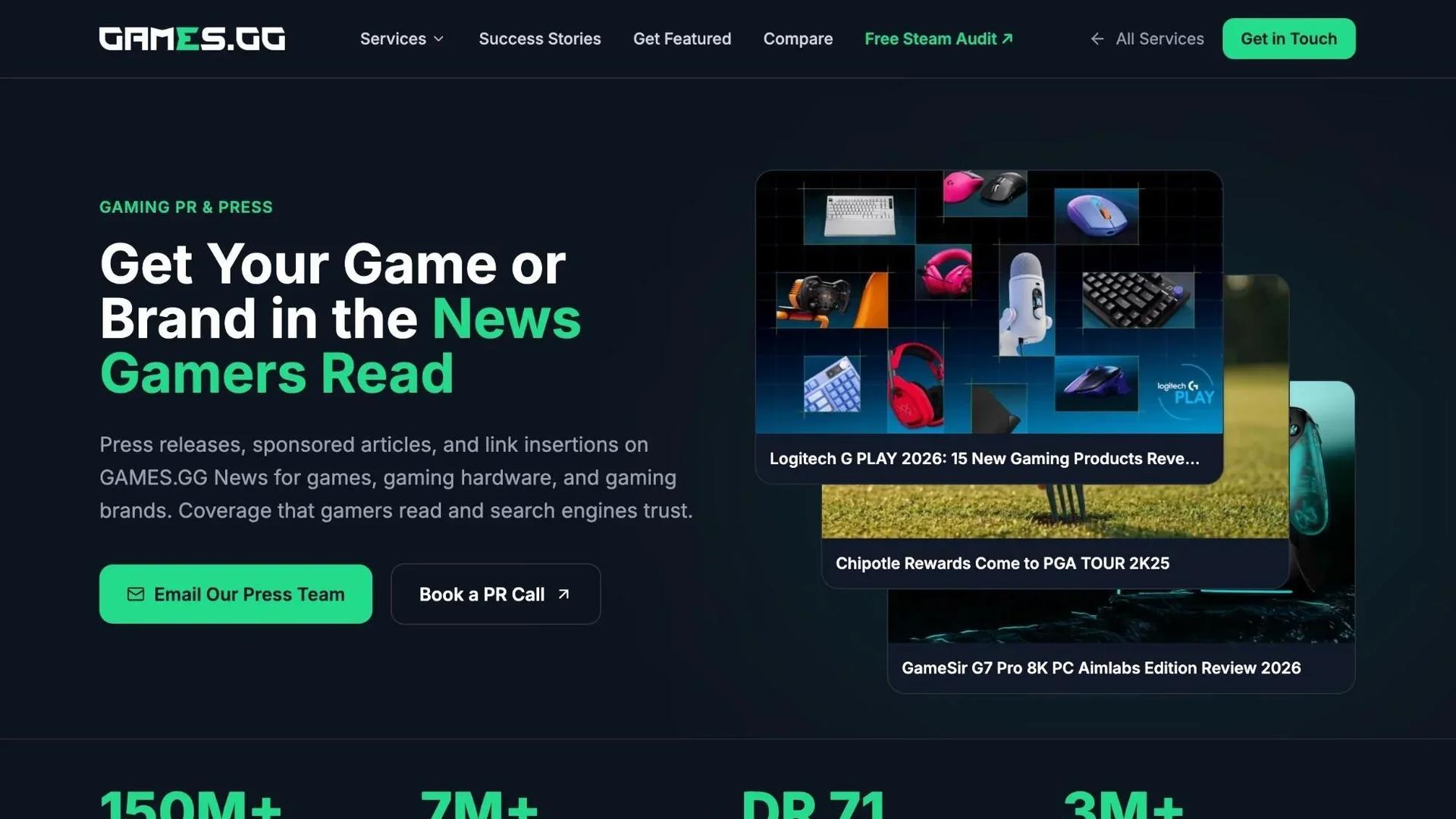
| Paid coverage on one site | Quoted per piece | GAMES.GG PR page, our service. Unpublished pricing depends on format, length and timing. |
A 3-month commitment at $4K to $10K monthly totals $12K to $30K, a big slice of many indie marketing budgets. Get your own quotes. Our game marketing budget guide explains channel allocation before you lock money into one.
How to do DIY press outreach for an indie game
You don't need an agency to get covered. Most DIY outreach is targeted list-building and sticking to a schedule.
1. Find the story
Journalists cover news, not games in general. A trailer, demo, release date, launch or milestone is a hook; “my game exists” isn't. Pick one hook per pitch and put it in the subject line.
2. Prepare the basics
Have your press kit, screenshots, trailer link and contact details ready. Our no-budget marketing guide covers the kit. Add a one-page fact sheet and a short game press release for each beat.
Keep the release to one page, including:
- A news-led headline and key facts: platforms, release date and price.
- A one-paragraph game description and developer quote.
- Trailer, store-page and press-kit links, plus a contact email.
3. Build a targeted press list
- Find 10 to 15 similar games and identify the outlets and writers covering them.
- Read each writer's last 5 to 10 articles. Remove anyone who doesn't cover your genre or platform.
- Sort contacts into big outlets (long shots), mid-size genre sites (realistic), and small sites, newsletters and creators (most likely).
- Track name, outlet, beat, email, what you sent, date and reply in a spreadsheet.
One launch checklist recommends 200 to 400 contacts. We'd choose 30 to 50 well-matched contacts for a small indie. Outreach fails on fit, not volume.
Our rule of thumb: small genre outlets and Steam curators are usually easier to reach than top sites, and their coverage can still help wishlists.
4. Time it correctly
These are conventions, not hard rules:
- Begin outreach 6 to 8 weeks before launch, per the presskit.gg checklist.
- Give priority press and creators keys at least 2 weeks before launch, allowing time to play, record and edit, per the same checklist.
- Announce Tuesday to Thursday mornings in your target time zone, avoiding major publisher showcases. That's our rule of thumb, not a measured result.
Our marketing timeline places press within the wider pre-launch calendar.
5. Use embargoes properly
An embargo is an agreement not to publish before a specified date and time. It gives outlets preparation time and coordinates when stories go live.
- State the exact date, time and time zone.
- Specify restrictions, including spoilers or unannounced platforms.
- Allow enough playing time; rushed reviews and broken embargoes damage relationships.
- Confirm the lift time the day before.
Save embargoes for exclusives, reviews and big reveals. Small announcements can go out without one.
6. Keep the pitch short
Stay under 150 words. Use a personal opening, explain the game and its fit for that writer's beat, include trailer, press-kit and store links, and offer keys or an interview. Don't attach large files.
7. Follow up once
After 3 to 5 days, send one follow-up with something new, such as a screenshot or demo link. No reply? Move on. Repeated chasing gets you ignored, and journalists remember it.
8. Use Steam's tools
Steam's Curator Connect lets you send copies through Steamworks to up to 100 selected curators, with a maximum of 5 copies each. Acceptance and reviews aren't guaranteed.
You need a public store page; a reviewed, live “coming soon” page qualifies.
Press works best when the destination page converts. Check your capsule before pitching; our capsule art guide covers that work.
Gaming PR agency vs DIY: which should you choose?
| Factor | Agency | DIY |
|---|---|---|
| Cash | High, usually a monthly retainer | Low to none |
| Your time | Lower, but briefings still take time | Regular hours before launch |
| Contacts | Existing relationships and lists | Built from scratch |
| Control | Shared pitch angles | Full |
| Learning | Borrowed experience | Your experience benefits later games |
| Guaranteed coverage | No | No |
| Best fit | Funded studio, strong hook, firm date | Solo developer or small, budget-conscious team |
When an agency makes sense
Consider an agency if:
- PR has a budget beyond development costs.
- Your hook is clear: standout art, a distinct mechanic, known IP or a notable team.
- Your key beat is at least 3 months away.
- You lack outreach time, or a publisher or investor expects professional PR.
- You're launching on console or multiple platforms and need wider reach.
When DIY is better
Choose DIY if your entire marketing budget is a few thousand dollars or less, a handful of niche writers and creators matter most, or you want to own the relationships and learn the process.
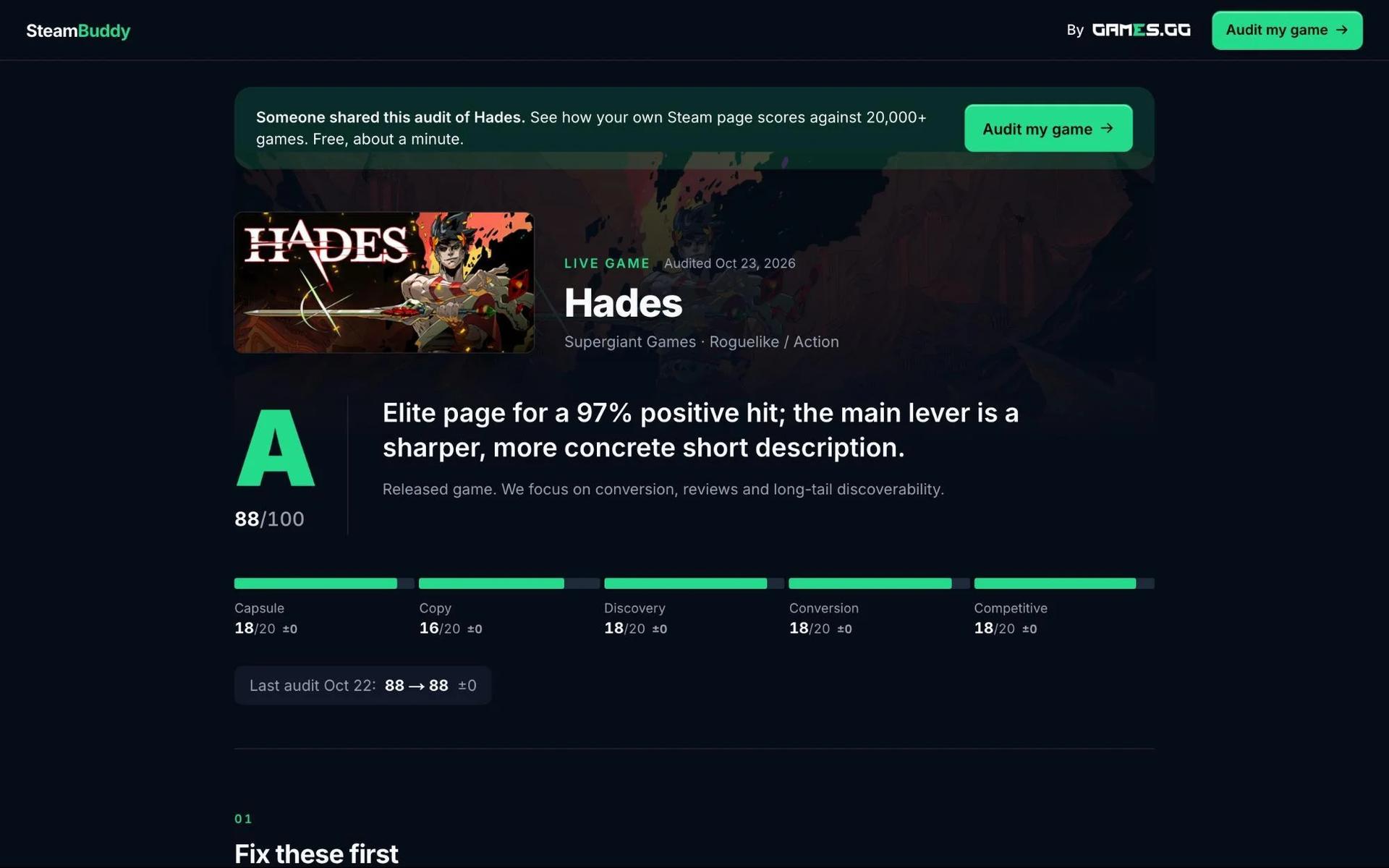
If your Steam page is unfinished or isn't converting, audit it first with SteamBuddy. Its free audit scores capsule, copy, tags, conversion and competitive standing out of 100, benchmarked against 20,000+ Steam games.
How to vet an agency
- Request coverage examples for games your size and genre, not just its biggest client.
- Ask who pitches and how many projects that person handles simultaneously.
- Get written scope: pitch numbers, key handling, reporting and arrangements if your date slips.
- Check contract length and exit terms.
- Walk away from guaranteed coverage.
Paid coverage: a third option
Paid placement sits between a retainer and pure DIY. The GAMES.GG gaming PR page offers three formats, this is our service:
- Press release: your announcement on GAMES.GG News, tagged Press Release, with links, assets and an embedded trailer.
- Sponsored article: an editor-written feature, guide or list around your game.
- Link insertion: a contextual link in an existing, indexed article.
Request an email quote; pricing depends on format, length and timing. Social promotion costs extra and is quoted separately.
This is labeled paid placement, not an independent review. It doesn't carry the weight of earned coverage from a major outlet. What it offers is a published, indexed page with timing you control, no pitching risk, and a link you can share from your store page and social posts.
Use it alongside DIY, not instead of earned press. For broader packages, see indie game marketing.
A realistic plan for most indie studios
- 12 to 6 months out: build the Steam page, trailer and press kit; audit the page with SteamBuddy.
- 8 weeks out: finish the press list and pitch template.
- 6 to 8 weeks out: begin outreach and send Curator Connect copies.
- At least 2 weeks out: send review keys with an embargo.
- Launch week: publish your release, follow up once with unanswered contacts and share every piece of coverage on your channels.
Have budget? Get 2 or 3 agency quotes around 6 months out and compare them with DIY's time cost.
Our free Indie Game Growth Roadmap is a 60-second quiz that places your game in one of 7 stages and emails a roadmap of next steps.
With a live Steam page, you can also apply to our Indie Growth Program. Applying is free. Selected games receive a GAMES.GG News press release, a feature in our newsletter to 100K subscribers and other placements. The package itself is paid, at a reduced rate, after a short intro call.
For a press release or sponsored article, request a quote on the gaming PR page. If your game isn't listed yet, start with the free game listing.