
Back in 2009, while most of the industry was still debating whether digital distribution was even a serious threat to retail, Satoru Iwata had already done the math.
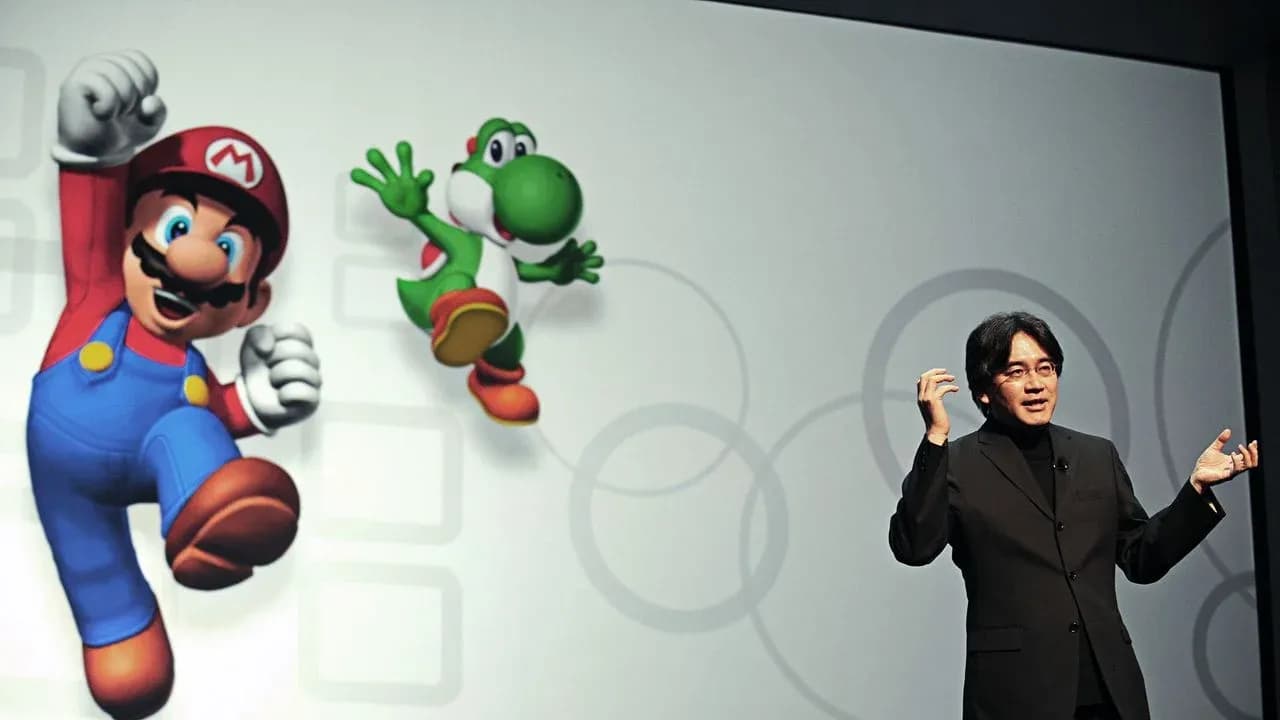
During an investor Q&A that year, Iwata, who served as Nintendo's president and CEO from 2002 until his passing in July 2015, pushed back against the more aggressive predictions floating around at the time. "Most radical people even dare to say that retailers will be replaced by digital distribution in no time," he said, before offering his own, more measured take: "In 20 years or so, I might say it will have probably changed. But in 5 years or so, I do not totally agree with opinions that no one will purchase titles at retailers by then."
That quote resurfaced on Reddit this week, and the timing is hard to ignore.
The prediction that aged like fine wine
Here's the thing: 2009 was a different world. The PlayStation Store and Xbox Live Marketplace existed, but physical copies still dominated sales by a wide margin. Saying digital would eventually take over wasn't bold. Saying it would take roughly two decades, though, was a specific and considered call that most analysts at the time would have laughed off.
Iwata was essentially arguing that consumer habits, infrastructure, and publisher incentives would all need to shift gradually, and that retail wouldn't collapse overnight. He was right on all counts.
Fast forward to 2026, and the dominance of digital is no longer a prediction. It's the operating reality. Sony has confirmed it will stop producing physical discs for PS5 games in 2028, citing a "general preference for digital media" that now "significantly outpaces physical discs." Rockstar shipped GTA 6 physical copies as code-in-a-box, with no actual disc data included. Xbox has quietly shipped recent releases, including Doom: The Dark Ages, with physical cases that contain no game data on the disc itself.
Iwata's 20-year window lands somewhere around 2029. Sony's cutoff is 2028. He was off by roughly one year.
What physical gaming looks like right now
The situation across platforms tells a consistent story, even if no one has officially declared physical gaming dead yet.
- PlayStation ends disc production for new PS5 games in 2028
- Rockstar ships GTA 6 as a code-in-a-box with no playable disc data
- Xbox recent physical releases have shipped with empty discs, requiring full downloads
- Nintendo introduced Game-Key Cards for Switch 2, which are resellable but carry no actual game data
The key here is that "physical" has quietly become a different product. You're buying a box, sometimes with a card or disc that functions as a license key, not a self-contained copy of the game. The preservation argument that physical advocates have long relied on is already eroding.
Analysts have noted that Sony's move could influence how Xbox and Nintendo approach physical media going forward, though Nintendo has historically moved at its own pace on these decisions. For now, Nintendo remains the outlier, still producing standard game cards for Switch 2 titles alongside the new key-card format.
Why Iwata's read still holds up
What made Iwata's prediction sharp wasn't just the timeline. It was the reasoning behind it. He understood that the shift wouldn't be driven by technology alone. It would require consumer preference to genuinely move, and that takes longer than engineers and executives tend to assume.
The backlash Sony has faced since announcing the end of disc production shows that preference hasn't fully shifted for everyone. Physical buyers are vocal, organized, and genuinely upset. But the numbers clearly don't support their position commercially, which is exactly what Iwata was anticipating when he said the change would be gradual rather than sudden.
For Nintendo fans specifically, this moment carries extra weight. Iwata is remembered as one of the most player-focused executives the industry has seen, someone who consistently framed business decisions around what made sense for the people actually buying and playing games. The fact that his 2009 investor comment reads as more honest and accurate than most of what the industry said about digital distribution over the following decade says a lot.
Nintendo's current release slate, including titles like Tomodachi Life: Living the Dream, still ships in physical formats. If you're planning around launch day, the Tomodachi Life: Living the Dream release date and start times guide has everything you need. For broader Nintendo coverage and the latest on how the Switch 2 library is shaping up, the gaming guides hub is worth bookmarking as the platform's physical and digital release schedule continues to evolve.
The real question now isn't whether digital will dominate. It already does. The question is what happens to the players who built their libraries around physical ownership when the last disc rolls off the production line. For a deeper look at how Nintendo is handling its own format transition with Switch 2, the Tomodachi Life aging guide covering the Age-o-Matic and Kid-o-Matic items is a small but telling example of how Nintendo still designs around tactile, cartridge-based play, even as the broader industry moves on without it.