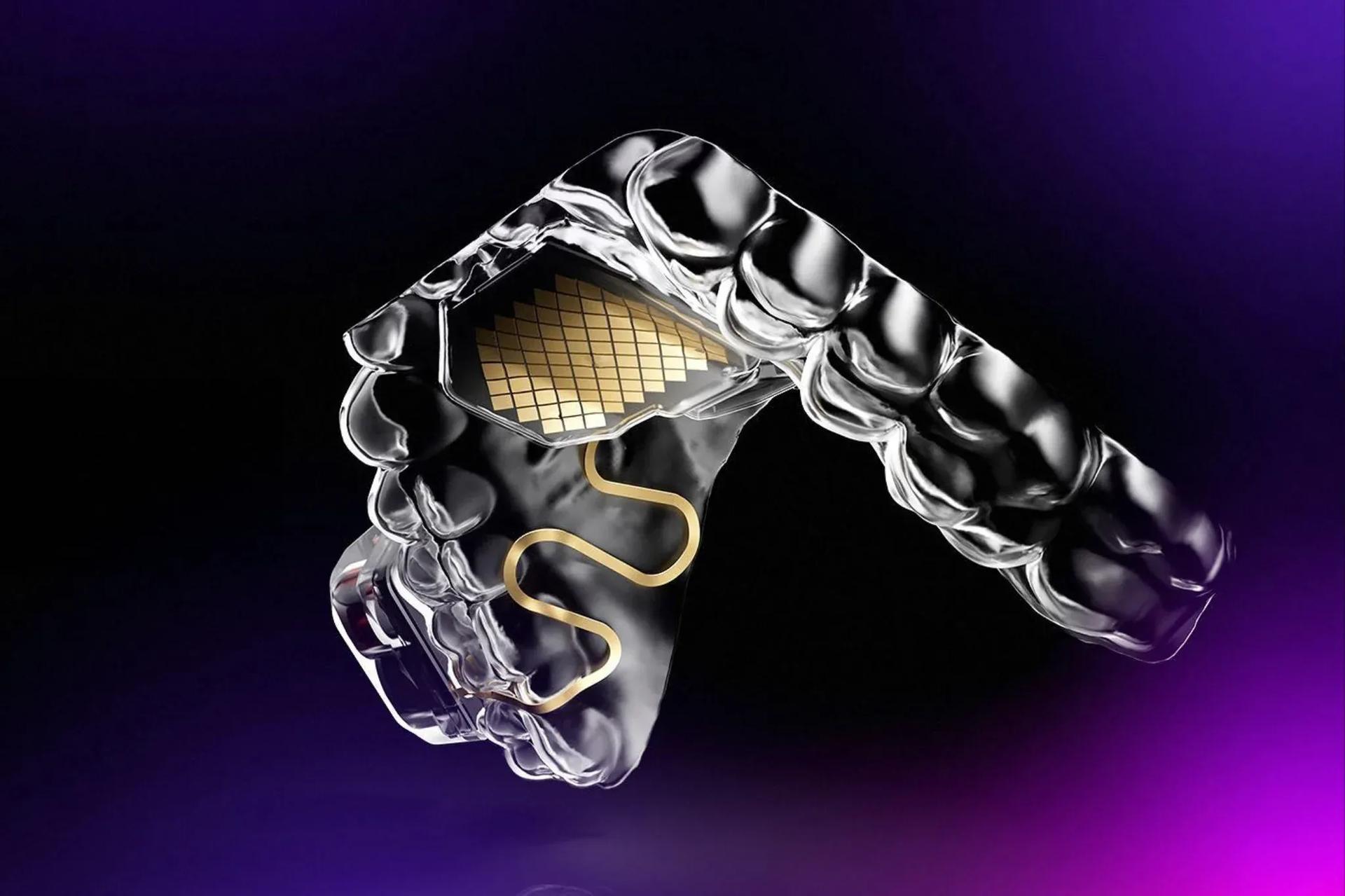

Somewhere between assistive technology and science fiction sits the MouthPad, a $1,400 dental retainer-style device that tracks your tongue's position inside your mouth and translates those movements into cursor control on a computer. No hands. No voice commands. Just your tongue sliding across a touch-sensitive pad fitted against the roof of your mouth.
The device comes from Augmental, a startup that has spent years building toward this specific use case: hands-free computer interaction for people who cannot use traditional input devices. The MouthPad connects via Bluetooth and works with computers, tablets, and smartphones. Tongue movements control the cursor, while a sip-and-puff mechanism handles clicking actions.
Why $1,400 and who is actually buying this
The price point puts the MouthPad squarely in assistive technology territory rather than consumer gadget territory. That context matters. The device is primarily designed for people with spinal cord injuries, ALS, cerebral palsy, or other conditions that limit hand and arm mobility. For that population, $1,400 is competitive with other high-end assistive input devices, many of which cost significantly more.
Here's the thing: the gaming angle is not just a side story. People with physical disabilities represent a massive underserved segment of the gaming community. Devices like the Xbox Adaptive Controller opened the door to rethinking how inputs work, but tongue-based control is a different category entirely. It leaves both hands free while still providing precise, continuous cursor movement.
The MouthPad requires a custom fitting, similar to getting a dental retainer made. You work with a dental professional to get an impression taken, and Augmental uses that to manufacture a device that fits your specific mouth geometry. The touch-sensitive surface inside responds to tongue tip contact, and the onboard accelerometer also tracks head movement for additional control options.
What this actually means for gaming accessibility
Precision is the real test for any alternative input device in gaming. Mouse-level cursor accuracy from a tongue-controlled pad sounds improbable, but Augmental has published demo footage showing users navigating standard desktop interfaces, drawing in creative apps, and playing games with the device. The learning curve is real, but tongue dexterity is something humans develop naturally through speech, and that existing motor skill transfers.
For PC gaming specifically, the combination of tongue-controlled cursor movement and sip-and-puff clicking covers the core inputs for a wide range of genres. Point-and-click games, strategy titles, and even some shooters become accessible in ways that eye-tracking or voice control alone cannot replicate. Eye-tracking struggles with precision clicking. Voice control introduces latency and fatigue. The MouthPad sits in a different position because it offers analog-style continuous movement.
Controls are worth thinking about more broadly here. The way games handle input remapping and accessibility settings has become a genuine differentiator. Titles that support full input customization open themselves up to players using devices like the MouthPad, while games locked to rigid control schemes shut those players out entirely. If you want to see how much thought goes into control flexibility in modern games, our MECCHA CHAMELEON controls guide is a good example of how deep that rabbit hole goes.
The broader shift in how we think about input
The MouthPad is not the first tongue-controlled interface and will not be the last. What makes it notable right now is the combination of Bluetooth connectivity, custom fit, and a price that, while high, is within reach for individuals and organizations focused on accessibility solutions.
Gaming has slowly become one of the strongest advocates for accessible input design. The industry moved from ignoring the problem entirely to shipping dedicated hardware and software solutions in roughly a decade. Voice-controlled games like YAPYAP pushed input experimentation in a completely different direction, and if you have ever tried to get voice recognition dialed in for a game, the YAPYAP voice setup and mic fix guide covers exactly how finicky that process can be.
Augmental is currently taking orders through its website, with delivery timelines that depend on the custom fitting process. The $1,400 price covers the device itself, and the company has indicated it is working with insurance providers and vocational rehabilitation programs to explore coverage options for qualifying users.
For players and developers paying attention to where input technology is heading, the MouthPad is worth watching. The hardware is real, the use cases are documented, and the gap between assistive technology and mainstream gaming peripherals keeps getting narrower. Check out our gaming guides for more on how modern games are adapting to new control methods and accessibility features across the board.