A recent survey from Circana reveals shifting patterns in how Americans game in 2024, with overall participation dipping slightly while a hardcore segment of "super gamers" expands. The study polled 5,100 active gamers across all age groups, capturing demographic trends, platform choices, and spending habits that paint a picture of where gaming is headed.

Rise of the Super Gamers
Key Insights
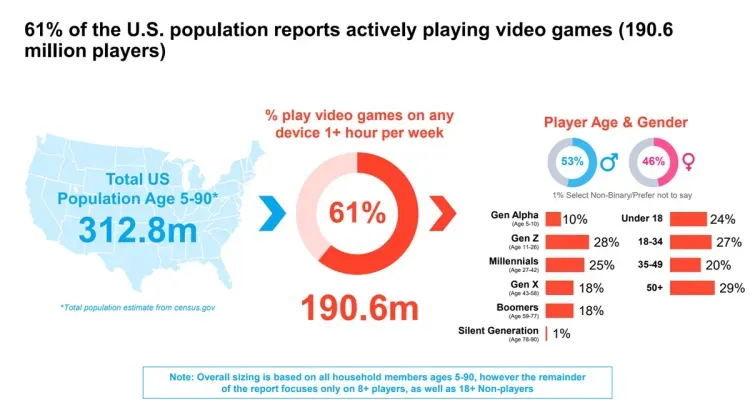
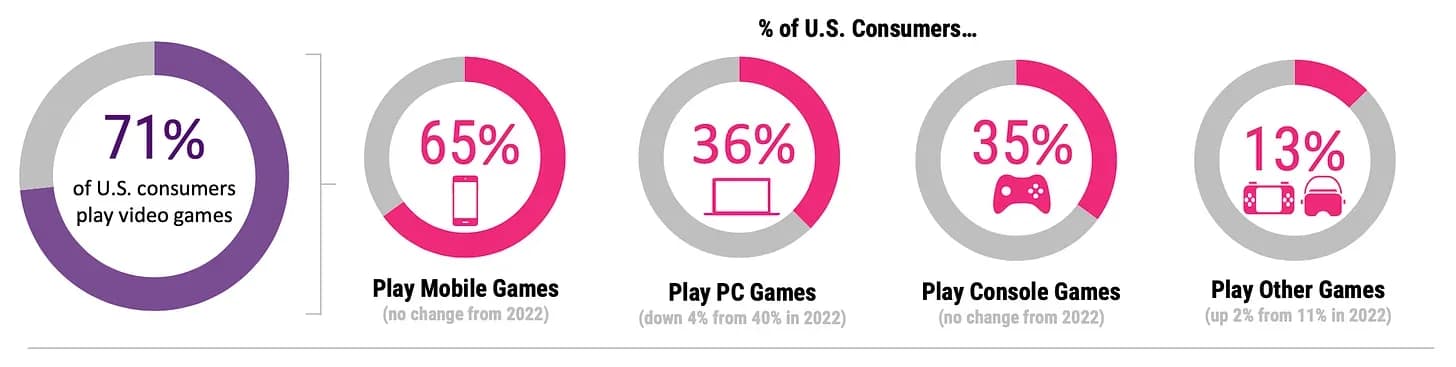
Right now, 71% of U.S. residents count as gamers—people who played on any device in the past month. That's down from 74% in 2020, though still higher than the 67% recorded in 2018. Total active gamers in the country sit at 236.4 million.
Players over 45 make up the biggest slice of that audience at 37%. This group leans more toward consoles and has the highest share of women. Even as their total playtime drops, their spending keeps climbing, showing they're still invested in the hobby.
Generation Alpha—kids aged 2 to 12—saw a 6% drop in participation since 2022. Despite the decline, this age bracket still drives meaningful engagement and spending, keeping it on developers' radar.

U.S. Gamer Segmentation
Gaming Platforms and Preferences in 2024
Platform choice continues to splinter. Mobile gaming dominates, holding steady at 65% of the population—unchanged from 2022. The breakdown looks like this:
- 65% play on mobile, flat year over year.
- 36% play on PC, down 4% from 2022.
- 35% use consoles, unchanged.
- 13% play on VR headsets, handhelds, and other devices, up 2% since 2022.
Among active gamers specifically, 92% touch mobile at some point. 51% use PCs, and 50% play on consoles.
Rise of the "Super Gamer" Segment
The super gamer category—players who log serious hours and spend heavily—grew to 16% of all U.S. gamers, or 38.3 million people, up from 36 million in 2022. This group skews younger (13 to 34) and jumps between platforms constantly. They're the ones bankrolling the industry.
Average Weekly Gaming Hours and Spending
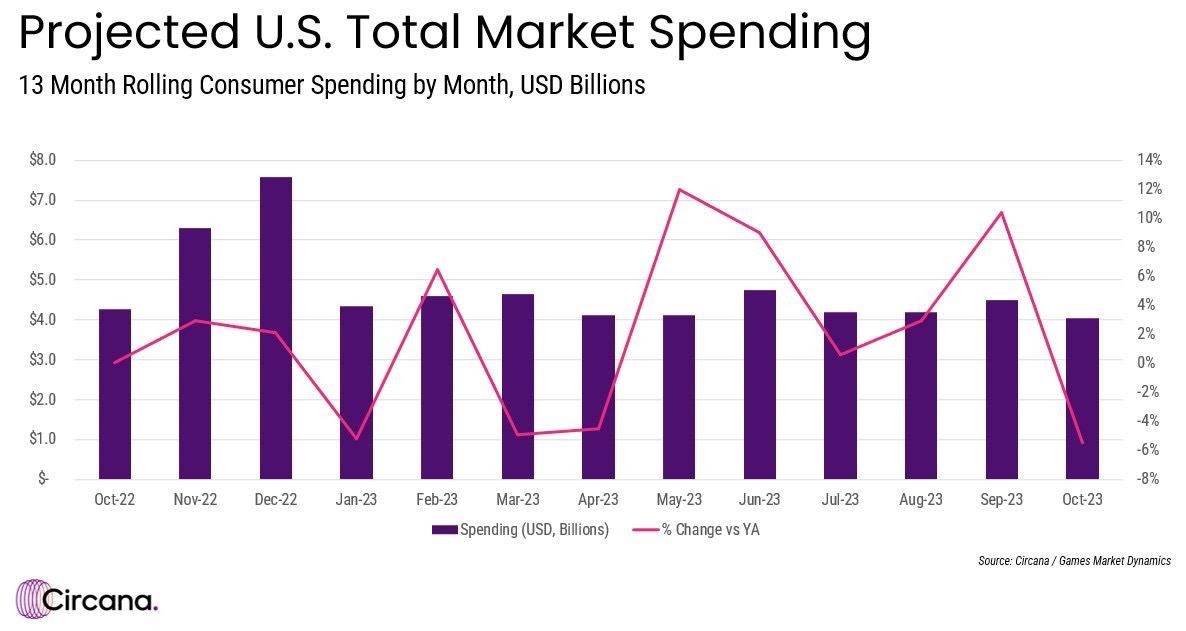
The average gamer now plays 14.5 hours per week, up 1.8 hours from 2022. Most of that extra time goes to mobile and console gaming. Spending tells a different story: the average player dropped $56.20 on games in the past six months, but 46% spent nothing at all.
Over 70% of US Residents Play Games
Relevance to Web3 Gaming
These trends matter for web3 gaming. Super gamers—multi-platform, high-spending, deeply engaged—are exactly the audience web3 needs to reach. Their willingness to invest time and money aligns with ownership-driven models and decentralized economies. The stability of mobile, the uptick in VR and emerging hardware, and growing interest from older players all point toward opportunities for web3 to deliver accessible, cross-platform experiences with real asset ownership.
Generation Alpha's fluctuating engagement opens a door for web3 developers to experiment with blockchain-based incentives and digital collectibles that resonate with younger players. As gaming habits shift, web3 sits in a position to capitalize on both the dedication of super gamers and the broadening appeal of gaming across every demographic.