

Ozark is the kind of game that expects you to figure things out for yourself. It gives you tutorials and hints, but when it comes to combat, you're largely left to learn by playing.
At first, that can be a little frustrating. You don't always know exactly what the game expects you to do, and some of its systems take time to understand. But once things start clicking, that becomes part of the experience.
What stood out most is that combat actually makes you think. You can't simply run into an area and start shooting everything you see. Ammo and supplies are limited, so every engagement becomes a question of where to shoot, when to shoot, and whether you should even bother at all.
What I Liked

Ozark-Combat
Combat Makes You Think
Combat was probably the best part of Ozark.
You can't just fire and forget because ammunition is scarce. Every shot feels like it matters, especially when you have no idea when you'll find your next supply.
That scarcity forces you to pay attention to positioning and to make every shot count, rather than spraying bullets and hoping for the best.
You can also search enemies after killing them, which quickly becomes a habit. Supplies aren't exactly everywhere, so checking bodies and combing the environment is an important part of staying alive.
It sounds simple, but it gives combat a satisfying rhythm: fight, search, explore, and decide whether the next encounter is actually worth the resources.
The Survival Mechanics Add Another Layer
Ozark also has a survival side that's reminiscent of Fallout. You have to manage things like eating and drinking, which adds another layer of difficulty on top of the already limited resources.
Survival mechanics like these can sometimes feel like busywork, but here they fit reasonably well with the game's overall focus on scarcity. You're constantly thinking about what you have and what you might need later.
It makes the world feel less like a series of combat arenas and more like somewhere you actually have to survive.
Local Co-Op Is a Highlight
One feature that genuinely elevates the experience is local co-op.
Being able to play through the game with another person makes everything more enjoyable. Ozark can already be demanding solo, so having someone alongside you makes exploring and dealing with enemies feel more manageable.
More importantly, it just makes the game more fun. Searching for supplies, exploring areas, and tackling enemies together gives the whole experience a completely different feel.
What I Didn't Like
Ozark-Stage
The Camera Takes Some Getting Used To
The camera was probably the biggest source of frustration.
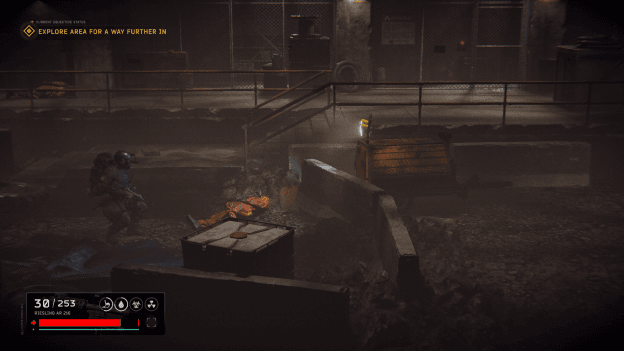
Ozark is technically presented from a third-person perspective, but it carries a more 2D-like quality. If you're not used to that style, it can be disorienting at first.
A more traditional third-person camera would have made things easier, particularly during combat. There were moments when it wasn't completely clear where a character was in relation to an enemy or an object.
After a while, you do get more comfortable with it , but it never fully stops being something you notice.
The Lock-On System Can Be Frustrating
The aiming system also caused problems. The game locks onto enemies when they're within range, meaning you sometimes have to move closer before you can properly target them. The frustrating part is that the lock-on doesn't always choose what you actually want.
There were moments when trying to aim at an enemy directly ahead, only for the game to lock onto a barrel instead.
That's particularly annoying when ammunition is limited and every shot counts.
Aiming down sights also became a frequent necessity, not just for accuracy but simply to see what was ahead , since the normal camera doesn't give you much range of vision. It meant spending a lot of time looking down the sights just to scout the environment.
The Footsteps Are Really Loud
This is a small complaint, but the footstep audio is noticeably loud.
After a while, the sound becomes distracting during exploration. It's not a game-breaking issue by any means, but it's the kind of thing you start noticing and can't stop noticing.
Exploration Is Part of the Experience
Ozark-Objective
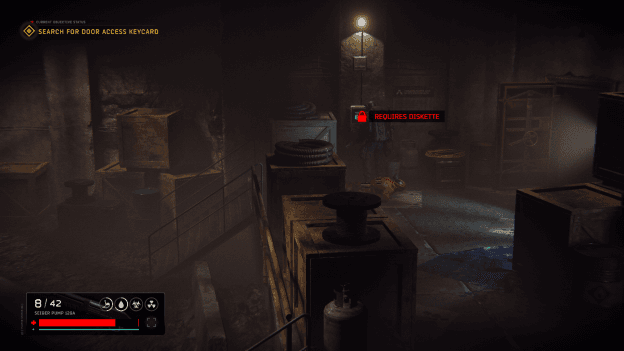
One interesting aspect of Ozark is that it gives you objectives without always making it obvious how to reach them. There were sections where the goal was clear but the path to it was not.
That can be frustrating, but it also encourages you to explore more of the map.
And exploration feels worthwhile precisely because of the limited supplies. When you know you might need more ammunition or resources, you have a genuine reason to check areas you might otherwise skip.
Searching corners, combing through rooms, and doubling back through areas all become natural habits. Finding something you actually need makes that effort feel rewarding rather than tedious.
Early Verdict
Ozark doesn't constantly tell you how to play, and that's largely a strength. You get tutorials and hints, but much of the experience comes from experimenting, making mistakes, and eventually figuring things out.
The resource scarcity is the standout element. Limited ammo and supplies force you to think before entering a fight, and searching enemies and environments becomes a core part of survival rather than an afterthought.
The camera and lock-on system are the clearest pain points. Getting locked onto a barrel when an enemy is standing right in front of you is never fun, and the loud footsteps become grating over time.
But despite those issues, Ozark has more personality than a straightforward shooter. The survival mechanics, resource management, exploration, and local co-op all work together to create something that feels genuinely considered.
It's not a game that makes everything easy. Sometimes that works against it , but learning how to survive is also a big part of what makes playing Ozark enjoyable.
Ozark Review: 7/10