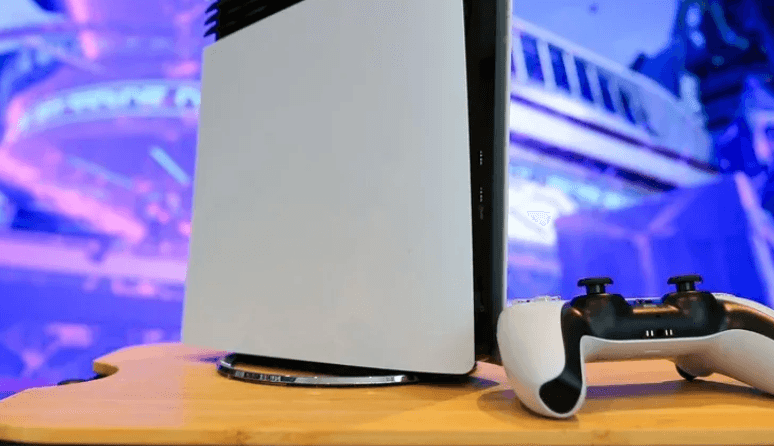


The backlash against Sony ending PS5 physical media production from January 2028 has been loud. Petitions, forum threads, social media pile-ons. Here's the thing, though: the sales data doesn't care about any of that.
Circana analyst Mat Piscatella shared figures for the week ending July 11, 2026, and they are genuinely striking. Just two PS5 games sold more than 10,000 physical copies in the US during that entire week. Year-to-date, only seven PS5 titles have crossed 100,000 physical copies sold in the US. That's not a slow week. That's a format on life support.
The UK numbers are arguably even more telling. Christopher Dring, who runs The Game Business, noted that 1,000 physical sales would have been enough to land the number 9 spot in last week's UK physical sales chart. Pokémon Legends: Z-A held that position, with its sales split 60% Switch 2 and 40% original Switch. Star Fox, which launched on June 25, sat at number 10 with fewer than 1,000 physical copies sold across the entire UK in a single week.

Use code TRYHARD33 at checkout to redeem this offer before code expires again.
Get 33% Off GAMES+ Subscription
What those Star Fox numbers actually mean
To put that in perspective: a single high-street game store a decade ago could move upwards of 100 units of a newly-released title in one day. Star Fox is less than a month from launch and sitting below 1,000 weekly physical copies across an entire country. That's not a quiet week for a niche franchise. That's a structural collapse.
Some context is worth acknowledging. Star Fox is a remake of an older title, not a fresh AAA release. Sales naturally slow after launch week. The UK is one market, not a global picture. And critically, the data tells us nothing about digital sales for the same period. If Star Fox only moved 2,000 digital copies that same week, physical would still represent a third of total sales. Without that comparison, the picture is incomplete.
But even with those caveats, nobody is arguing physical is thriving. The debate is really about how fast it's dying, and whether that pace is being accelerated by deliberate industry decisions.
Sony's decision looks less surprising in this light
Sony announced it would stop producing physical PS5 media from January 2028. The community reaction was swift and angry. A petition gathered over 300,000 signatures. But with 90 million PS5 units in the wild, that signature count represents a fraction of the installed base, and the sales data suggests the passionate minority online doesn't reflect where most players actually spend their money.
The key here is that Sony isn't making this call in a vacuum. Publishers track exactly these numbers. When only seven titles crack 100,000 physical copies in a full year across the US, the business case for maintaining disc production infrastructure becomes very hard to justify. Sony almost certainly isn't reversing course.
Nintendo's position remains different. Japan continues to move significant physical numbers, with recent first-party Switch 2 titles posting strong launch week physical totals. Circana's Piscatella has previously noted that Nintendo operates by its own rules, and the near 50/50 digital-physical split in their annual results backs that up. Game Key Cards, whatever you think of them, are partly Nintendo's attempt to keep physical retail viable for third parties who would otherwise skip the format entirely.
The ownership question nobody wants to answer
What most players miss in this debate is that the physical versus digital argument was never really about plastic. It's about ownership. A disc or cartridge can be resold, lent, kept indefinitely, and played without an internet connection. A digital license can be revoked, delisted, or made inaccessible if a storefront shuts down. That's not a hypothetical. It's already happened with older platforms.
The gaming community that quietly shifted to digital over the past decade didn't necessarily endorse that trade-off. Convenience won, as it usually does. But the downstream consequences of a fully digital market, including no resale value, no price competition from second-hand retailers, and platform holders controlling access entirely, are now arriving faster than most people anticipated.
For players who want to stay informed on what's actually worth buying while physical options still exist, our gaming guides cover everything from current releases to hidden gems worth tracking down. If you're specifically looking at what's new and playable right now, the Dying Light: The Beast docket codes guide is worth bookmarking, as is our rundown of The Sims 4 Marketplace update for players navigating that game's evolving content model.
The data from this week won't change the trajectory. But the conversation about what digital-only gaming actually means for players, particularly around preservation and ownership rights, is one the industry still hasn't answered honestly.