

The best version of Pokémon Champions is genuinely exciting. No grinding, no EV training spreadsheets, no spending 40 hours building a team just to find out your nature is wrong. You pick your Pokémon, set your moves and stat spreads from a menu, and get straight to battling. For anyone who has watched competitive Pokémon from the sidelines and wondered why the entry barrier is so punishing, that alone feels like a long-overdue fix.
The problem is everything built around that core.
What the game gets right before it gets in its own way
Developed by The Pokémon Works and published by The Pokémon Company and Nintendo, Pokémon Champions launched on April 8, 2026, for Switch 2, Switch, iOS, and Android. The free-to-play competitive battler strips out the mainline RPG structure entirely and focuses on what the series does best: turn-based battles with decades of mechanical refinement behind them.
Single and double battle formats are both available, each with ranked and unranked modes. The key here is that building teams for each format requires genuinely different thinking, and that strategic layer holds up. Mega evolutions are back too, letting one Pokémon per team power up for the duration of a match. After recent competitive seasons leaned heavily on Scarlet and Violet's terastallization mechanic, the shift back to mega evolutions freshens up the meta in a way that feels deliberate and welcome.
The roster gap that serious players will notice immediately
Here's the thing: the series has over 1,000 Pokémon, and Champions launches with roughly 190 available. That is not a soft limitation. For competitive players who have spent years building around specific team compositions, finding that staple picks simply do not exist in the game is a genuine problem.
Held items are similarly gutted. The choice band, assault vest, and life orb are all absent at launch. These are not obscure niche items; they are foundational to how competitive teams function. Calling Champions the future of competitive Pokémon while shipping without them creates an awkward gap between the game's stated ambitions and what it actually delivers.
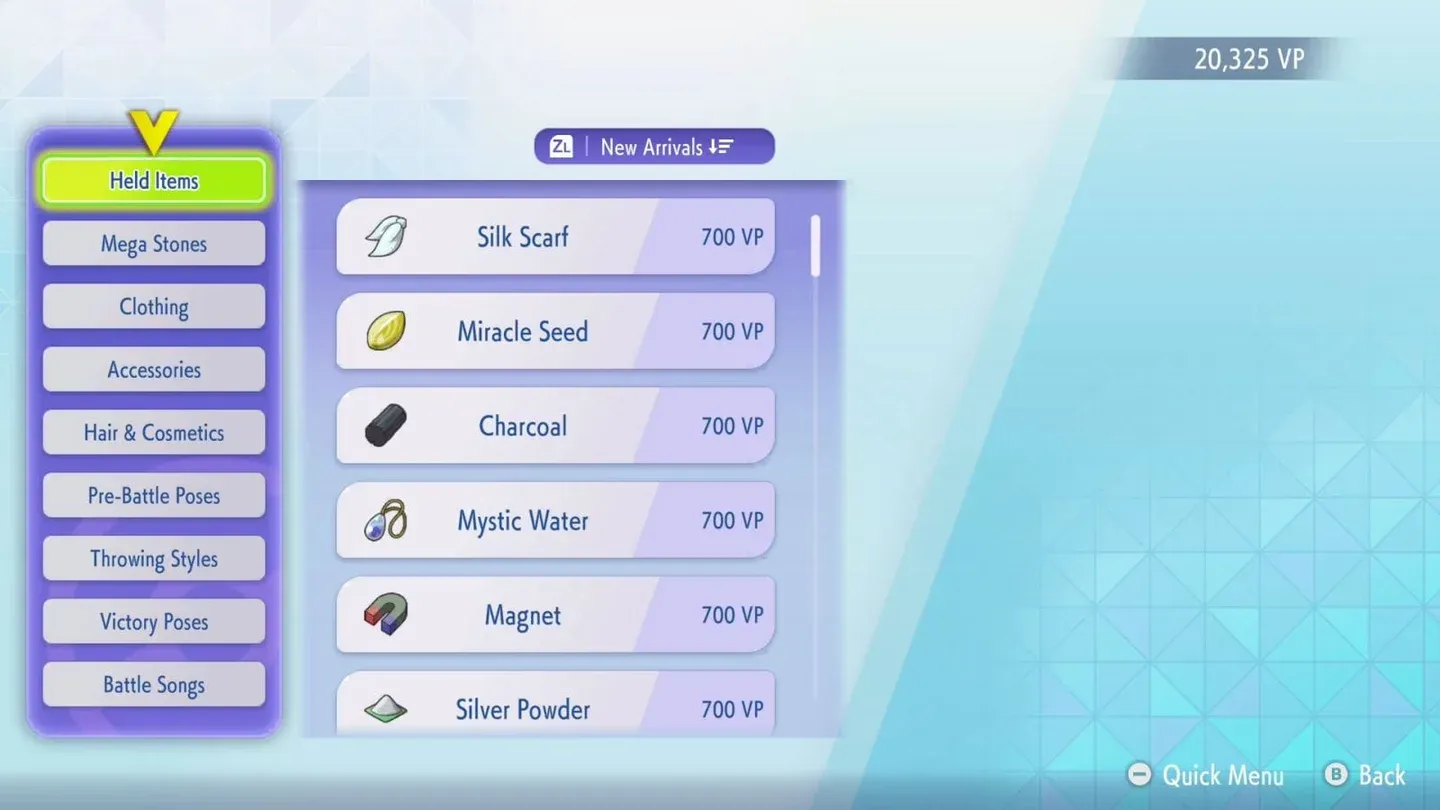
Held item options at launch
The free-to-play structure punishes the people it should be welcoming
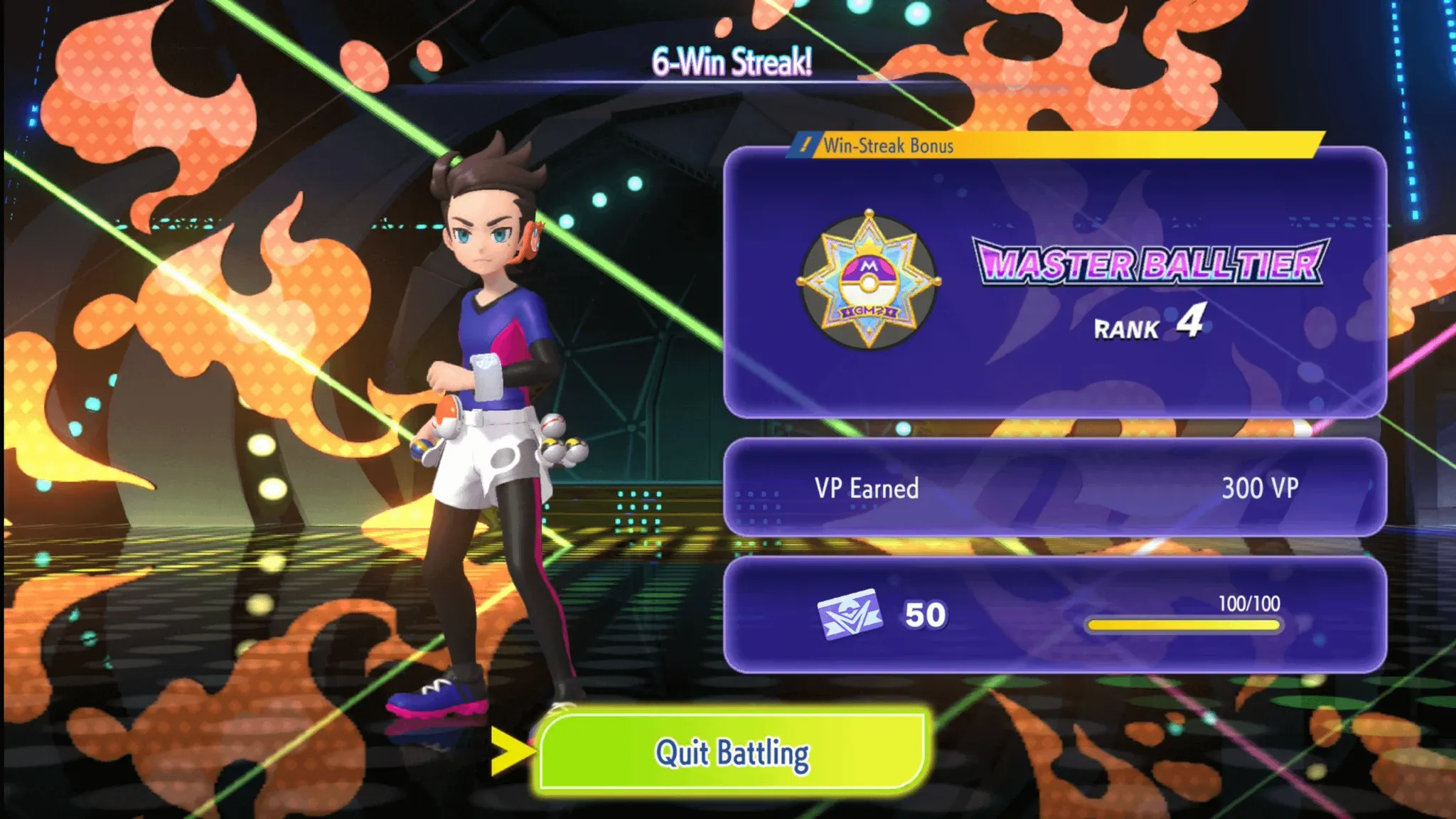
VP, the game's currency, touches nearly everything. Cosmetics cost VP, which is expected. Held items and mega stones also cost VP, which is less expected. Pokémon can be collected for free once per day, but keeping them permanently costs VP. Changing moves or stat spreads costs VP. Winning battles earns bonus VP, and the opening hours are reportedly generous, but the cumulative weight of the system works against the game's most prominent selling point: accessibility.
The onboarding does not help. The tutorial covers the absolute basics, aimed squarely at players who have never seen a Pokémon battle before. Past that point, the game offers little guidance on team building, item synergies, or which Pokémon are actually viable in the current meta. The implicit message is that Champions can be learned in a vacuum, but the reality is that new players will need to turn to external resources like Smogon or YouTube guides almost immediately.
That creates a strange tension. The game simultaneously reaches for newcomers with simplified systems and a free-to-play model, while also failing to actually teach those newcomers anything useful.
Who Champions actually works for right now
Players who already understand competitive Pokémon and want a faster, lower-friction way to participate will get the most out of Champions in its current state. The barrier to entry for ranked play in mainline games has always been steep, and this genuinely lowers it. That is worth something.
For complete newcomers, the combination of a shallow tutorial and a VP-gated progression system is a tough sell. For hardcore veterans, the missing Pokémon and absent held items make it feel like a limited preview of something bigger rather than a finished product. By aiming at all three audiences simultaneously, Champions does not fully satisfy any of them.
The foundation here is strong enough that future updates could address the roster gaps and item limitations. Whether the monetization structure gets revisited is a different question. For now, Champions works best as a companion to the mainline series rather than a standalone destination. You'll want to check our latest reviews to see how it stacks up against other competitive releases this year.
The competitive Pokémon scene deserves a dedicated home, and Champions comes closer than anything before it. It just needs to figure out what it actually wants to be before it can get there. For more on competitive gaming releases across platforms, browse more guides to stay ahead of the meta.