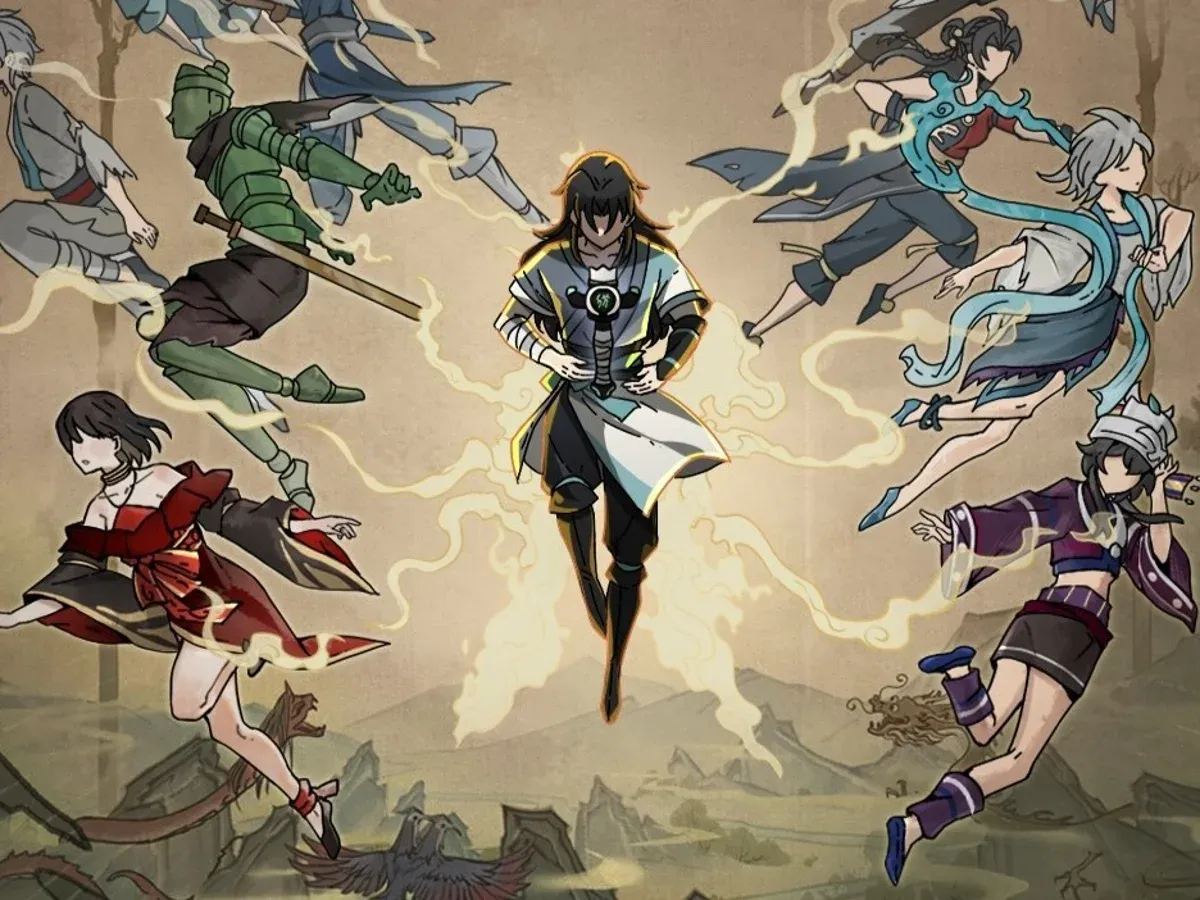


Some games announce themselves with trailers and marketing budgets. The Scroll of Taiwu did it the old-fashioned way: word of mouth, a fiercely dedicated player base, and eight years of relentless development that turned a solo passion project into one of the most talked-about PC RPGs in China right now.
The game is the work of Heluo Studio, a tiny Chinese indie outfit that first released an early version of Taiwu back in 2018. What players found then was already unusual: a wuxia life simulation that asked you to grow a martial arts master from birth, navigate a procedurally generated world full of sects, rivals, and ancient secrets, and eventually confront a centuries-old nemesis. Eight years of updates later, the scope of what Heluo has built is genuinely hard to categorize.

Use code TRYHARD33 at checkout to redeem this offer before code expires again.
Get 33% Off GAMES+ Subscription
What actually makes Taiwu different from every other RPG
Here's the thing: most RPGs give you a character and a story. Taiwu gives you a life. You manage your cultivation (the wuxia concept of training body and spirit to unlock supernatural power), your relationships with NPCs across dozens of factions, your crafting, your reading, your diet, and your combat style, all simultaneously, across a turn-based structure that tracks every single day of your character's existence.
The roguelite layer sits underneath all of this. Each run starts fresh, with a different lineage, different starting skills, and a different configuration of the world. The game's procedural systems mean that no two playthroughs feel identical, and with the depth of the cultivation and martial arts trees, players routinely sink hundreds of hours across multiple runs without exhausting what the game has to offer.
What most players miss on first contact is just how much the game rewards reading. Taiwu's world is built on classical Chinese literature, philosophy, and martial arts fiction. The texts your character studies in-game are based on real classical works, and the combat philosophies attached to different fighting styles reflect actual schools of thought in wuxia fiction. It's a game that respects its player enough to build an entire cultural framework rather than just borrowing aesthetic surface details.
The eight-year development arc that built something unusual
Heluo Studio's approach to development has been almost the opposite of how most modern games are built. Rather than shipping a polished vertical slice and expanding outward, the team spent years deepening existing systems, responding to community feedback, and adding entire new dimensions of gameplay: a full crafting overhaul, expanded NPC relationship mechanics, a reworked combat system, new story content tied to the game's central antagonist.
The result is a game that feels genuinely dense in a way that most RPGs, indie or otherwise, simply aren't. The closest comparisons are games like Dwarf Fortress or Caves of Qud, titles where the systems themselves are the content and mastery takes real time. But Taiwu wraps all of that in a wuxia aesthetic and a surprisingly coherent narrative through-line that keeps individual runs feeling purposeful rather than purely mechanical.
Why this is hitting now, not in 2018
The timing of Taiwu's global breakthrough isn't accidental. The English localization reaching a genuinely playable state, combined with Chinese PC gaming exports gaining wider attention after titles like Black Myth: Wukong and Neverness to Everness demonstrated that there's a real appetite for games rooted in Chinese culture and mythology, has created a moment where players are actively looking for the next discovery from that scene.
Taiwu fits that appetite perfectly. It's mechanically ambitious in ways that feel fresh to players burned out on Western RPG conventions, and its cultural specificity is a feature rather than a barrier. If you've been keeping up with our Neverness to Everness character pixels guide or optimizing your setup with the Neverness to Everness best PC settings guide, Taiwu represents a very different kind of Chinese gaming experience but one that's drawing from the same surge of interest.
The key here is that Taiwu isn't trying to compete with big-budget action RPGs on their own terms. It's doing something structurally different: a game about patience, mastery, and the accumulation of knowledge over many runs, built by a small team that clearly played a lot of the games they love before making their own.
What this means for players looking to jump in
The learning curve is real. Taiwu does not hold your hand, and the sheer volume of systems on display in the first few hours can feel like being handed a manual written in a language you're still learning. The community around the game has built extensive guides, and the English localization has improved considerably, but you'll want to approach your first run as an exploration rather than an attempt to win.
For players who like their RPGs with genuine mechanical depth and are willing to invest time in understanding a system before it rewards them, Taiwu is the kind of discovery that makes you feel like you've found something most people haven't played yet. That feeling gets rarer every year.
Head to our gaming guides hub for more coverage as the global community around The Scroll of Taiwu continues to grow and produce resources for new players finding the game for the first time.