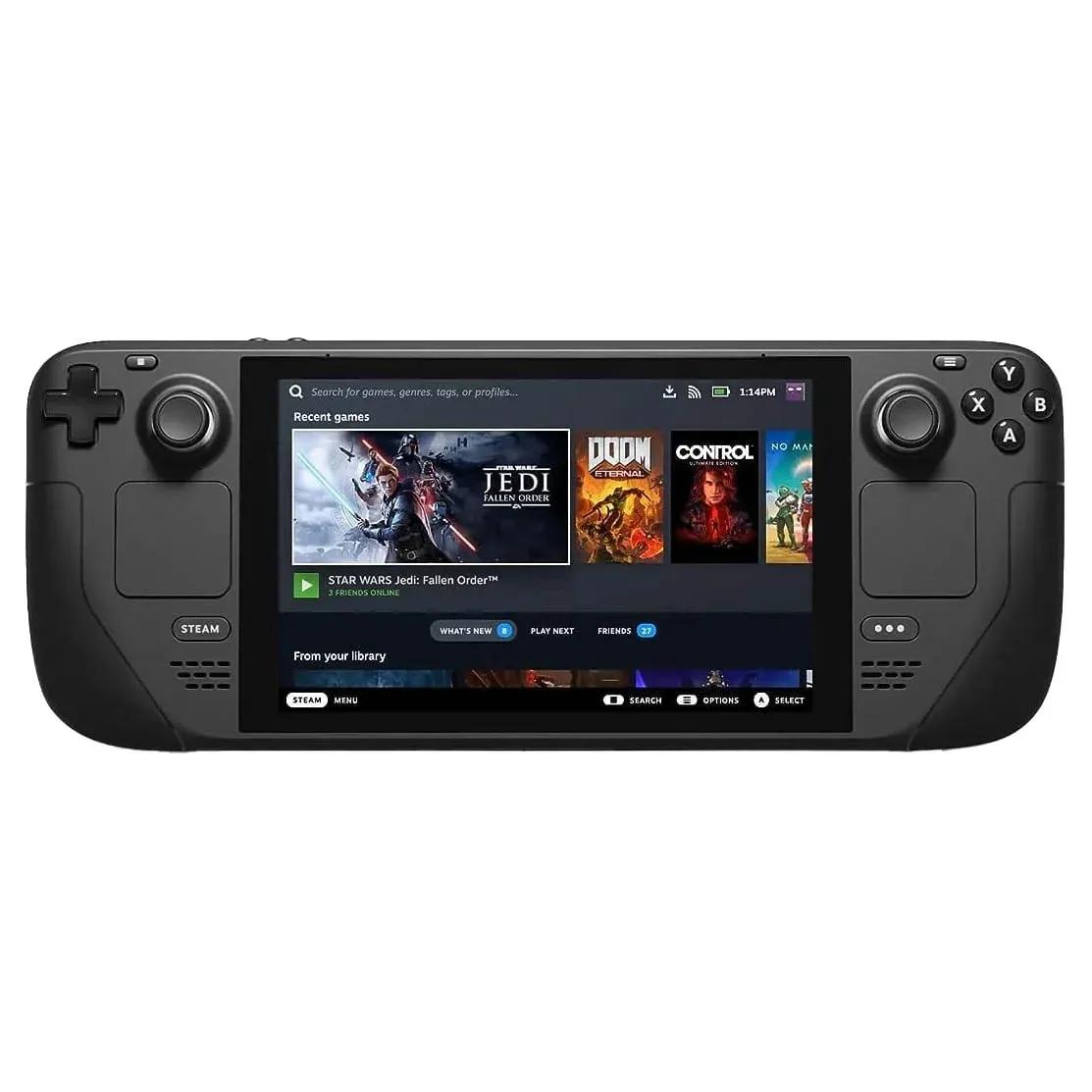

Valve's Steam Deck has spent most of its life near the top of Steam's bestseller charts. Since its 2022 launch, brief dips outside the top 10 were treated as actual news events. That streak appears to be over.
Since Valve relaunched the Steam Deck at higher prices in late May, chart analysis suggests weekly sales have fallen by approximately 80 percent compared to 2025 baselines. The handheld that once rarely left the top 5 globally now sits around 12th place.
From top 5 to barely top 10
The numbers paint a stark picture. Through 2025, the Steam Deck never dropped below seventh place on Steam's top-selling products by revenue chart, spending most of that time inside the top 5. Then RAM and storage shortages hit in February, supply dried up, and the device went completely unavailable until May.
When stock returned, so did the price tags. The previous range of $400 to $649 is gone. The current lineup runs from $789 to $949, a jump driven by component shortages that Valve has been transparent about.
The chart position slide has been steady. The Deck debuted at fifth place when orders resumed in late May, then drifted to 14th place by early July. Back-of-the-envelope modeling based on surrounding game revenues and estimated average sale prices suggests the real unit volume drop is somewhere around 80 percent, from roughly 11,000 to 18,000 units per week in 2025 down to an estimated 1,400 to 3,000 units per week now. Those are rough estimates with meaningful margin for error, but even the high end of the current range is a fraction of where the Deck was.
What $789 buys you in handheld gaming now
Here's the thing: the old Steam Deck pricing had almost no direct competition at its tier. A $400 entry point was hard to argue with for a device that ran your entire Steam library. At $789 and up, the math changes completely.
Competitors like the ROG Ally X, Lenovo Legion Go, and MSI Claw all occupy the same price range now, and several offer more raw performance than the current Steam Deck hardware. Consumers who would have grabbed a Deck without much deliberation at $400 are now running genuine comparisons before spending nearly $800.
That caveat matters, but it doesn't fully explain an 80 percent drop. Price sensitivity is real, and the Deck's audience has always skewed toward players who value the price-to-performance ratio. Doubling the entry cost fundamentally changes who the product is for.
The Steam Deck 2 problem
In a vacuum, a sharp sales decline would normally push a hardware maker to accelerate its next product. Valve has acknowledged a Steam Deck 2 is in development, but has publicly stated it's waiting for better chips before committing to a release timeline.
The problem is that those better chips, when they arrive, will carry their own premium pricing in the current component market. If the existing Deck hardware already costs $789 to $949 due to RAM and storage shortages, a more powerful successor built on newer silicon could push prices even higher at launch.
That's a difficult position for Valve. The Steam Deck's appeal was always tied to accessible pricing. A premium-tier successor that lands at $1,000 or more would be a fundamentally different product targeting a fundamentally different buyer.
For players who already own a Steam Deck, none of this changes the device in hand. The library keeps growing, SteamOS continues to receive updates, and the hardware still runs the vast majority of Steam titles without issue. If you're looking to make the most of your current setup while the market sorts itself out, our gaming guides cover everything from strategy deep-dives to hardware tips worth bookmarking.
For anyone considering a first-time purchase at current prices, the calculus is trickier. The Deck remains the most polished handheld Linux gaming experience available, but $789 is a harder sell when the competition has closed the gap considerably. Watch the chart positions over the next few weeks. If sales continue sliding, a price correction or a formal Deck 2 announcement could follow sooner than Valve has let on.
While you're waiting to see how this plays out, there's plenty to keep you busy. Check out our War Thunder May Sale guide if you're looking to spend smart on in-game purchases, or the PowerWash Simulator 2 furniture stacking guide for a look at what Update 1.2 added to one of Steam's most unexpectedly addictive games.