
To get Steam keys to streamers and YouTubers without feeding scammers, use a platform that verifies creators, such as Keymailer, Lurkit, Terminals.io, PressEngine or Gamosy. Alternatively, skip keys entirely with Steam Curator Connect. Most let you start free.
Know this first: no platform can make a creator play your game. Keys can earn coverage from people who opt in. Guaranteed placement is a different product.
Steam key distribution platforms compared
We checked the official pages in November 2026, with verification gaps noted below. This is not a quality ranking. “Pricing on request” means we found no public number. Plans change, so confirm before paying.
| Platform | Best for | Pricing and free access | Creator vetting / anti-scam | Link |
|---|---|---|---|---|
| Keymailer | Key requests and coverage tracking | Free tier and trial; paid promotions and services, with no plan prices published; free for creators | Accreditation and channel eligibility checks; developers choose recipients | keymailer.co |
| Lurkit | Creator CRM and paid Quests | Indie, Studio and Publisher plans: pricing on request; 20% commission on paid Quests; no free tier listed | Says it manually verifies every creator | lurkit.gg |
| Terminals.io | Press and media-status creators | Launch packages: $2,000–$6,000; no developer free tier listed | Manual application review, with audience and content minimums | services.terminals.io |
| PressEngine | Press-heavy outreach and coverage tracking | Free Starter; Lite £300/month, Standard £800/month, Pro £1,200/month; Ultimate on application | Says it personally verifies every account | pressengine.net |
| Gamosy | Independent studios wanting free distribution | Free key distribution; PRO $49/month per game; new studios get 60 days of PRO | Creator Trust Score and a fraud score on every request | gamosy.com |
| Daredrop (Dare Drop) | Funded campaigns with challenges and rewards | Pricing on request; book a demo; no free tier listed | Not described publicly | daredrop.com |
| Gamesight | Managed key outreach | Pricing on request; no free tier listed | Automated rules, manual review and identity verification | docs.gamesight.io |
| Woovit | Larger publishers; described as enterprise | Pricing on request; official page unverified; free access unknown | Publisher whitelists and blocklists, per a partner case study | Cheesecake Labs case study |
| Steam Curator Connect | DIY outreach without keys | Free | You select curators; offers go through Steam | Steamworks docs |
| itch.io press system | Games also sold on itch.io | No fee mentioned in the 2014 announcement; check current availability | Every creator application reviewed | itch.io update |
Keymailer alternatives and how they work
Keymailer
Keymailer's publisher side is now branded Partnier. Ask what the paid extras cost before committing.
Creators need an Eligible channel to request keys; Accredited status signals regular game coverage and tagging. Keymailer also claims a daily 20-point checklist on every influencer and manual channel review by two full-time anti-fraud staff. These are its own claims. The publisher, developer or PR agency still decides who receives keys, so check requesters yourself.
Lurkit
Lurkit advertises a discount of up to 70% without explaining who qualifies. Its icon identifies Lurkit creators beside their usernames for segmentation.
The site gives both 90k+ and 100k+ verified-creator figures. Treat those as marketing, not an audit.
Terminals.io
Terminals runs on media status. Staff review applications individually, with minimums such as 500 followers or subscribers on YouTube or Twitch. Steam-only curators and groups do not qualify.
Packages are Villager ($2,000), Adventurer ($3,000), Hero ($4,000) and Legend ($6,000), with distribution lasting 2 or 4 weeks. Nothing else listed publishes higher one-off prices.
PressEngine
Starter includes review key management and automatic coverage discovery. Lite covers 2 titles monthly; all prices exclude VAT.
Account verification usually takes one or two business days. Its pricing page displays a coverage rate without an “as of” date, so we are not quoting it.
Gamosy
The creator CRM and analytics are free alongside distribution. PRO adds publishing and monitoring.
Creators connect YouTube, Twitch or TikTok and receive a Trust Score from 0 to 100. We found no public creator count, so ask about reach before relying on it.
Daredrop
Publishers fund “Drops,” creators complete challenges while streaming, and their communities win rewards such as keys or DLC. This suits a funded launch much better than a solo developer without a budget.
Gamesight and Woovit
Gamesight supports targeted outreach, inbound requests, secure direct redemption links and an auditable record of which key went to whom. Its docs list no price.
Woovit's engineering partner describes an enterprise tool for sending codes to YouTube and Twitch creators. We could not find an official site with pricing, so ask before building a plan around it.
itch.io press system
Paid itch.io games can opt in to give approved indie-focused creators free access. The only official announcement we could verify dates from 2014; check your settings for the current setup.
Which option should you try?
Lurkit is closest to Keymailer in scope; Gamosy is cheapest to try, PressEngine has the clearest public pricing, and Terminals.io suits press-focused outreach. Curator Connect is free and keyless.
We found no neutral Keymailer-versus-Lurkit test. Start free and pay only when you need extra tooling. Paid plans make more sense for funded campaigns across several games or coverage reports. Coverage-rate claims are vendors' own numbers.
Press releases and sponsored articles, including our own services, are a separate route from key platforms.
How to spot Steam key scammers
Valve warns that fraudsters impersonate journalists or storefronts to obtain and resell keys. Treat keys like cash, and give distributors only what they reasonably need. Never sell Release State Override, Dev Comp or Playtest keys.
Game Developer's Eduardas Klenauskis (2018) flagged mismatched contact emails, redemption countries that differ from claimed locations, and extra keys requested for “friends.” Simon Carless (2022) added streamer impersonation, bought followers and bulk-requesting Steam curators who rarely update.
Before every send:
- Match the sender's email against the channel or website's official contact.
- Send only one key, even when asked for more, Carless's advice.
- Compare subscriber counts with actual video views.
- Check that the channel regularly covers games like yours.
- Watch redemption locations; a region mismatch is a reason to blacklist.
Platforms reduce this work; they do not replace it. Carless reported that Benjamin Glover of Stellar Jockeys, the Brigador developer, saw traffic spikes from unrelated streamers during a paid campaign. Devolver's Clara Sia called these services “probably better than nothing at all,” but stopped sending keys through them because impersonators slipped through. These are anecdotes, not measured failure rates.
How many Steam keys should you send, and when?
Valve gives request caps, not creator-outreach targets: up to 5,000 default release keys, with beta keys generally capped at 2,500 total. Request small batches and return for more as needed. Requests disproportionate to Steam interest and sales will likely be denied. First-time developers must wait three weeks after creating an AppID before requesting any keys.
For a starting point, presskit.gg, updated November 2026, suggests:
- Before a demo or Next Fest: 20–50 keys.
- Before launch: 100–200 for most indie games, plus about 20% extra for late requests.
- Post-launch: as needed, once sales data is available.
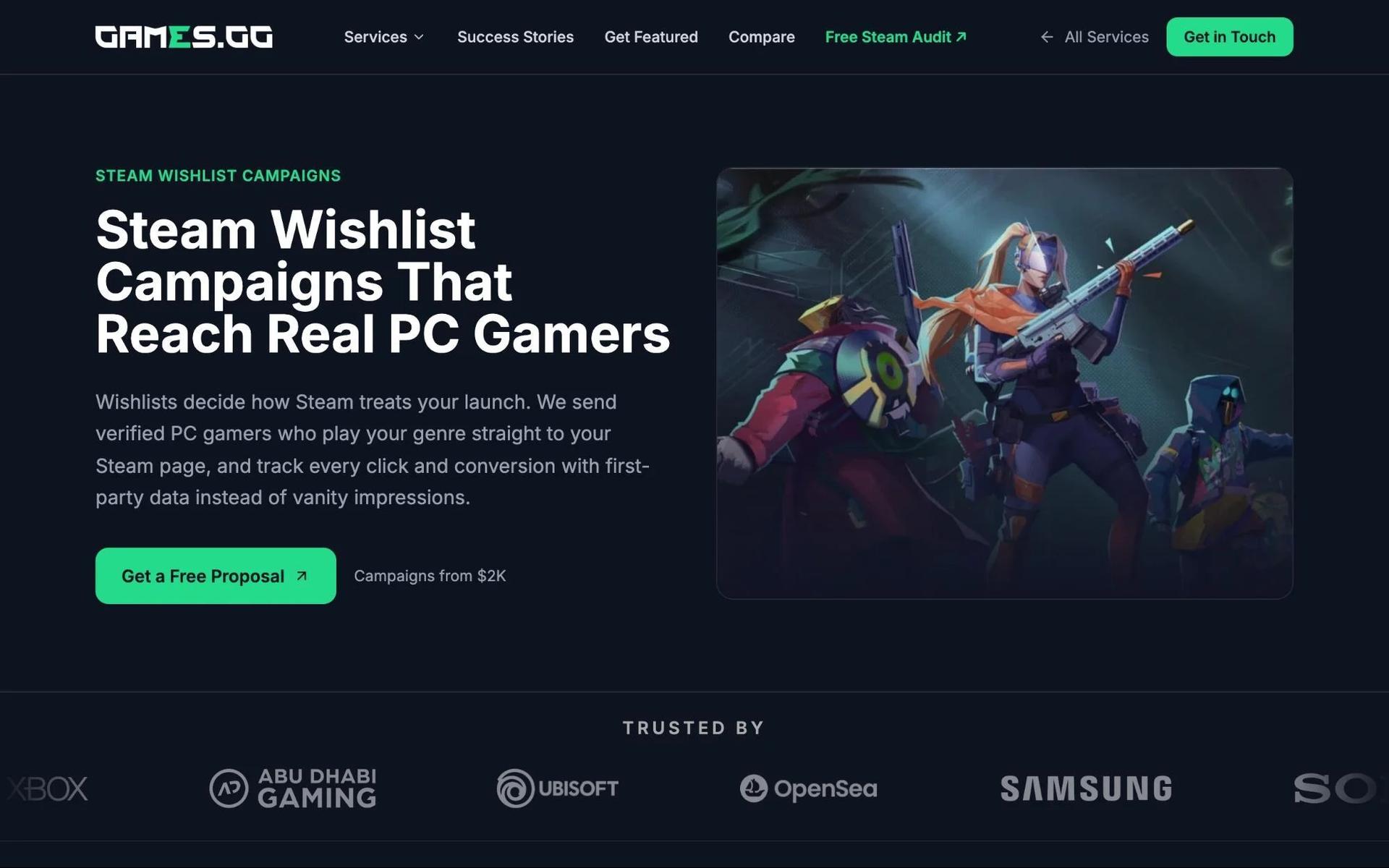
Wishlist campaigns, including our own service, offer another route that does not depend on keys.
Those quantities are one author's rough guide, not rules. For timing, see when to start marketing your game and preparing for Next Fest. Fix a weak store page first: creator traffic will not help if visitors will not wishlist.
Skip keys with Steam Curator Connect
For many indie games, this is the cleanest route. Steamworks allows offers to up to 100 curators, with up to 5 copies each. Extra copies mostly matter for multiplayer reviewers playing together.
Curator Connect grants licenses directly through Steam, leaving no keys to leak or resell. You need the Generate CD Keys permission. Accepted copies cannot be revoked, although unaccepted offers can expire.
Carless also recommends collecting streamer contacts manually and building relationships rather than relying only on platforms. Our guide to marketing an indie game with no budget covers that outreach.
Do streamers actually move wishlists?
Sometimes, especially around major moments such as betas. Our streamer activity and Steam wishlist growth analysis found clear Mecha Break wishlist jumps during open beta windows, driven by major streamers.
It also found about 41 hours of post-release streaming lined up with one copy sold across several 2025 releases: correlation, not causation.
A handful of small streamers will not produce the same jump. Reach and timing matter more than the number of keys sent.
Keys versus paid placement: where GAMES.GG fits
Keys are free or cheap, but creators choose whether to play. Paying for a post before a known audience on a known date is sponsored placement, not earned coverage.
GAMES.GG sells sponsored social posts. Our TikTok, Instagram and YouTube Shorts channels generate 50M+ monthly views combined; our TikTok handle is @gamesdotgg. Our September 2026 data puts the TikTok median at about 113K views per post. Results vary, so these figures are context, not promises.
- Indie Game Spotlight, $500: independent studios only; one dedicated post on one channel. Cross-posting costs extra.
- Game Showcase, from $3,000: any game; posts on all three channels, the game link delivered through comment-to-DM automation, and a 24-hour Instagram story.
- Launch Partnership: custom; book a call.
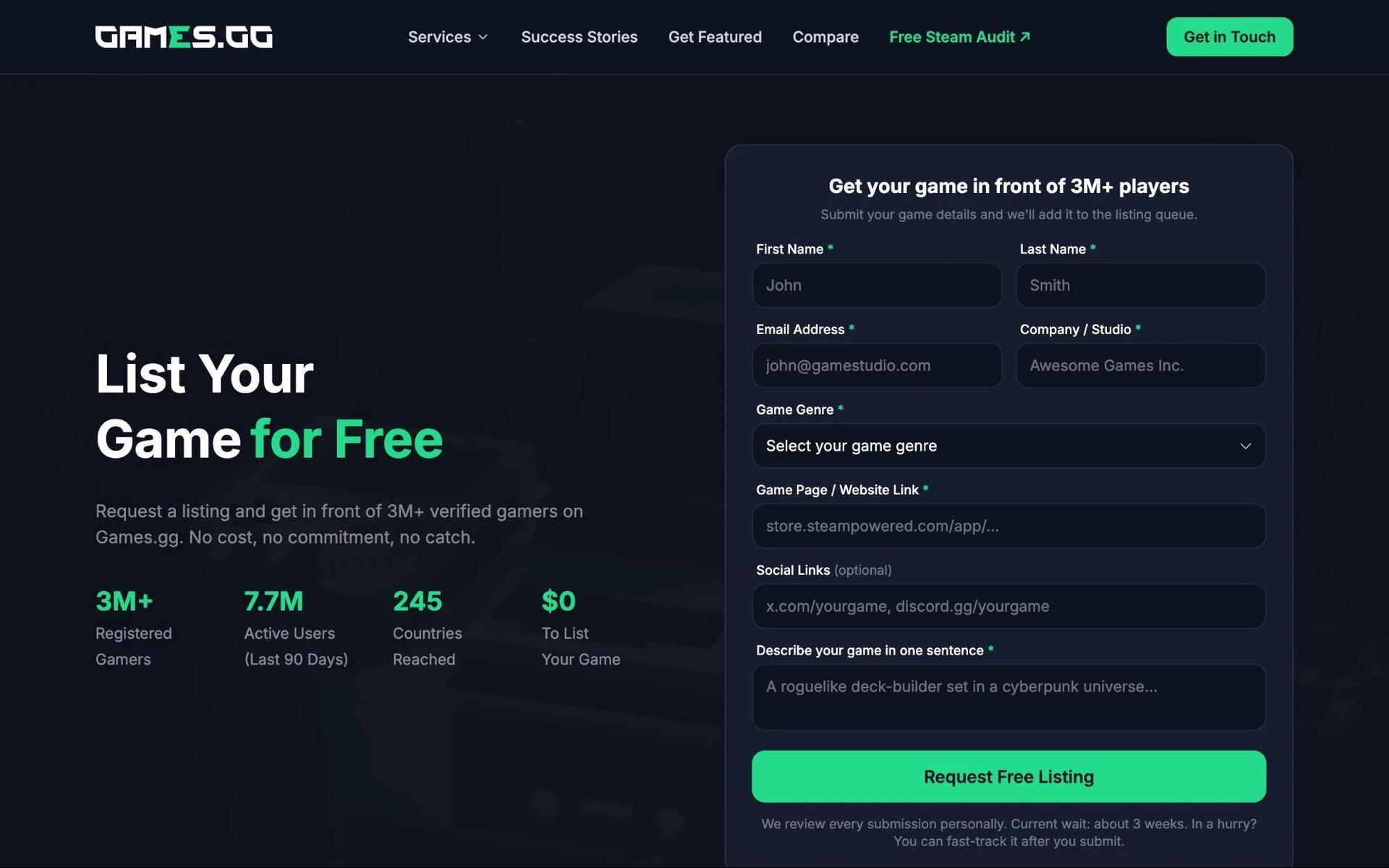
See the social media promotion page for details, or start with a free GAMES.GG listing. Our game marketing guide and budget breakdown help divide spending between keys and paid reach.
Before you send your first key
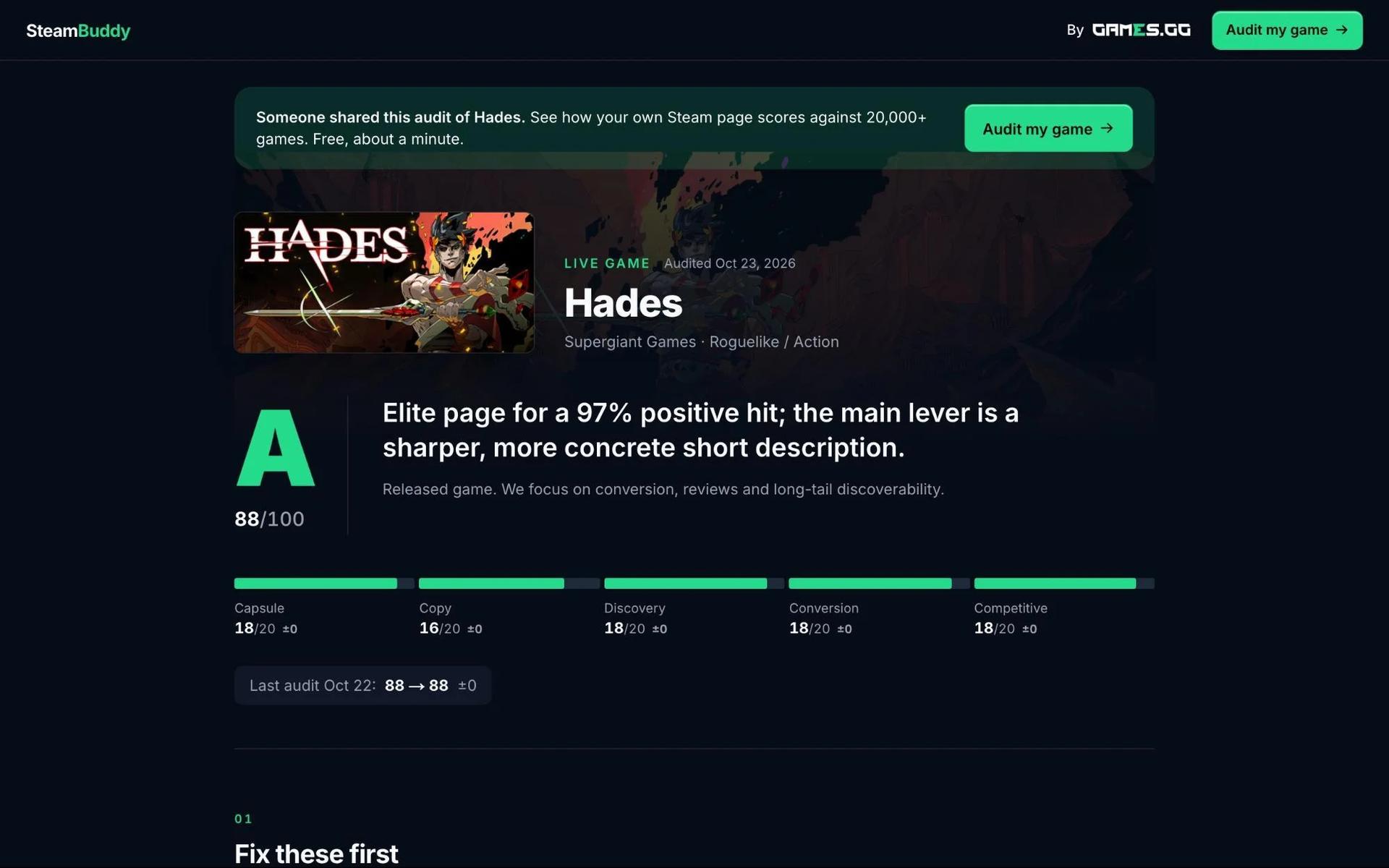
Check whether your Steam page converts incoming visitors. Our free SteamBuddy audit scores your page against 20,000+ Steam games and takes about a minute.