

Players crashing into Subnautica 2's early access have quickly discovered that hunger on planet Proteus is not a background mechanic you can ignore. Subnautica 2 throws a wrinkle at you almost immediately: the food you find might not actually feed you. That single design decision has sent thousands of players scrambling for answers, and the community response has been loud.
Why eating in Subnautica 2 is more complicated than it looks
The original Subnautica kept survival mechanics relatively approachable. Grab a fish, eat it, move on. Subnautica 2 layers a new system on top of that foundation called Digestive Incompatibility. Certain creatures found near your starting Lifepod are simply incompatible with your character's biology, meaning eating them does nothing, or worse, actively harms you.
Here's the thing: the game does not always explain this clearly upfront. New players spend precious early minutes stuffing their inventory with local fauna, wondering why their hunger bar refuses to budge. The fix is not finding better food. The fix is unlocking the Digestion Adaptation, which adjusts your biology to process the local ecosystem properly.
The Angel Comb creature, found north of your starting Lifepod, is the key scan needed to unlock this adaptation at the Biolab. Once you have it, the food sources around you become viable. That single unlock changes the early game entirely.
The food sources worth knowing about
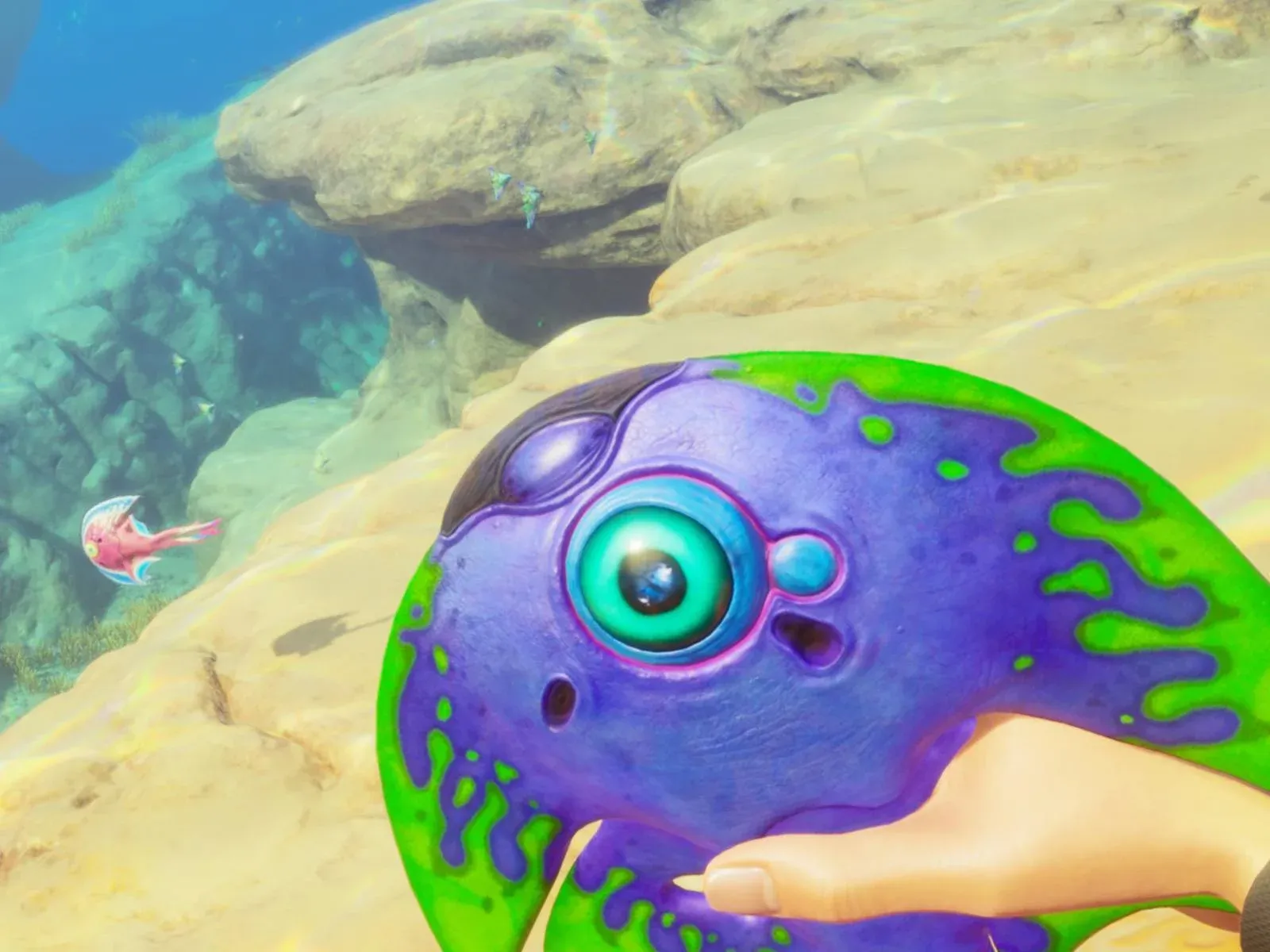
Once digestion is sorted, the ocean opens up. The most accessible food in the early game comes from smaller passive creatures swimming near the surface and in shallow reef zones. These can be grabbed by hand and eaten raw, though cooking or processing them where possible typically yields better hunger restoration.
Salt becomes relevant here faster than most players expect. Preserving and processing food requires salt, and the nearest reliable deposits sit close to Chap's Blackbox, a location players tend to stumble across during early exploration. Knowing exactly where to farm it saves a lot of backtracking. A single efficient run in that area can net around 35 pieces, which is enough to set up a meaningful food supply. The Subnautica 2 salt farming guide covers those exact spawn locations in detail.
Beyond raw food gathering, the Biolab opens up passive options that reduce how often you need to eat in the first place.
Biomods that take the pressure off hunger
Two passive Biomods stand out specifically for food management, and both are worth prioritizing once the Biolab is built.
Slow Metabolism is unlocked by scanning the Nibbler Mango, a creature found around the outskirts of Coral Garden and near the Hydrothermal Vents. Once equipped, your microbiome becomes more efficient and food loss slows noticeably. For players who find constant foraging tedious, this is arguably the single most quality-of-life improving unlock in the game right now.
Dermal Garden takes a different approach. Scanning the Needler Mango at the Needler Nest inside the Alien Ruins unlocks this one. It slowly grows nutritious algae on your skin, generating a food item passively over time. The catch: it needs a free inventory slot to deposit the algae, and the regeneration rate is slow. It works best as a backup rather than a primary food source.
For water alongside food, Water Secretion (from scanning the Water Slug near grass patches or small caves) functions the same way, slowly filling a water packet that occupies one inventory slot.
What most players miss is that Water Retention and Slow Metabolism together create a noticeably more relaxed survival loop. You spend less time hunting, less time managing inventory, and more time actually exploring the depths of Proteus.
What the community is figuring out right now
Since Subnautica 2 hit early access on May 14, food management has been one of the top discussion points across player communities. The Digestive Incompatibility system in particular caught a lot of people off guard, generating significant frustration before the workaround became widely known.
The consensus settling in is that the game rewards players who engage with the Biomod system early rather than treating it as optional. Survival on Proteus gets considerably more manageable once you stop fighting the biology and start working with it.
For a full breakdown covering hunger, thirst, and how Digestive Incompatibility interacts with every food source in the game, the Subnautica 2 food, water, and digestion guide has everything you need to stop dying on an empty stomach.