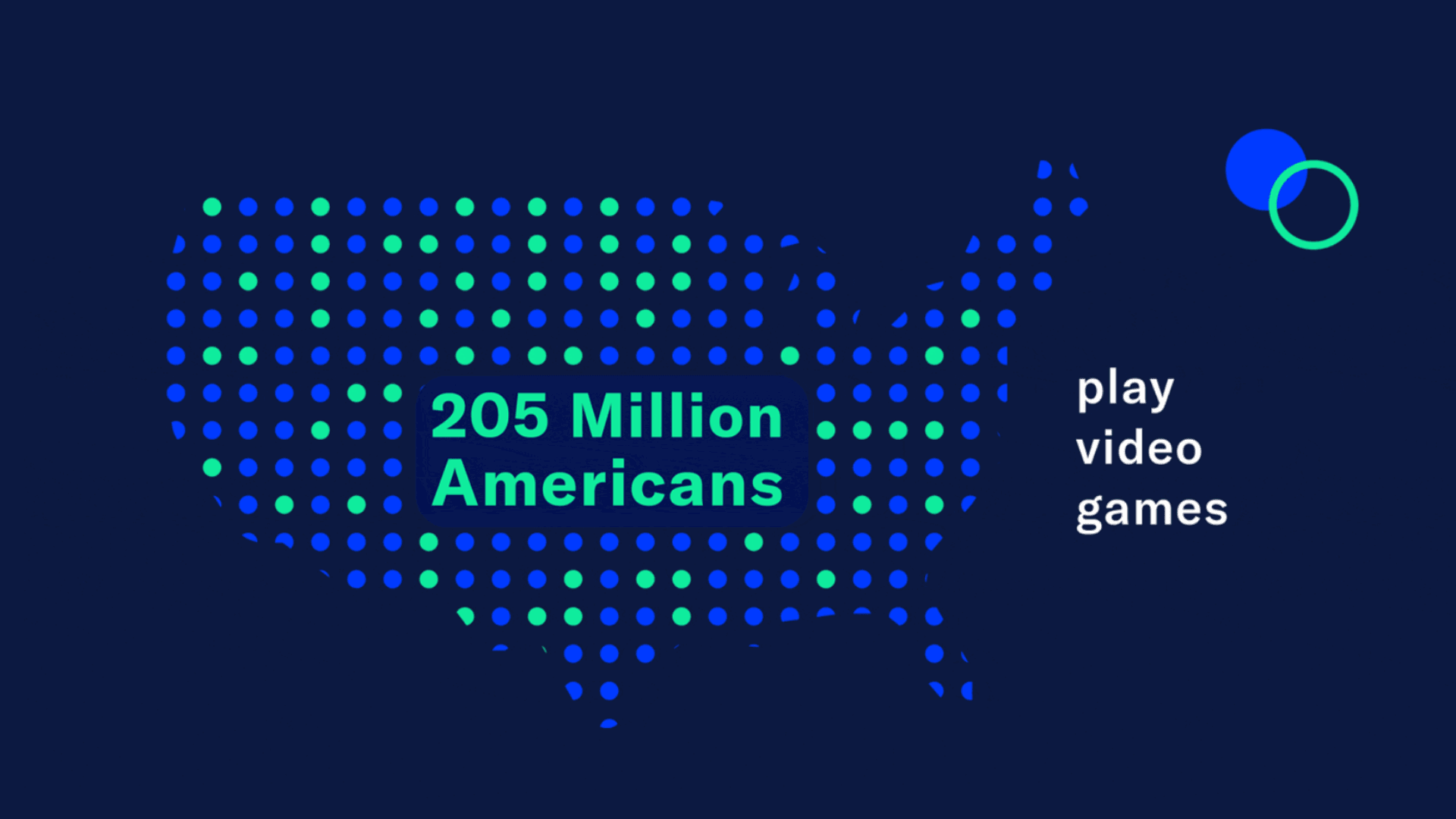

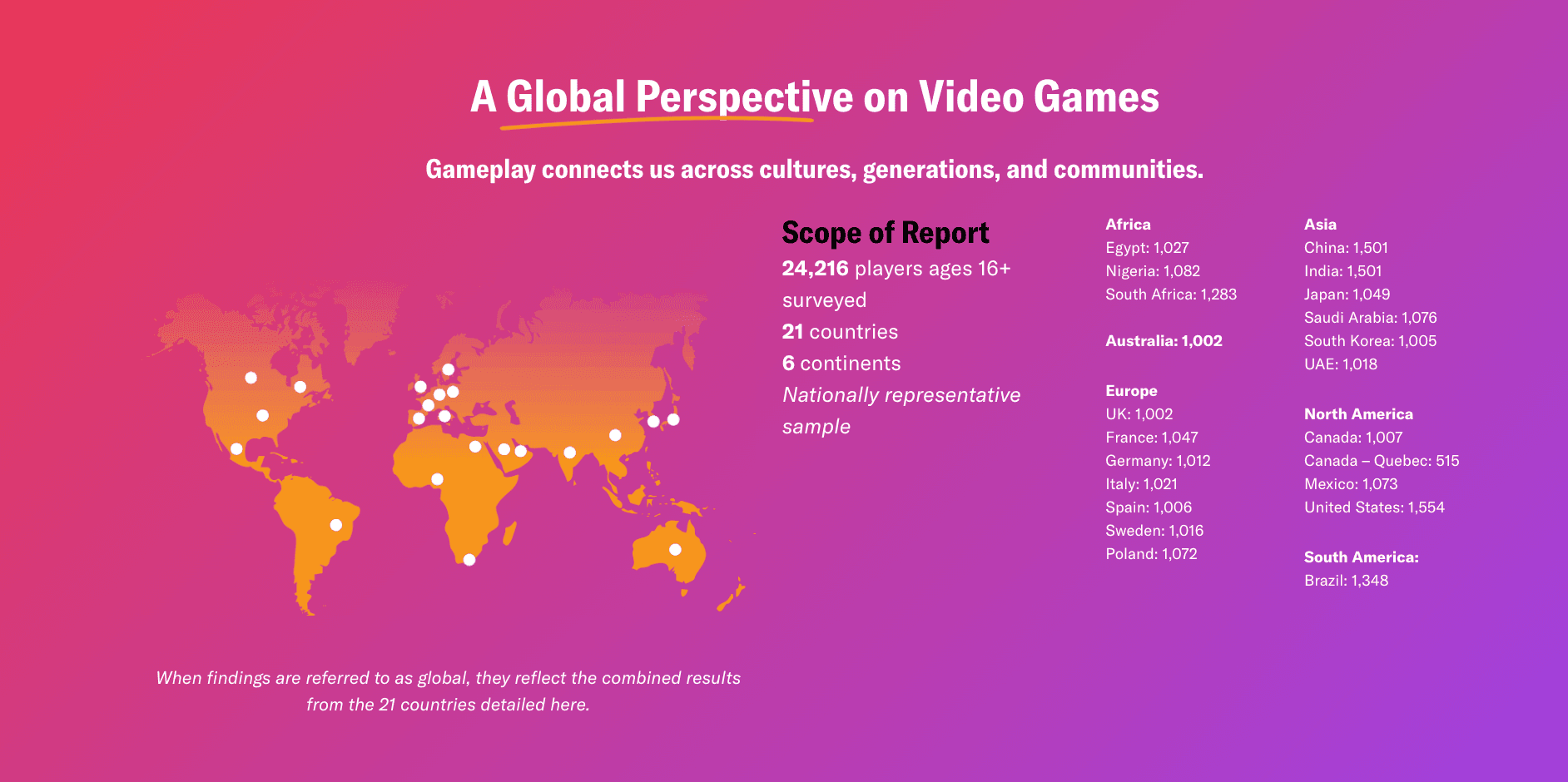
The Entertainment Software Association (ESA) has published its 2025 Global Power of Play report, examining how video games shape players' lives worldwide. The study surveyed over 24,000 active players across 21 countries, conducted with support from international gaming associations and research firm AudienceNet. The data reveals that gaming delivers social, emotional, and mental benefits across all age groups, extending well beyond simple entertainment.
Video games now rank among the most popular forms of entertainment globally, and this research demonstrates their deeper impact. Stanley Pierre-Louis, president and CEO of the ESA, emphasized that the findings confirm games are "more than just fun," highlighting their role in building global connections and supporting mental wellbeing.
Video Games Boost Mental Wellbeing
Gaming as a Tool for Stress Relief and Mental Stimulation
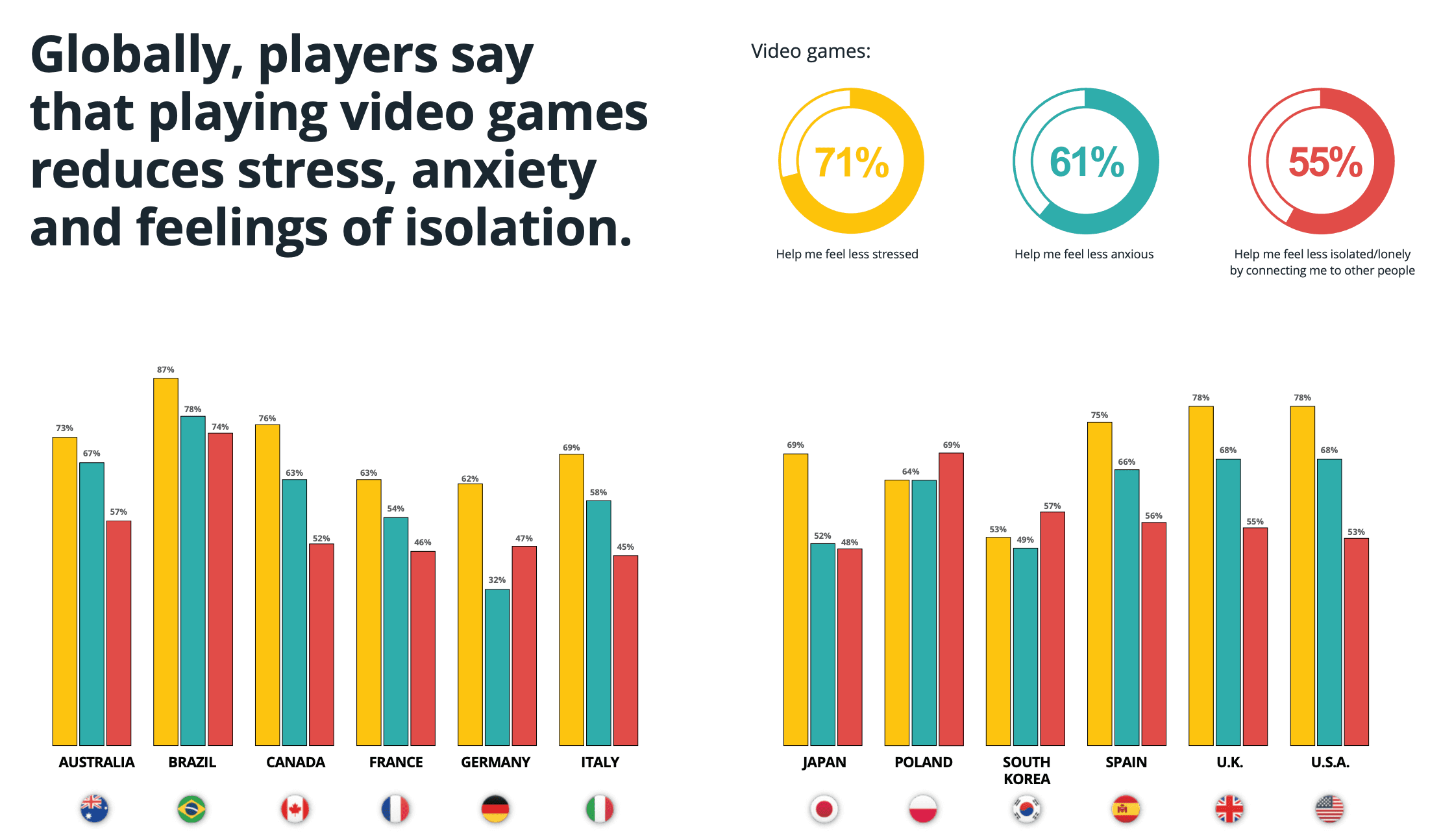
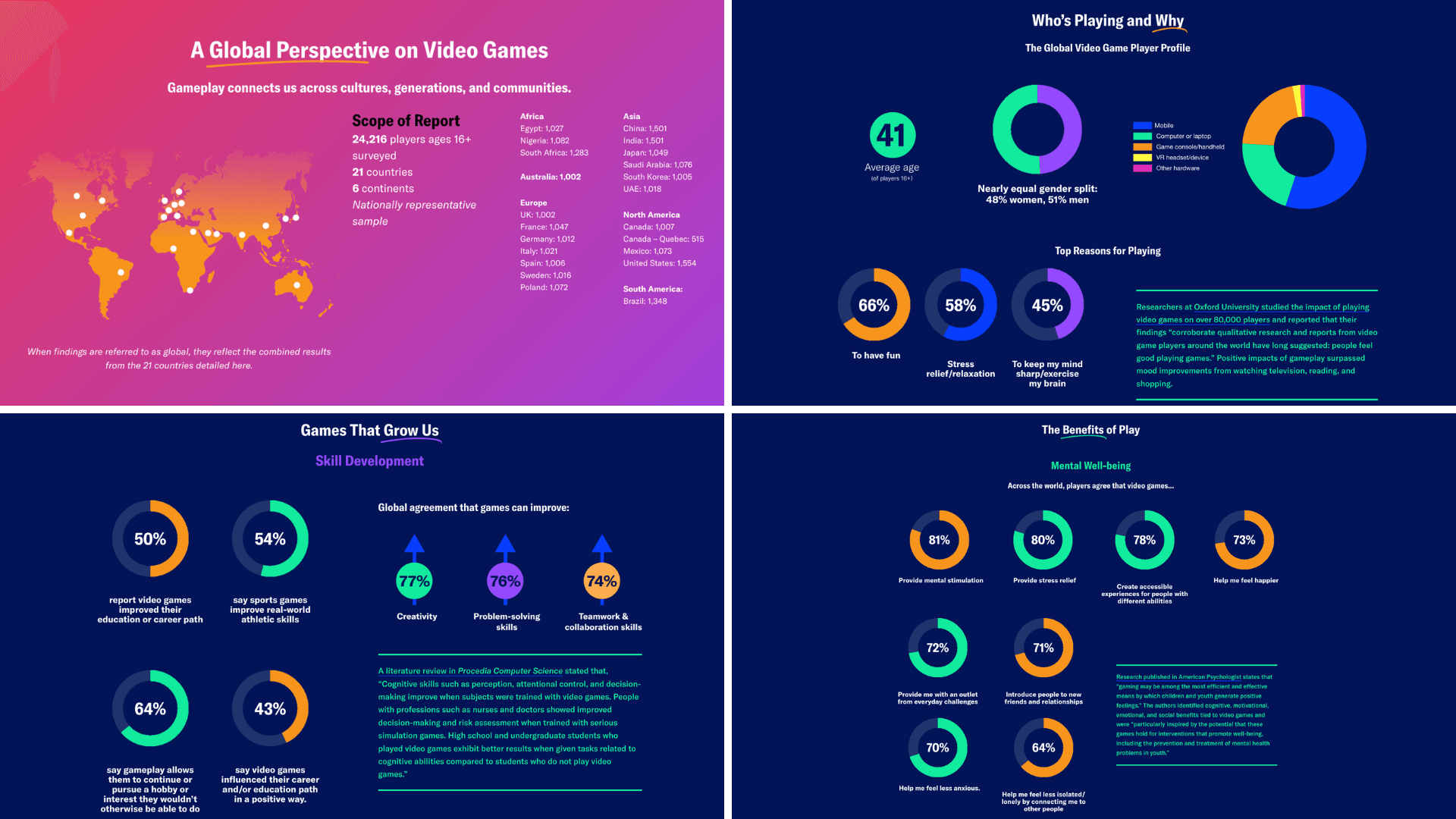
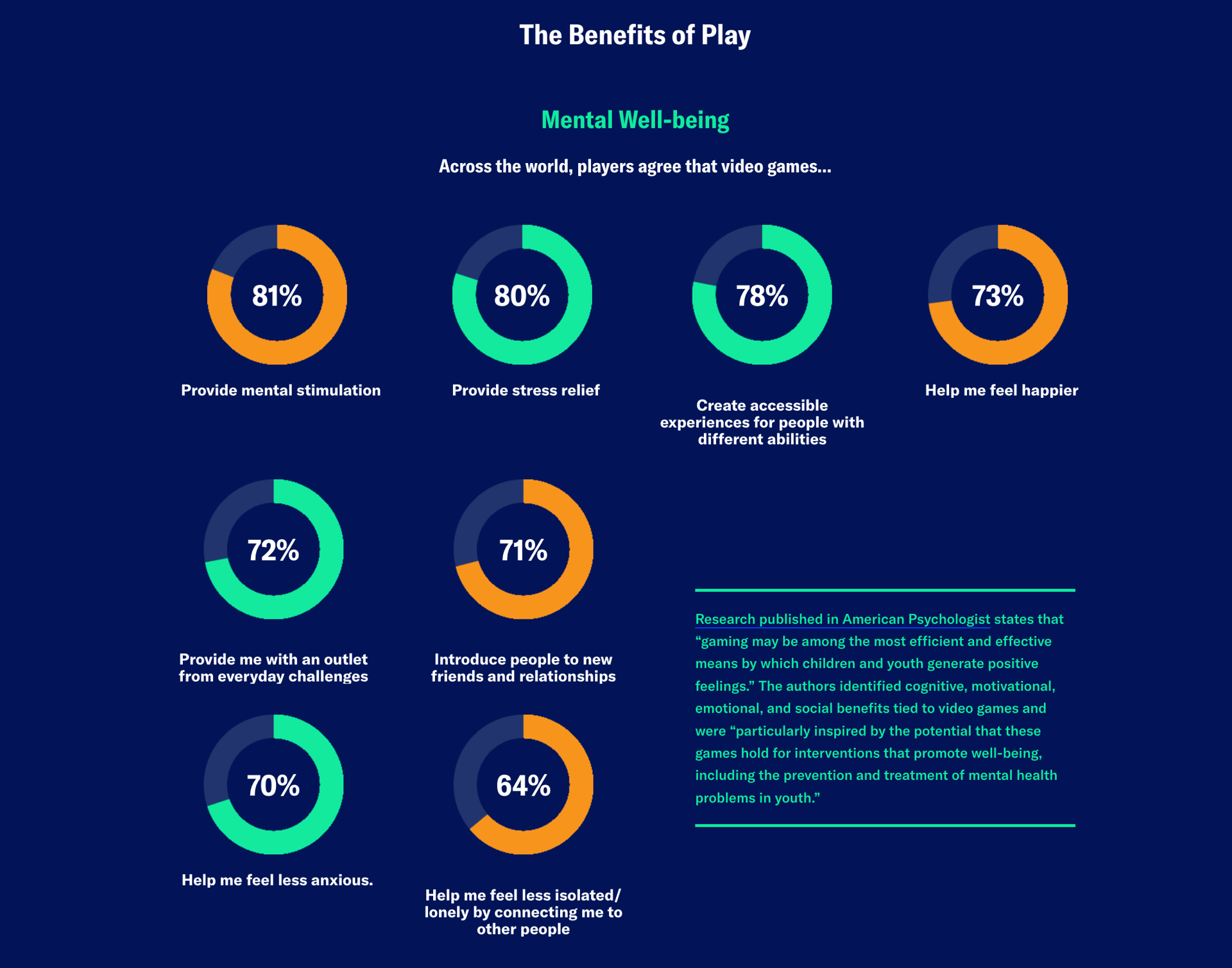
Players across continents primarily turn to games to have fun, decompress, and exercise their minds. Roughly two-thirds of global respondents ranked fun as their primary motivation, while 58 percent play specifically to lower stress levels. Nearly half pointed to mental stimulation as a driving factor.
The findings show games make a measurable difference in emotional health. More than three-quarters of players reported feeling less stressed after gaming sessions, and 70 percent experienced reduced anxiety. Around 64 percent said video games combat loneliness by creating connection opportunities. U.S. respondents mirrored these trends, with 75 percent reporting lower stress levels from gaming.
Players also recognize games as tools that sharpen focus and cognitive function. Over 80 percent of participants said games keep their minds engaged, while nearly as many believe games offer accessible experiences regardless of ability level.
Video Games Boost Mental Wellbeing
Skill Development and Real-World Applications
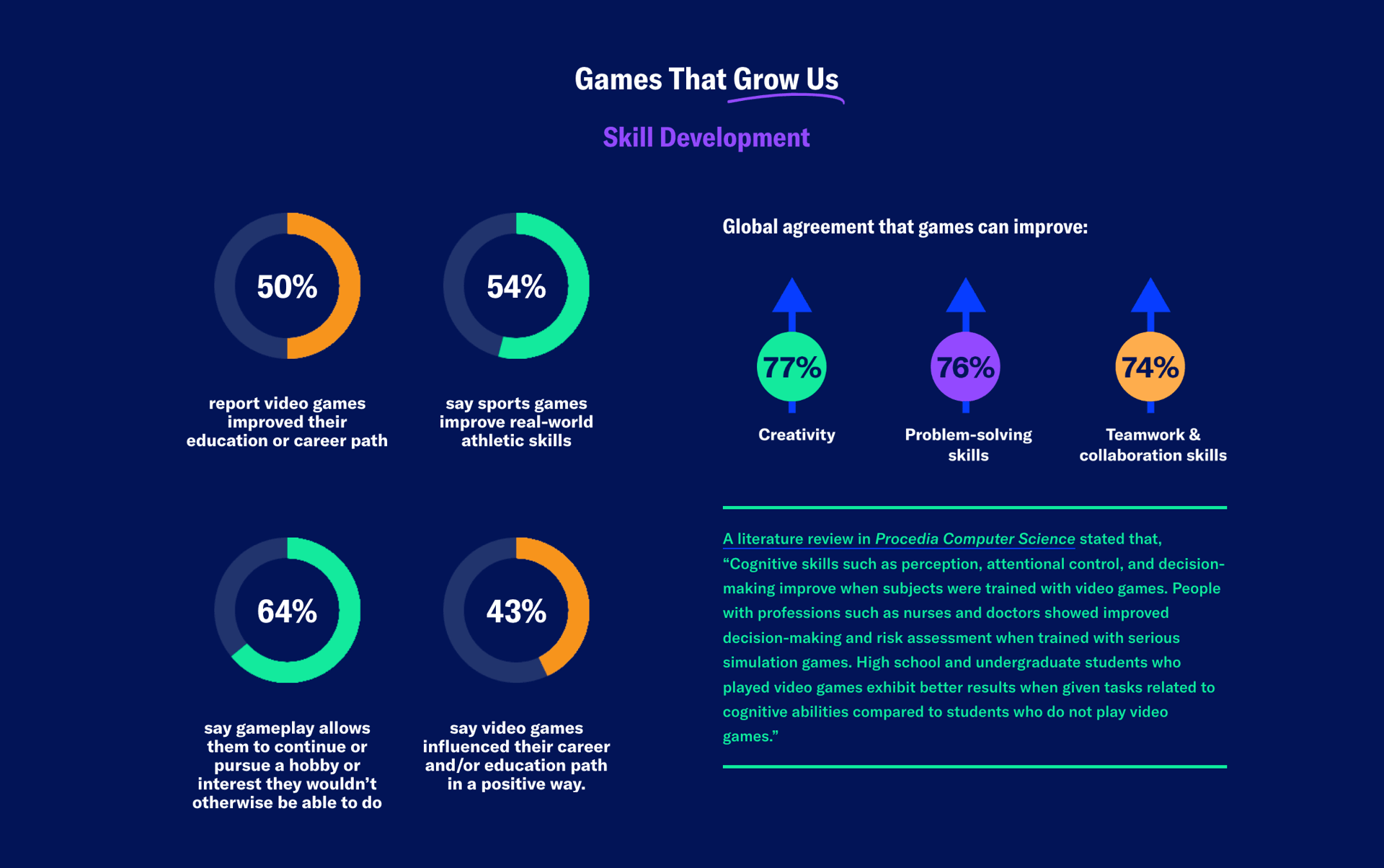
The report documents tangible benefits that carry over into education and careers. Around 77 percent of participants said video games boost creativity, while others noted gains in problem-solving, teamwork, and adaptability. U.S. players most frequently cited improvements in adaptability, cultural awareness, and communication skills.
Half of surveyed players said gaming directly contributed to their professional or educational progress, whether through enhanced technical abilities or career direction. Sports games showed particularly concrete effects — more than half of respondents claimed that virtual gameplay improved their real-world performance in those sports.
Video Games Boost Mental Wellbeing
Connection and Community Through Play
Gaming remains a powerful force for social connection across cultures. About 62 percent of players worldwide said video games foster positive interactions with others. Younger players between 16 and 35 were most likely to report forming meaningful friendships or relationships through gaming. Nearly three-quarters of that age group said gaming reduces isolation by keeping them connected to others.
The family dimension of gaming also stands out. Over half of global players reported that video games positively affect their relationships with their children, and most parents game with their kids at least monthly. American players showed similar patterns in family engagement.

Video Games Boost Mental Wellbeing
Who Is the Modern Gamer?
The global average player age is 41, demonstrating gaming's broad demographic appeal. The study found near gender parity, with 51 percent male and 48 percent female players worldwide. In countries like Brazil and South Africa, women actually outnumber men among gamers.
Mobile devices dominate as the most common gaming platform, with 55 percent of respondents playing on smartphones or tablets. Action and puzzle games emerged as the most popular genres across nearly all participating countries, revealing shared global preferences in gameplay experiences.
The Broader Context of the Power of Play
The Global Power of Play report reinforces how gaming continues evolving as both a cultural and social force. The ESA, which has represented the U.S. gaming industry since 1994, stressed the role video games play in promoting creativity, learning, and connection. After more than three decades of advocacy, the association continues documenting how games contribute to mental health, education, and economic growth worldwide.
The complete 2025 Global Power of Play report is available at www.theesa.com/powerofplay.
Frequently Asked Questions (FAQ)
What is the Global Power of Play report? The Global Power of Play report is a worldwide study conducted by the Entertainment Software Association (ESA) and AudienceNet. It examines how video games affect mental health, social connection, and skill development among players in 21 countries.
How many people participated in the survey? The study included 24,216 active gamers aged 16 and older. Each participant plays video games for at least one hour weekly across consoles, PCs, mobile devices, or VR.
What are the top reasons people play video games? Globally, players listed having fun, reducing stress, and keeping their minds sharp as their primary motivations for gaming.
How do video games affect mental health? The data shows 77 percent of players feel less stressed after gaming sessions, while 70 percent experience reduced anxiety. Many respondents also said gaming helps counter loneliness by connecting them with others.
Do video games help develop real-world skills? Yes. Players across all regions reported that gaming improves creativity, problem-solving, teamwork, and adaptability. Many respondents credited games with positively influencing their education and careers.
Who published the report? The Entertainment Software Association (ESA), which represents the U.S. video game industry, published the report in collaboration with international gaming organizations and research firm AudienceNet.