

Advertisement





Overview
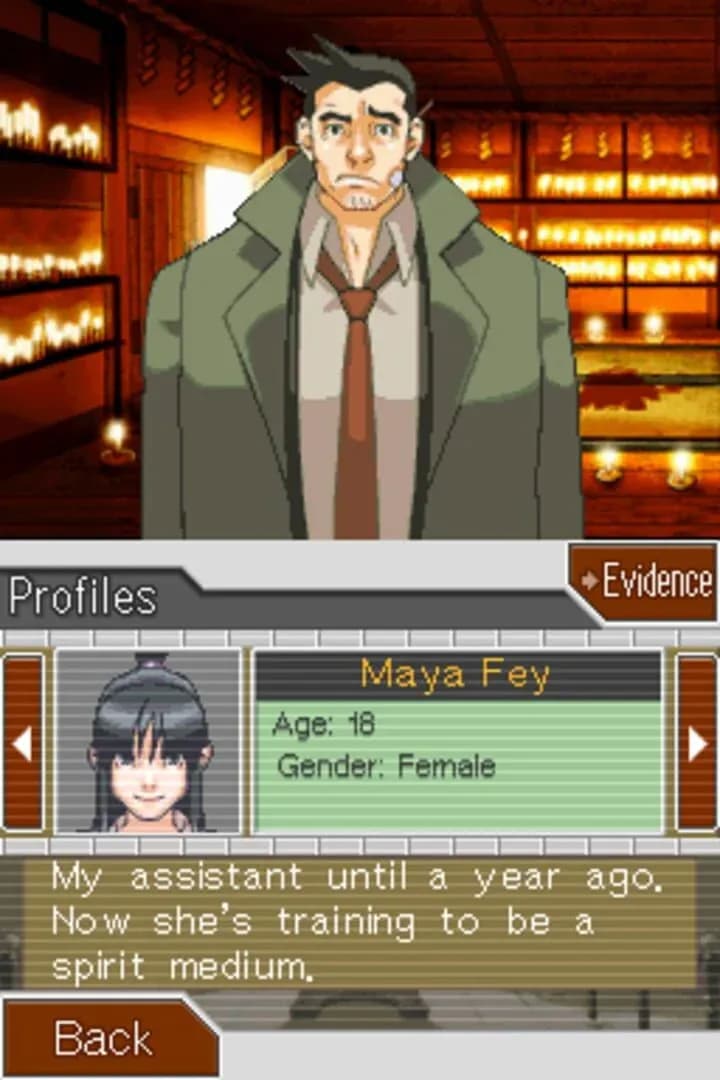
Justice for All picks up where the first Ace Attorney left off, putting players back in the shoes of defense attorney Phoenix Wright as he battles through four all-new cases. The second game in Capcom's series takes the courtroom formula and tightens it, adding new pressure mechanics and some of the most memorable characters the franchise has ever produced. Each case functions as a self-contained mystery that gradually feeds into a larger narrative, rewarding players who pay close attention to every piece of evidence and every contradicting word.
The tone here is noticeably darker than the original. Cases touch on memory loss, betrayal, and moral compromise in ways that give the story genuine weight. The fourth and final case in particular is widely considered one of the best in the entire series, putting Phoenix in an impossible situation where the right legal answer and the right human answer are not the same thing.
Phoenix Wright: Ace Attorney - Justice for All content image
Gameplay and mechanics
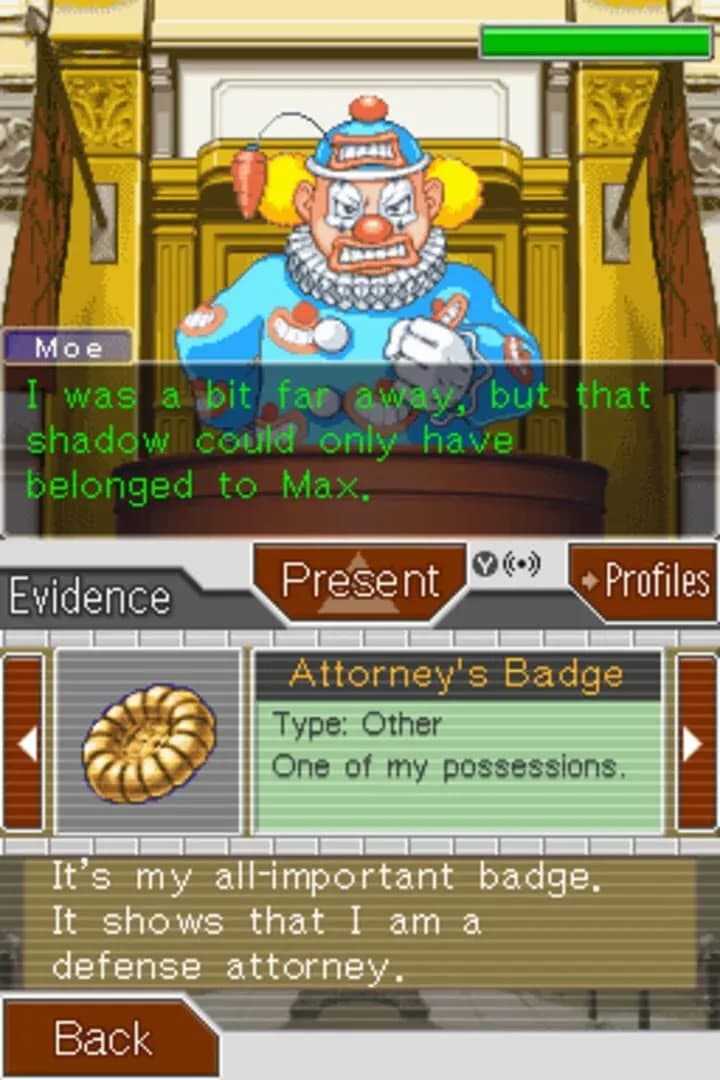
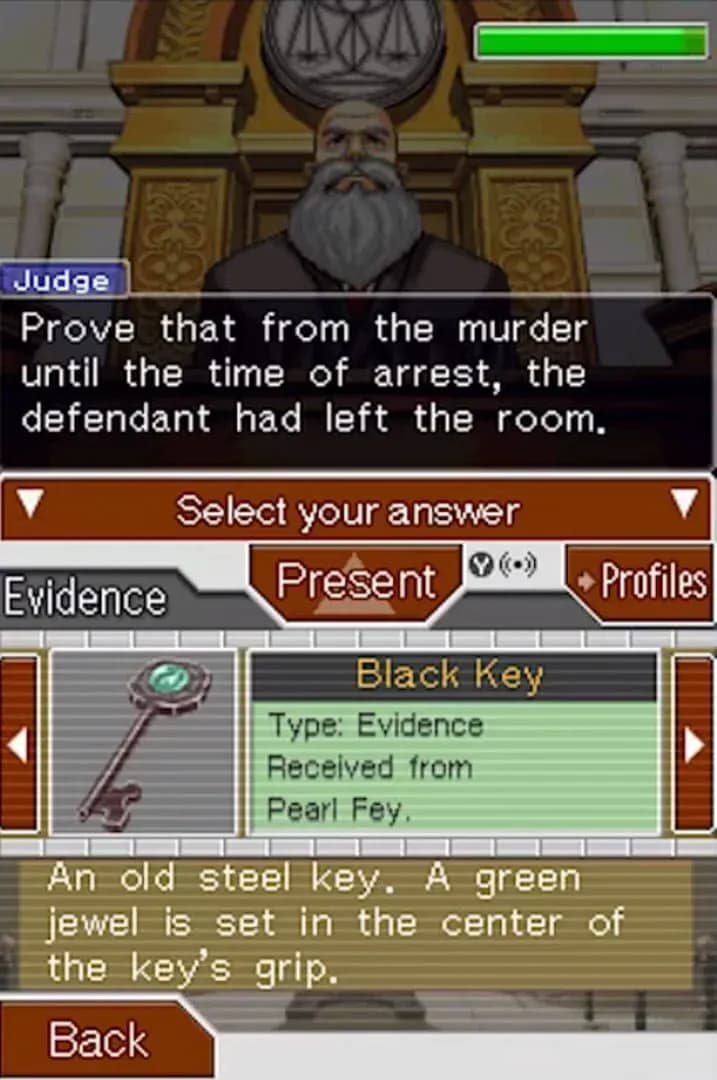
The core loop remains intact: investigate crime scenes, gather evidence, then take that evidence into court and use it to expose contradictions in witness testimony. The rhythm of building a case and then dismantling a witness on the stand is as satisfying here as it ever was.
Phoenix Wright: Ace Attorney - Justice for All content image
Justice for All's biggest addition is the Psyche-Lock system. During investigations, certain characters will refuse to share key information, represented visually by padlocks over their hearts. To break those locks, players must present the right evidence and push back against their denials. The system adds a second layer of cross-examination outside the courtroom and makes gathering information feel like a challenge rather than a formality.
Key mechanics at a glance:
- Present evidence to expose contradictions
- Break Psyche-Locks during investigation phases
- Manage a penalty gauge that depletes with wrong answers
- Cross-examine witnesses to find inconsistencies
- Collect and combine case files and objects
World and setting
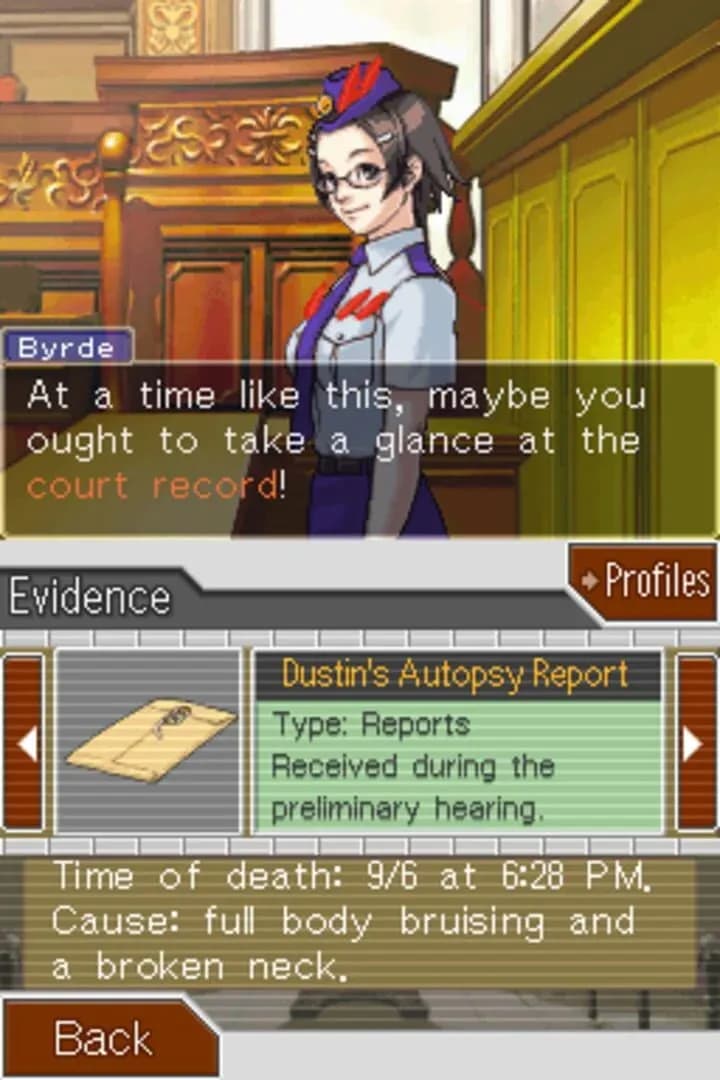
The game's courtroom setting is stylized and theatrical, built on exaggerated character animations and sharp visual comedy that balances the heavier subject matter. Franziska von Karma, the new primary prosecutor, carries a literal whip and uses it on anyone who annoys her, including her own witnesses. She is a completely over-the-top character who somehow also feels like a genuine threat.

Phoenix Wright: Ace Attorney - Justice for All content image
Each of the four cases takes place in a distinct environment, from circus grounds to a high-security detention facility, keeping the visual variety high across the roughly 15-hour runtime. The pixel-art character portraits remain expressive and iconic, and the soundtrack continues the series tradition of pairing each major character with a distinct musical theme that lodges itself in memory.
Impact and legacy
Originally released for the Game Boy Advance in Japan in 2002 before reaching Western audiences in 2006, Justice for All is now available across a wide range of modern platforms including PC via Steam, Nintendo Switch, PlayStation, Xbox, iOS, and Android, primarily through the Ace Attorney Trilogy collection. That accessibility has introduced the game to entirely new audiences who never touched the original GBA or Nintendo DS releases.

Phoenix Wright: Ace Attorney - Justice for All content image
The Psyche-Lock system introduced here became a defining mechanic of the series, and the fourth case's moral dilemma is still discussed as a high point in visual novel storytelling. For anyone working through the Ace Attorney games in order, Justice for All is not a filler entry between stronger installments. It earns its place in the series and delivers the kind of courtroom drama that the point-and-click adventure genre rarely manages to replicate.