Overview
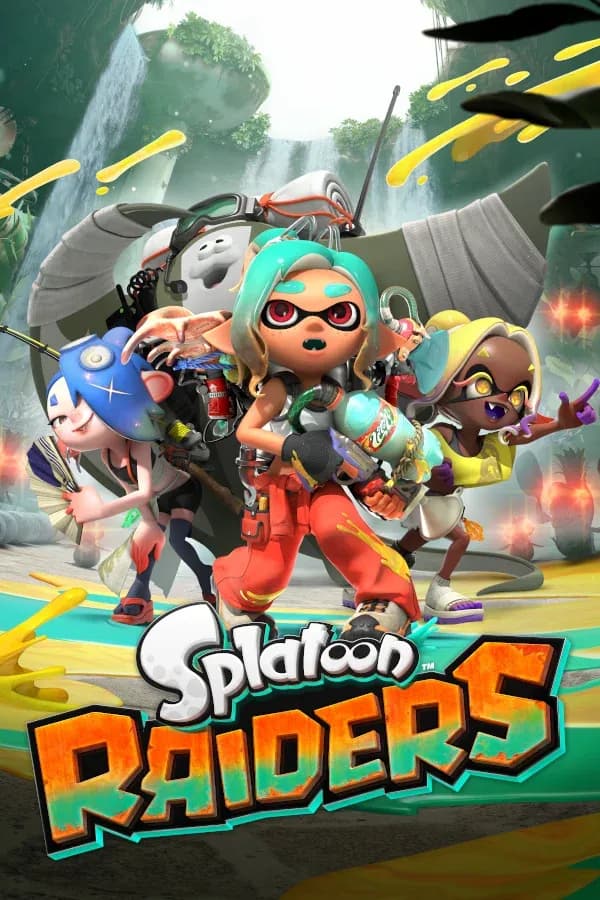
Splatoon 3 is a third-person shooter for Nintendo Switch, developed by Nintendo EPD and published by Nintendo. Its central idea makes accuracy only part of the contest: spreading ink across an arena changes where fighters can move safely and how teams approach their next encounter.
Competitive battles, cooperative survival, and a single-player campaign give that foundation different purposes. Some modes reward control of shared objectives, while others test crowd management or precise platforming. The same weapon can demand different decisions depending on the task, keeping combat closely connected to the space around it.
How does ink combat work?
Ink serves as ammunition, territory, and a movement tool in Splatoon 3. Inklings and Octolings can transform to swim through their own ink, moving quickly while replenishing their ink tanks. Enemy ink slows movement, making an exposed approach dangerous even before an opponent opens fire.
Several mechanics shape those exchanges:
- Territory control through ink
- Squid Roll direction changes
- Squid Surge wall climbs
- Sub and special weapons
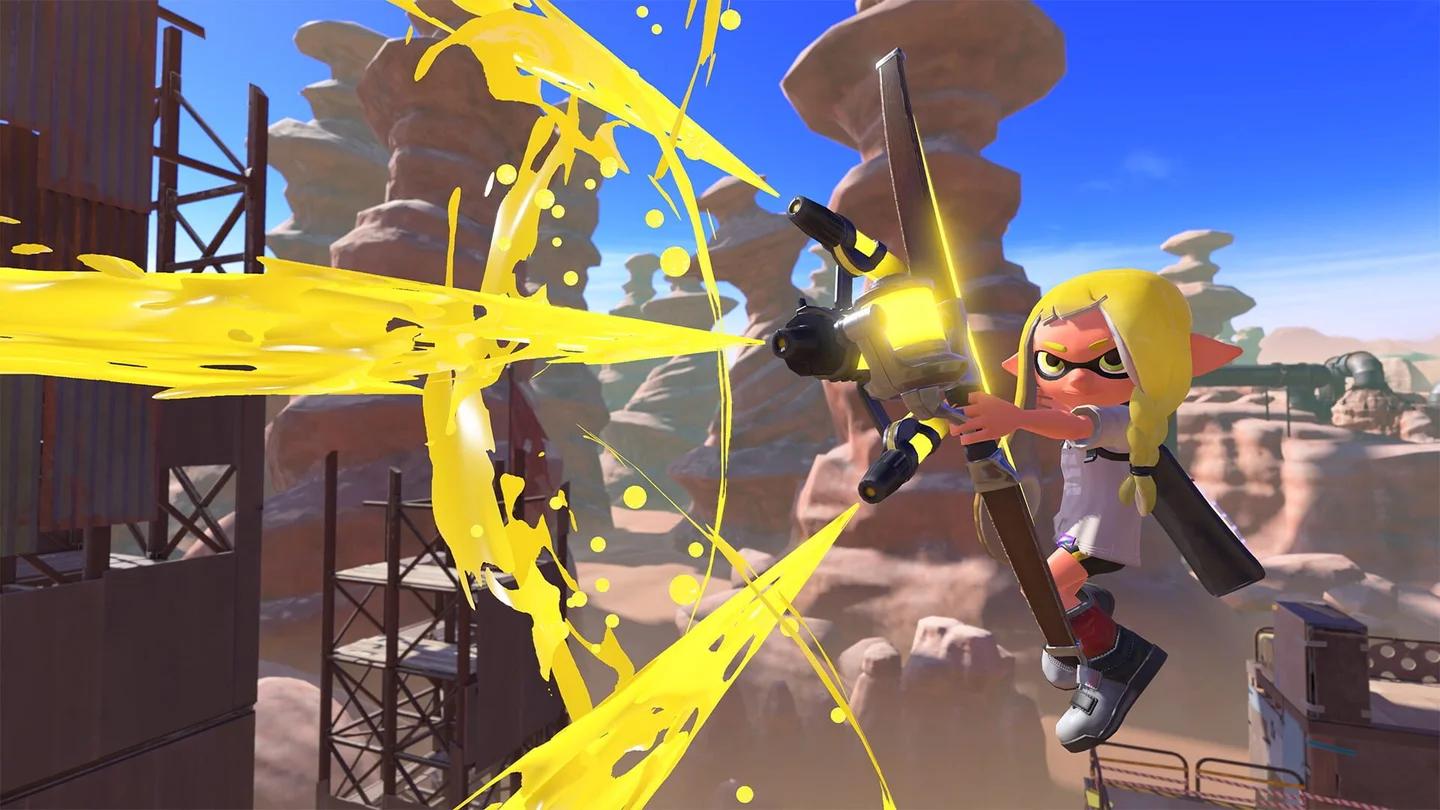
Weapon classes change how players handle distance and coverage. Shooters deliver sustained fire, rollers spread broad paths, and chargers reward carefully aimed shots. Bow-shaped Stringers release multiple projectiles, adding another firing pattern to consider when holding an angle or pressuring a route.
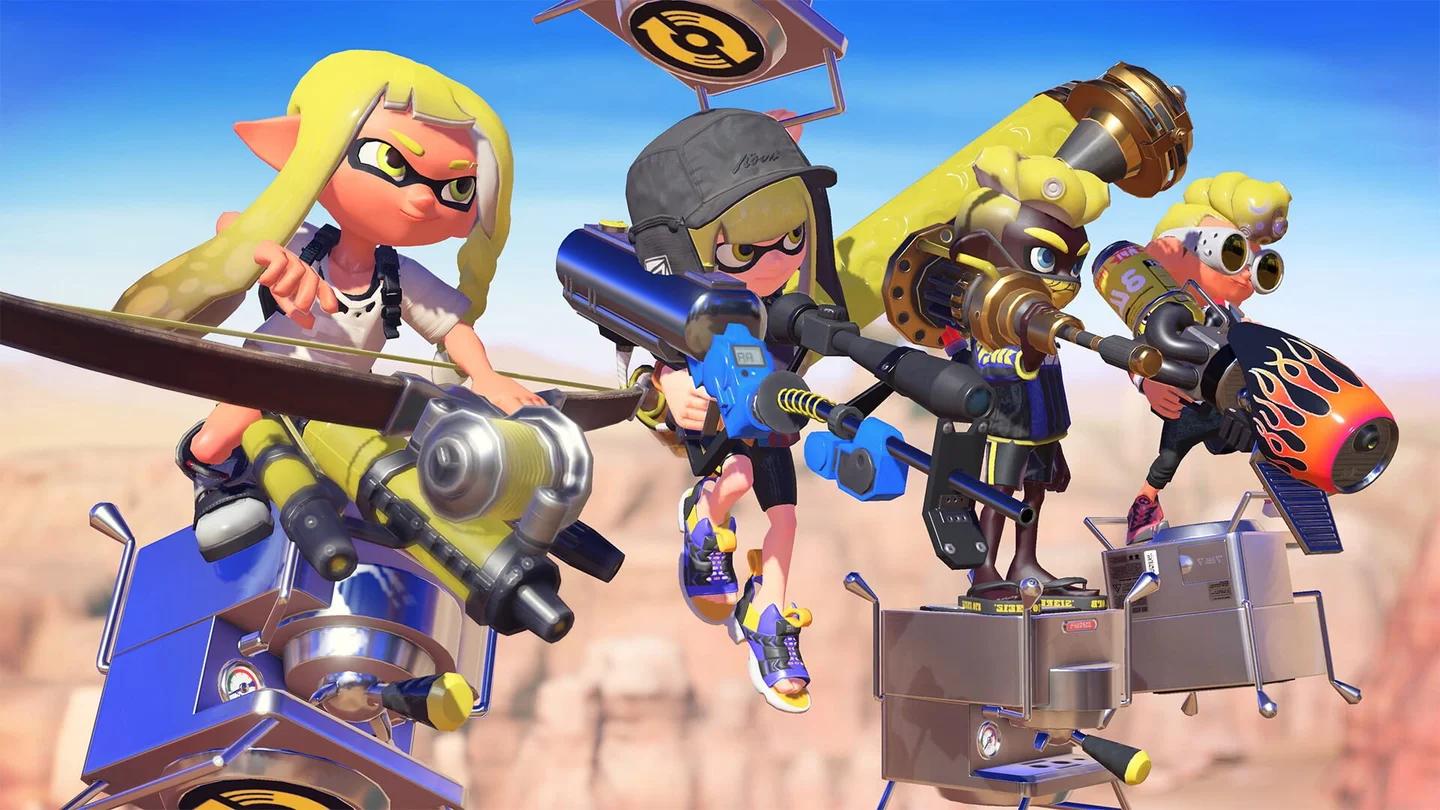
Competitive and cooperative multiplayer
Turf War pits two teams of 4 against each other in three-minute matches. Victory depends on the amount of ground covered at the end, so splatting opponents supports the objective without replacing it. A strong attack still needs teammates who convert openings into painted territory.
Anarchy Battles introduce more concentrated objectives. Splat Zones asks teams to hold designated areas, while Tower Control centers the fight on escorting a moving platform. These rules make the timing of a coordinated push especially important, since scattered eliminations do not necessarily move the objective forward.
Salmon Run shifts the pressure toward cooperation. Crews of up to 4 face waves of enemies, defeat Boss Salmonids, and deliver Golden Eggs to meet collection quotas. Teams must balance fighting, collecting, and reviving fallen teammates as threats build around the basket.
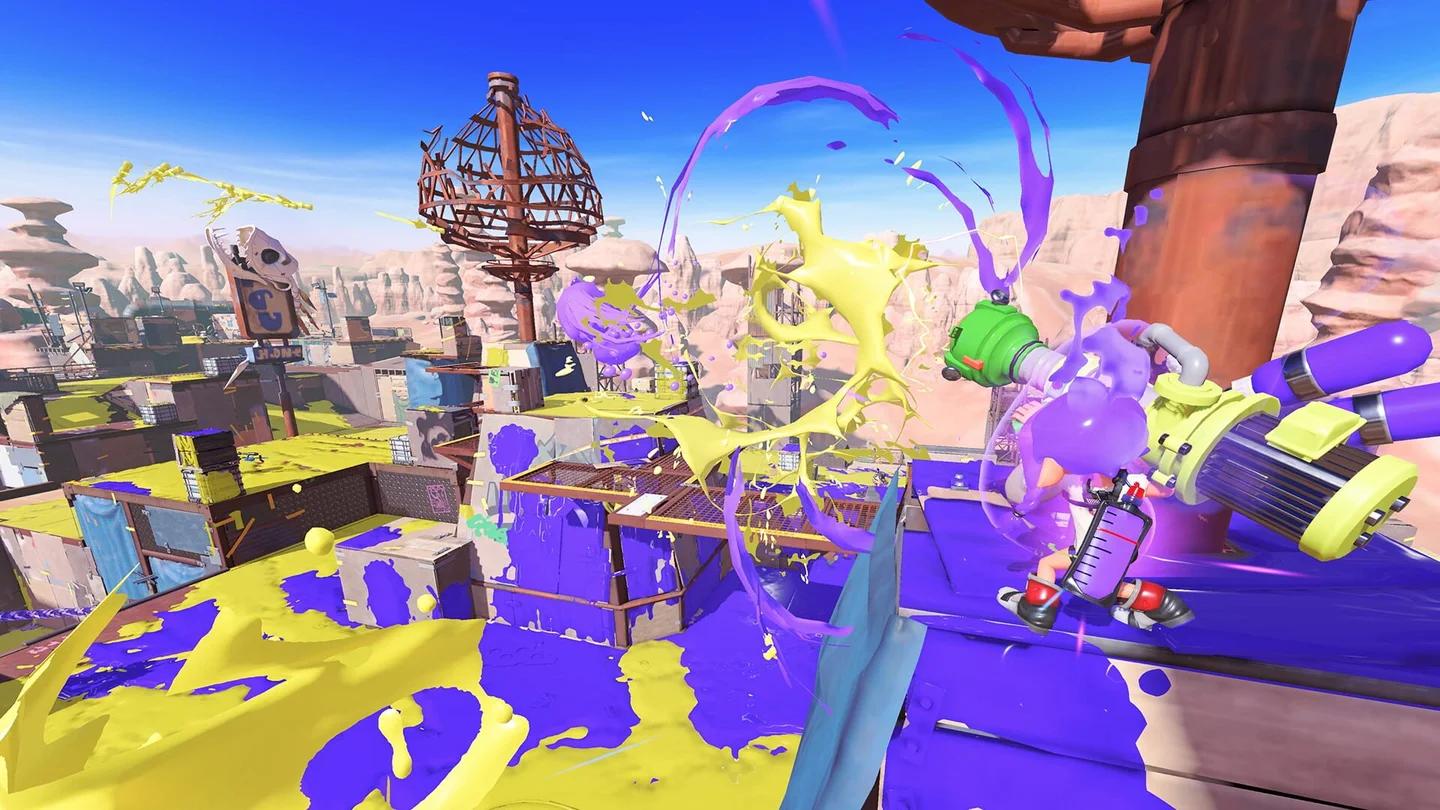
The Splatlands and Return of the Mammalians
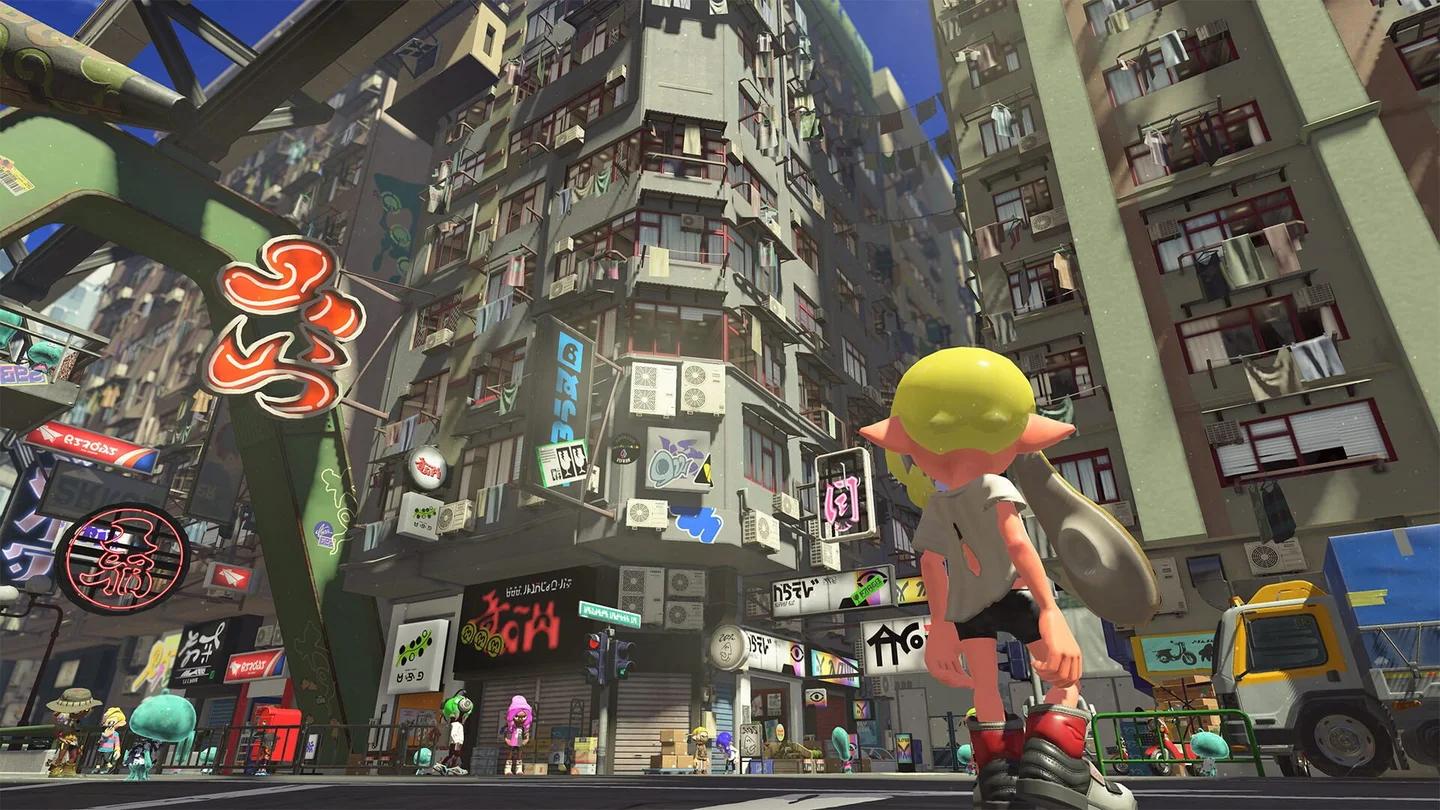
The Splatlands surround the action with sun-scorched terrain, while Splatsville serves as the region's crowded urban center. Its dense streets and expressive fashion contrast with the dry surroundings, giving the game a recognizable identity beyond the arenas.
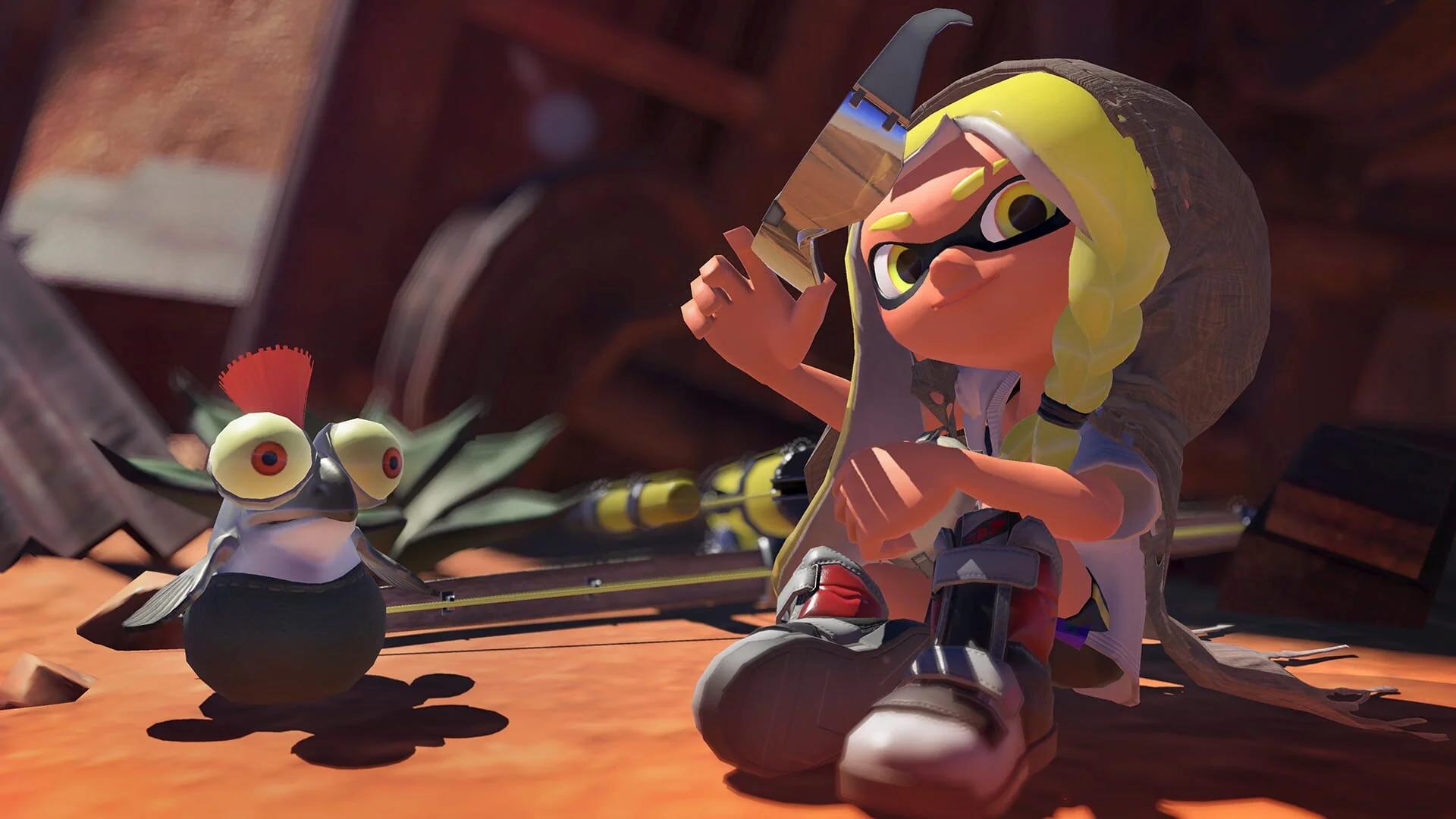
The solo campaign, Return of the Mammalians, follows Agent 3 against the Octarian army. Its central mysteries concern Alterna and the spreading Fuzzy Ooze. Smallfry accompanies Agent 3, contributing to combat and helping remove the substance that blocks exploration.
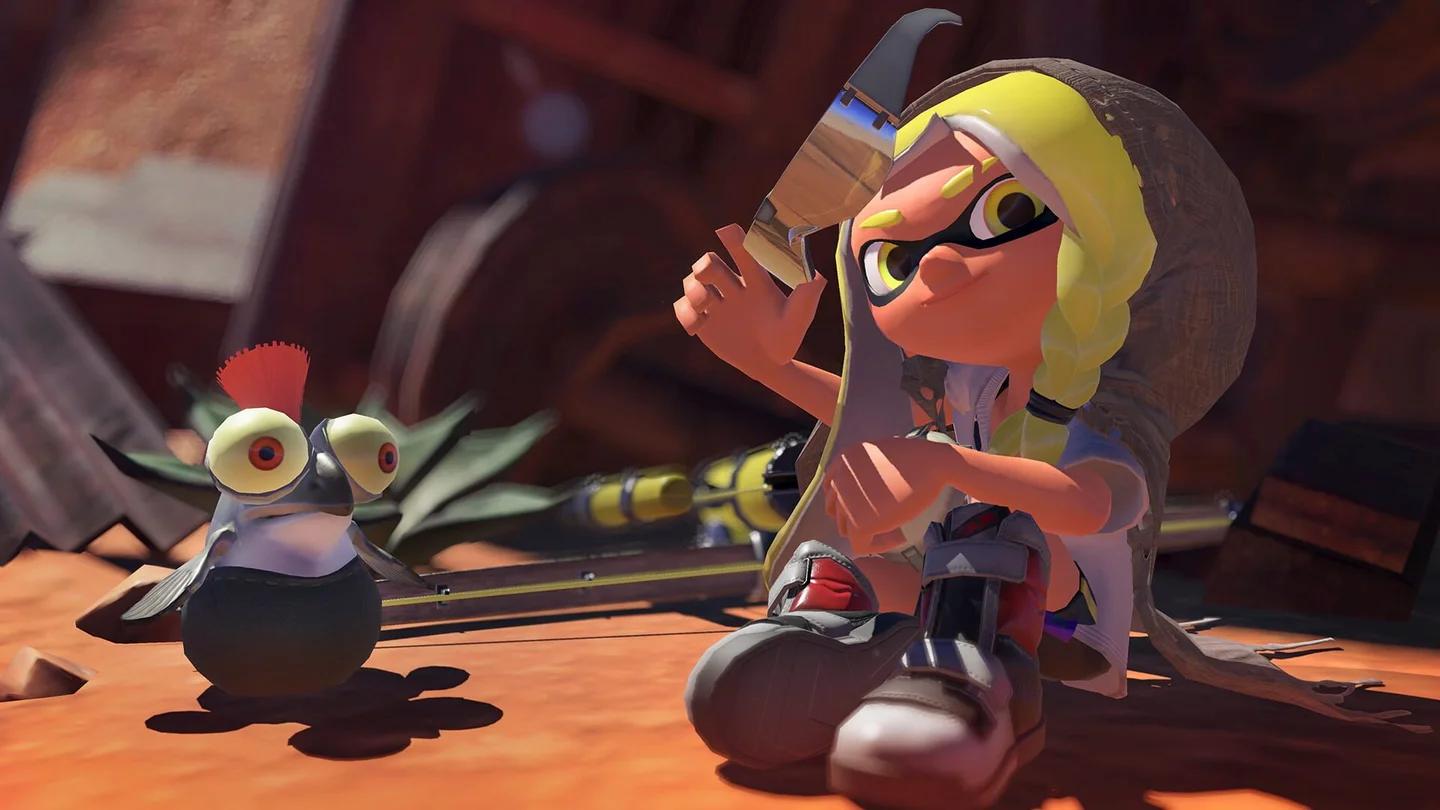
Alterna's stages combine platforming, target shooting, and combat challenges. Stage-specific weapon choices encourage practice with tools that might otherwise go unused in multiplayer, while traversal tests put ink movement under closer scrutiny. The campaign gives Splatoon 3's shooter mechanics room to work as carefully arranged problems, with success depending on reading a route as much as landing a shot.