
Advertisement

Overview
The Lord of the Rings: The Battle for Middle-earth II, developed by EA Los Angeles and released in March 2006, expands the real-time strategy formula into corners of Tolkien's world that most adaptations ignore entirely. Where the films focused on the War of the Ring in the south, this game pushes the conflict north, into the Misty Mountains, Mirkwood, and Dol Guldur. The result is an RTS that feels genuinely rooted in the source material rather than riding the coattails of Peter Jackson's trilogy.
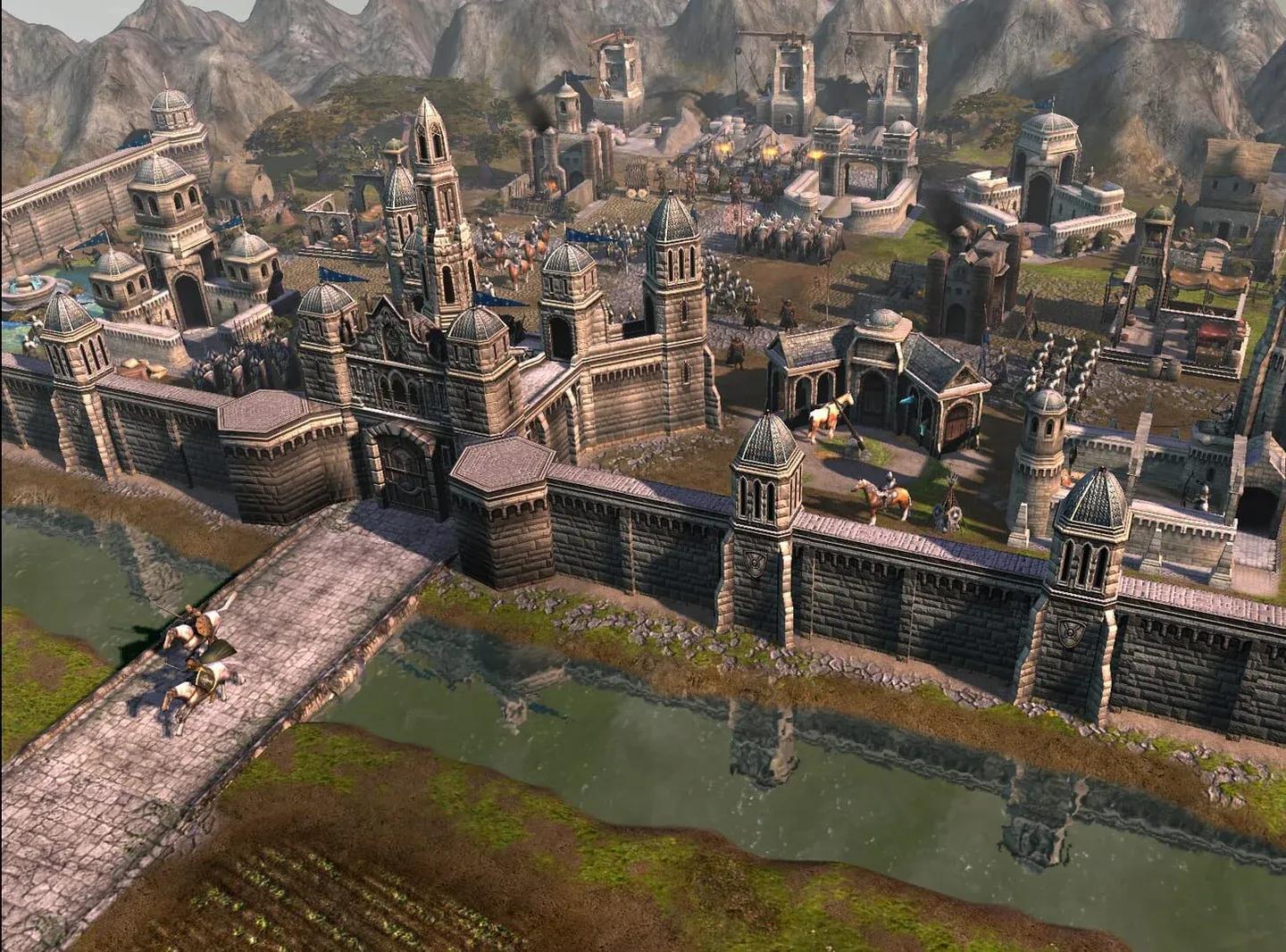
The game ships with two full campaigns, one for the Free Peoples and one for Evil, and the asymmetry between factions runs much deeper than cosmetic differences. Dwarven armies rely on fortified positions and heavy infantry, Elven forces favor mobility and ranged firepower, and the Evil factions bring chaos and creature-based power that the Good side simply cannot match. Each plays differently enough that cycling through them feels like a genuinely new strategic challenge.
The Lord of the Rings: The Battle for Middle-earth II content image
Gameplay and mechanics
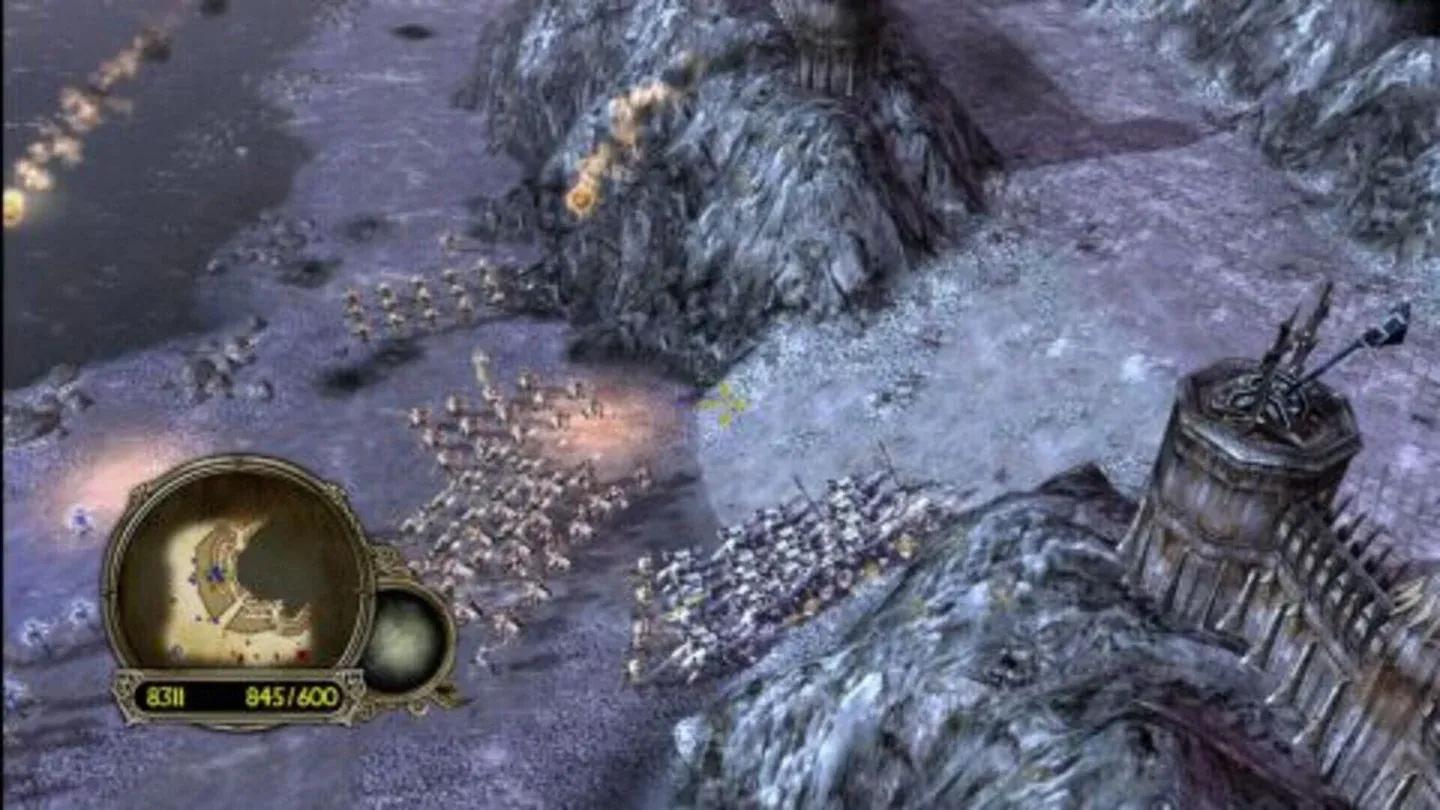
Battle for Middle-earth II builds on the first game's base-building and hero system while tightening both. Key mechanics include:
- Hero units with unique abilities that scale through combat
- Faction-specific resource structures tied to map control
- Ring powers unlocked through campaign progression
- Summoning abilities including dragons for Evil factions
- A War of the Ring mode for large-scale strategic play
The hero system deserves particular attention. Characters like Glorfindel, the Balrog, and Sauron himself function as high-impact units that can swing battles but also die permanently on higher difficulty settings, which keeps their deployment tense rather than routine. Managing when to commit a hero and when to hold them back becomes one of the game's core decision points.
What makes the northern setting so distinctive?
Most Lord of the Rings games center on Helm's Deep, Minas Tirith, or the Mines of Moria because those locations carry film recognition. Battle for Middle-earth II deliberately sidesteps that familiarity. Dol Guldur, the fortress where Sauron hid before his return, appears as an Evil stronghold with its own visual identity. Mirkwood's corrupted forests create a different tactical environment than the open fields of Rohan. The Misty Mountains introduce vertical terrain that affects unit movement and siege placement in ways flat maps never demand.
The Lord of the Rings: The Battle for Middle-earth II content image
This commitment to the broader Tolkien canon rather than just the film trilogy gives the game a credibility that pure movie tie-ins rarely achieve. Players who know the lore will recognize references that go well beyond the Jackson films, and those references are baked into the faction design rather than dropped in as flavor text.
Content and replayability
Beyond the two single-player campaigns, the War of the Ring mode functions as a risk-style strategic layer where players fight for control of Middle-earth one territory at a time, with each battle playing out as a real-time skirmish. Skirmish mode against AI opponents and online multiplayer extend the lifespan further. The faction variety alone, spanning Gondor, Rohan, Elves, Dwarves, Mordor, Isengard, Goblins, and Angmar, means that no two competitive matches play out identically.
The Angmar faction, built around the Witch-king and undead units, stands out as one of the more original designs in any Tolkien game. It has no direct film equivalent to lean on, which forced EA Los Angeles to build something from the lore up. That effort shows in how distinctly it plays compared to the more straightforward Evil factions.
The Lord of the Rings: The Battle for Middle-earth II content image