




Overview
Tidy Wizard: A Place For Every Plate is a first-person organizing simulator developed and published by Embers, set inside the dining halls and refectories of a wizarding world. The core fantasy is simple and specific: you are the apprentice who cleans up after the feast, and magic is your only tool. There are no timers counting down, no failure states to dread, just scattered plates, soiled cutlery, and the deeply satisfying task of returning every item to its proper home.
Tidy Wizard: A Place For Every Plate content image
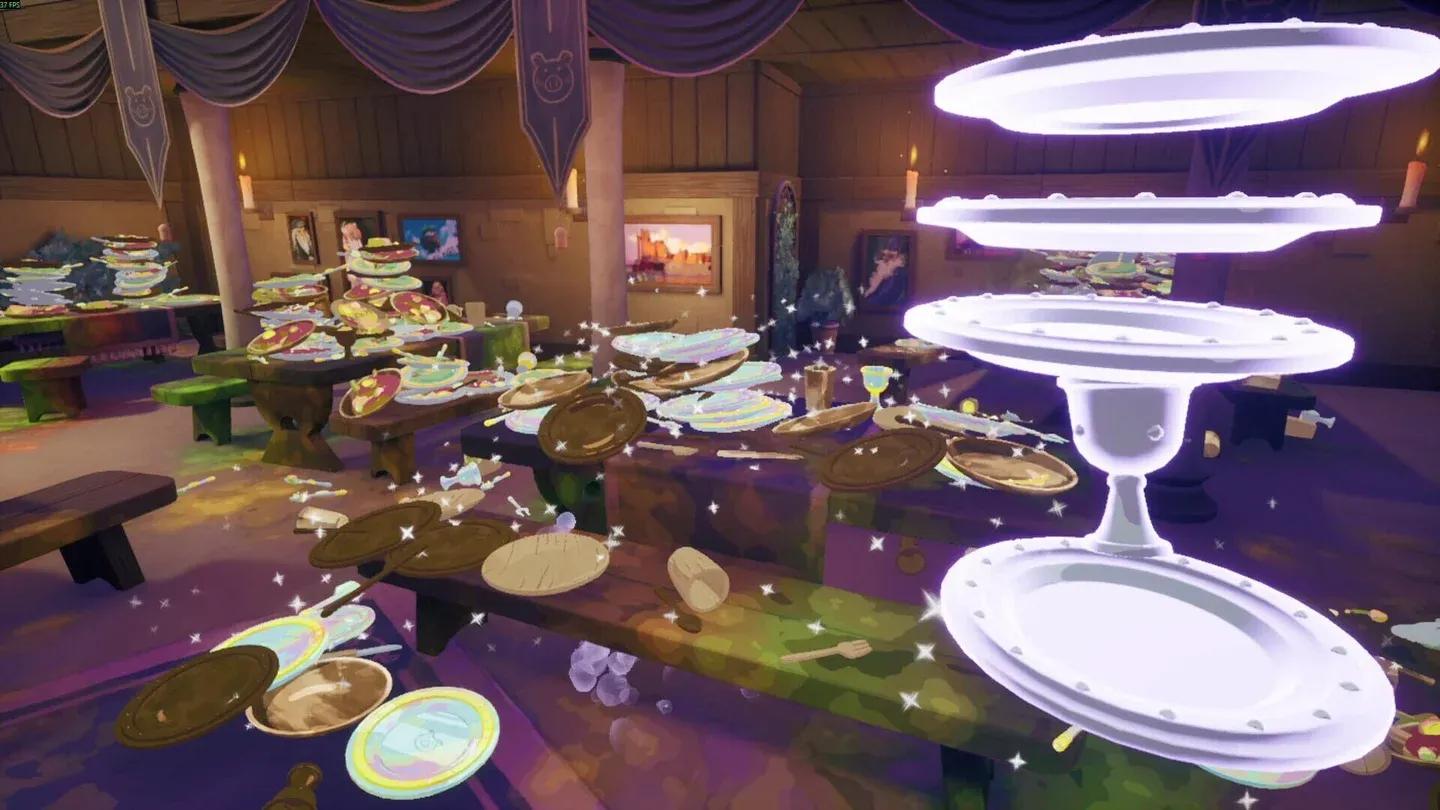
The game scales its environments from modest dining rooms up to sprawling castle refectories, giving the organizing loop room to grow without overwhelming players early on. Skill points earned by completing rooms unlock new utility spells, which gradually smooth out the workflow rather than fundamentally changing how the game feels. It is a deliberate, unhurried design choice that suits the genre perfectly.

Tidy Wizard: A Place For Every Plate content image
Gameplay and mechanics
The core loop in Tidy Wizard breaks down into three distinct actions, each tied to a spell:
- Levitate: pulls scattered dishes and cutlery across the room to your hands
- Scrub: submerges soiled tableware into enchanted basins that clean automatically
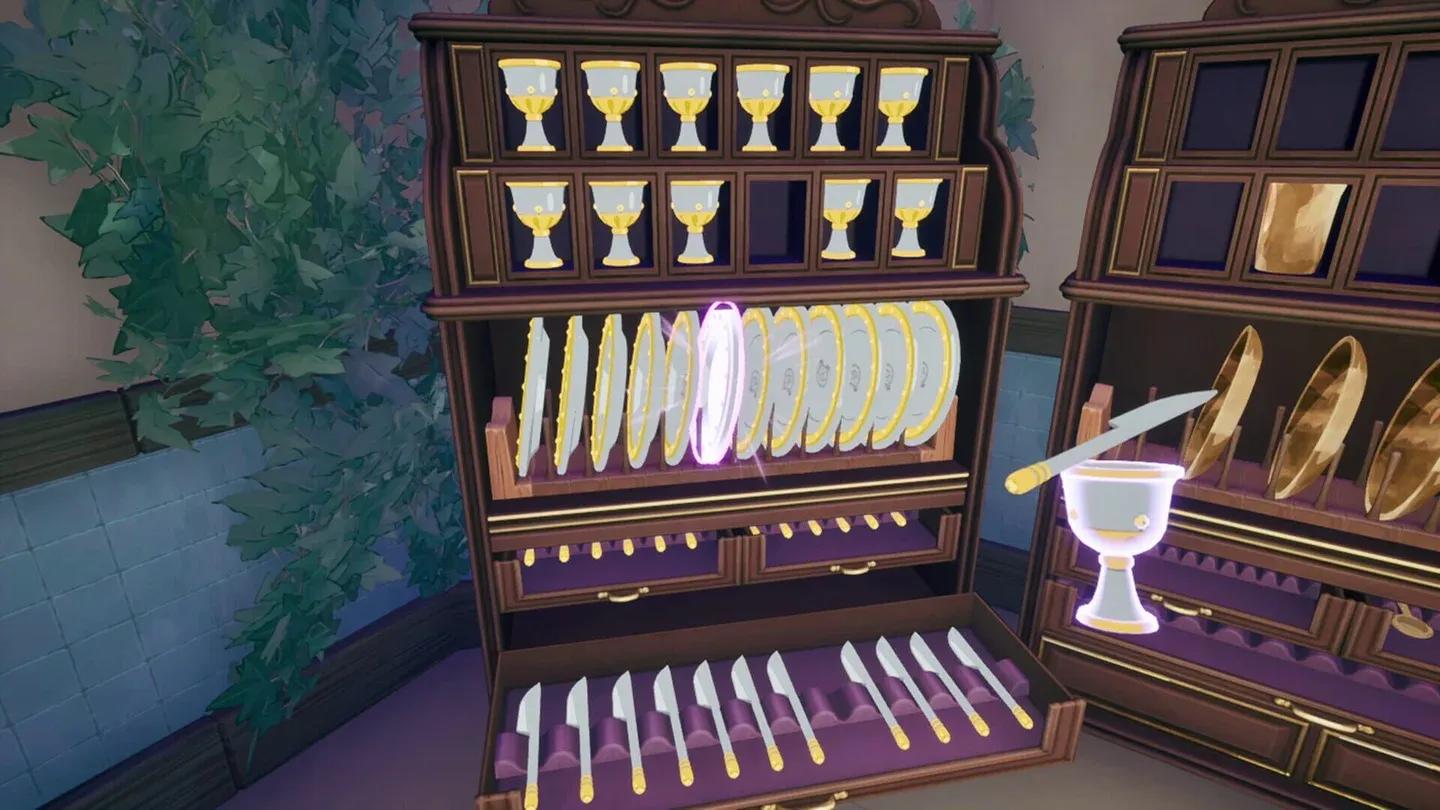
- Shelve: matches cleaned items to the correct material-specific dresser
The shelving step is where most of the thinking happens. Dressers are sorted by material type, ranging from rustic wood to steel, gold, and other tiers, and players need to explore each room to figure out which dresser belongs to which category. It is a light puzzle layer that stops the loop from becoming purely mechanical, giving the brain just enough to do without creating stress.
What makes the sorting system work?
Material-based sorting is the mechanic that separates Tidy Wizard from a straightforward cleanup game. Rather than dropping everything into a single bin, players match each piece of tableware to a specific storage type based on what it is made of. A wooden bowl does not go where a gold chalice goes, and identifying the right dresser requires a quick scan of the room each time you enter a new space.
This system scales naturally as environments grow larger. More materials appear, more dressers are scattered across the hall, and the spatial memory required to move efficiently becomes part of the skill. The unlock progression feeds directly into this, with new spells designed to reduce friction in bigger spaces rather than adding complexity for its own sake.

Tidy Wizard: A Place For Every Plate content image
World and setting
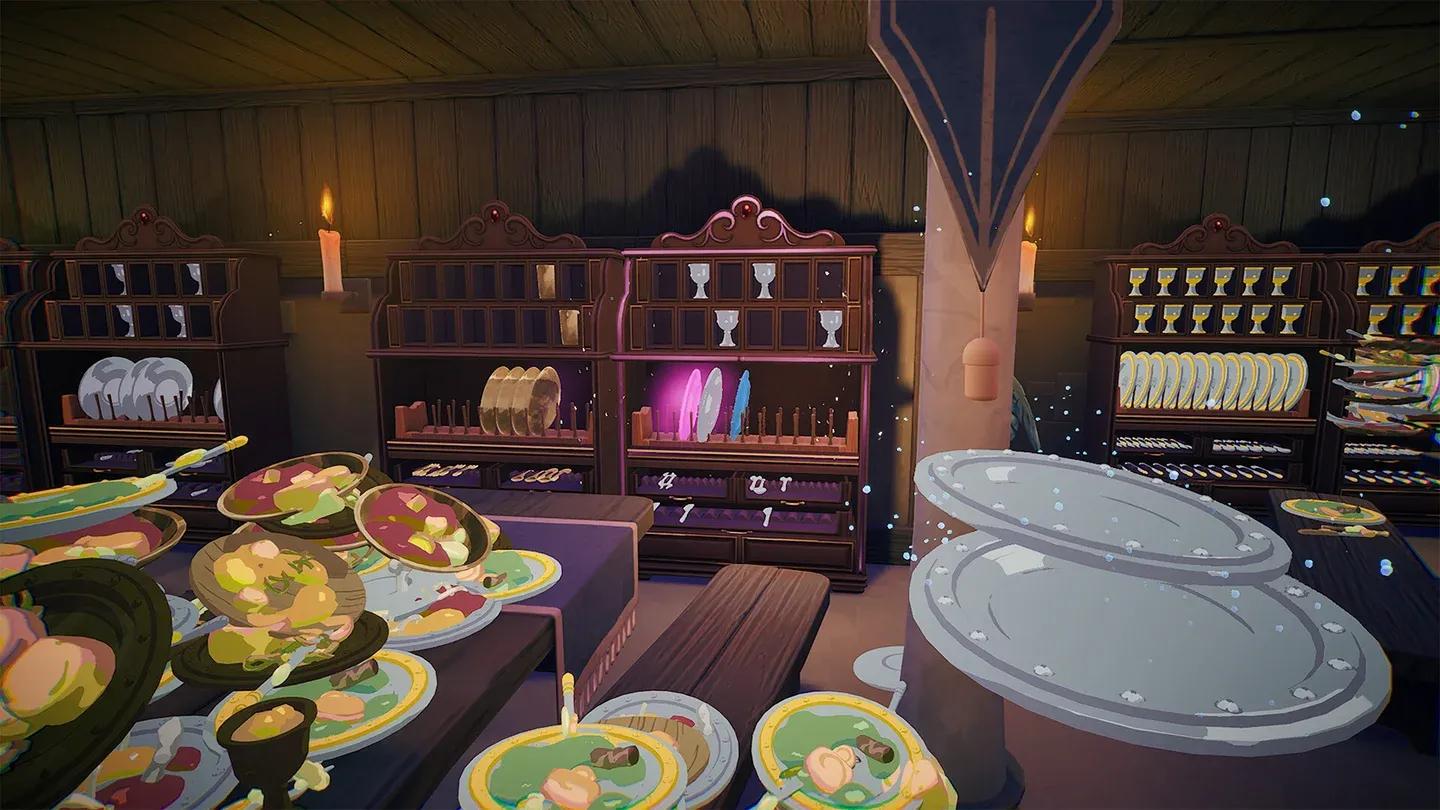
The wizarding dining hall setting does a lot of quiet work here. Enchanted basins, ornate dressers, and tables covered in the aftermath of magical feasts give the organizing loop a sense of place that a generic warehouse or apartment would not. The first-person perspective puts players directly inside these spaces, which makes the before-and-after contrast of a cleaned room feel tangible rather than abstract.
Embers has designed the environments to scale in ambition alongside the player's spell repertoire. Starting in a small dining room and eventually working through grand academy refectories gives the game a natural sense of progression without requiring a traditional narrative to justify it. The setting provides enough visual character to keep the spaces interesting across multiple rooms.

Tidy Wizard: A Place For Every Plate content image
Content and replayability
For players drawn to relaxing simulation games and cozy organizing experiences, Tidy Wizard offers a focused, low-pressure loop that rewards patience and attention to detail. The combination of scaling environments, material-based sorting puzzles, and a spell unlock system that meaningfully improves quality of life gives the game more structural depth than its calm presentation might initially suggest. Each completed room delivers a clean, unambiguous sense of accomplishment that the genre does best.