Following the "Essential Facts About the U.S. Video Game Industry" report by the Entertainment Software Association (ESA), new data reveals how video games deliver measurable benefits beyond entertainment. The ESA surveyed nearly 13,000 players aged 16 and older across 12 countries: Australia, Brazil, Canada, France, Germany, Italy, Japan, Poland, South Korea, Spain, the United Kingdom, and the United States. Fun remains the top reason people play, but the data shows gaming delivers a wider range of real-world advantages.
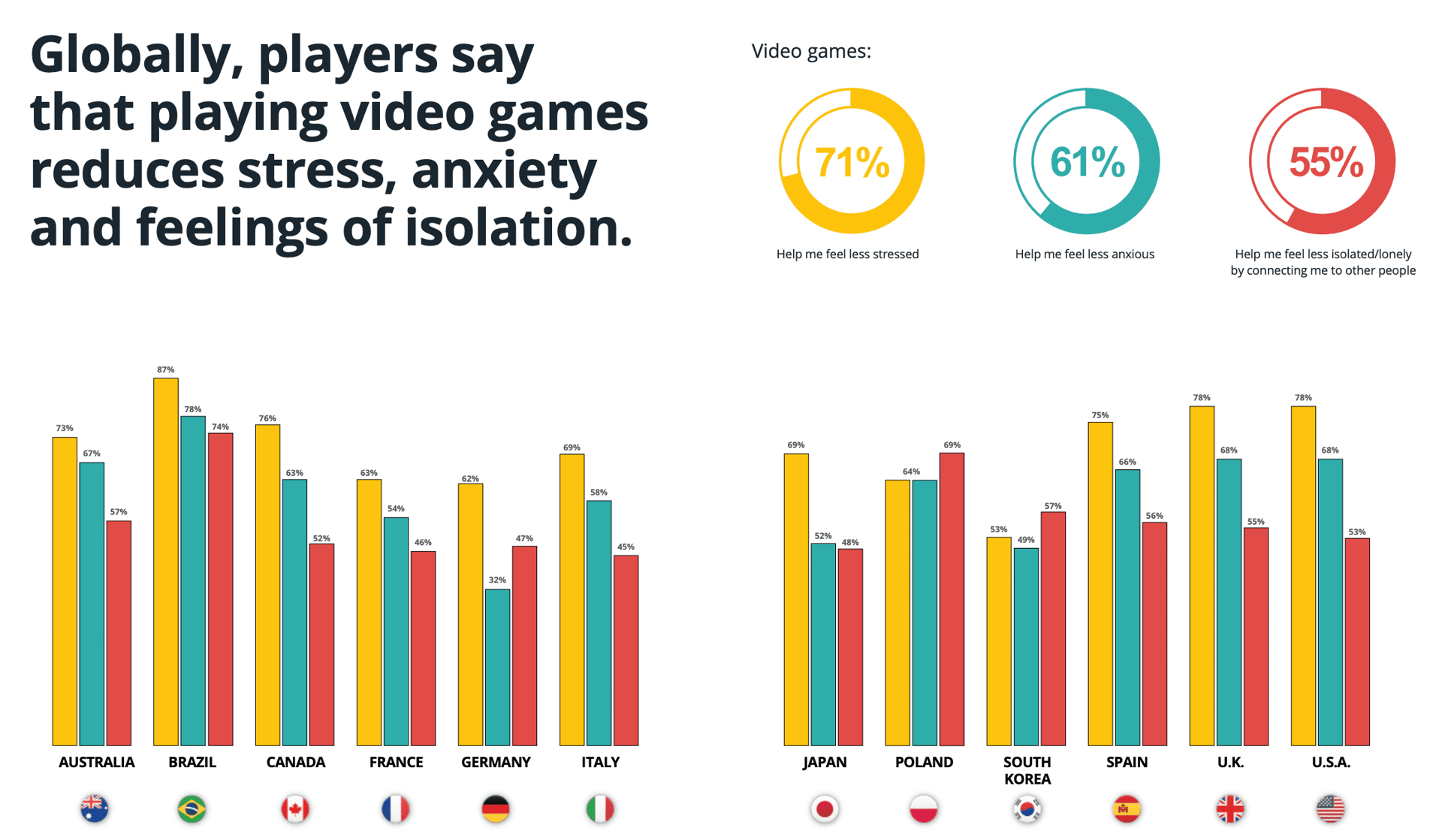
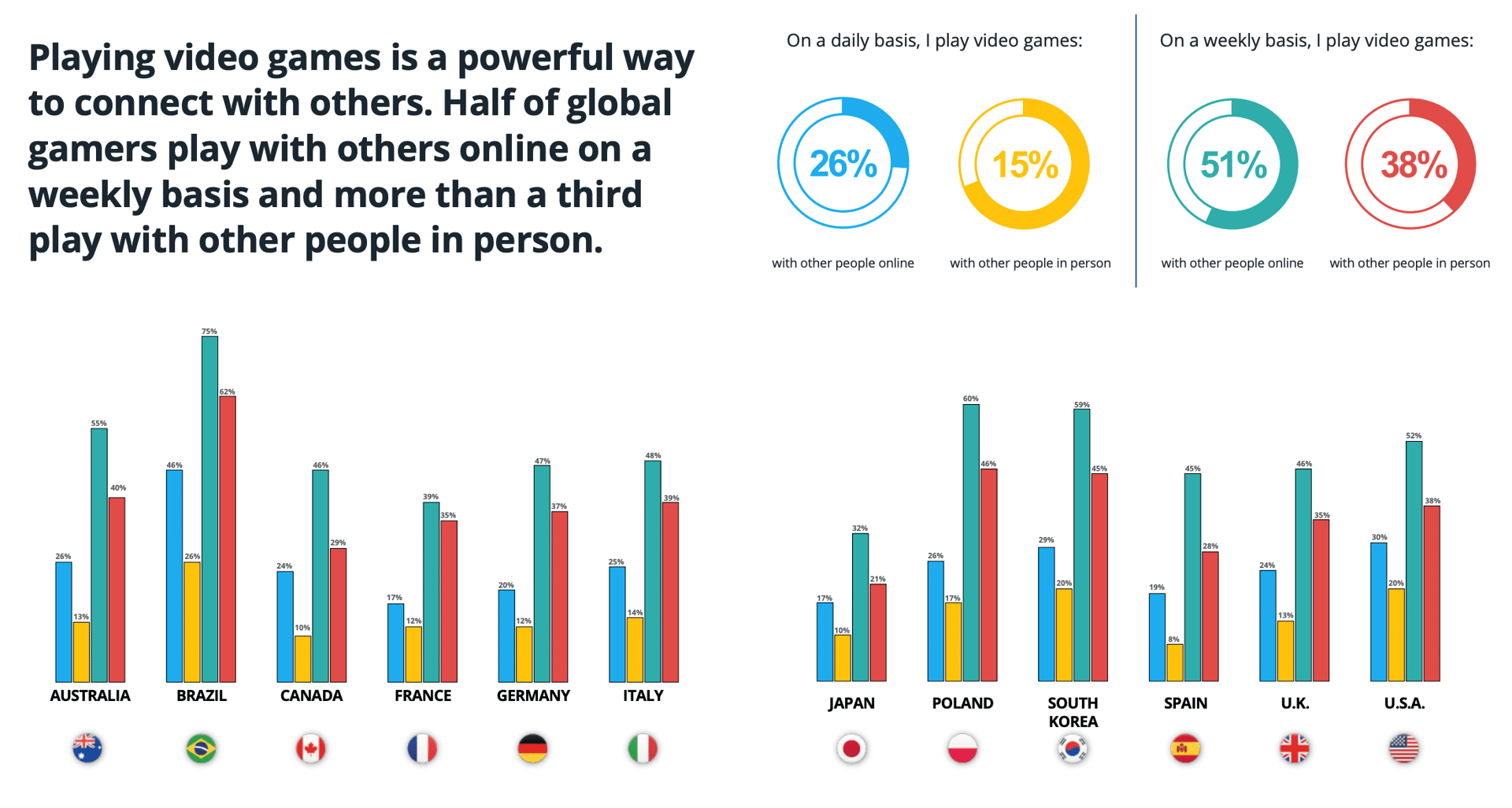
Players use video games to manage stress, stay mentally engaged, and cope with difficult life circumstances. During the COVID-19 pandemic, gaming became a primary way to maintain connections with friends and family. More than half of players now participate in online multiplayer games, and over a third play in person with others. Nearly half of all players have formed meaningful relationships through gaming, including friendships and romantic partnerships.
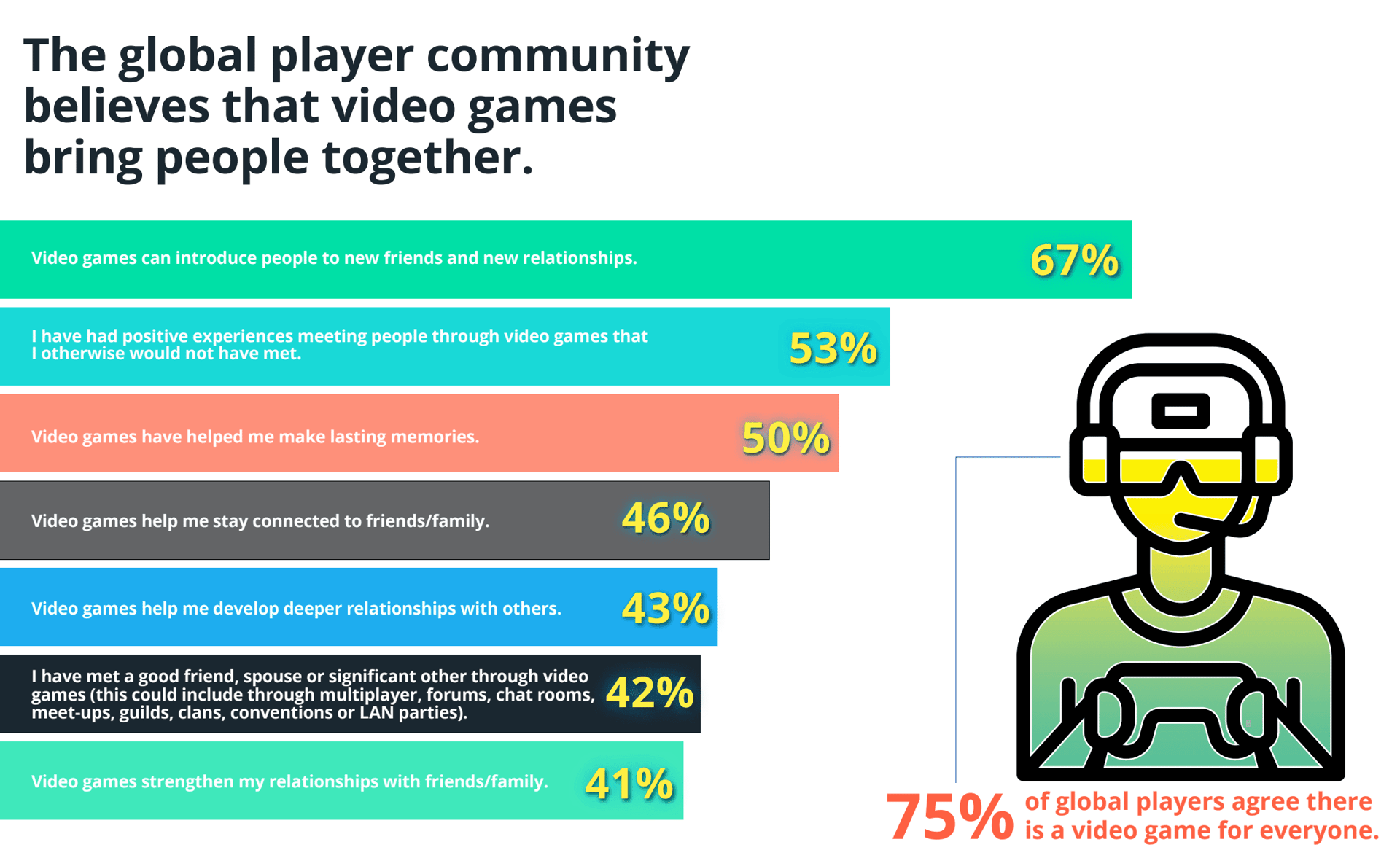
Academic research backs up these findings. Approximately 15 recent peer-reviewed studies confirm that video games offer social and emotional benefits that other entertainment mediums can't match. The data supports what players already know: gaming delivers tangible positive effects.
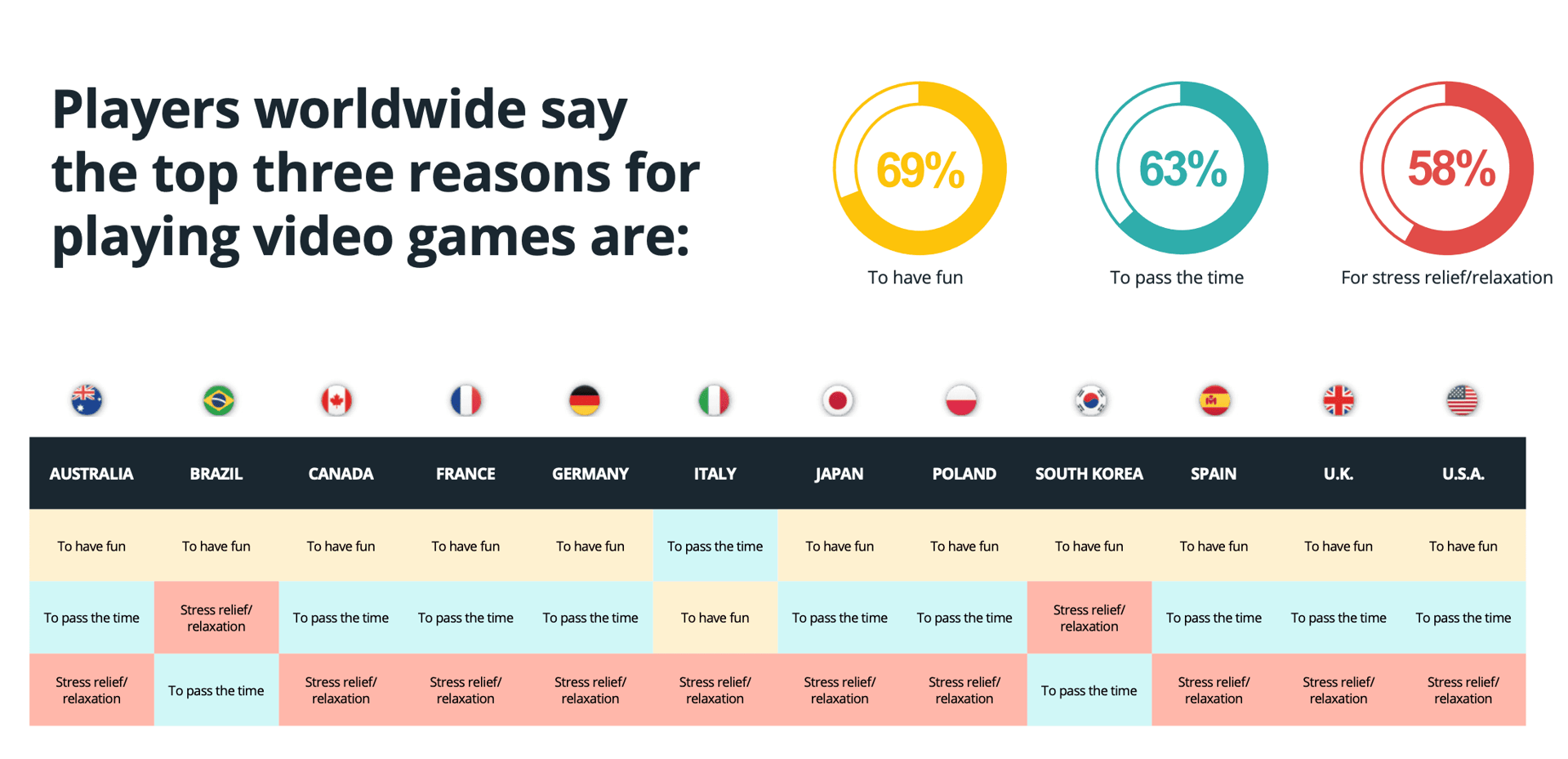
The top motivations for playing break down to 69% for fun, 63% to pass time, and 58% for stress relief and relaxation. Mental health improvements are measurable: 71% of players report reduced stress, 61% experience less anxiety, and 58% feel less isolated or lonely.
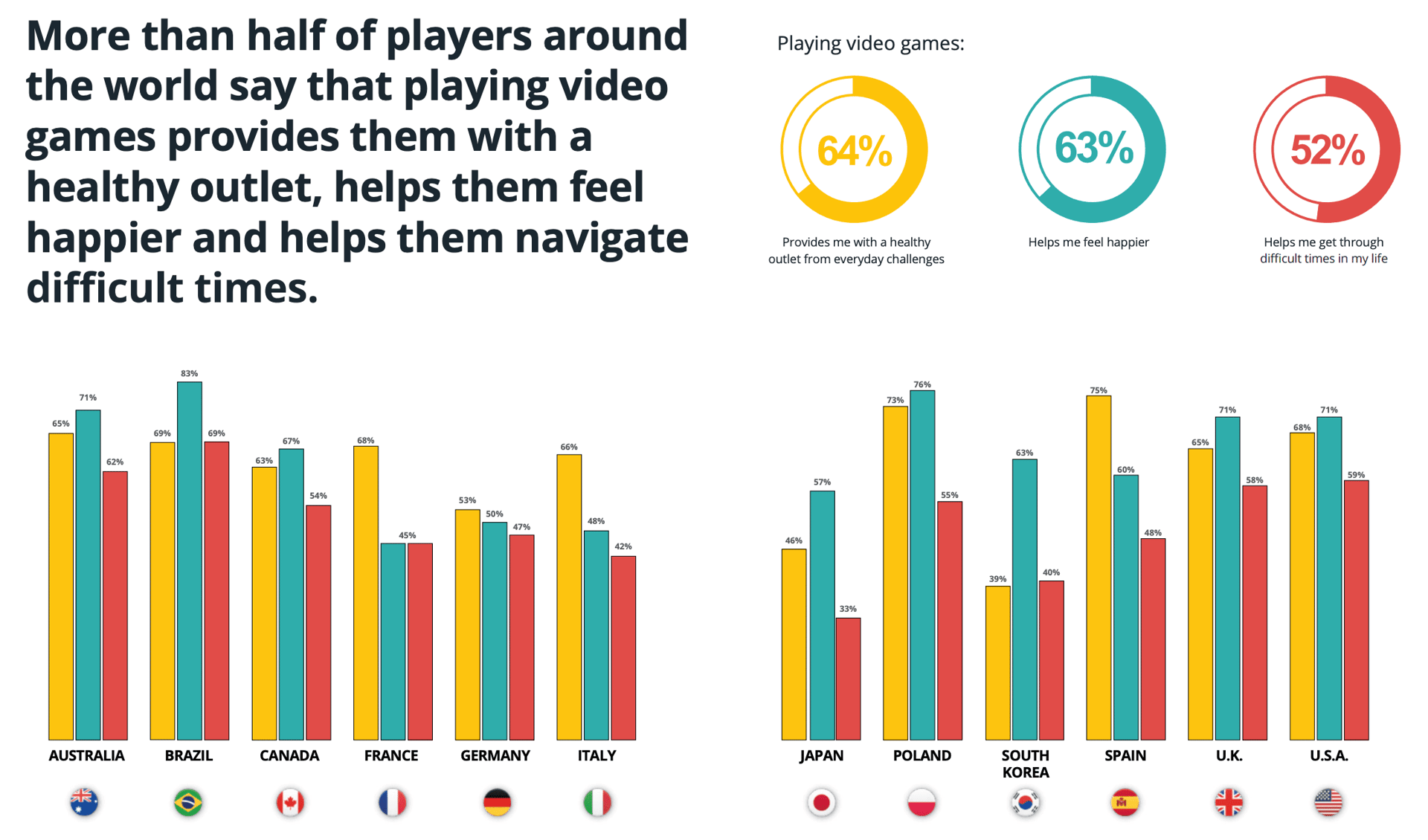
More than half of global players say gaming provides a healthy outlet for life's challenges, helps maintain happiness, and supports them through difficult periods. The numbers: 64% use games as a healthy coping mechanism, 63% credit gaming with their happiness, and 52% rely on video games during tough life phases.
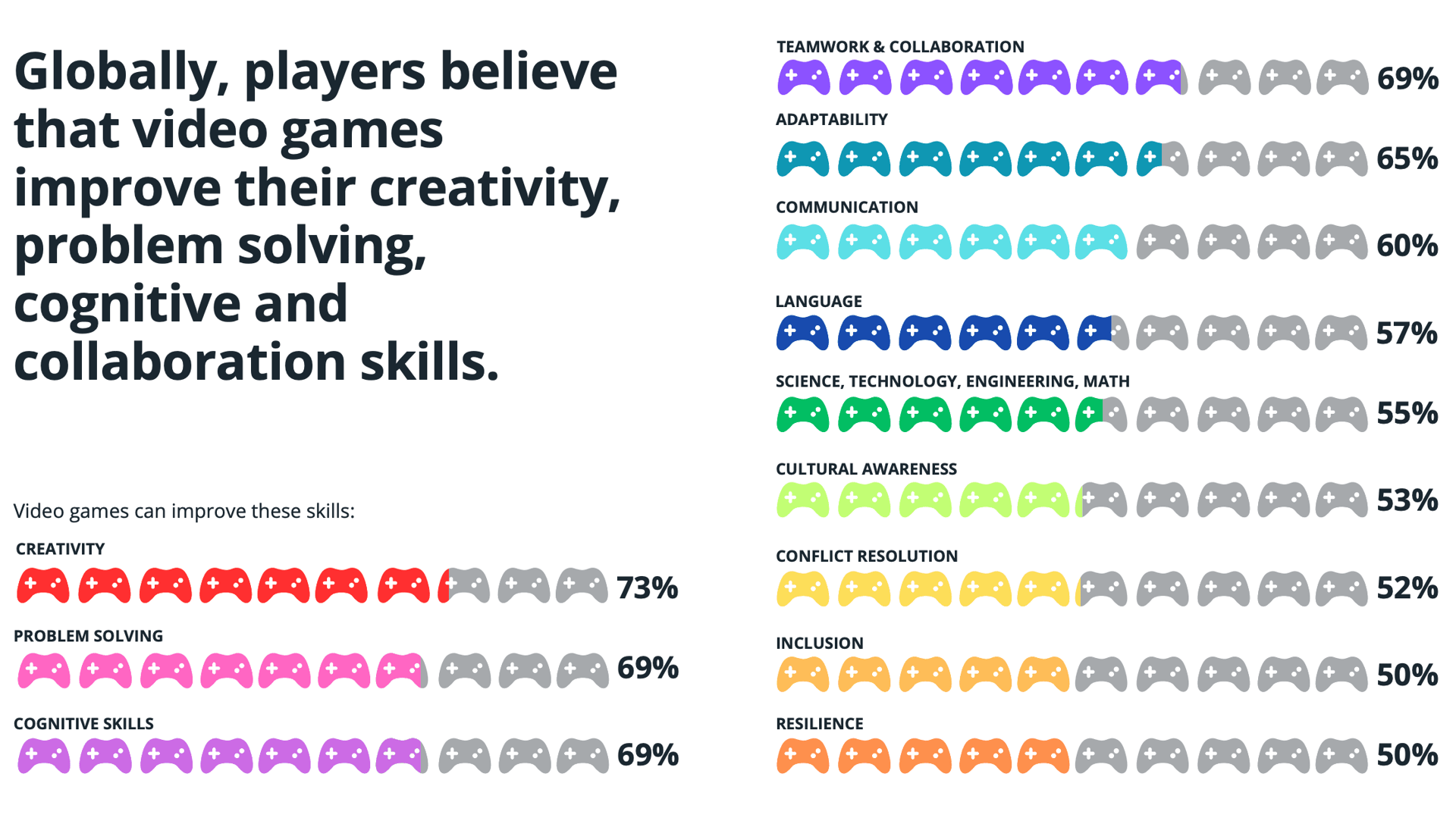
Cognitive benefits also show up in the data. Video games have always offered storytelling and escapism, but research now demonstrates they can sharpen cognitive skills and potentially slow memory loss. A study published in Nature Human Behavior found that just a few hours of gameplay per week improves attention, control, and reading abilities, with effects lasting long-term.
The social side of gaming is equally significant. Half of global gamers play online multiplayer sessions weekly, and over a third play in person with others regularly. Video games create social spaces that ignore age, gender, language, and location barriers.
These findings matter for web3 gaming, where blockchain technology is merging with gaming experiences. The benefits documented here — social connectivity, mental well-being, cognitive development — position web3 gaming to amplify what traditional gaming already delivers. As web3 gaming evolves, the data confirms video games function as more than entertainment. They're tools for positive change in players' lives.