

Advertisement



Overview
Transistor puts you in control of Red, a celebrated singer in the technologically advanced city of Cloudbank, who finds herself holding a massive sword called the Transistor after a failed assassination attempt by a shadowy group known as the Camerata. The attack strips Red of her voice, sealing it inside the weapon alongside the consciousness of a man who died protecting her. That man now speaks to Red through the Transistor, serving as narrator, companion, and the emotional core of the story as she hunts down those responsible.
Cloudbank itself is under simultaneous threat from a robotic force called the Process, which attacks the city's citizens without discrimination. The Camerata, it becomes clear, has lost control of the very weapon they intended to wield. Red's pursuit of answers runs parallel to a city quietly being consumed, and the game never lets you forget that the clock is ticking on both fronts.
Transistor content image
Gameplay and mechanics
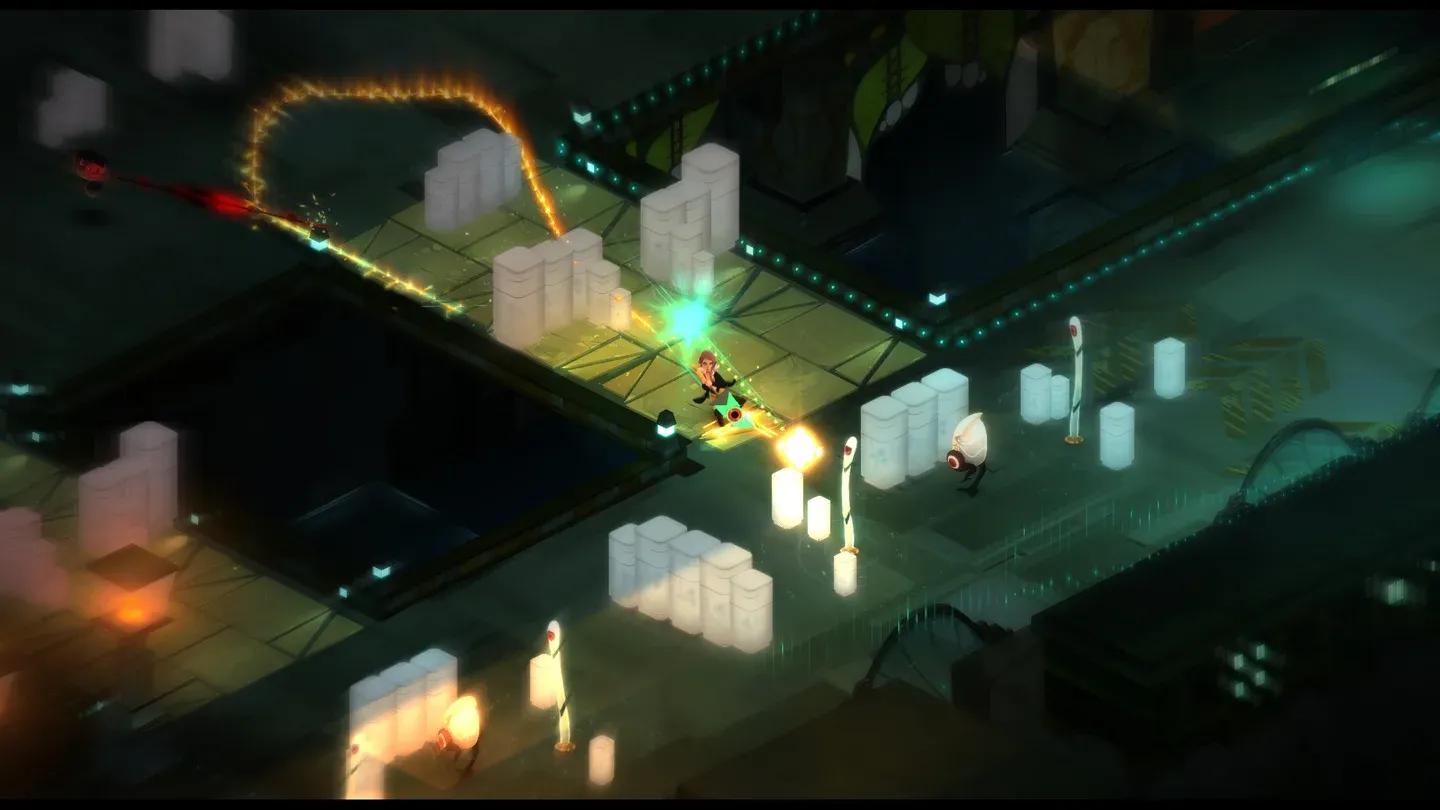
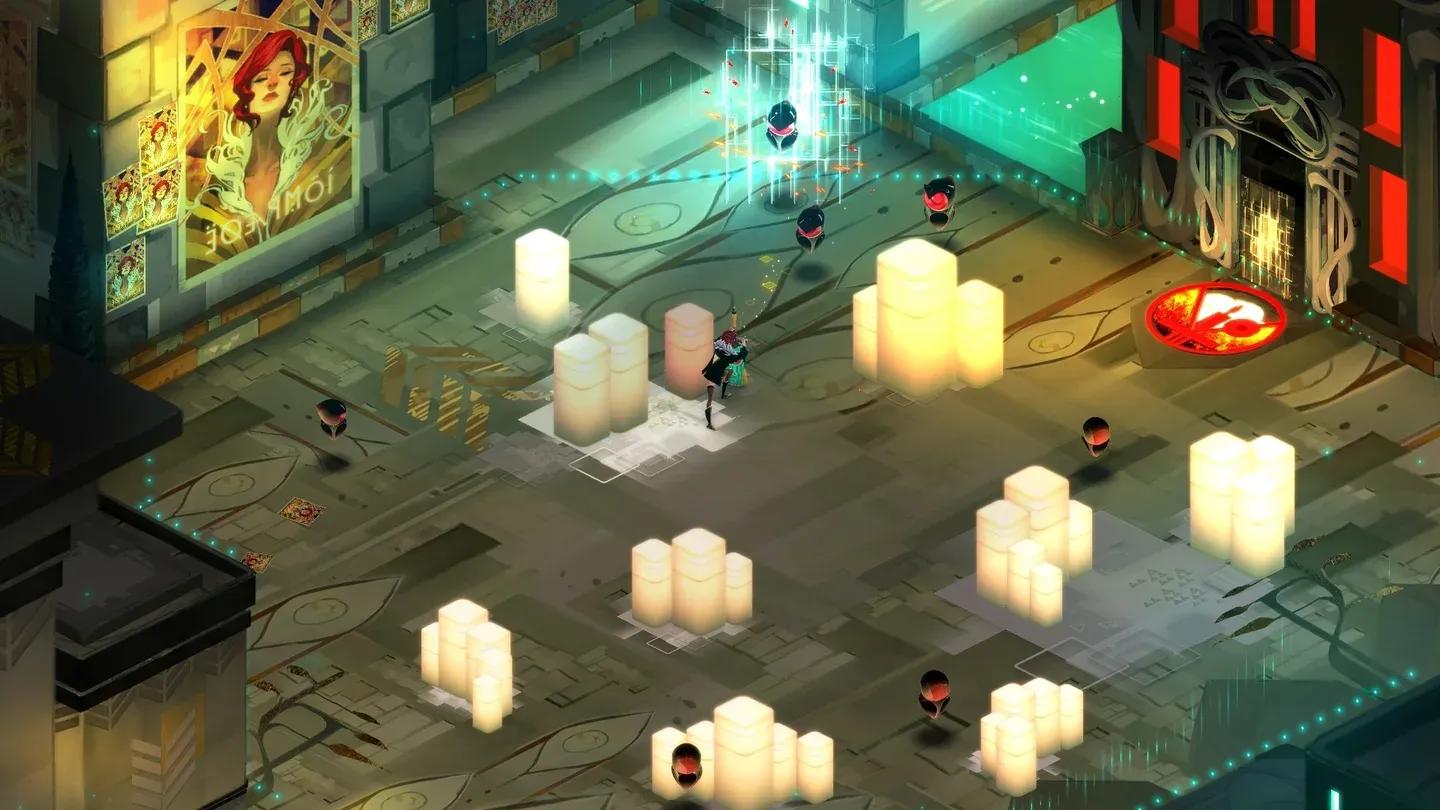
The combat system is where Transistor earns its reputation. Red can fight in real-time, swinging and dodging through waves of Process enemies, or she can activate Turn(), a planning mode that pauses the action and lets her queue up a sequence of moves and attacks to execute all at once. After a Turn() burst resolves, there's a cooldown period where Red can't use the mode again, which forces you to think carefully about when to commit.
Transistor content image
Powers in the game are called Functions, and the system built around them is genuinely flexible:
- 16 total Functions available
- Equip as active combat abilities
- Use as upgrades to modify other Functions
- Slot as passive persistent effects
- Combinations unlock unique behaviors
That triple-slot system means a single Function can serve three different roles depending on how you build around it. The same ability that fires a projectile as an active skill might reduce cooldown time as a passive or add a homing property when slotted as an upgrade. Supergiant encourages experimentation across multiple playthroughs, and the sheer number of viable combinations keeps the system from going stale.

Transistor content image
World and setting
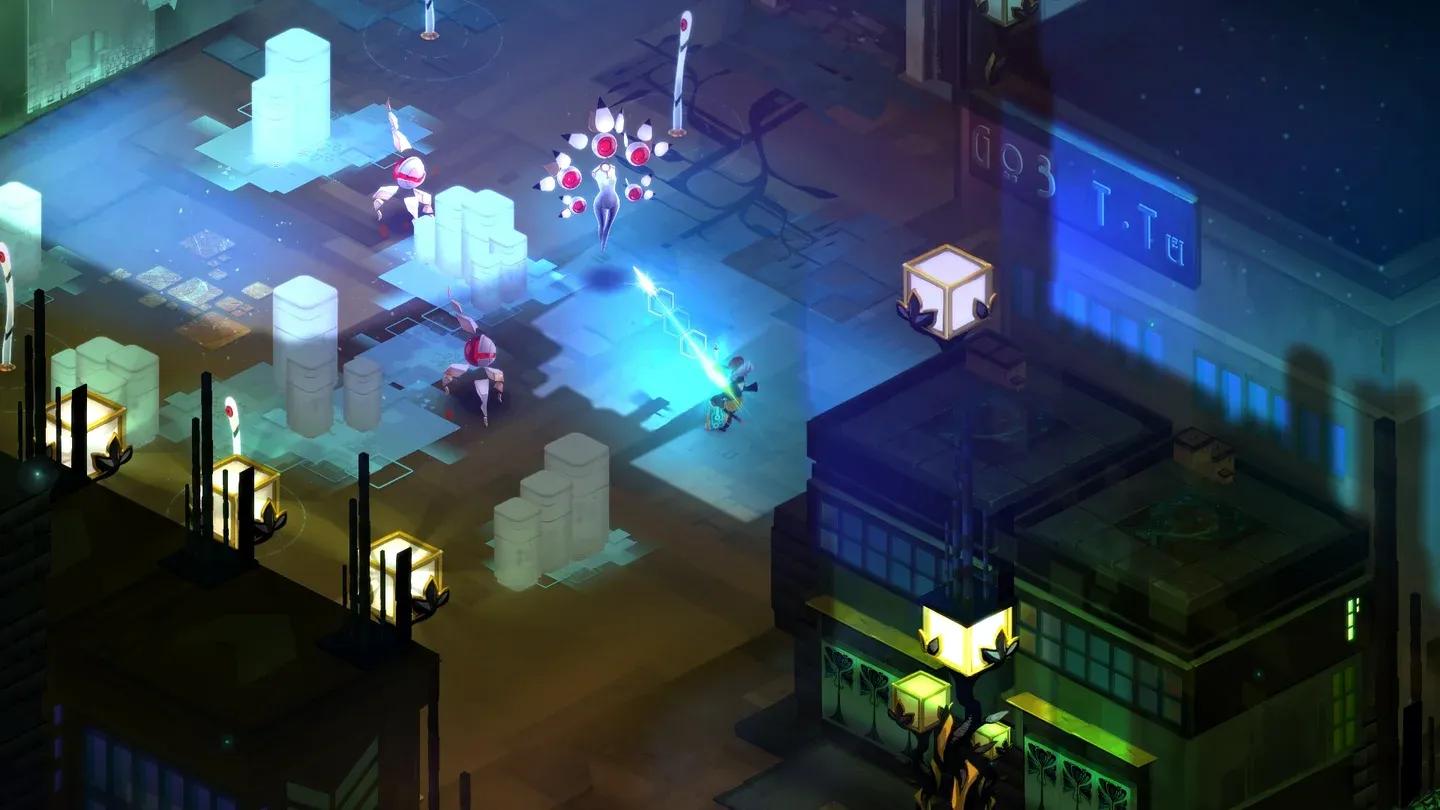
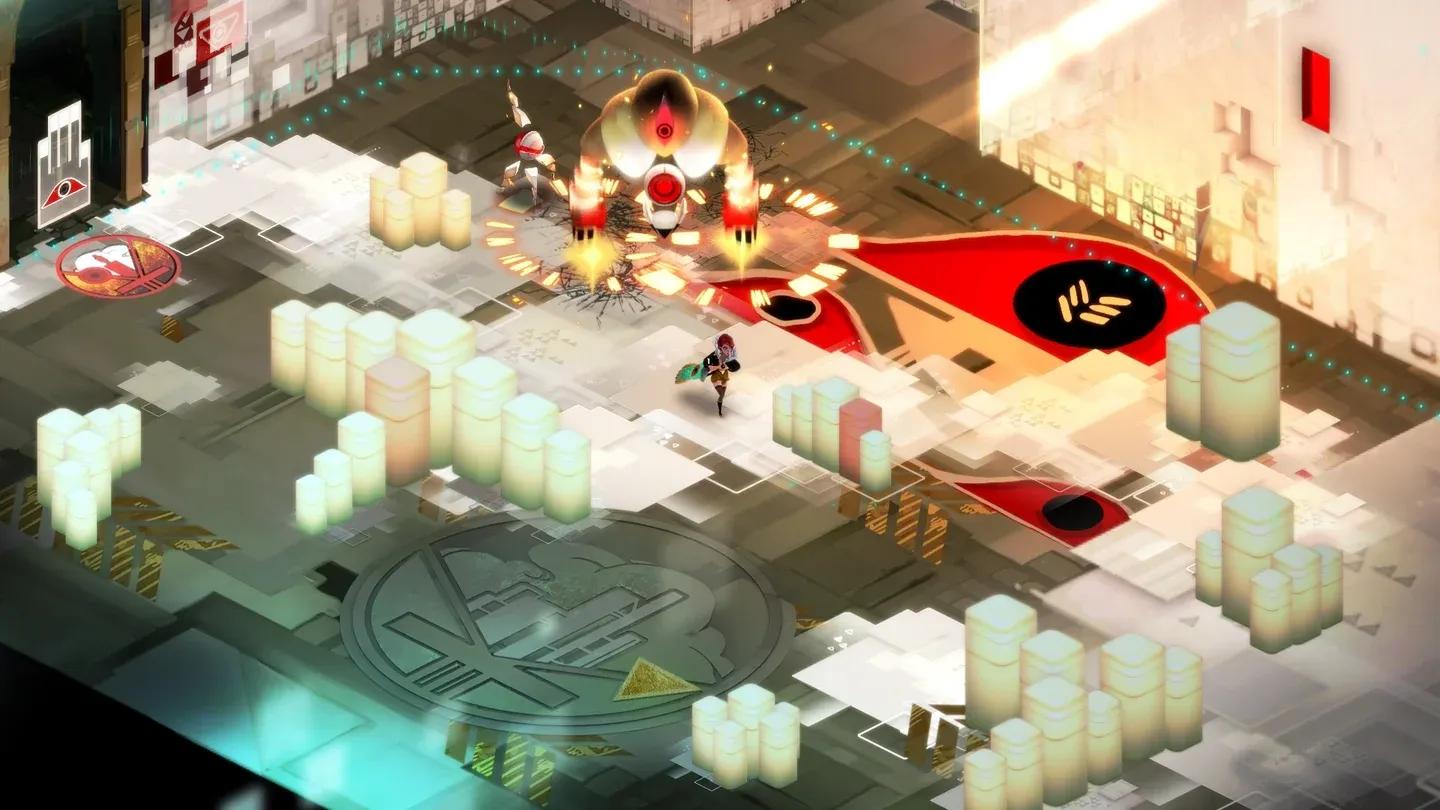
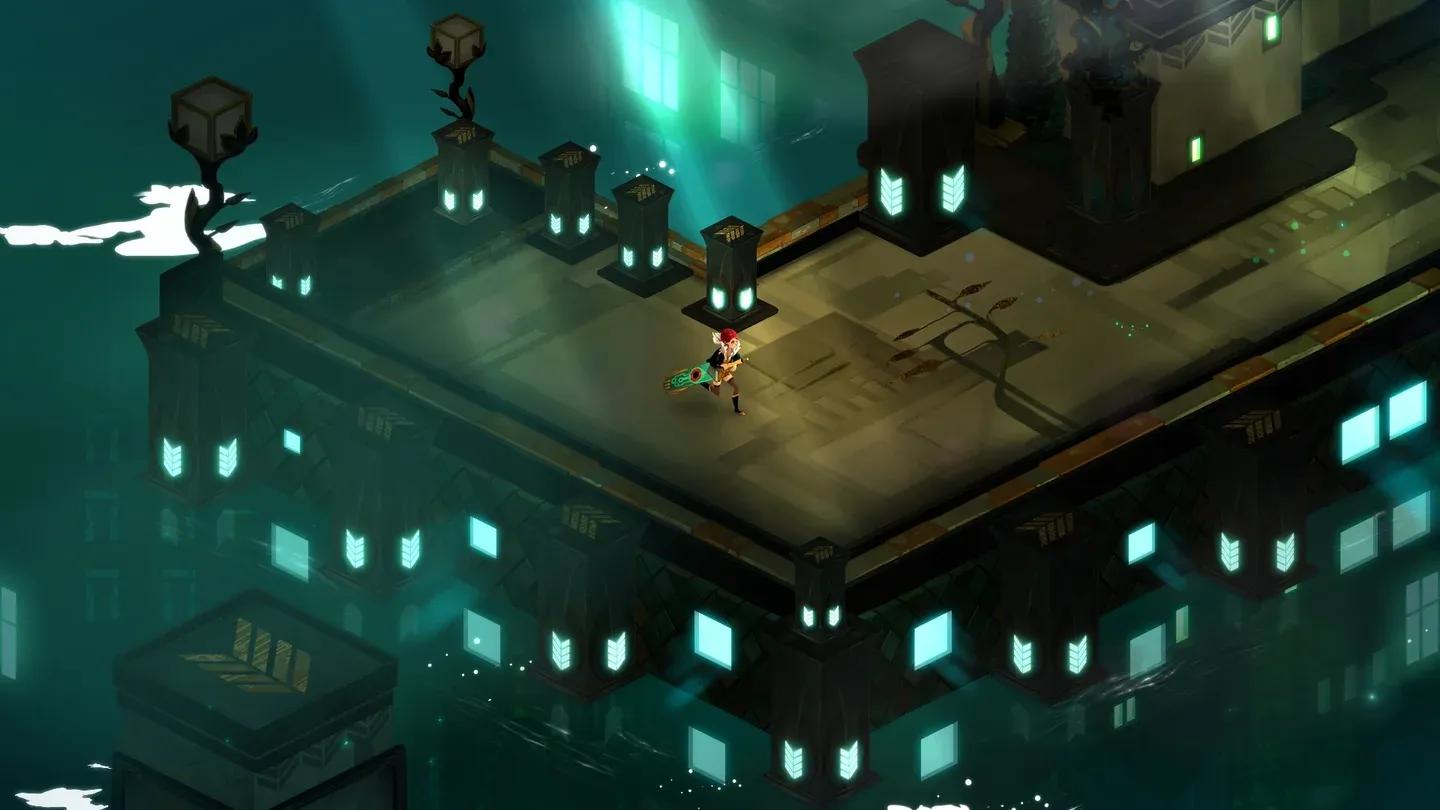
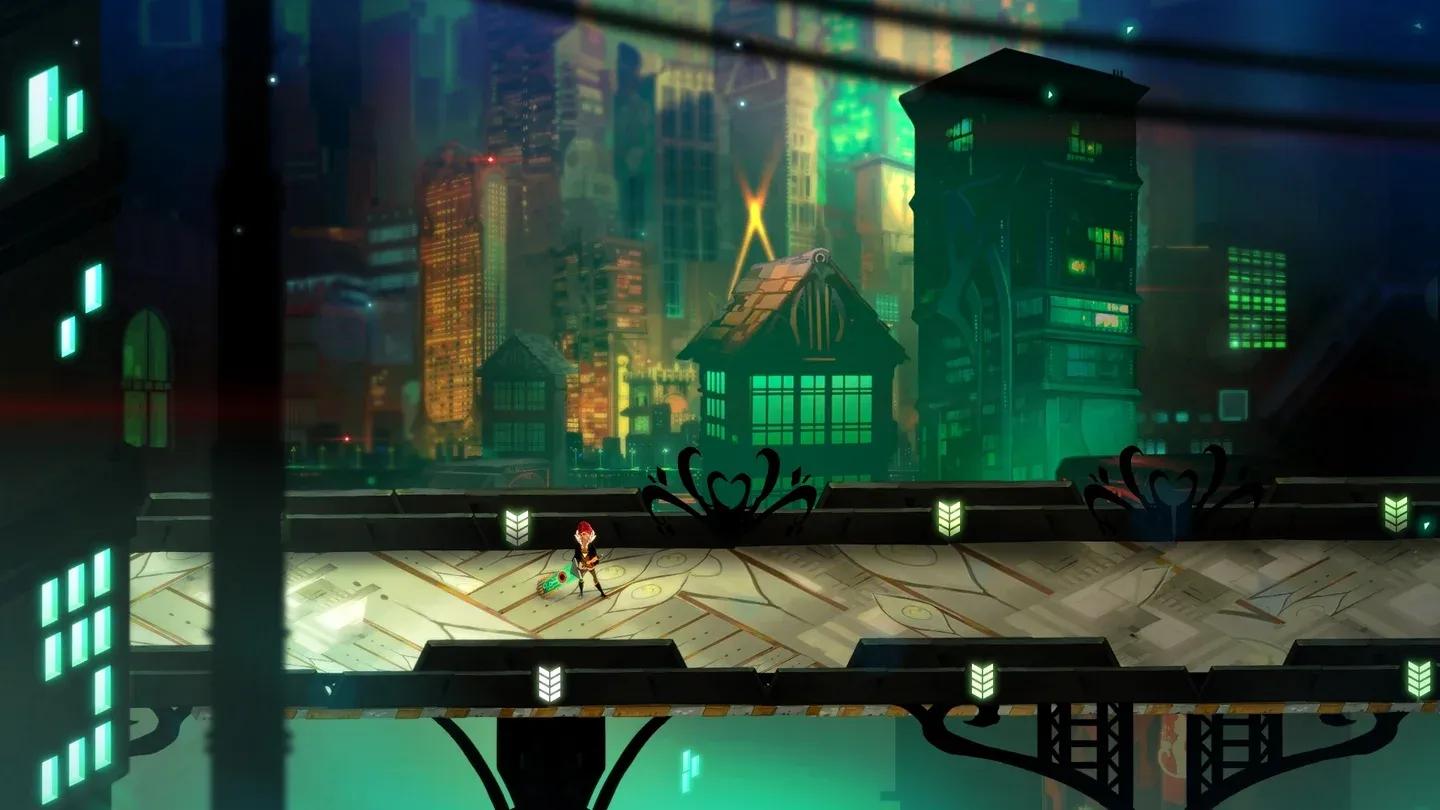
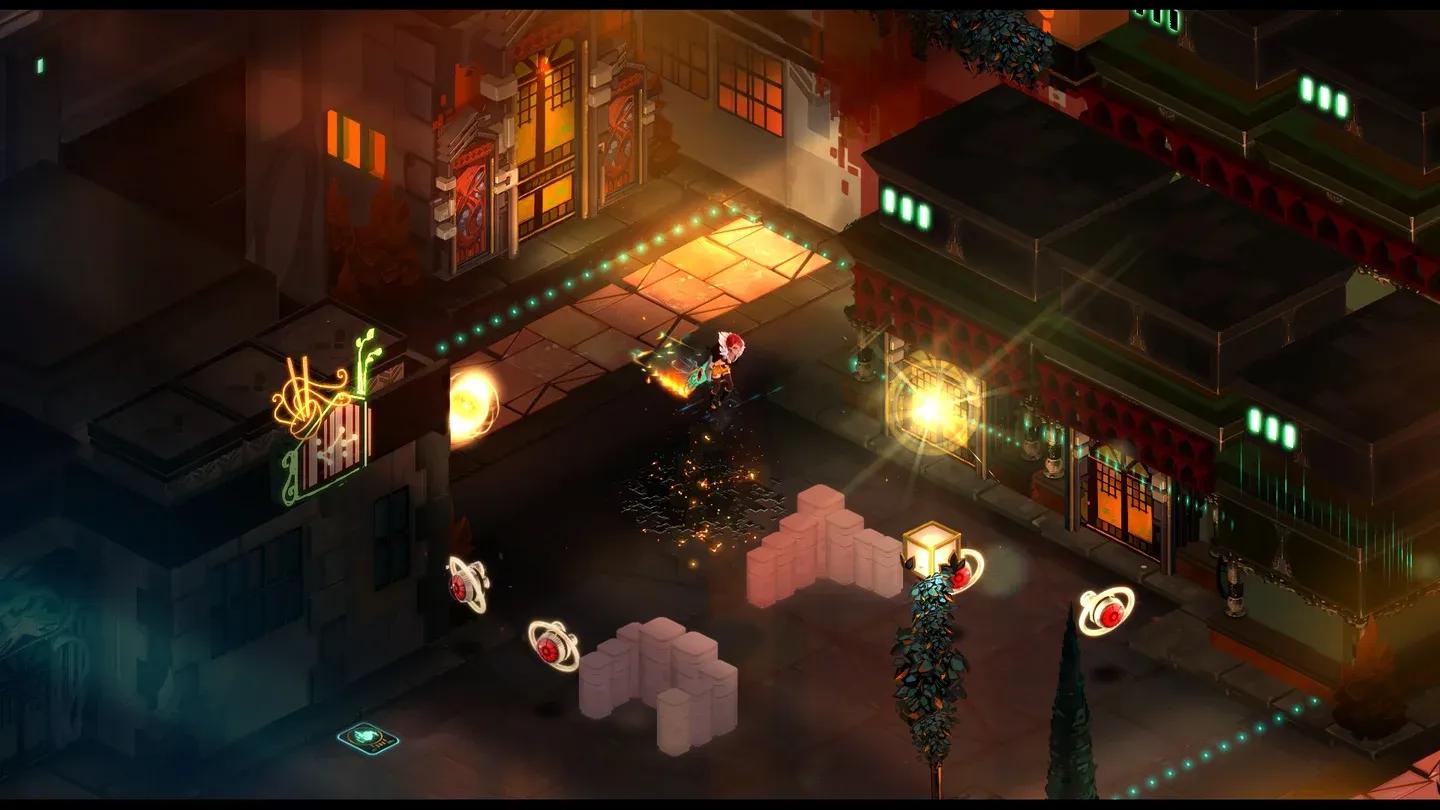
Cloudbank is a city that feels lived-in without ever being explained to death. Its art deco architecture layered over bioluminescent technology gives every environment a specific mood, and the isometric perspective frames it all like a painting that happens to be on fire. The Process enemies, with their clean geometric forms, contrast sharply against the organic warmth of Red's character design, which makes the invasion feel genuinely wrong.
Transistor content image
The narrative unfolds through environmental storytelling, the Transistor's commentary, and optional data logs scattered across levels. Nothing is handed to you directly, which suits the game's tone. Red never speaks, but her actions and the reactions of the world around her communicate more than dialogue would.
Visual and audio design
Darren Korb's soundtrack for Transistor sits in a genre he described as "old-world electronic" and it fits the game's atmosphere with unusual precision. Tracks blend acoustic guitar with synthesizer textures in a way that feels both nostalgic and alien. Ashley Barrett's vocal performances, particularly the humming versions of the main theme that play during combat, are some of the most memorable audio moments in any indie game released in the last decade.
The visual design matches that ambition. Every screen in Transistor looks considered, from the way neon light refracts off wet pavement to the subtle animations on the Transistor's blade. Supergiant built a world where the aesthetic and the mechanics reinforce each other, and that coherence is what makes the game hold up more than a decade after its 2014 release.
System Requirements
| Requirement | Minimum |
|---|---|
| Processor | Dual Core CPU - 2.6ghz |
| Memory | 4 GB RAM |
| Graphics | 1GB of VRAM: Intel HD 3000 GPU / AMD HD 5450 / Nvidia 9400 GT |