Biggest discounts, free games, and limited-time offers across every major gaming store.
Never pay full price again.
Overview
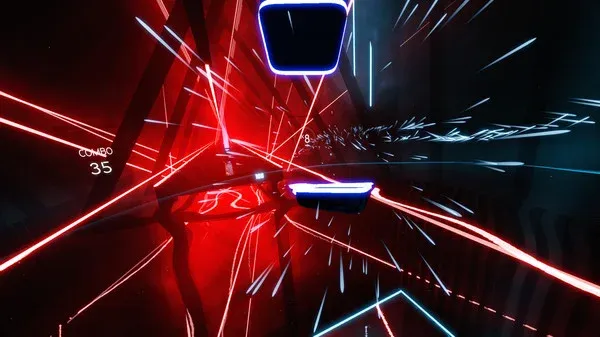
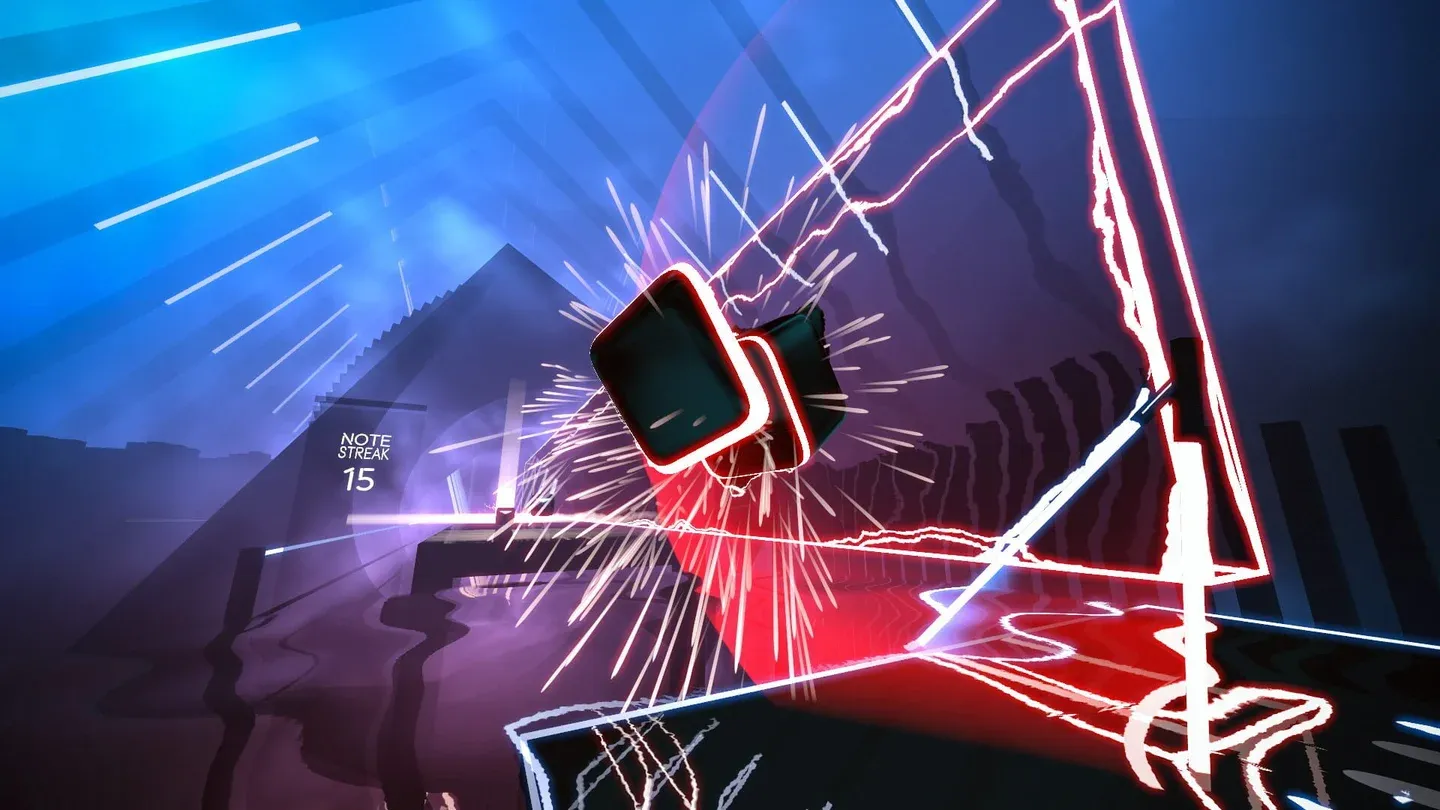
Beat Saber arrived in May 2018 from Hyperbolic Magnetism and immediately set the bar for what a VR rhythm game could feel like. The concept is straightforward: colored cubes fly toward you in time with the music, and you slice them with matching sabers in the correct direction. That simplicity is deceptive. At higher difficulties, the game demands real coordination, quick reflexes, and enough spatial awareness to dodge walls and obstacles mid-swing.
Development began in 2016 when the team identified a gap in the VR market for a genuinely great rhythm-based experience. The game went through public demos where nearly 700 people played early builds, and the response pushed it toward a full release. That grassroots testing loop shows in the final product. The core mechanic feels refined in a way that generated-content rhythm games rarely achieve.
Beat Saber content image
Gameplay and mechanics
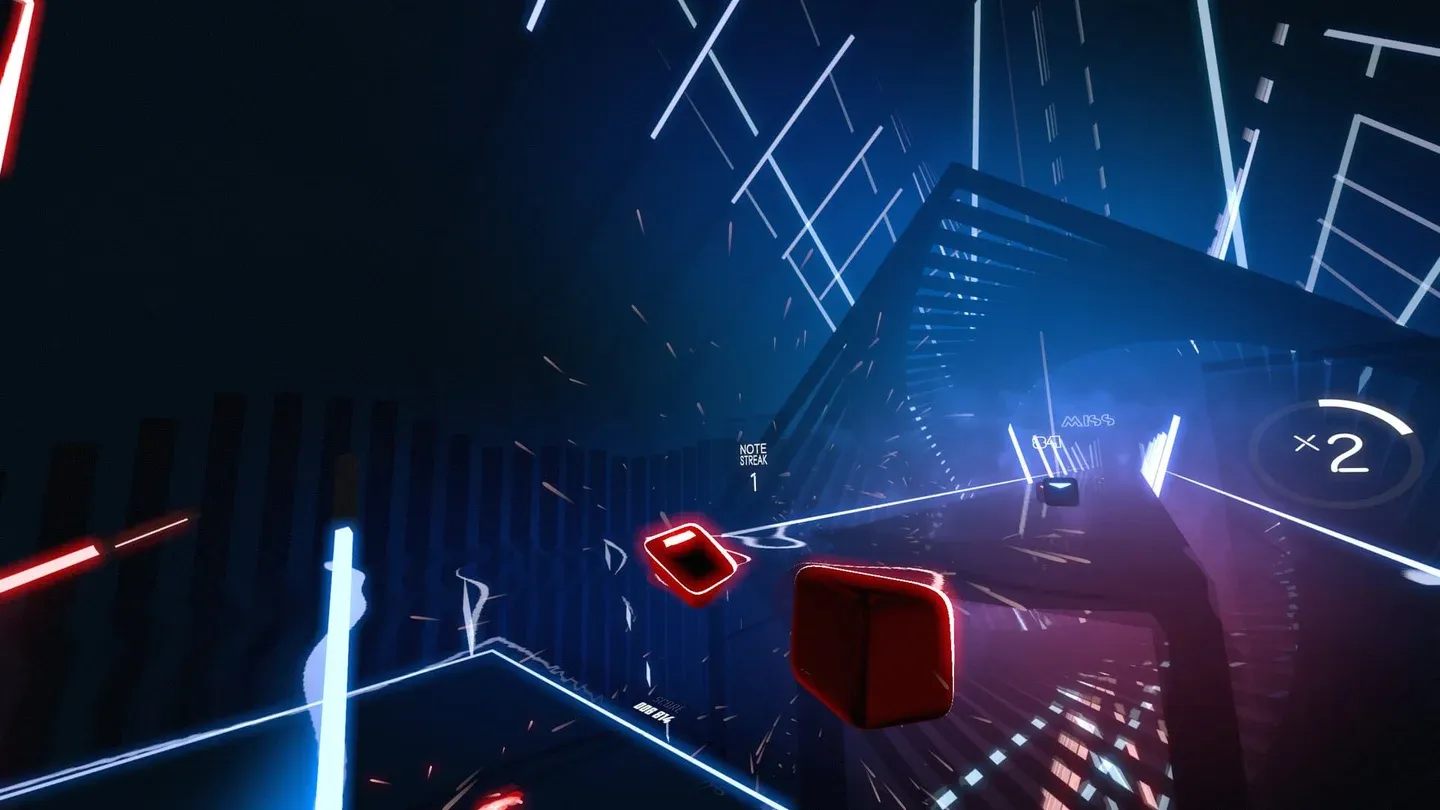
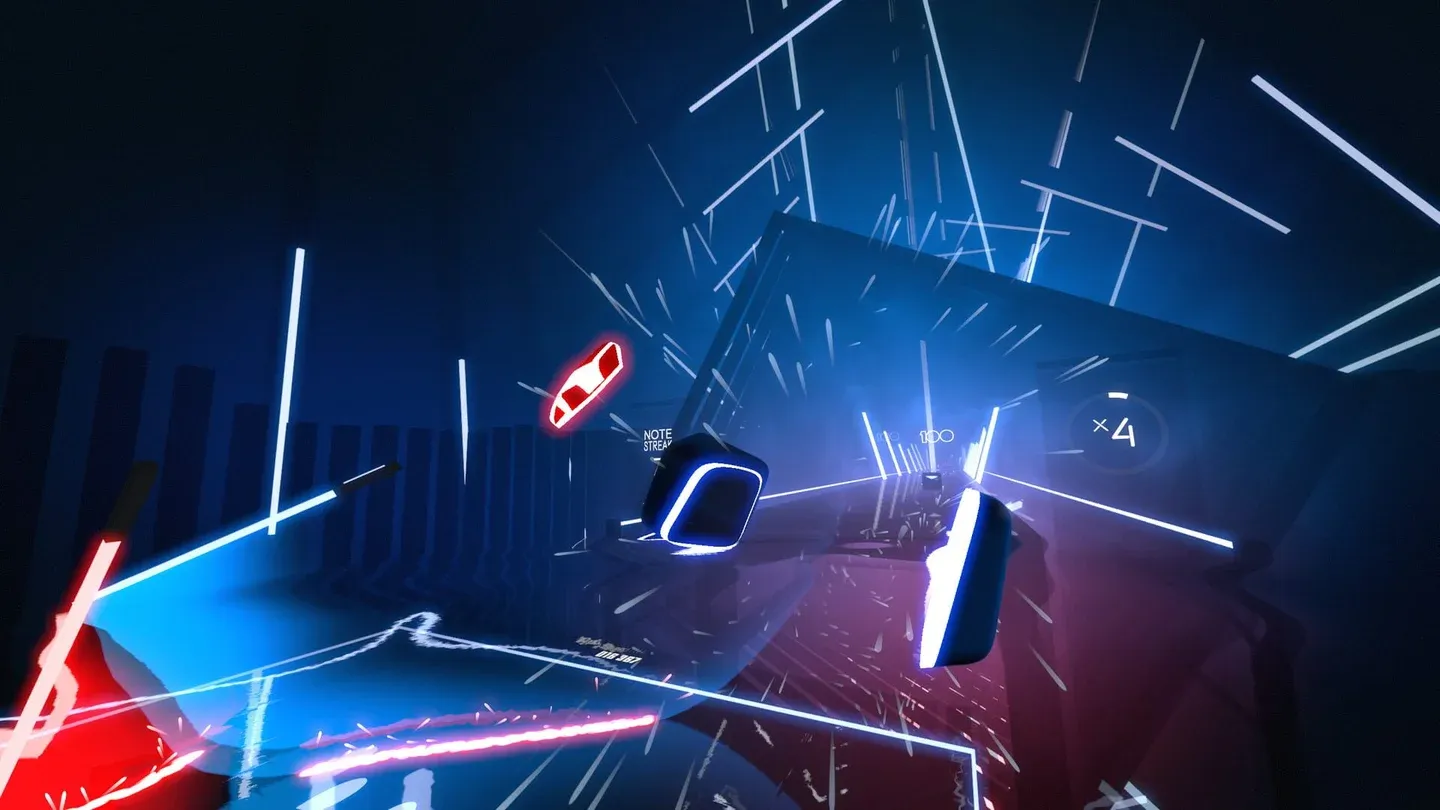
The fundamental loop of Beat Saber is built around two rules: match the saber color to the cube, and swing in the direction the arrow indicates. Everything else grows from there.
Beat Saber content image
Key mechanics at a glance:
- Color-coded cubes require left or right saber
- Directional arrows dictate swing angle
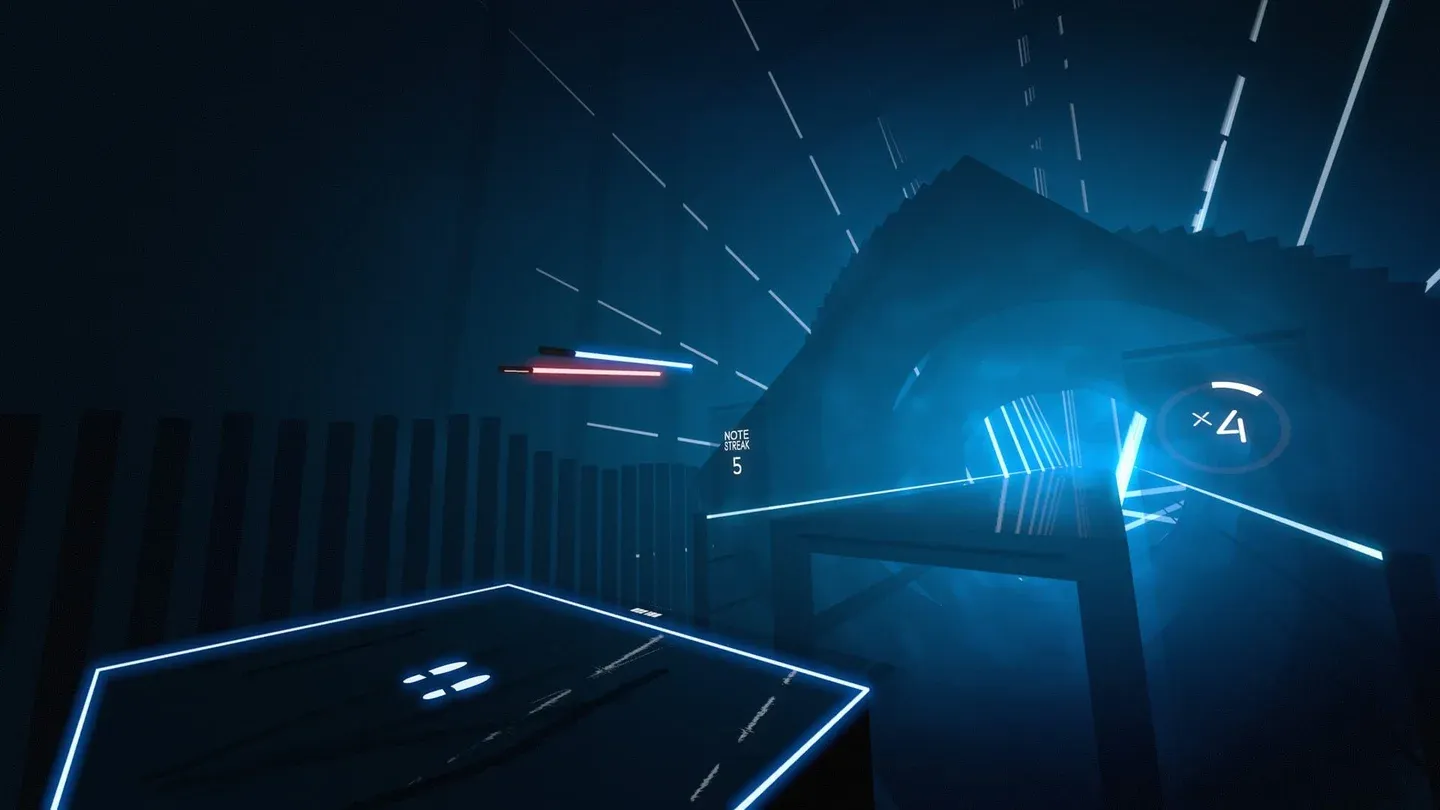
- Obstacles force full-body dodges
- Combo multipliers reward clean streaks
- Career mode and quick play offer flexible session lengths
What makes this work is the physical feedback. Every clean slice lands with a satisfying crack of audio and a burst of visual effect that reinforces the beat. Missing feels bad in exactly the right way. The game is also genuinely accessible. Anyone can grasp the rules in seconds, but mastering Expert+ maps takes serious practice and builds real muscle memory.
Beat Saber content image
Visual and audio design
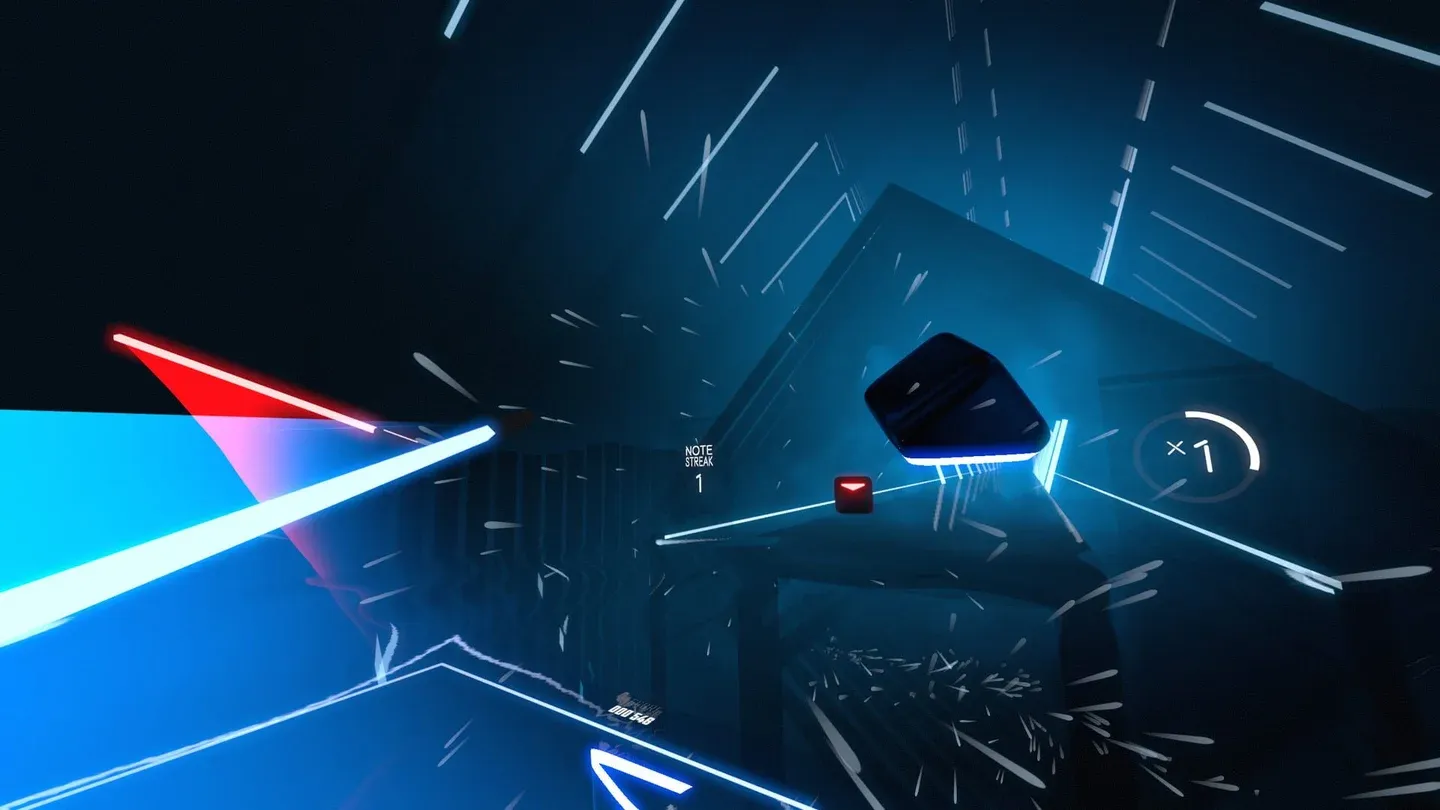
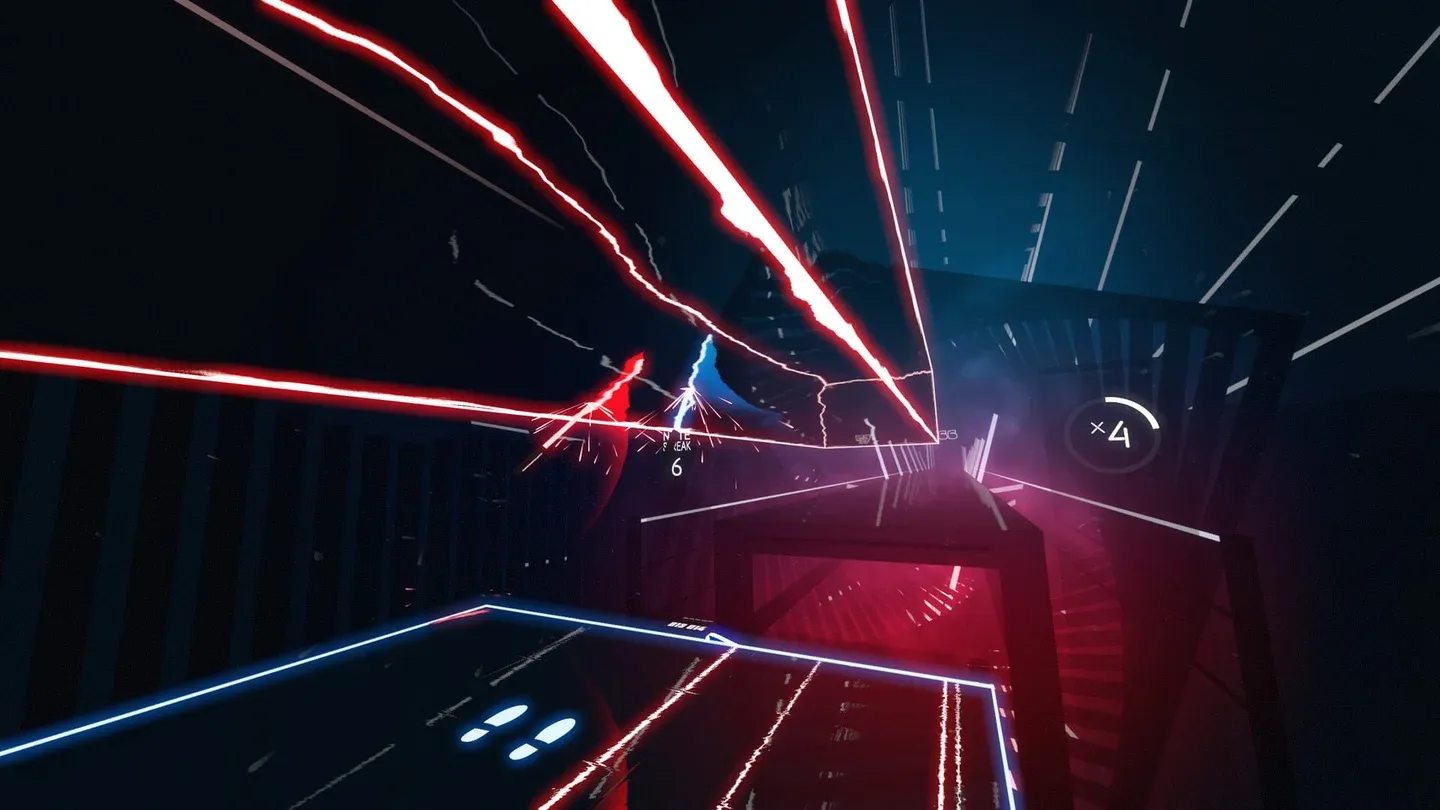
The aesthetic is clean and purposeful. Neon geometry, glowing sabers, and a dark futuristic backdrop keep the visual noise low enough that you can track incoming cubes clearly, even at fast tempos. This is smart design, not just style. A cluttered visual environment at high speeds would break the game entirely.
The audio side is where Beat Saber earns its reputation. All base-game music is composed specifically to match the handcrafted levels, meaning the map and the song are designed together rather than mapped after the fact. The result is that every level feels authored rather than generated. Cuts land on beats. Obstacle patterns follow musical phrases. The whole experience locks into a rhythm that makes you feel less like a player and more like a performer.
Content and replayability
Beat Saber ships with a set of original tracks and supports a DLC music catalog that has grown considerably since launch, pulling in artists across electronic, pop, and rock genres. Career mode gives players a structured progression path, while quick play lets anyone jump in for a few minutes without committing to a full session. Multiple difficulty tiers mean the same map can feel completely different at Expert versus Normal.
Beat Saber content image
The PC version also has an active modding community that has produced thousands of custom maps, effectively turning the base game into a platform. That community-driven content layer gives Beat Saber a shelf life that far outpaces most rhythm games. Between official DLC packs and player-made maps, the volume of playable content is practically unlimited, and the core saber-slashing mechanic holds up across all of it.