


Biggest discounts, free games, and limited-time offers across every major gaming store.
Never pay full price again.
Is this just another friendslop game? No.
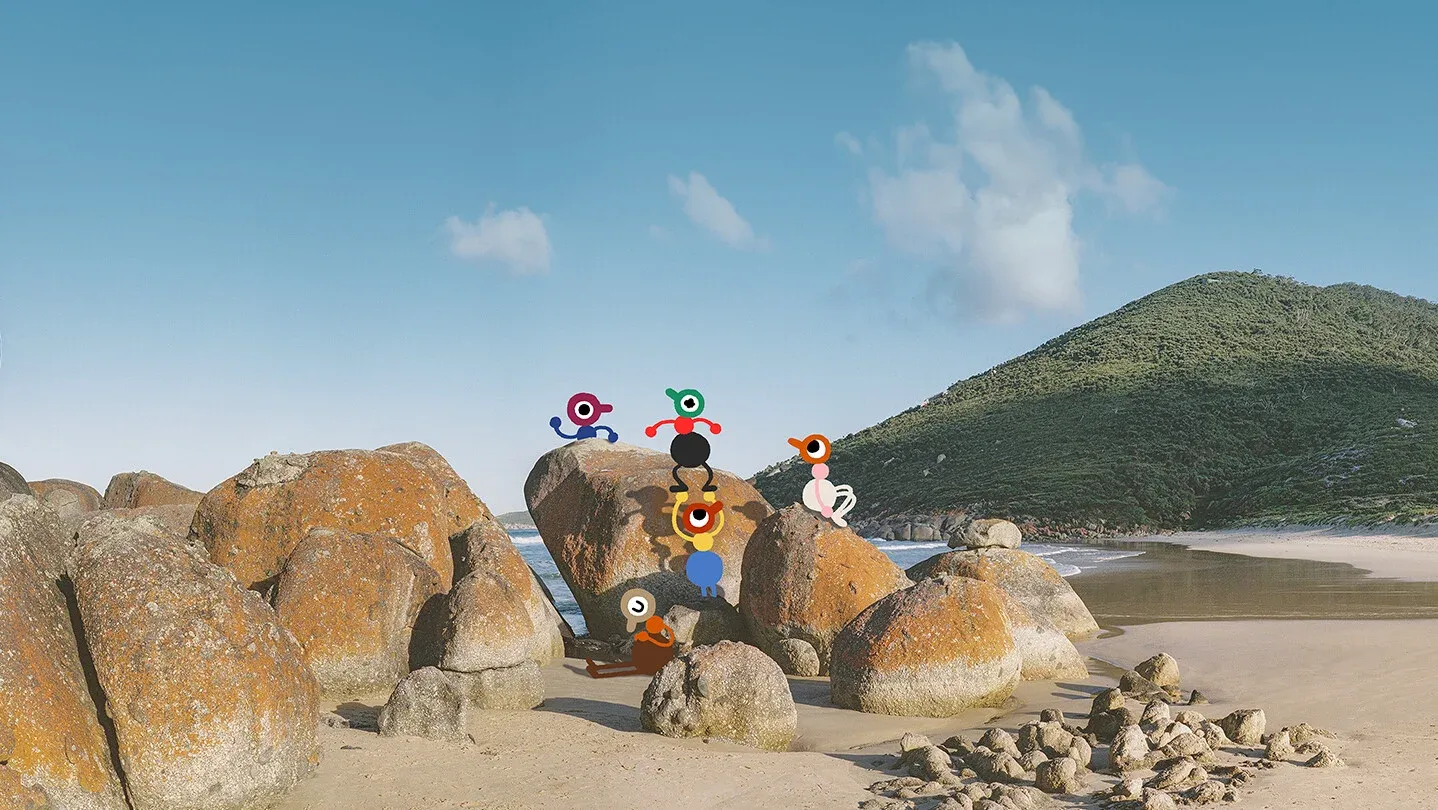
House House made a game about a goose causing property damage, and somehow that became a beloved indie classic. Their follow-up, Big Walk, could have coasted on that goodwill with something safe. Instead, they built one of the most thoughtfully designed co-op experiences I've played in years, set on a vast island that takes genuine hours to understand.
The term "friendslop" gets thrown around a lot lately for games like this: co-op titles built around communication, proximity chat, and shared silliness. Big Walk fits that description on the surface. Spend more than an hour with it, though, and you realize the comparison is almost insulting. This is closer to The Witness, than Among Us, a game about reading an environment carefully and piecing together how it works, except you're doing it with friends at your side.
Gameplay: walking with friends. kinda.
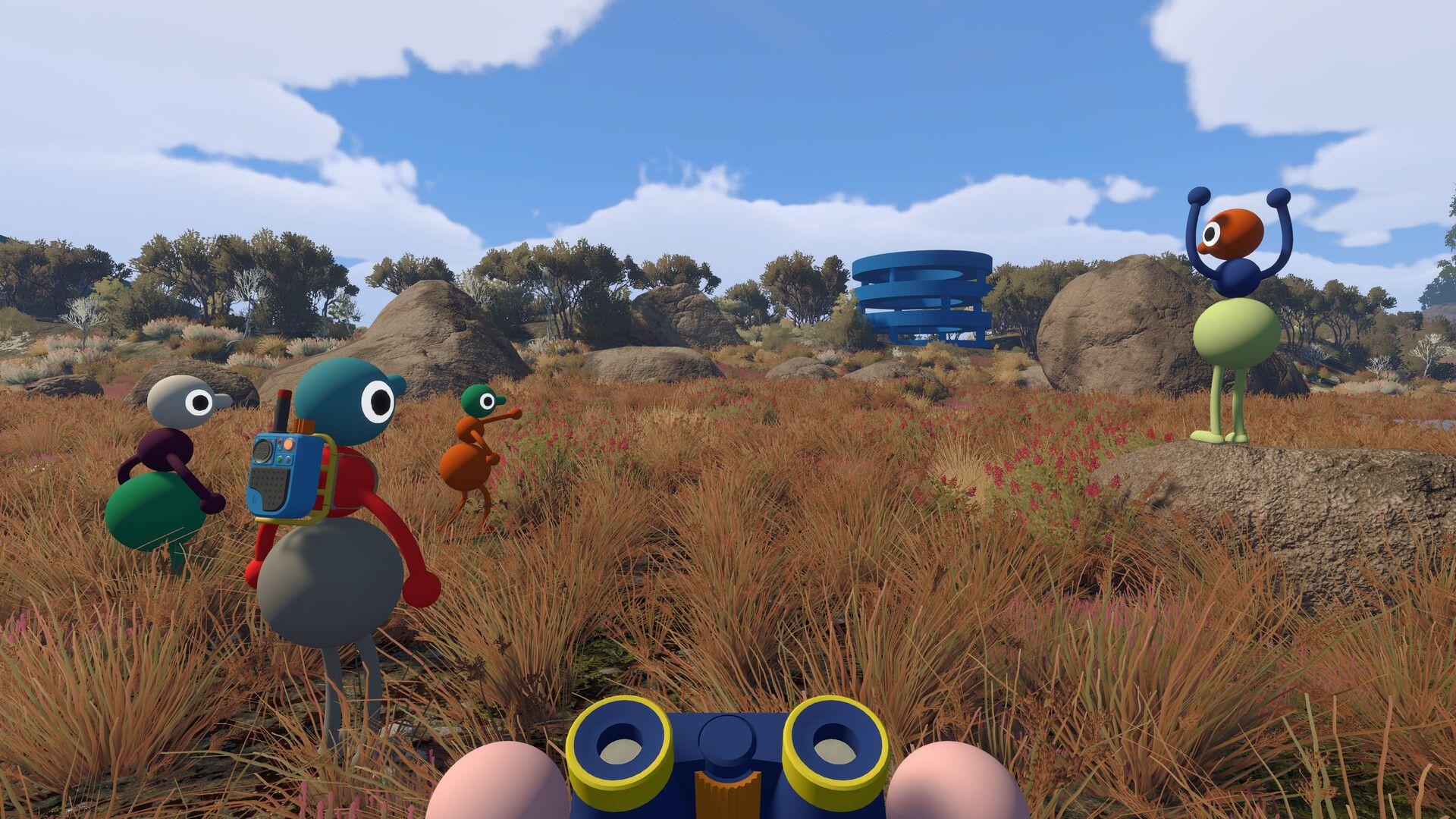
The gameplay loop is pretty simple: you and up to 11 other players explore a large island, find puzzles, solve them cooperatively, collect MacGuffins, and gradually unlock more of the world. The first few puzzles act as a soft tutorial, easing you into the island's logic before the map opens up almost entirely at once. From that point, your group decides where to go and what to tackle next.
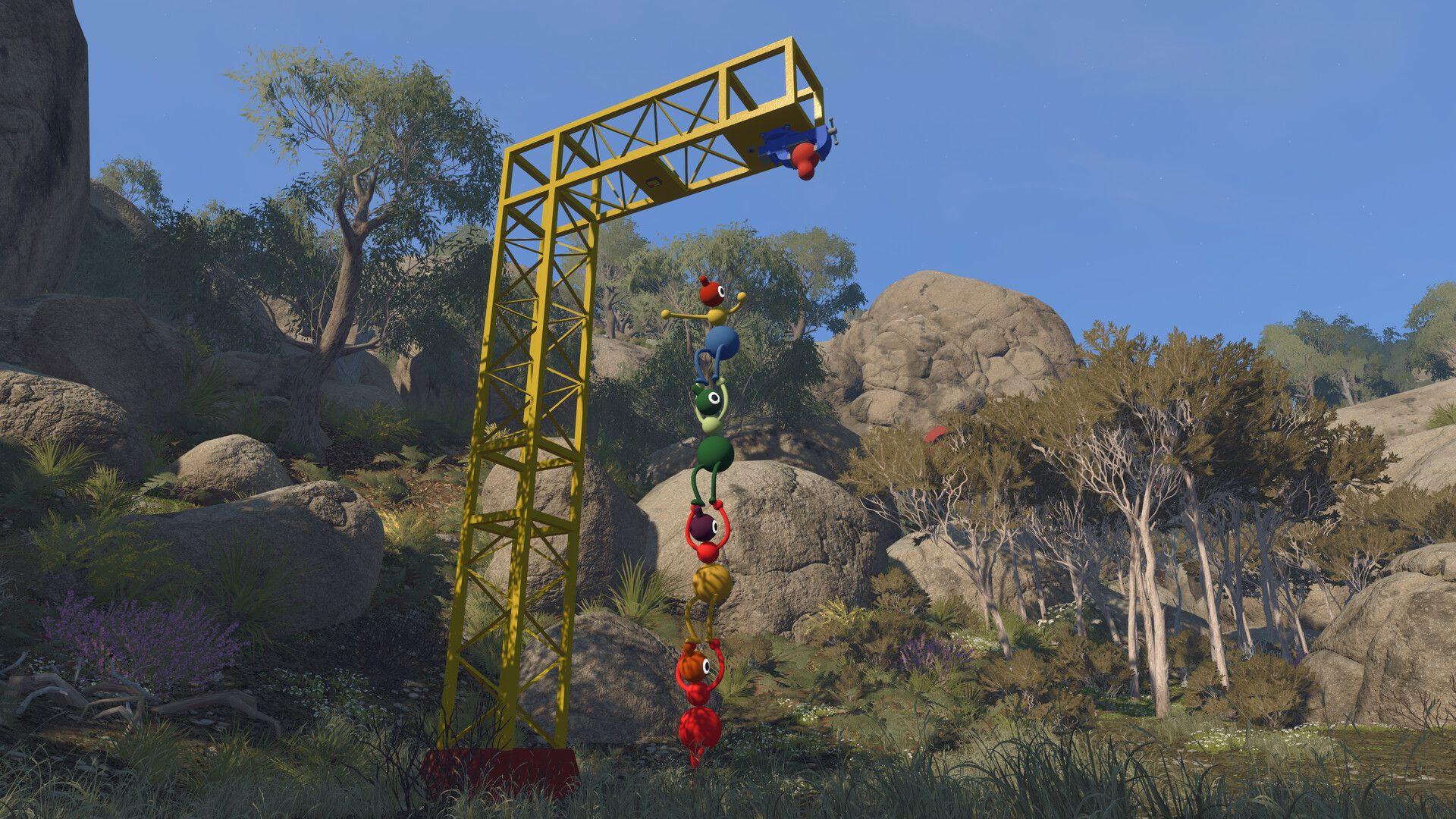
The puzzles are genuinely clever and well put together - they don't explain themselves like most puzzle mini-games do these days. There are no tutorial pop-ups telling you what to do. You figure things out by looking at your environment, talking to your friends, and occasionally failing in ways that teach you something useful. Some puzzles even borrow elements from others you've already solved, and the game drops environmental hints when this is the case. That kind of layered design takes real craft.
The island itself is handcrafted, not procedurally generated, and the difference is immediately apparent. Every switchback on a mountainside exists for a reason. Radio stations scattered across the world play their own songs, and you can carry the music with you if you want company on a long walk. The world feels intentional at every scale, which is rare.
Group size actually changes how some puzzles play out, which means a session with 3 friends hits differently than one with 10. The host holds the save data, so your progress persists across sessions, and the pacing naturally adjusts to however your group approaches things. If you're the type of player who likes to sprint toward objectives, Big Walk will slow you down. If you like to wander and absorb, it rewards that completely.
Proximity chat is a core mechanic, not a gimmick. You hear players near you clearly, and voices fade as people move away. This creates natural moments of coordination and just as natural moments of chaos when your group splits up and you realize you're the only one who knows how to solve the puzzle you're standing in front of. I've played many games with proximity chat, and this might've genuinely been one of the rare occassions where I felt like the feature was a necessary mechanic, rather than a “fun add on”.
Graphics and audio: clean and simple
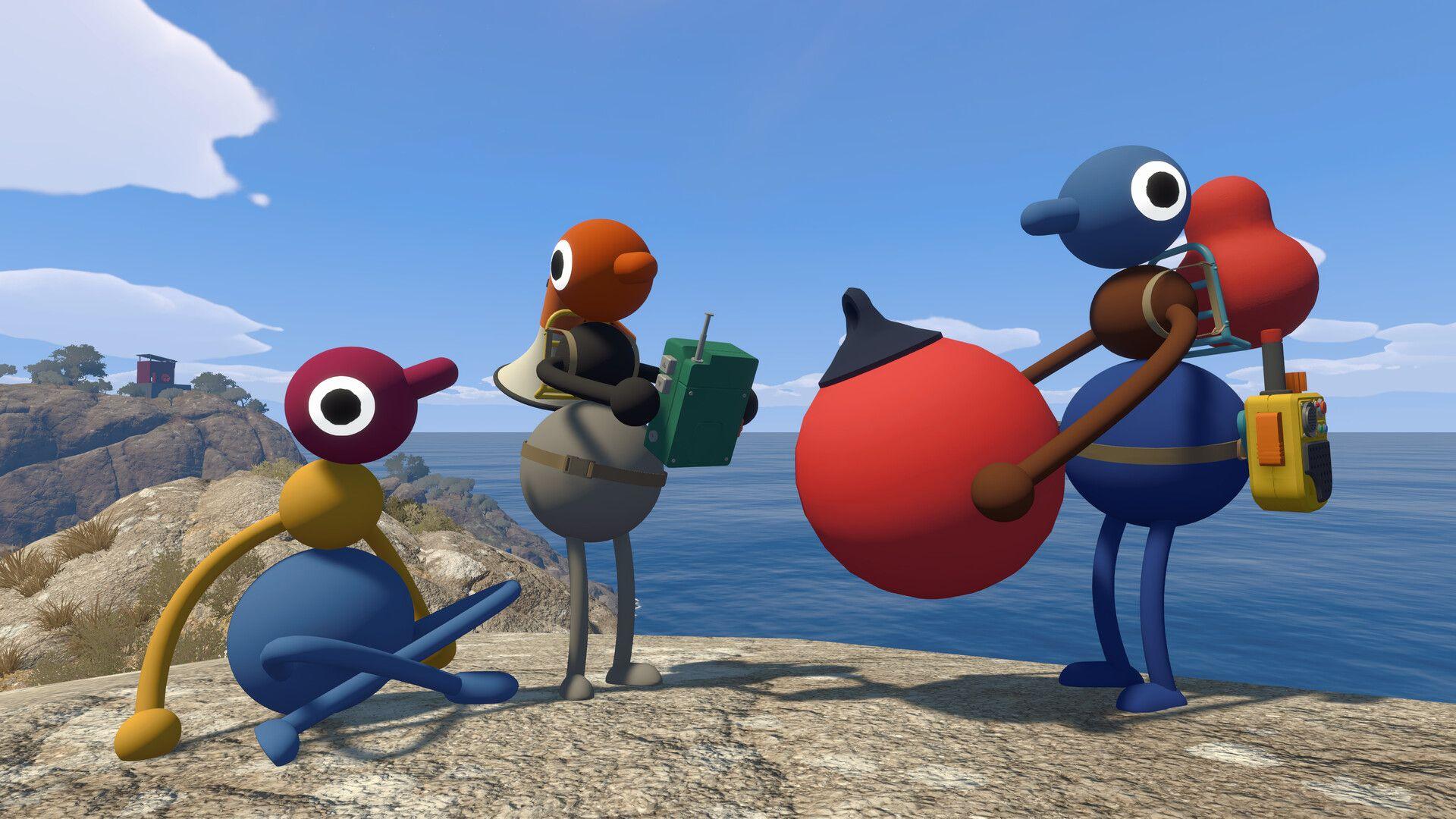
Visually, Big Walk leans into a clean, expressive style that suits the tone perfectly. The player characters are vaguely humanoid, somewhere between colorful snowmen and cartoon aliens, with long noses and noodly arms. It sounds odd and looks charming in motion. The island itself is genuinely attractive (based on a real national park in Australia), with distinct biomes that give each area its own feel without ever feeling cluttered.
The audio design does a lot of quiet work. The ambient sounds shift as you move through different parts of the island. The radio stations you encounter each have their own musical identity, and carrying one with you on a long trek across the map becomes its own small ritual. The soundtrack knows when to pull back and let the environment breathe.
No story, and that's fine
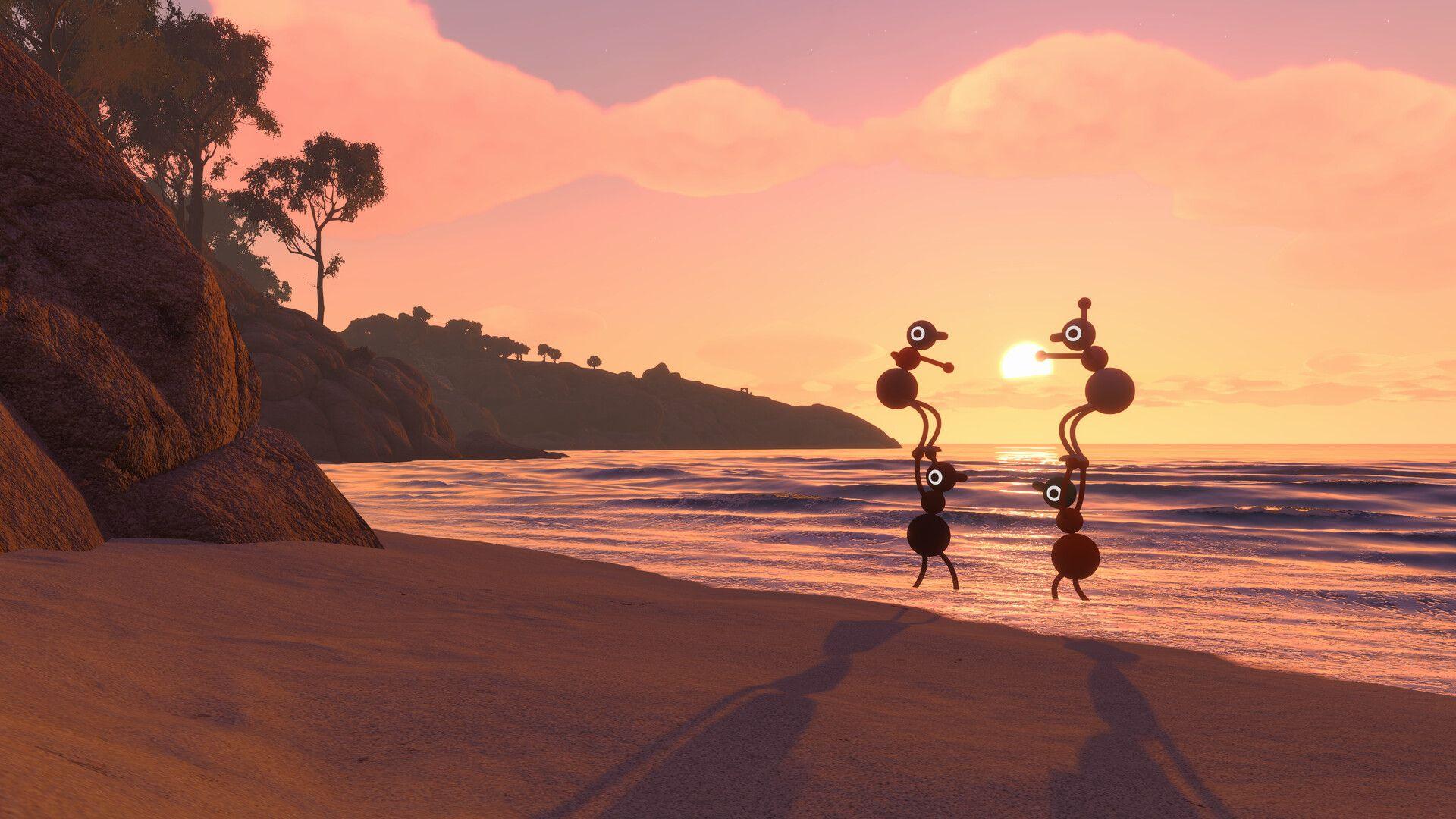
Big Walk doesn't have a narrative in the traditional sense. There are no characters with names, no cutscenes, no dialogue trees. The island has a history you can read through its design, but the game never stops to explain it to you. What story exists is the one you make with your group of friends each time you pick up the game to play it, the moment someone figures out a puzzle everyone was stuck on, the argument about which direction to go next, the accidental discovery of a hidden area nobody was looking for.
For players who need a story to stay engaged even in a co-op setting, this might feel empty. For everyone else, the lack of singular storyline will feel refreshing.
Verdict
Big Walk is one of the best co-op games released this year (and perhaps over the past few years). The puzzle design is genuinely intelligent, the world rewards curiosity at every turn, and the proximity chat system turns every session into something that feels organic rather than scripted. The game plays out differently depending on who you're playing with, and each run brings plenty of surprises and challenges your way. The one real limitation is structural: you cannot play this alone, which means you need friends to play this - step 1: find friends.
That's not a flaw exactly, but it's a hard requirement that will keep some players from ever experiencing it, especially if you've got stubborn friends that don't play anything that doesn't involve a ball or a gun. For everyone else, the price of entry is definitely worth checking out and the game is genuinely a fun group experience. If you want to know what it costs and whether PS Plus subscribers get a discount at launch, our Big Walk pricing guide breaks it all down. The bottom line: if you have friends who play games and you want to experiment with a game that will leave you with actual memories rather than just kill time, Big Walk is the answer.