Overview
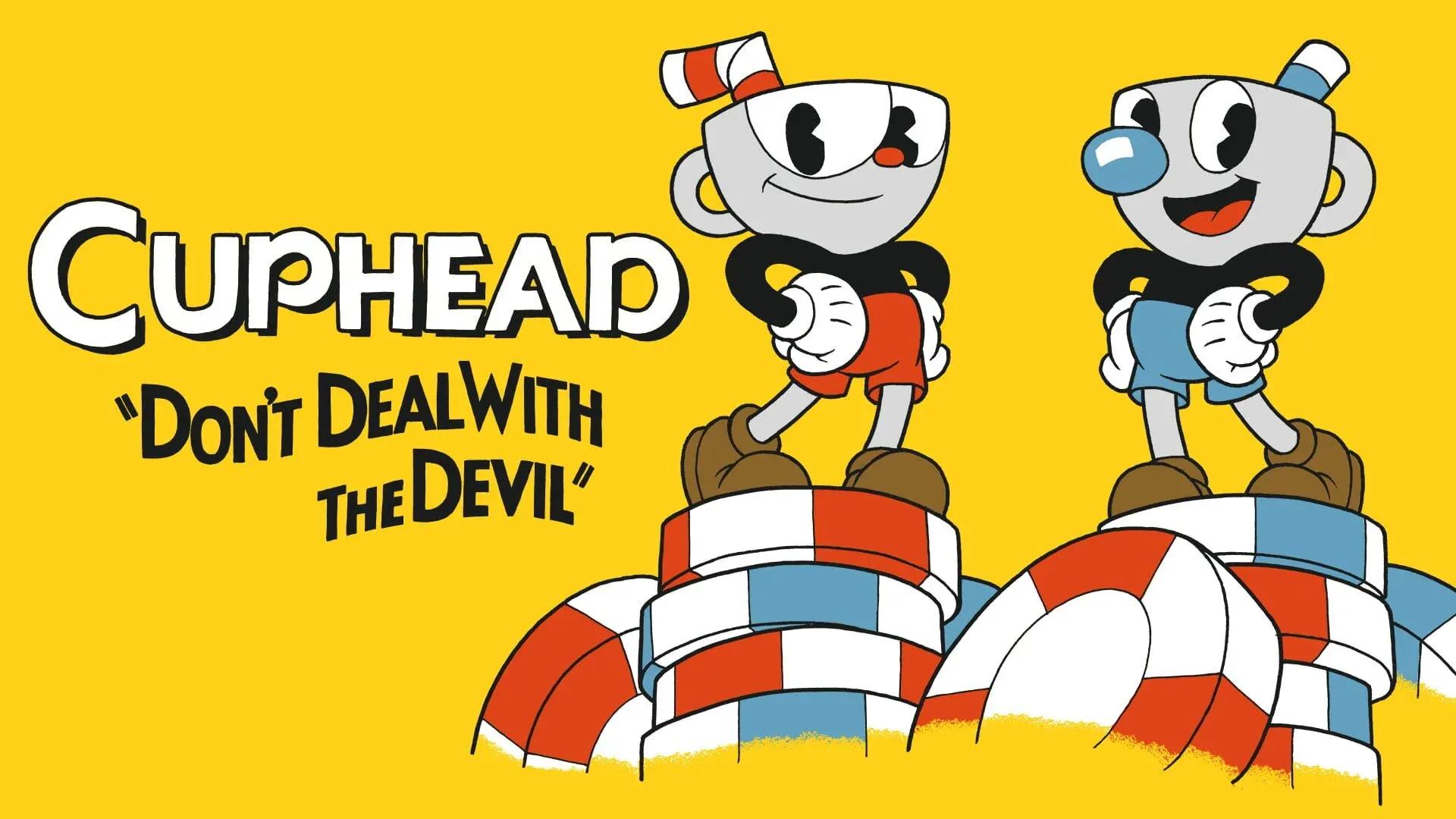
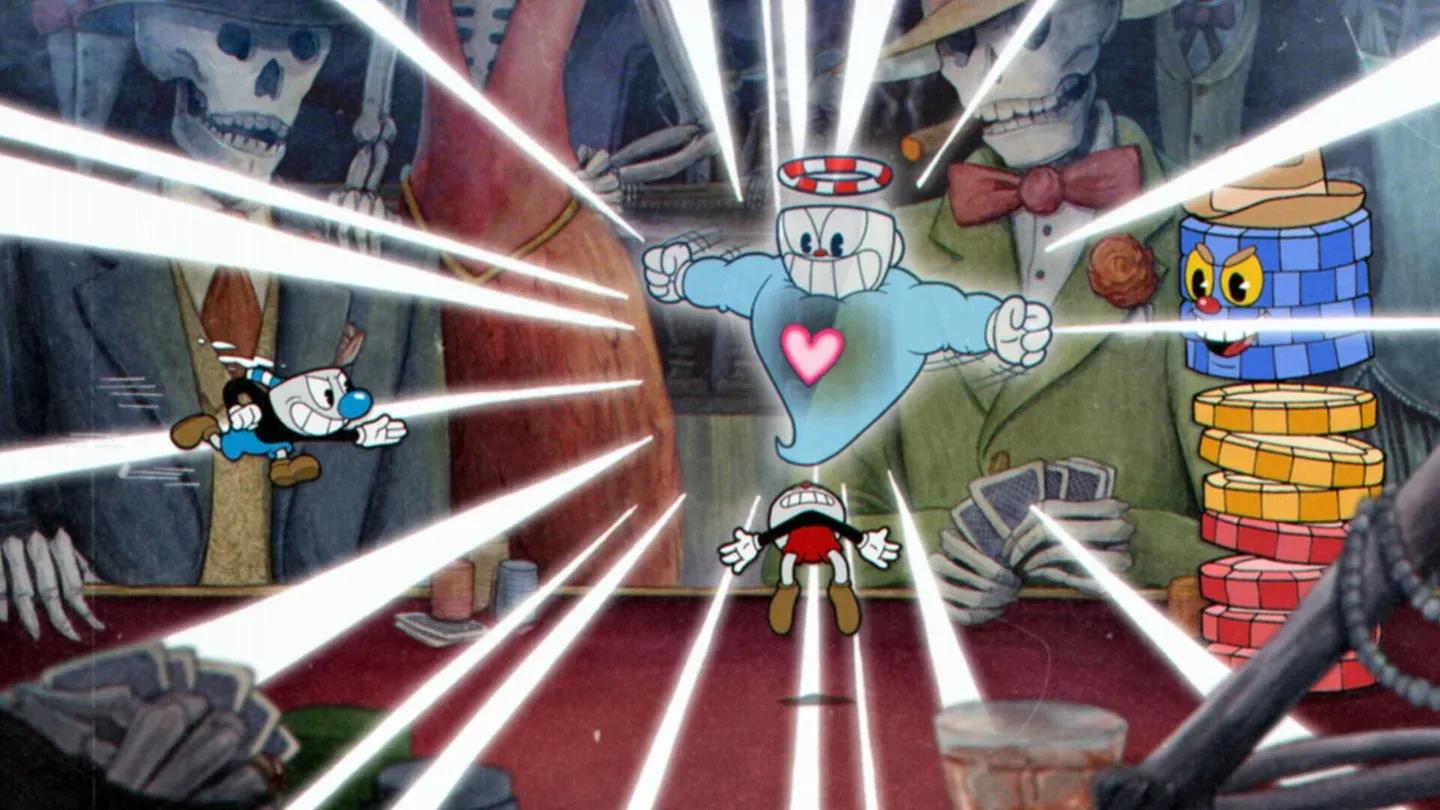
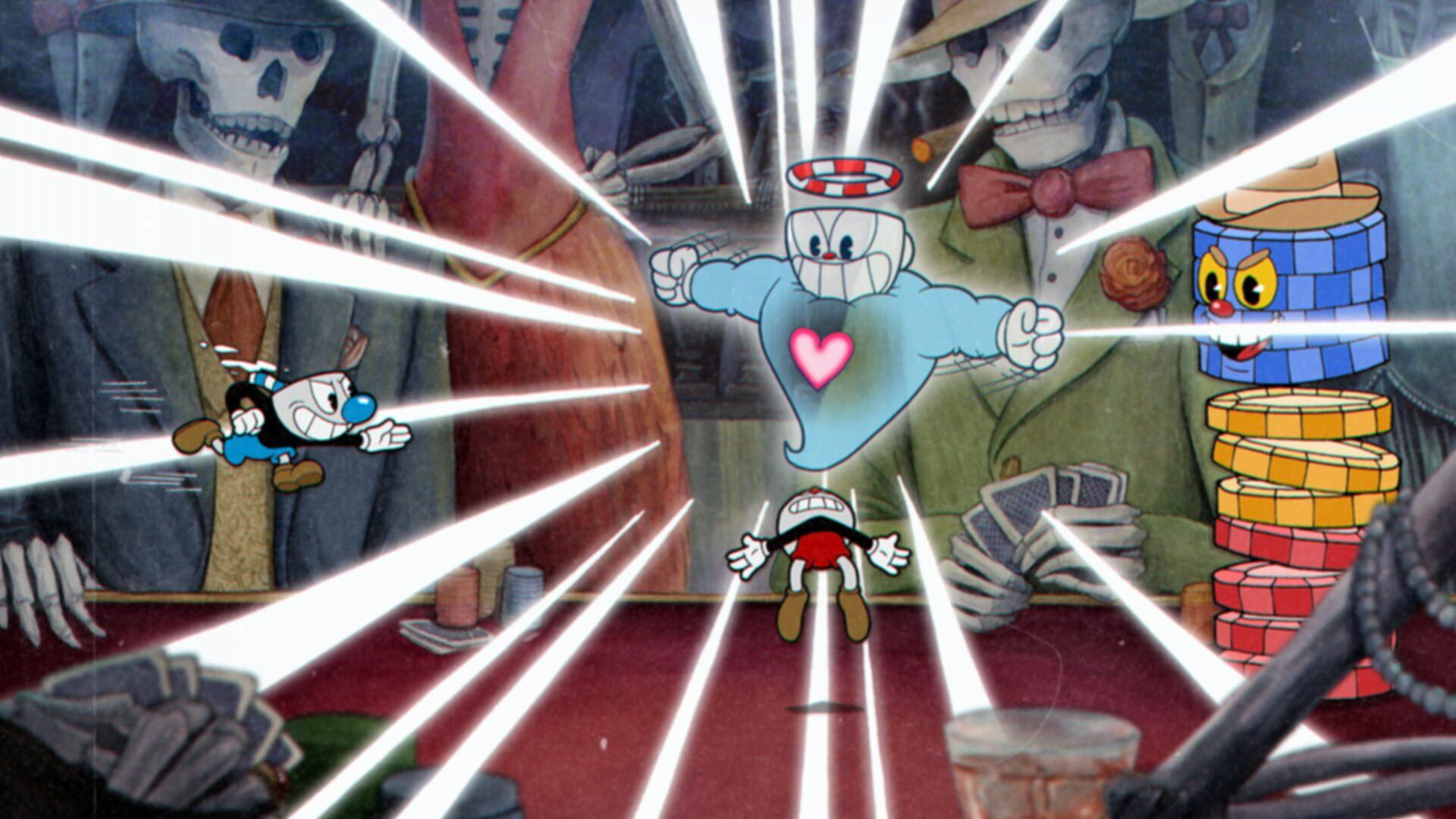
Cuphead is a run-and-gun action game developed and published by Studio MDHR, released on September 29, 2017. The premise is simple and a little grim: brothers Cuphead and Mugman gamble away their souls at the Devil's casino and must travel across Inkwell Isles collecting soul contracts from a roster of increasingly unhinged bosses to pay off the debt. The story stays thin on purpose, giving the boss-rush structure room to breathe.
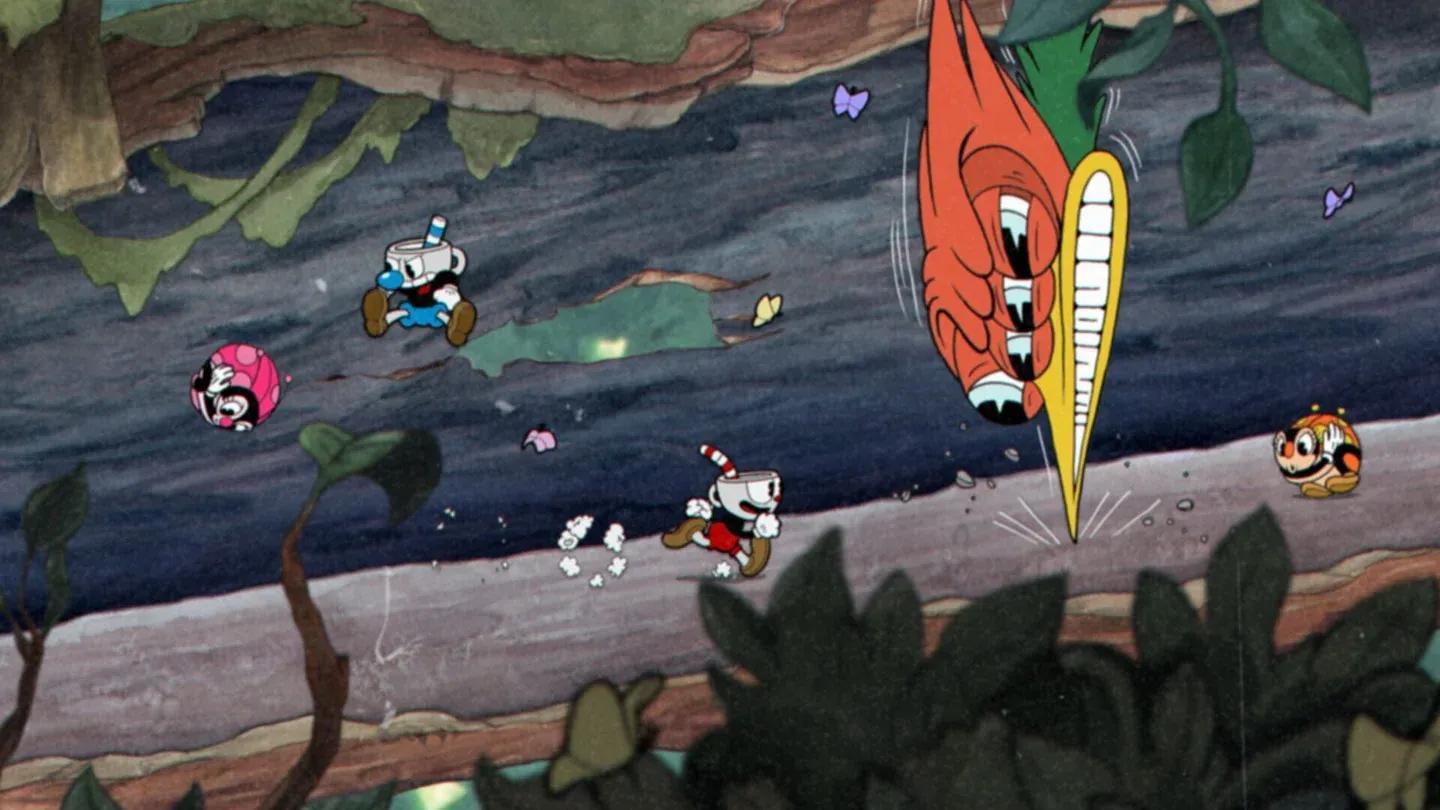
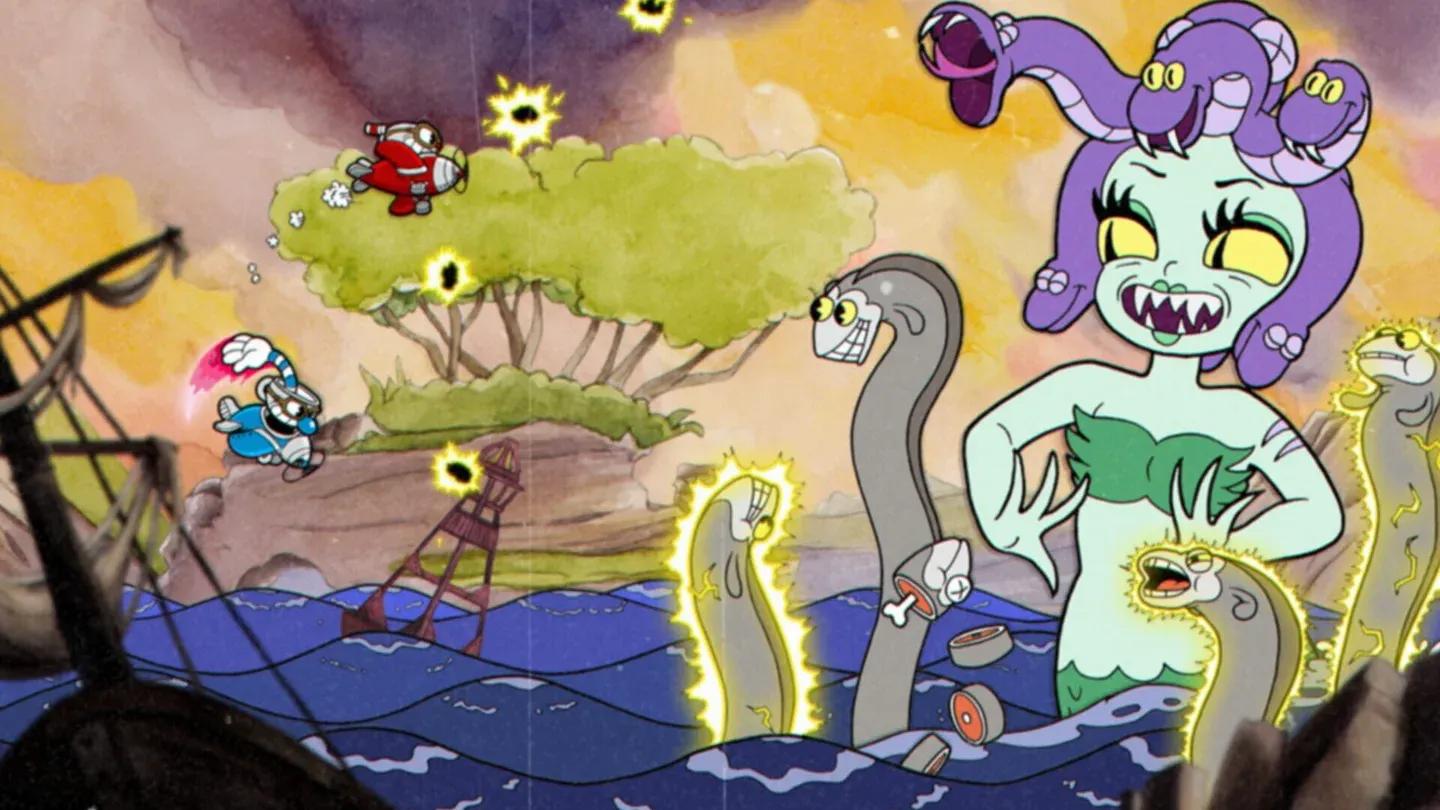
The game runs on a loop of approaching a boss, dying repeatedly, reading their attack patterns, adjusting your loadout, and eventually clearing them with a mix of relief and satisfaction that few games manage to produce. Side-scrolling run-and-gun stages break up the pace between boss encounters, though the bosses are clearly the main attraction. Weapons, super moves, and charm items can be purchased between stages, giving players some build flexibility without softening the core difficulty.
Gameplay and mechanics
Cuphead's combat system is built around a small but meaningful set of tools:
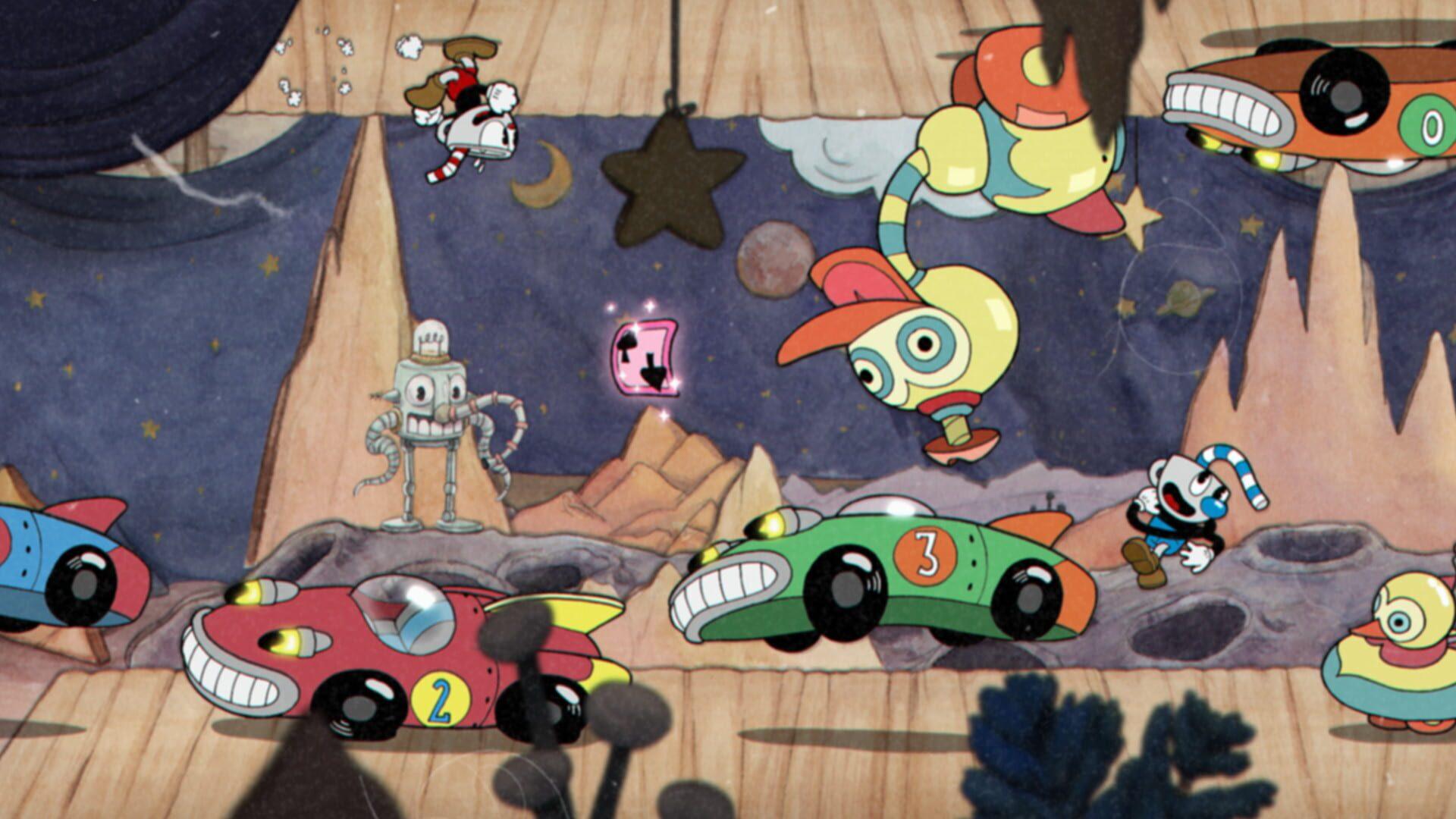
- Parrying pink projectiles to charge the super meter
- Swapping between two equipped weapons mid-fight
- Activating super moves for burst damage or invincibility
- Equipping charm items for passive bonuses
- Completing stages on Regular or Simple mode for different rewards
The parry mechanic is the most underrated part of the system. It rewards aggression rather than pure defensive play, and mastering it separates players who clear bosses from those who grind them for hours. Each boss has multiple phases with distinct attack patterns, and the difficulty scales hard enough that the game earned its "2D Dark Souls" reputation organically.
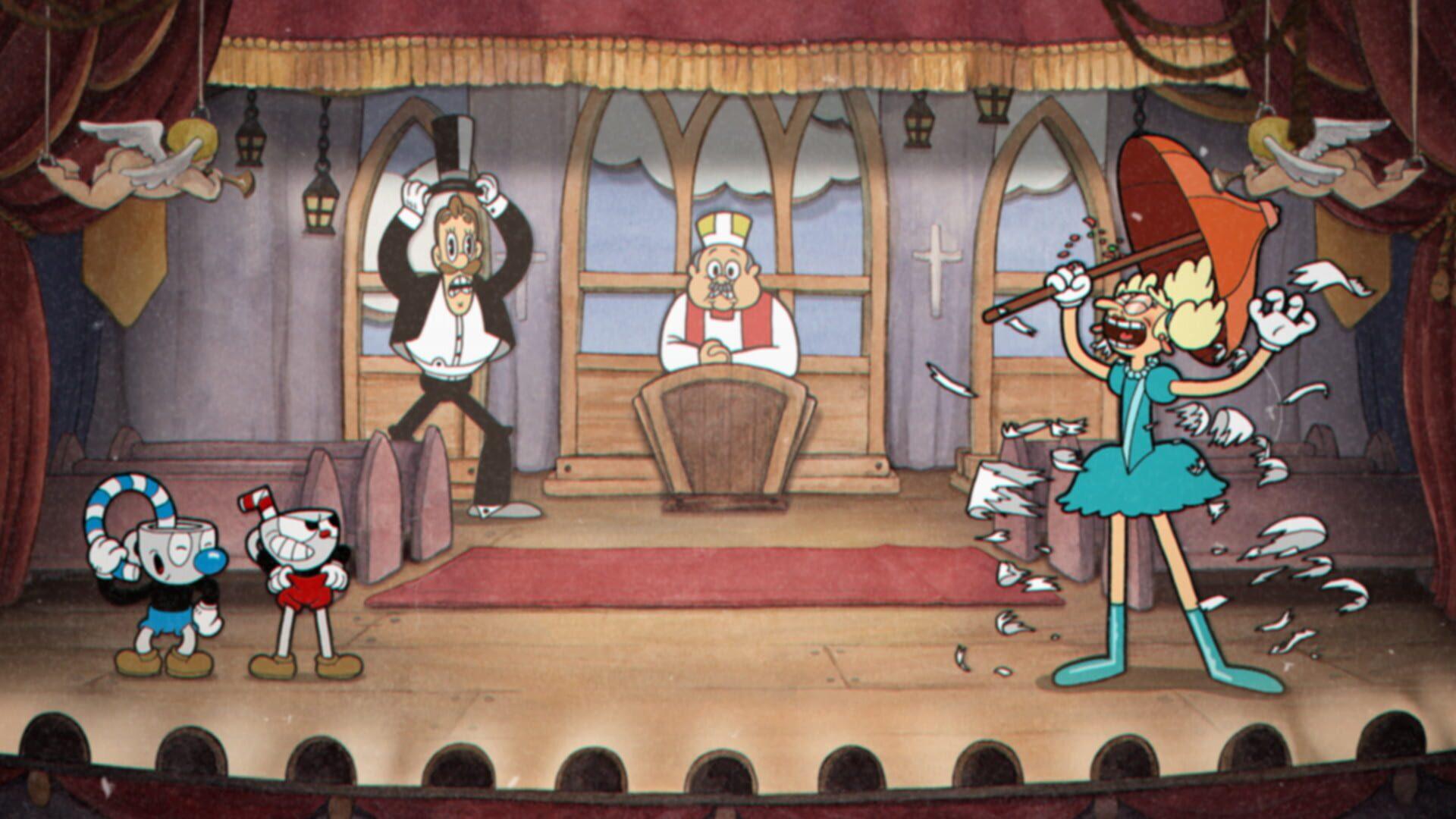
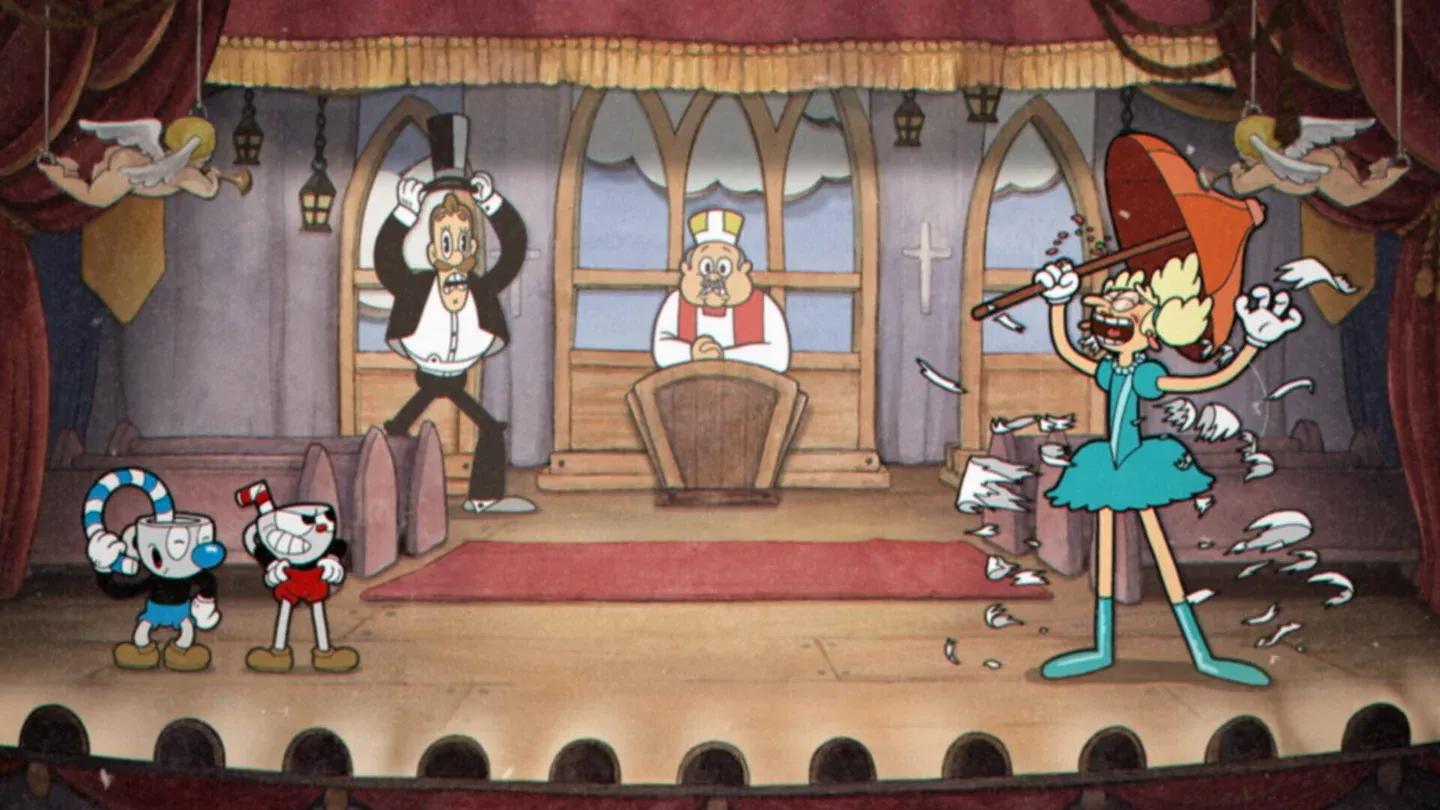
Local co-op supports two players simultaneously, with Mugman as the second character. The co-op implementation is straightforward rather than deep, but sharing the chaos of a late-game boss with another player changes the dynamic significantly. Two players generate more projectiles, which can make certain attack patterns harder to track.
Visual and audio design
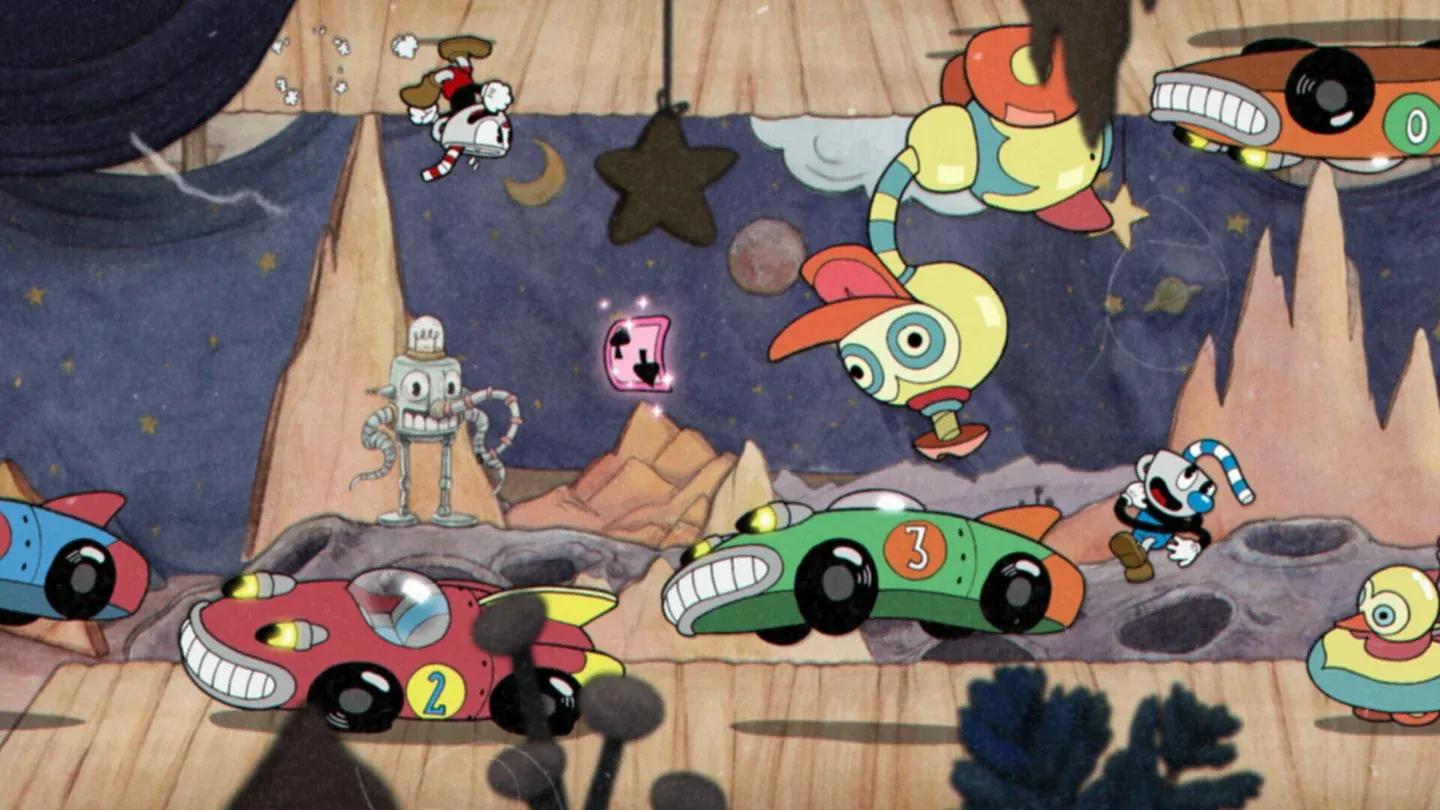
The art direction is the reason Cuphead gets discussed years after release. Every character, background, and animation frame was hand-drawn using traditional cel animation techniques, then composited with watercolor backgrounds painted to match the aesthetic of 1930s American cartoons. The result is a game that genuinely looks like it was pulled from a film reel rather than rendered on modern hardware.
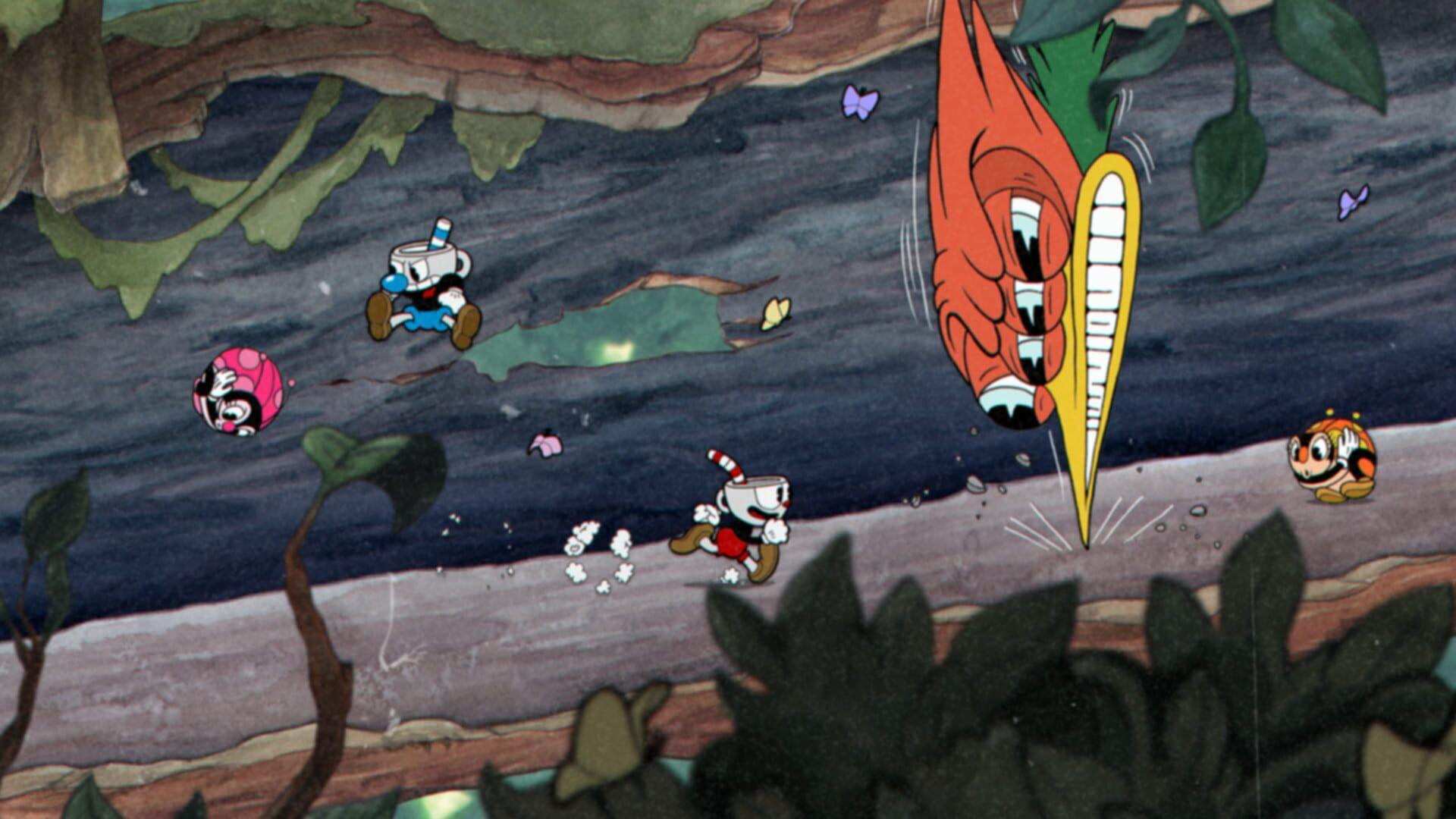
The soundtrack matches the visuals beat for beat. Studio MDHR commissioned original jazz and big band recordings performed by live musicians, and the score shifts dynamically across boss phases. The audio design is not just window dressing; the musical tempo often telegraphs incoming attack patterns if you pay attention.
Impact and legacy
Cuphead arrived with a development story that became part of its identity. Six years of production, a two-person founding team that grew into a full studio, and a trailer at E3 2014 that generated attention years before release. The game sold over 6 million copies across platforms by 2020 and received a Netflix animated series adaptation in 2022.
The DLC expansion, "The Delicious Last Course," added a full new island, a playable character in Ms. Chalice, and a new set of bosses that match the quality of the base game. Cuphead is available on Windows, macOS, Xbox, PlayStation, Nintendo Switch, and Steam, with the $19.99 price point making it one of the more accessible entries in the punishing-platformer genre.
The game's staying power comes down to craft. Every element, from the frame-perfect hitboxes to the hand-inked title cards between stages, reflects a level of attention that makes the difficulty feel fair rather than frustrating. That combination of demanding run-and-gun gameplay and unmatched visual artistry is what keeps Cuphead on shortlists for best-looking and best-designed indie games nearly a decade after launch.