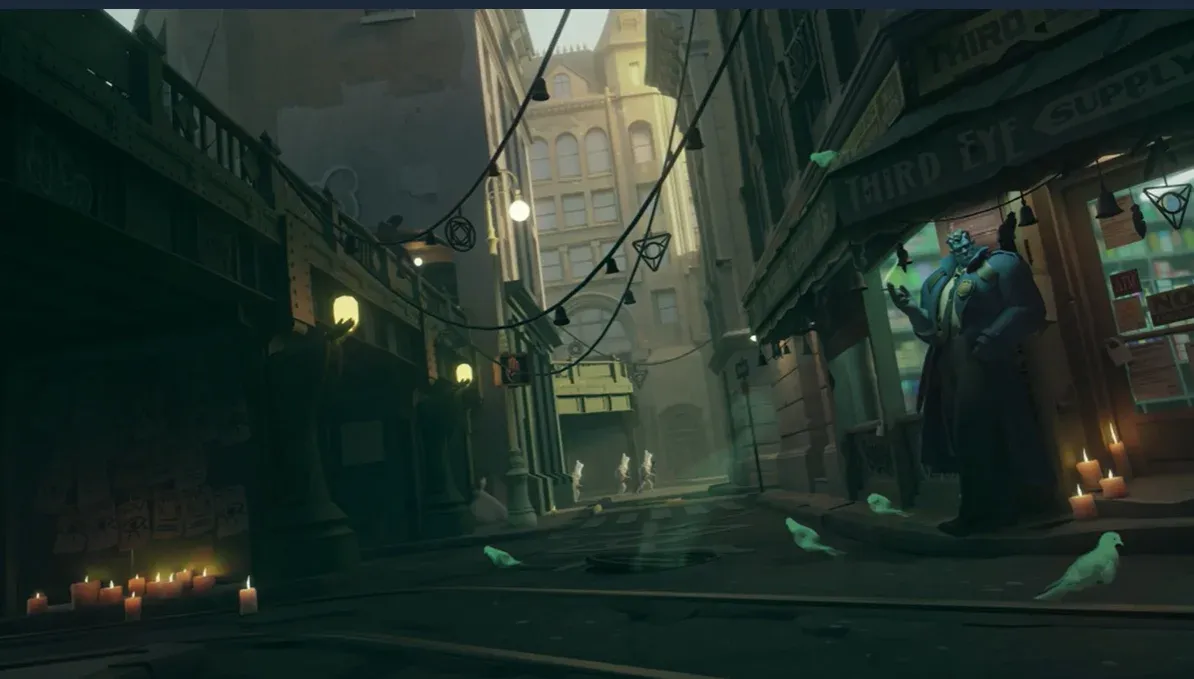


Moving fast in Deadlock separates players who react to fights from players who control them. Whether you're rotating between lanes, diving for a Soul Urn, or escaping a losing skirmish, knowing how to use ziplines effectively for map mobility is the single biggest skill gap between new and experienced players. This guide breaks down every movement technique, from the basics every player should know to the advanced tricks that make pros look like they're flying.
How Do Ziplines Work in Deadlock?
Deadlock's map is built around four color-coded lanes: York Avenue (Yellow), Greenwich Street (Green), Broadway (Blue), and Park Avenue (Purple). Each lane has its own Transit Line (also called Hyperlines), a set of thick colored wires that run from your base down the lane toward the enemy. These ziplines are your primary tool for using ziplines effectively for map mobility across the entire map.
Here's what most players miss: zipline availability is dynamic. The further your Troopers push down a lane, the more of that lane's Transit Line becomes accessible to your team. Lose ground, and your zipline range shrinks. This means map control directly affects how fast you can rotate.
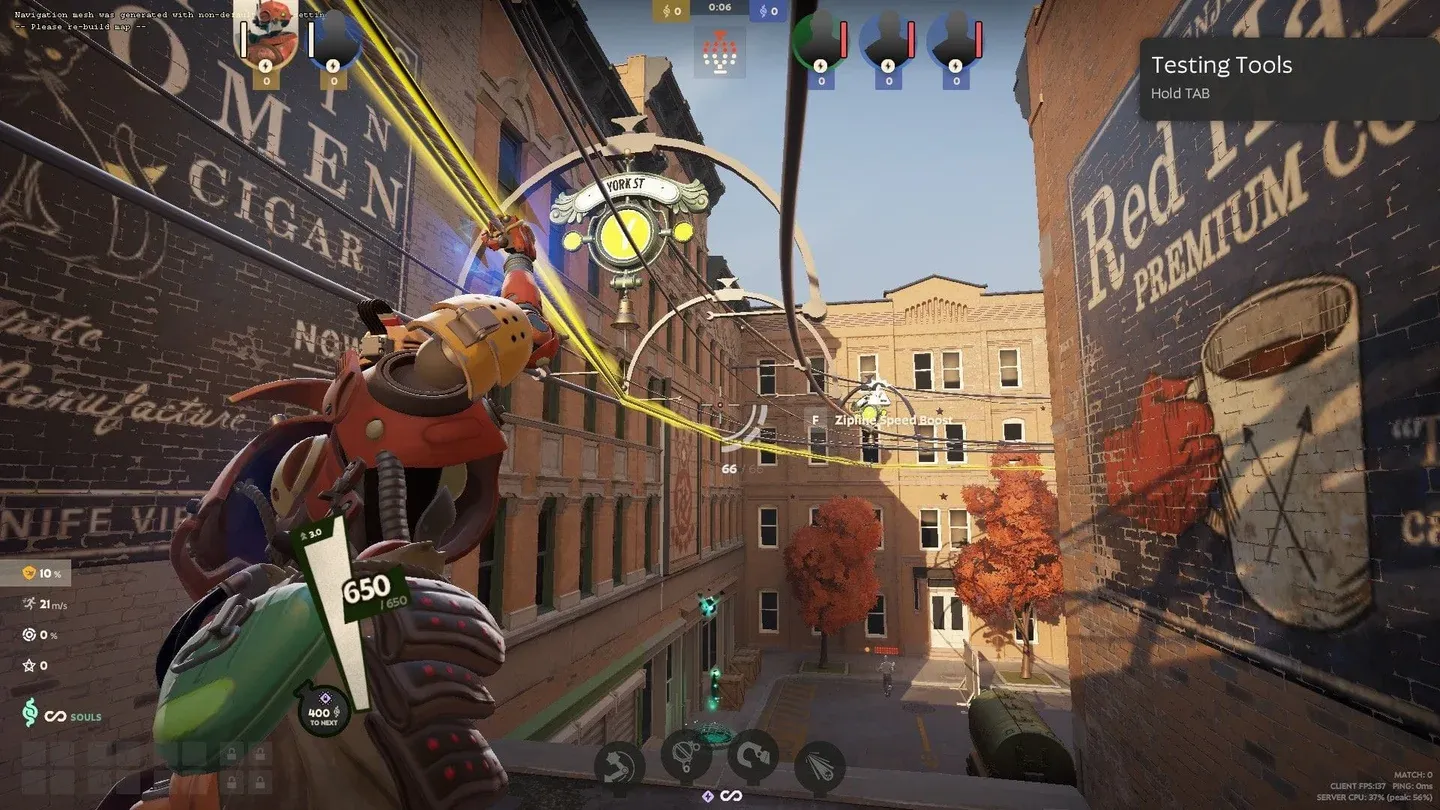
York Ave zipline in action
How to Exit a Zipline for Maximum Speed
Jumping off a zipline is the most basic technique, but it wastes most of your built-up speed. The correct method for using ziplines effectively for map mobility is to crouch-exit instead of jumping. When you press crouch to dismount, you retain significantly more momentum from the ride, letting you carry that speed into a run, slide, or dash.
Take this further with the Zip Dash technique: exit the zipline via crouch, then immediately dash or strafe-dash. The combination of zipline momentum conservation and a dash multiplies your travel distance, turning a standard dismount into a high-speed launch across the map.
What Are the Core Movement Techniques?
Before touching advanced tech, nail these fundamentals. Good movement helps even when your macro decisions are suboptimal.
Wall Jumping
Wall jumping is essential for conserving momentum around corners and over gaps. The core idea is to redirect your existing speed rather than losing it to a full stop. Practice bouncing off building edges while maintaining your direction of travel. This is especially useful in Deadlock's lane corridors where buildings line every route.
Dash Jumping
Combining a dash with a jump covers significantly more horizontal distance than either input alone. A good habit: whenever something hits you and you need to find new cover, dash-jump immediately. It creates distance fast and makes you harder to track.
Sliding After Mantling
When you climb over a ledge or object (mantle), your speed briefly spikes. Pressing slide immediately after the mantle captures that boost and carries it forward. This is a free speed gain that costs nothing once it becomes muscle memory.
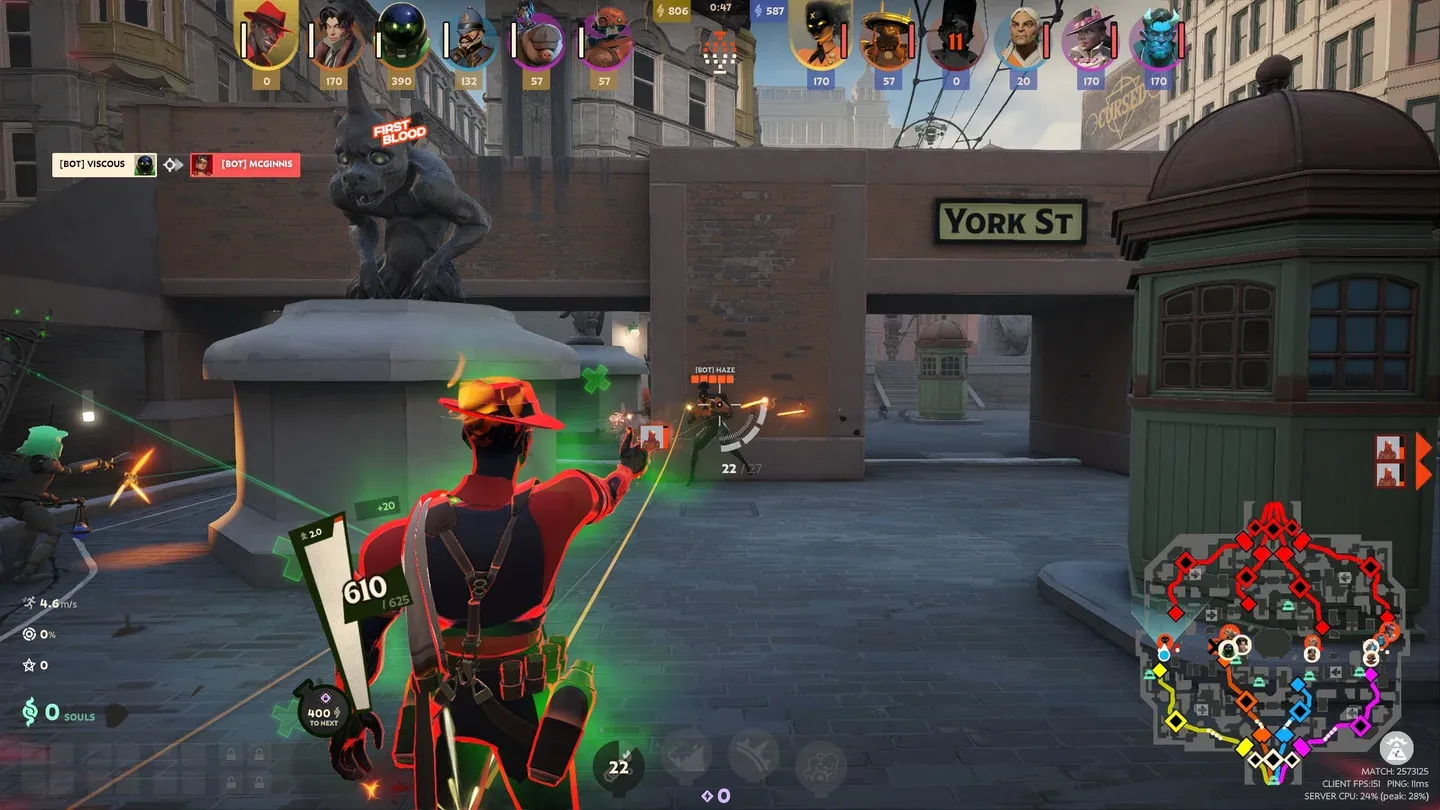
Mantle into slide for speed
How to Use Advanced Movement Tech?
Once the basics are natural, these two techniques are the most impactful advanced skills for using ziplines effectively for map mobility and general traversal.
Instant Air Dash
The Instant Air Dash is performed by dashing at the exact moment you leave the ground. Done correctly, it produces a burst of speed greater than a standard mid-air dash. This technique is one of the two most important advanced movement tools in the game, and it stacks well with zipline exits.
Edge Boosting
Edge boosting occurs when you move along the edge of a surface at a specific angle, generating extra speed from the geometry interaction. Combined with Instant Air Dash, these two techniques form the backbone of high-level movement. Players who have mastered both can cross sections of the map that would take others several seconds in a fraction of the time.
What Fast Travel Options Exist Beyond Ziplines?
Ziplines are the primary tool, but Deadlock offers three other fast travel mechanics worth understanding.
Teleporters offer instant cross-map movement and are marked on the minimap with black and white arrows. Use them when you need to respond to a fight on the opposite side of the map and your zipline range doesn't reach. Airvents (also called jump pads) launch you in a fixed direction quickly, making them excellent for escaping bad positions or jumping into fights from unexpected angles. Ropes are the slowest option but let you scale buildings for ambush positions or item access.
Which Heroes Have the Best Movement?
Some heroes in Deadlock have built-in movement advantages that reward players who already understand the fundamentals.
- Celeste has a passive ability granting enhanced air control, increased air acceleration, and reduced gravity. If you enjoy aerial movement and want a hero whose kit amplifies every technique in this guide, Celeste is the strongest fit.
- Holliday excels at bunny hopping and using jump pads, making her ideal for players who want high skill-expression movement on a sniper-style hero.
- Lash has a grappling hook that opens up three-dimensional movement options unavailable to most of the roster. Using ziplines effectively for map mobility is only part of his toolkit since the grapple lets him bypass lanes entirely.
How Does Map Control Affect Your Movement Options?
This is the strategic layer most guides skip. Your ability to use ziplines effectively for map mobility is directly tied to how well your team is pushing lanes. When your Troopers advance, your Transit Lines extend. When they're pushed back, your zipline range contracts and you're forced to rely on teleporters or ground movement, both slower options.
Prioritizing lane pressure in the early game (roughly the first 10 minutes) doesn't just earn souls. It expands your movement network for the rest of the match. Teams that control more lanes simply move faster across the map as a structural advantage.
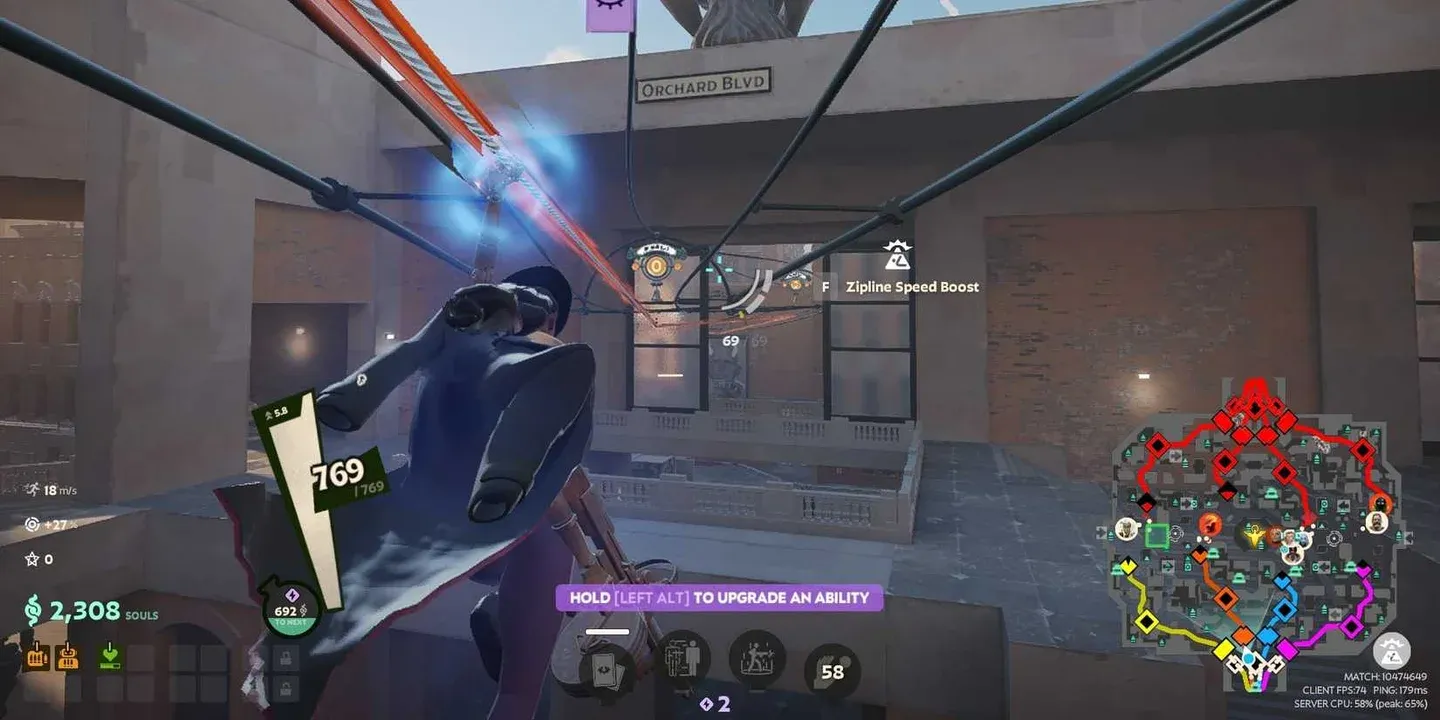
Lane push extends zipline range
Practice Routine for Faster Movement
Knowing the techniques is one thing. Building the muscle memory is another. Here's a focused practice approach:
- Start in Sandbox or Explore NYC mode and practice crouch-exiting ziplines until it's automatic.
- Add Zip Dashes to your exits, aiming to maximize distance after every dismount.
- Practice wall jumps along a single lane, bouncing off buildings without losing forward momentum.
- Drill the Instant Air Dash by jumping off ledges and dashing at the exact moment your feet leave the surface.
- Combine everything in live matches, starting with the techniques you've drilled most and adding new ones gradually.
Players who spend even a few sessions in practice modes before applying tech in real games see dramatically faster improvement than those who try to learn everything mid-match.