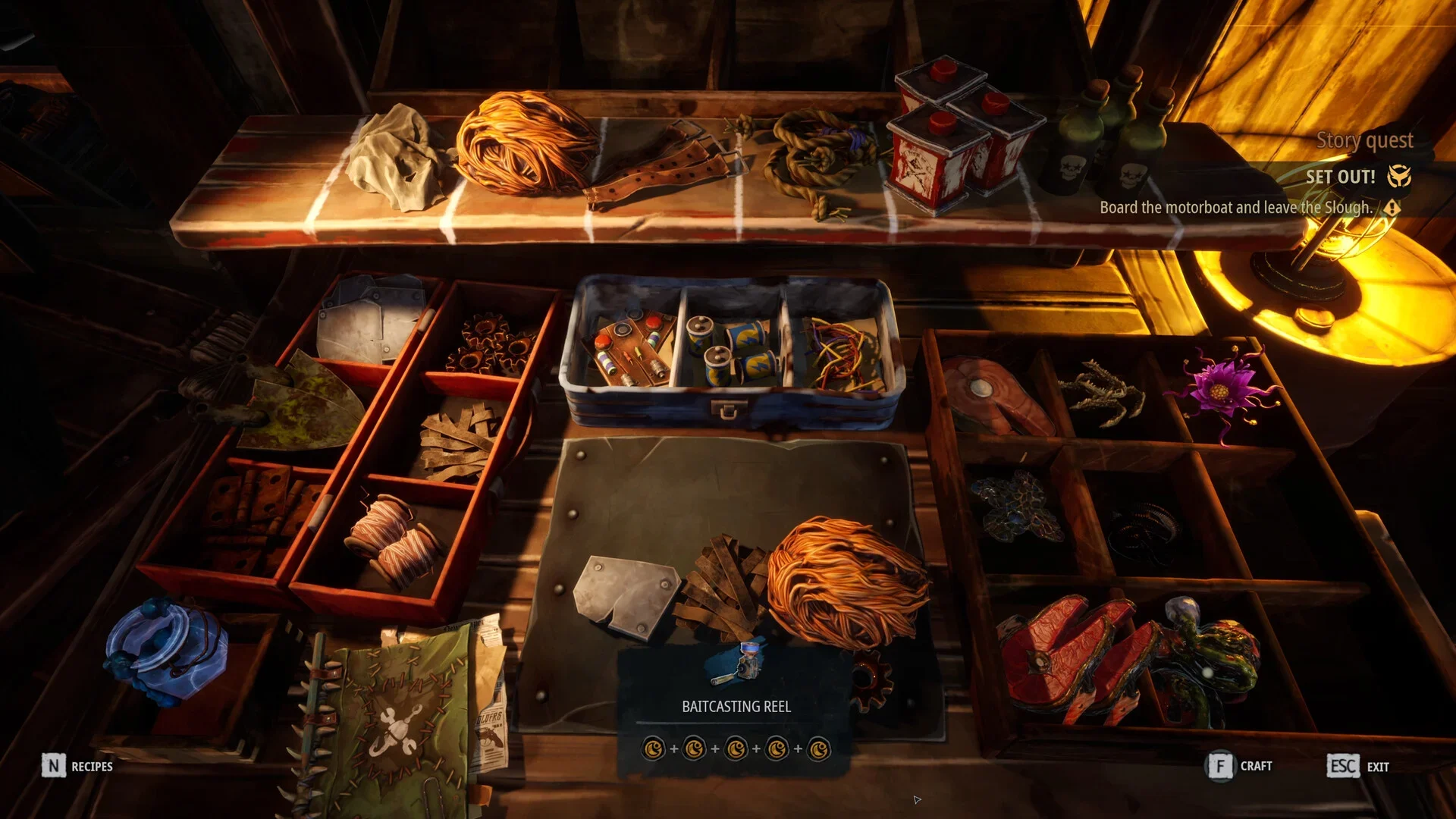

DREADMOOR crafting turns scavenged materials and processed fish into bait, tools, and equipment modules at the Dry Dock workbench. You need an unlocked recipe and its ingredients to make an item, while equipment upgrades also need installation.
Your early crafting choices should solve a current problem: catch a quest fish, improve an unreliable fishing setup, or prepare for a specific expedition. Keep knowledge spending tied to those jobs. A useful blueprint with ingredients you can collect now deserves attention before an optional tool you have no immediate reason to carry.
How to access crafting
Use the workbench at the Dry Dock. Its surrounding cubbies hold the materials you select during crafting, while the blueprint book lets you inspect recipes and their requirements.
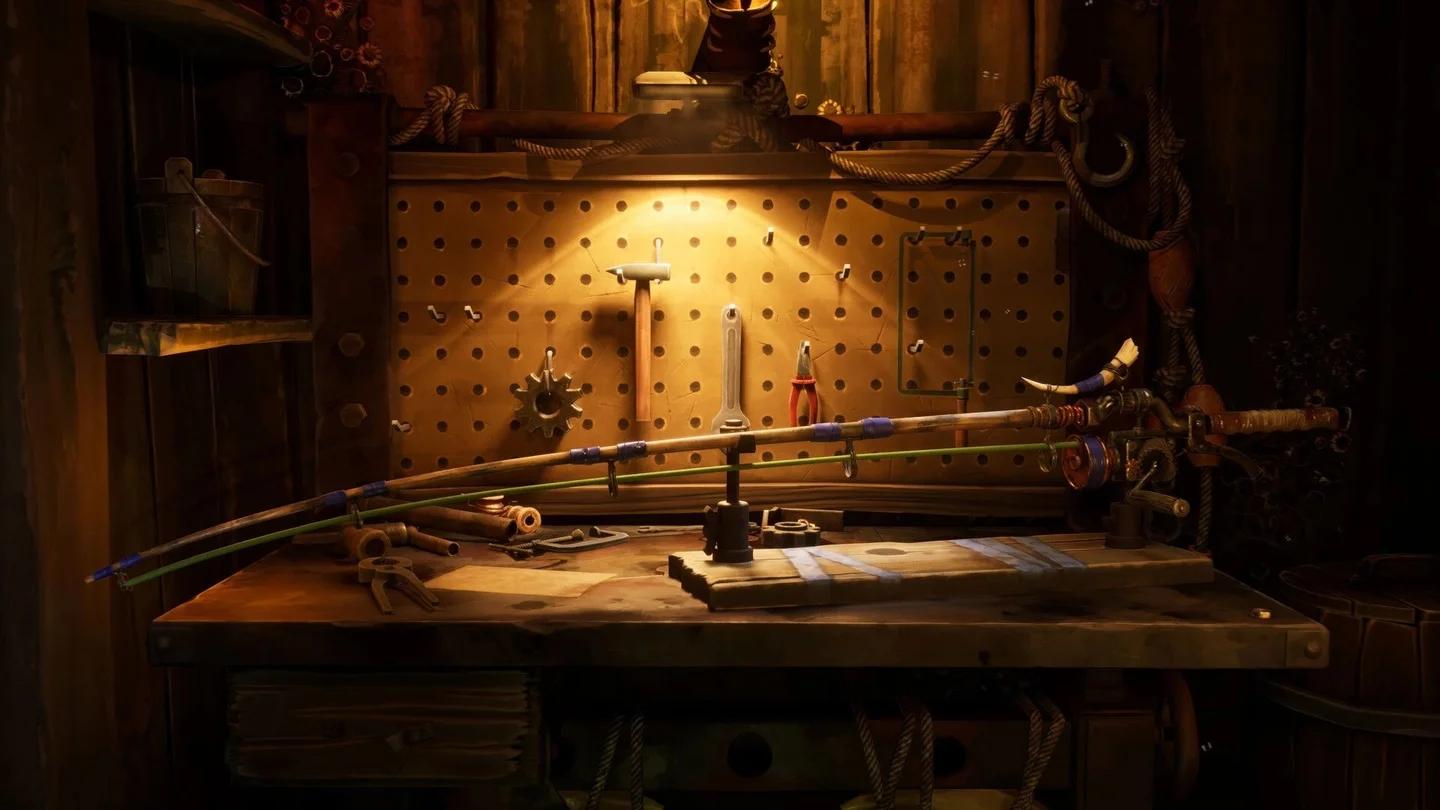
Dry Dock crafting workbench
On PC, follow this sequence:
- Approach and interact with the workbench.
- Press N to open the blueprint book.
- Choose an unlocked recipe and check its ingredient counts.
- Click the required materials in the cubbies around the table to combine them.
Story progression unlocks new recipes. If a design is still locked, address its unlock requirement before gathering a complete batch of ingredients for it.


Where to find crafting materials
Look at the objects around you, not just conventional loot containers. Barrels, wheels, electronics, fabric, and other discarded items supply different components. Fishing provides a separate stream of biological ingredients through processing.
These materials support the early recipes and equipment modules covered below:
| Material | Where to get it |
|---|---|
| Metal Plate | Metal barrels and salvage around wrecks, buildings, and debris |
| Rope | Broken ship parts and supplies in the starting area |
| Rubber | Wheels |
| Gear | Small gears or wooden crates |
| Coral Fiber | Coral, including the coral at Angler's Island |
| Bug Slime | Blue beetles on rocks |
| Chromatic Scales | Processing Softgrazer |
| Fish Meat | Processing fish |
| Alcohol | Small glass vials |
| Rusty Hinge | Hinges |
| Swamp Lily | Lily pads in the water at night |
Check the rocks for Bug Slime
The rocks behind the trading post are a useful place to look for blue beetles. Search above the waterline for this ingredient; swimming around the shoreline is not the same as checking the beetles' rocky perch.
Plan salvage around a recipe
Choose your next craft before leaving the dock. A trip for Rubber and Gear calls for different salvage than a trip for Coral Fiber, and a missing biological ingredient may require fishing instead of searching another building.
Inventory and boat storage are limited. Prioritize the ingredients for your active objective and next upgrade, then use spare space for components that are harder to replace. Selling unfamiliar crafting materials for quick currency can leave you searching for them again when their recipe becomes useful.
Understanding recipe requirements
Blueprints and Scraps of Knowledge
Some locked designs require Scraps of Knowledge to research. You can obtain these through exploration, traders, and certain quests. Read the blueprint name, its knowledge cost, and any additional requirement before spending them.
A locked blueprint and an ingredient shortage need different solutions. More Metal Plate will not learn a design for you, and more knowledge will not replace the Rubber missing from an already unlocked recipe. Check which requirement is stopping the craft before choosing your next trip.
Useful bait, tool, and supply recipes
The following recipes give you practical options for fishing, exploration, and basic supplies. Ingredient quantities are separate from any requirement to unlock the recipe.
| Item | Crafting materials |
|---|---|
| Wind-Up Tin | 1 Metal Plate, 1 Fish Meat |
| Rainbow Fin | 1 Fish Meat, 1 Metal Plate, 1 Chromatic Scales |
| Flaming Belly | 1 Fish Meat, 1 Jaw, 1 Metal Plate, 1 Swamp Lily |
| Crude Lockpick | 1 Rubber, 1 Metal Plate |
| First aid kit | 1 Alcohol, 1 Rusty Hinge, 1 Mutant Fish Meat |
| Harpoon | 1 Metal Plate |
Wind-Up Tin attracts Softgrazer, connecting a simple bait recipe to your supply of Chromatic Scales. Those scales feed both Rainbow Fin production and the Braided Line upgrade, so this lure opens more than another fishing option.
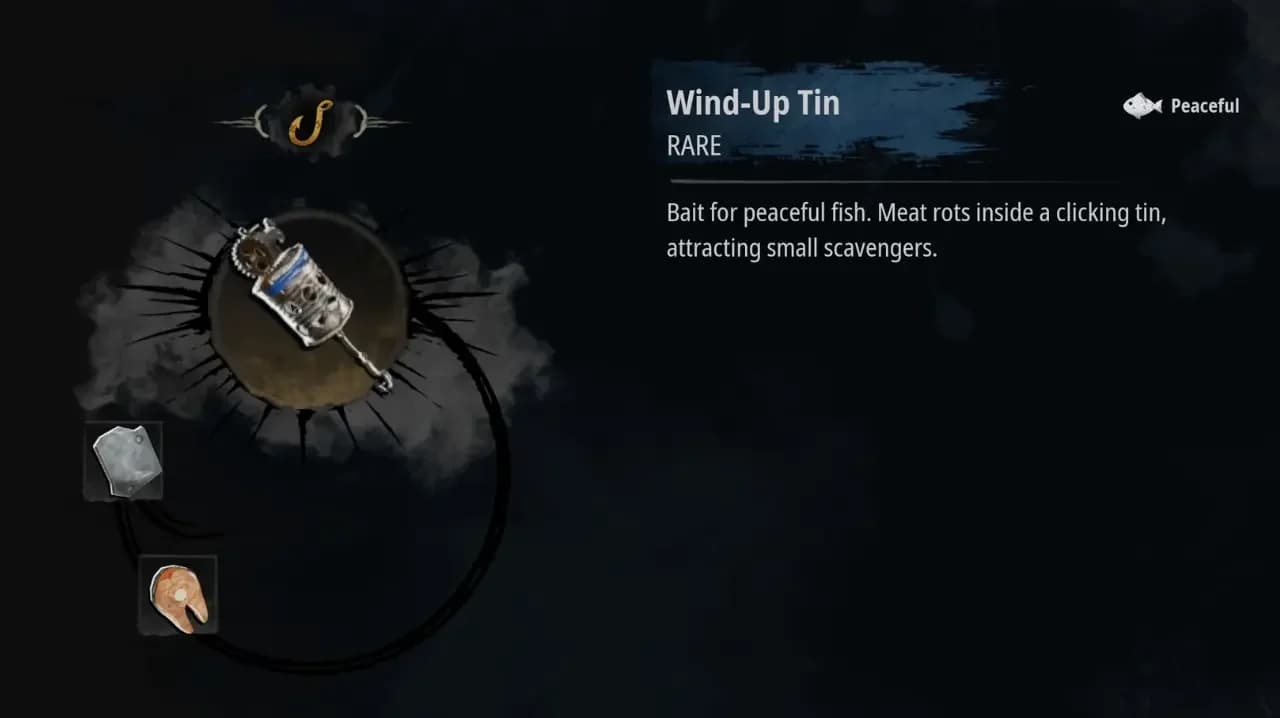
Wind-Up Tin bait blueprint
Dreadmoor bait recipes serve different fishing targets. Craft for the species and fishing spot on your next route instead of making a stockpile of every lure you have learned.
Crafting versus upgrading equipment
Making a module does not automatically improve your equipment. Dreadmoor separates learning the design, producing the item, and fitting it to the appropriate gear or vessel.
| Stage | What it does | What to check next |
|---|---|---|
| Research | Unlocks a blueprint | Can you gather its ingredients? |
| Craft | Produces the item or module | Does it need installation? |
| Install | Fits the improvement to its equipment | Is the upgraded equipment selected and ready? |
Use the correct installation station
Rod and line work goes through the rigging bench at Betsy and Sons. After fitting an upgrade, select the rod in the tackle menu so you are using the intended setup.
Boat modules belong to the Dry Dock upgrade process and need fitting to the vessel. The early demo boat chain uses the lathe workbench for its protective plates and engine work, followed by installation. Keep those steps separate when following a boat objective.
If an upgrade appears to have done nothing, check its installation and your selected equipment before collecting materials for another copy.
What to craft first
Build your fishing progression around the current objective
Complete a named quest requirement before spending its ingredients on an optional improvement. Once those materials are reserved, your Dreadmoor fishing gear upgrades should address the part of fishing that is costing you catches.
Start with Wind-Up Tin to open the scale-producing fishing loop. For equipment, Braided Line is a sensible first improvement, followed by Reinforced Rod. Move Baitcasting Reel up when reeling remains the weak part of your setup.
| Upgrade | Materials | When to prioritize it |
|---|---|---|
| Braided Line | 2 Chromatic Scales, 2 Rope, 1 Coral Fiber | You need better line strength and tension behavior |
| Reinforced Rod | 2 Coral Fiber, 1 Bug Slime, 1 Jaw, 1 Metal Plate | You are moving on to bigger fish and longer fights |
| Baitcasting Reel | 1 Metal Plate, 1 Rubber, 2 Gear, 1 Coral Fiber | You are consistently losing mid-tier fish during the reeling fight |
Baitcasting Reel shares Coral Fiber with both earlier modules. Reserve 4 Coral Fiber if you intend to craft all three upgrades, and budget extra Chromatic Scales separately for Rainbow Fin bait.
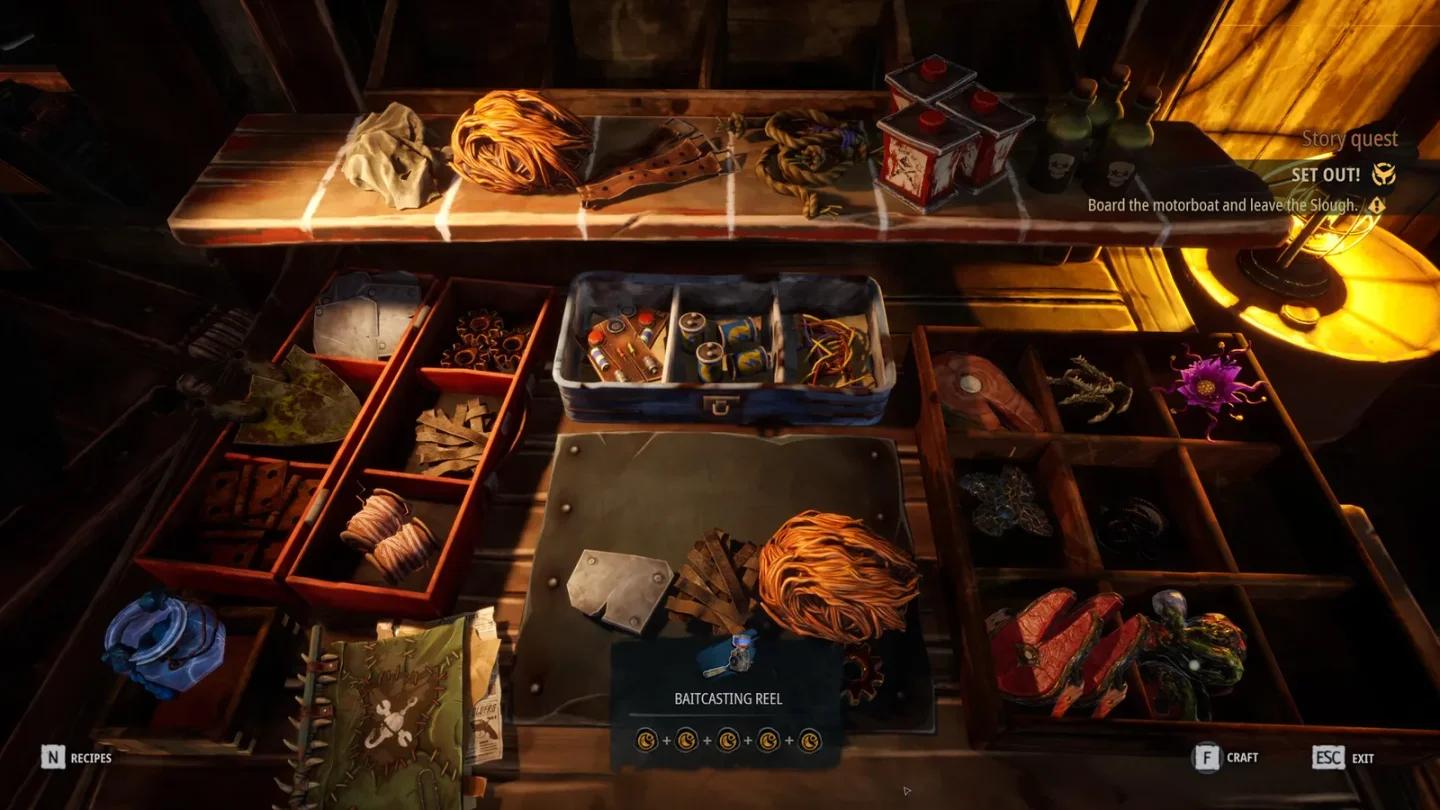
Baitcasting Reel blueprint
If you're struggling with line tension, improve your reeling habits alongside your equipment. Stop reeling before the tension meter fills, pull against the fish's movement to drain its stamina, and recover line when it tires. A stronger setup still needs controlled reeling.
Delay tools without an immediate job
Unlock the Dreadmoor Crude Lockpick recipe when opening locked containers and doors becomes your next exploration goal. Reserve its ingredients for that trip instead of producing tools simply because the recipe is available.
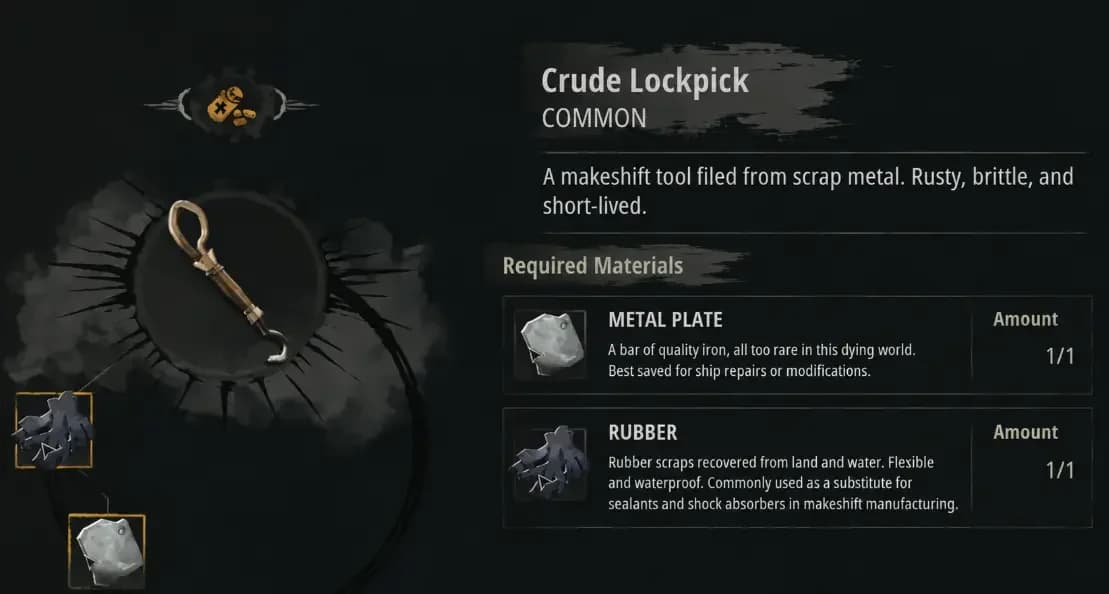
Crude Lockpick blueprint
Serrated axe edge becomes more useful when land combat is interrupting your progress. If you are avoiding those encounters and mainly fishing, improving your tackle has a clearer immediate purpose.
Do not treat every unlocked weapon, medicine, or convenience recipe as a shopping list. Match each craft to the encounter or obstacle ahead, then keep the remaining materials available for required progression.
Managing materials between trips
Sort supplies before committing ingredients
Use inventory autosort before checking what you can afford. Shared ingredients make it easy to fund one craft while accidentally delaying another, especially when bait and equipment both draw from the same stock.
Organize your next departure around three checks:
- Quest reserves: Set aside ingredients required by your active objective.
- Next craft: Identify the remaining materials for one chosen recipe.
- Travel supplies: Keep room for the fuel, repair supplies, bait, and equipment your route needs.
Keep contract fish out of the processing supply
Leave requested fish whole until you complete their delivery objective. Processing or selling them first means catching replacements. Use catches that are not reserved for a contract to supply your crafting ingredients.