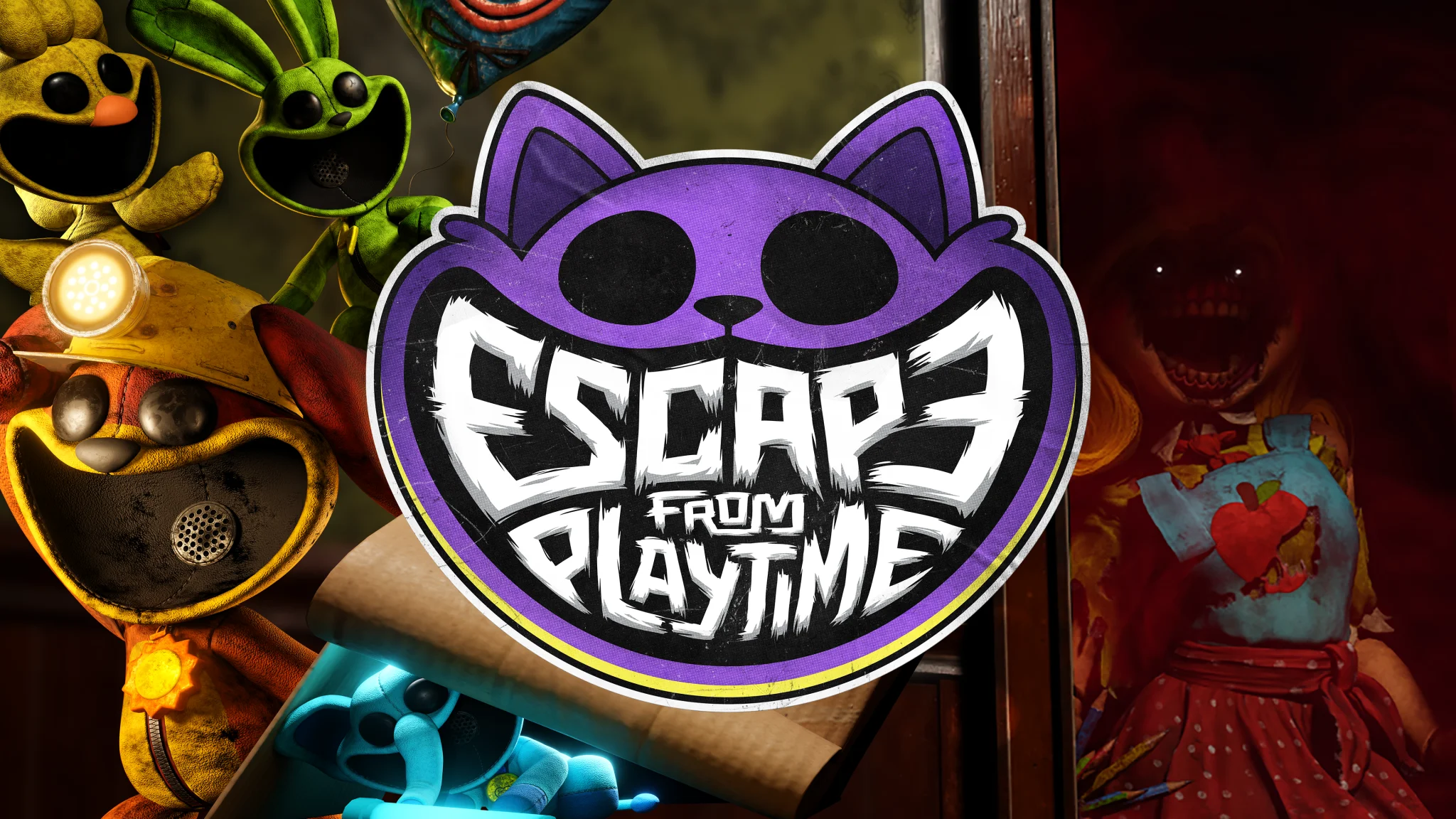

Escape from Playtime is a co-op survival horror game where you play as a Smiling Critter crawling through a procedurally generated toy factory, collecting resources for a mysterious Voice while rejected Playtime Co. creations hunt you down. Lobbies support up to 8 players, and every run reshuffles the layout. The factory does not reward bravery. It rewards planning, short callouts, and knowing when to turn back.

Pick your Critter before the run
How does the co-op loop actually work?
Every run follows the same structure: spawn into a freshly generated section of the Playtime Co. facility, locate the parts and resources the Voice demands, carry them back to the collection point, and get out. The layout pulls from classrooms, warehouses, testing labs, and the dark corridors connecting them, and it regenerates between runs. Muscle memory from the last session will not save you.
The loop is deliberately lean. Pressure comes from the creatures and the proximity voice chat, not from menus or loadout screens. Rejected Playtime Co. creations patrol the same halls you are looting, and they treat an unattended Critter as prey.
| Phase | What is happening | Smart play |
|---|---|---|
| Insertion | Spawn into a newly generated factory section | Walk quietly and clock exits for the first minute |
| Sweep | Search rooms for parts, resources, tools, and clues | Announce room type and item so nobody doubles back |
| Turn-in | Carry finds to the collection point | Pair a carrier with an escort on long hauls |
| Push or pull | Team decides to grab one more item or bank the haul | Set a hard item count before leaving the drop-off |
The mistake most players make is treating the turn-in phase like a victory lap. You are only safe once the delivery lands. Every corridor on the return trip is a live threat.
What roles should your team run?
The game assigns no formal classes. Roles are something you agree on before the first door opens, and skipping that conversation is how four players end up in the same storage room while the objective sits two corridors away.
| Role | Main job | Why it works |
|---|---|---|
| Point Critter | Leads the route and calls turns | Stops the group drifting into dead ends and ambush corridors |
| Hauler | Carries parts back to the collection point | Fewer people exposed on the return trip |
| Scout | Clears side rooms and checks hiding spots | Surfaces alternate routes before a chase forces the issue |
| Distractor | Pulls creature attention using tools and noise | Converts a losing chase into a clean escape |
Solo players handle all four jobs simultaneously, which means prioritizing the sweep and turning back earlier than a full team would. Two-player lobbies work best with a point Critter who hauls and a scout who stays close. Rotate roles between runs so nobody is permanently stuck carrying.

Warehouses expose you from distance
How does Mini Mode change movement and scavenging?
Playing as a Smiling Critter means seeing the Playtime Co. facility from knee height. Mini Mode lets you crawl through gaps, climb vents, and reach vertical routes that a full-sized character cannot access. Iconic factory locations read completely differently from a Critter's perspective, and that size advantage is your primary edge over the creatures hunting you.
Movement habits worth building before your first chase:
- Practice climbing and vaulting in safe rooms, not during an active pursuit
- Look up as often as you look forward; small bodies unlock vertical escape routes
- Identify two exits from every room you loot and call out which one you are taking
- Keep the group tight in open corridors and spread out in dense rooms with cover
- Break line of sight before you commit to a hiding spot; a spotted hiding spot is just a corner
Scavenging priority order:
- Objective parts and resources first; they are the reason the run exists
- Tools second; they convert a bad encounter into a survivable one
- Clues last, and only in rooms the team has already cleared
- Nothing justifies a solo detour across the map with the enemy lineup active
Because layouts are procedurally generated, the same room type can play completely differently between runs. Do not trust muscle memory. Do trust shared landmarks your group agrees on before splitting up, because those callouts transfer even when the floor plan does not.
What are the communication rules for proximity voice chat?
Proximity voice chat is what makes co-op genuinely tense. Every callout tells nearby players your exact position, and nearby is exactly where trouble lives. Short, specific, and quiet beats loud and vague every time.
| Situation | Say this | Skip this |
|---|---|---|
| Threat spotted | Direction plus distance: "left hall, close" | Full sentences and player names |
| Item found | Room type plus item type | "Over here" |
| Chase starting | Where you are running to | Silence while sprinting |
| Regrouping | A landmark the whole team knows | Guessing where teammates ended up |
Other mistakes that sink co-op runs:
- Hauling a full load through the most obvious corridor on the map
- Ignoring the collection point until the lobby is down to two Critters
- Treating found tools as trophies instead of consumables
- Overloading the lobby with players who all want to call the route
- Using a distraction before the person it is meant to protect is already moving
If voice is not an option, in-game text chat works as a fallback, but typed callouts are slower. Budget for that delay by moving in pairs and keeping routes shorter than you would in a full voice lobby.
How many players should you bring?
More Critters means more ground covered per run and more chances for something to go badly wrong. Choose your lobby size based on how well your group actually communicates.
| Lobby size | Strength | Watch out for |
|---|---|---|
| 2 to 3 players | Easy to keep everyone in voice range | Slow coverage; one downed player hurts badly |
| 4 to 5 players | Balanced search speed and coordination | Needs one player calling direction to prevent drifting |
| 6 to 8 players | Fast coverage of classrooms, warehouses, and labs | Crosstalk in voice chat; stragglers get isolated |
For a first session, a mid-sized group is the friendliest place to learn the loop. The lobby cap was raised from 4 to 8 after beta feedback, so older guides quoting a four-player limit are out of date.
What does the Perm-A-Lounge track?
Progress and rewards are tracked through the Perm-A-Lounge computer, which also surfaces company secrets as you play. Exact unlock conditions are still shifting during Early Access, so treat specific numbers you see elsewhere as provisional until Mob Entertainment finalizes them.
The Early Access build launched with the full 8-character Smiling Critter roster, one starter zone, and a core enemy lineup. Miss Delight appears to be the headline threat in the current build. Files from the beta period hint at future appearances from Huggy Wuggy, Boxy Boo, and DogDay, but those remain unconfirmed additions. New zones, enemies, features, lore, and balance changes are planned based on community feedback over roughly one year of Early Access.
| Feature | Status in the current build |
|---|---|
| Playable roster | Full 8-character Smiling Critter lineup |
| Zones | One starter zone, more planned |
| Enemies | Core lineup at launch; expansions planned |
| Progression | Perm-A-Lounge tracks progress, rewards, and company secrets |
| Replayability | Procedural layouts, puzzles, and modifiers |
| Lobby size | Solo up to 8 players |
| Voice | Proximity chat |
| Languages | English full audio; French, Italian, German, Spanish (Spain) interface and subtitles |
| Steam Deck | Compatibility unconfirmed |
Does your PC meet the requirements?
The requirements are modest by 2026 standards, which is good news for players on older rigs.
| Component | Minimum | Recommended |
|---|---|---|
| OS | Windows 10/11 (64-bit) | Windows 10/11 (64-bit) |
| Processor | Intel Core i3-9100 / AMD Ryzen 5 3500 | Intel Core i9-11900K / AMD Ryzen 9 5900X |
| Memory | 8 GB RAM | 16 GB RAM |
| Graphics | Nvidia GTX 1650 / Radeon RX 470 | Nvidia RTX 3070 / Radeon RX 6800 XT |
| DirectX | Version 12 | Version 12 |
If your setup sits near the minimum, trade visual fidelity for a stable framerate. A stutter during a chase costs more than a soft shadow ever will. Steam Deck compatibility is listed as unknown, so handheld players should wait for verified reports before buying in.
Escape from Playtime is a canon prequel set in 1997, two years after the Hour of Joy in the wider Poppy Playtime timeline. The lore clues you find in the facility are worth reading rather than skipping.
Common mistakes section
Here is a consolidated list of the patterns that end runs early, especially for new groups:
- Starting a run without confirming proximity voice chat works for everyone
- Splitting the group without setting a rally point or a hard item count
- Running the most obvious return corridor while carrying a full haul
- Hoarding tools instead of spending them when a teammate needs cover
- Pushing for one more item after the collection point is already reachable
- Treating the procedural layout like a fixed map and not checking for new routes
For more strategies across the full game, the Escape from Playtime guides collection covers everything from beginner runs to advanced enemy handling.
FAQ
Can you play Escape from Playtime solo? Yes. Solo play is supported, but the systems lean hard on proximity voice chat and shared roles. Solo runs are harder because you cover less ground and have no one to run interference. Turn back earlier than you think you need to.
Does progress carry between runs? Yes, the Perm-A-Lounge computer tracks progress and rewards across sessions. Specific unlock details are still being finalized during Early Access.
Is Escape from Playtime canon to Poppy Playtime? Yes. It is a prequel set in 1997, two years after the Hour of Joy, which is why the lore clues you find are worth reading.
What is the correct lobby size for beginners? Four to five players gives the best balance of search speed and coordination for a first session. Add players once everyone knows the loop.
Does the layout change every run? Yes. The factory is procedurally generated, so routes, room connections, and item placements shift between sessions. Learn room types and recurring landmarks rather than fixed paths.
If you enjoy co-op action games with genuine stakes and a strong horror atmosphere, Escape from Playtime delivers both in a package that gets more interesting the more your group communicates. Get your roles sorted, keep your callouts short, and bank the haul before greed makes the decision for you. Head to the Escape from Playtime game page to check the latest Early Access details and get started.