

Biggest discounts, free games, and limited-time offers across every major gaming store.
Never pay full price again.
Overview
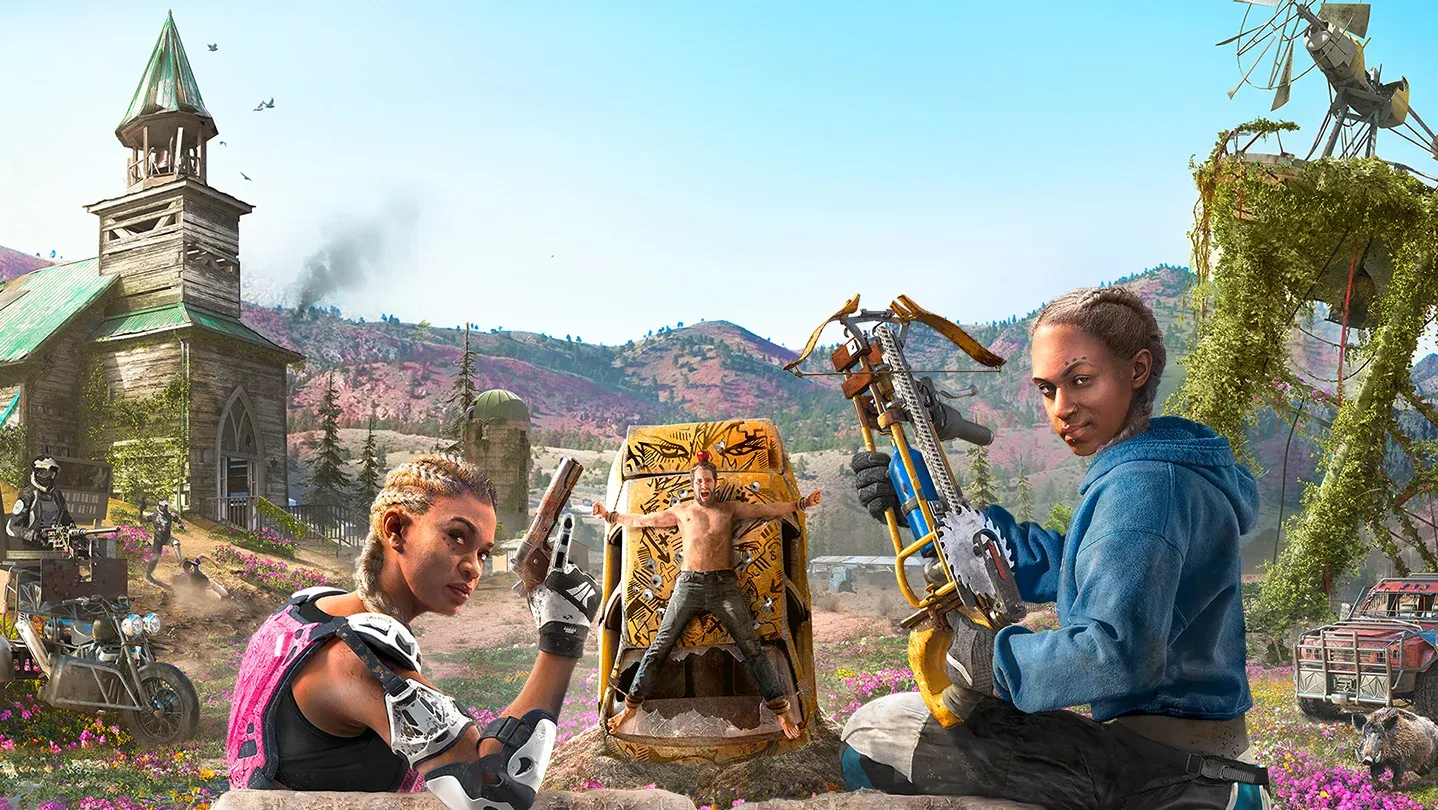
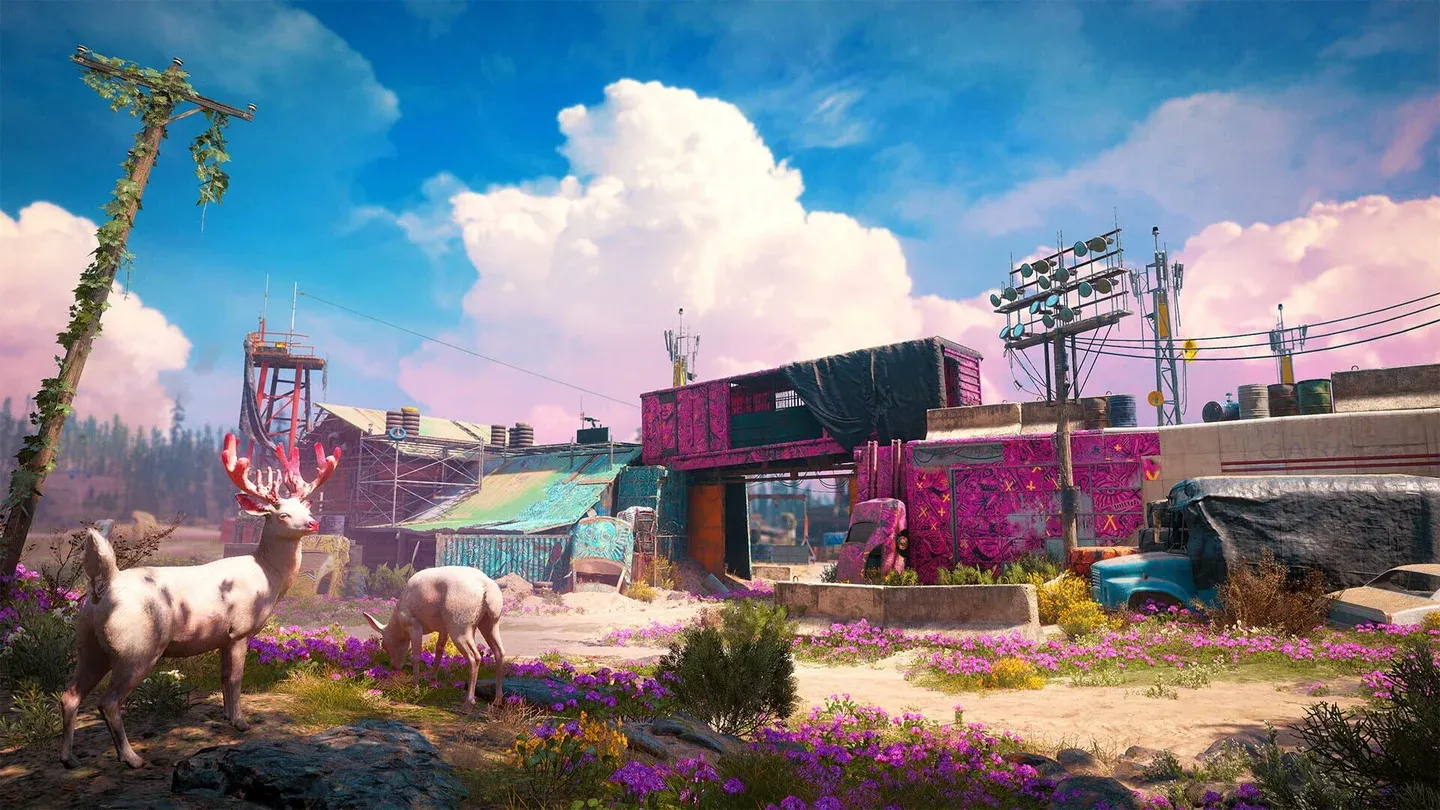
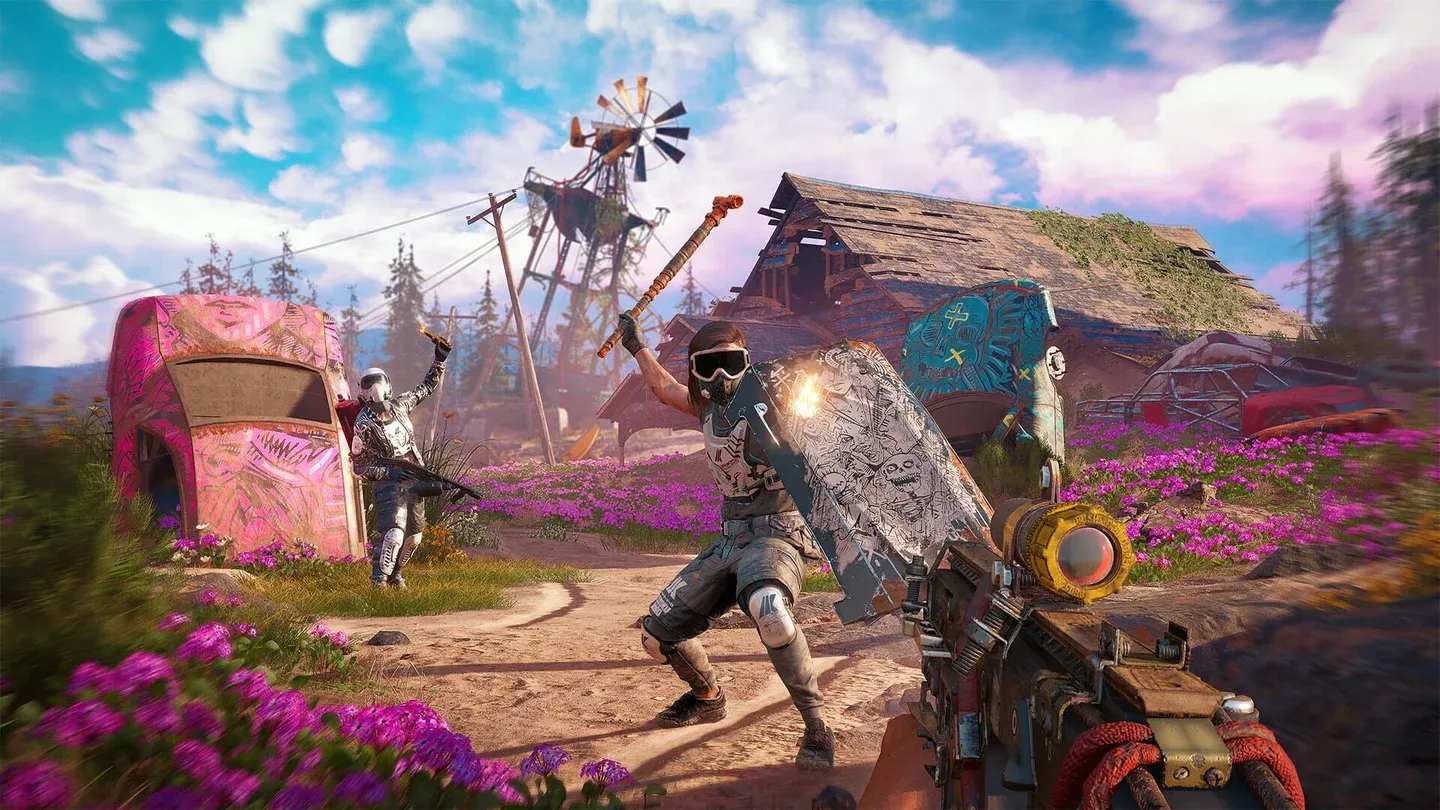
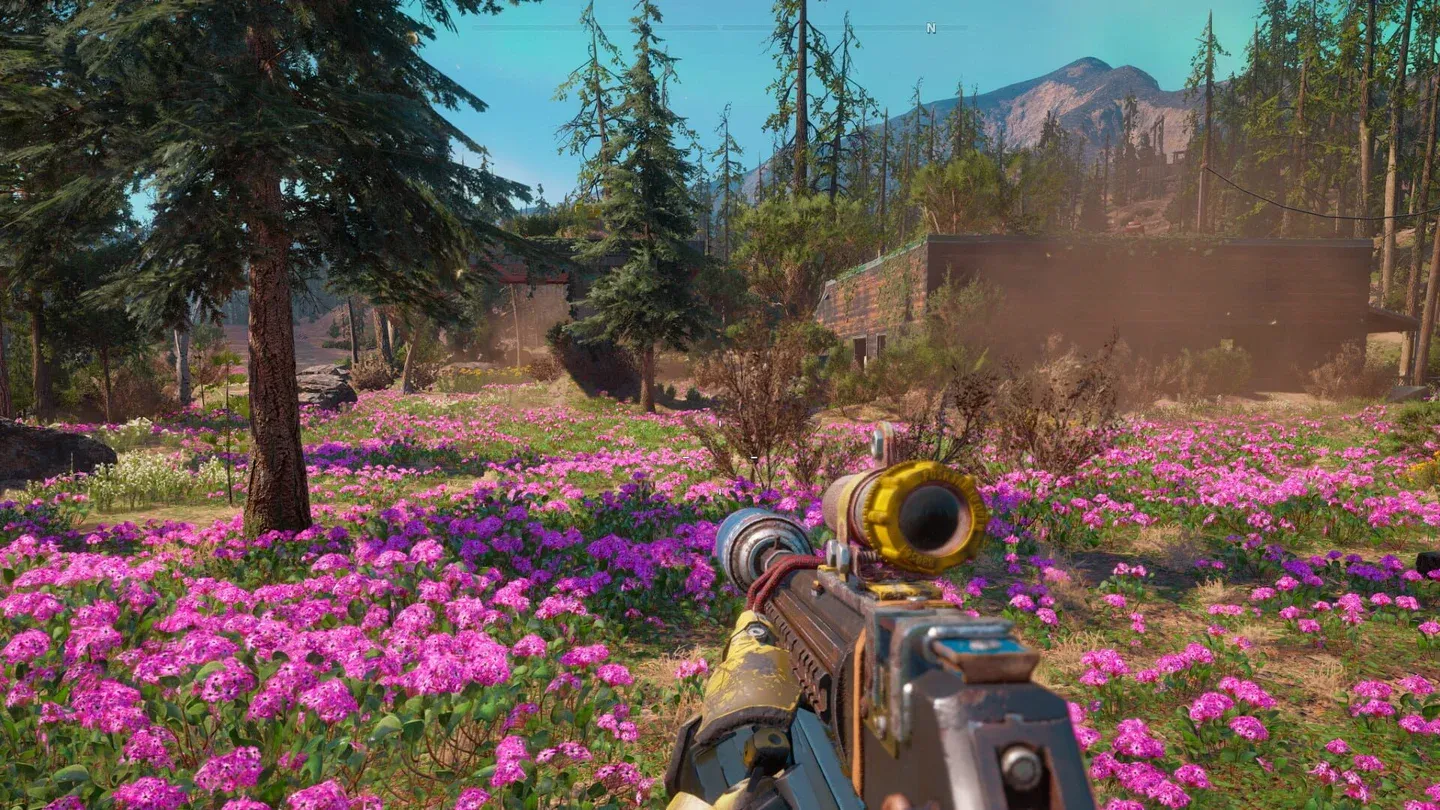
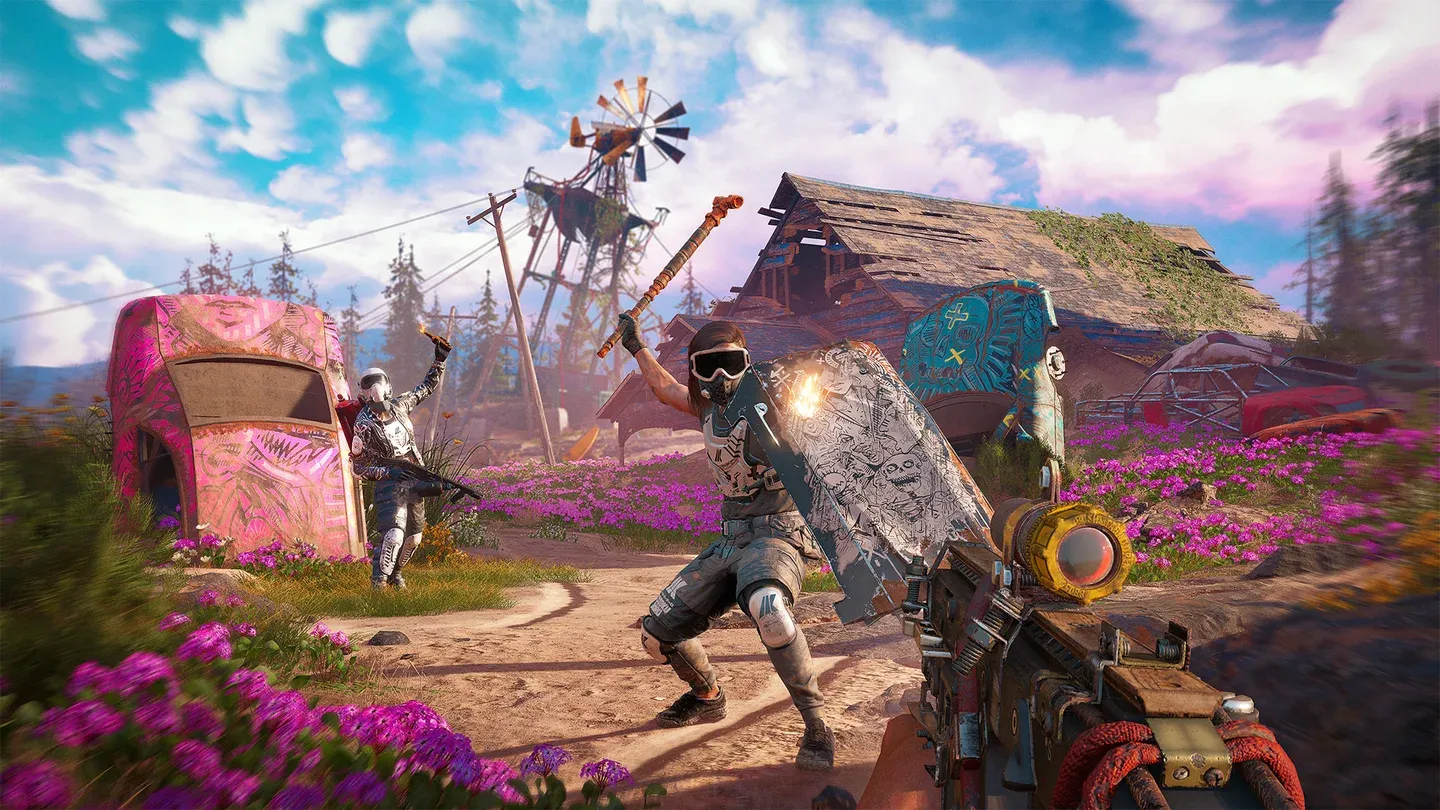
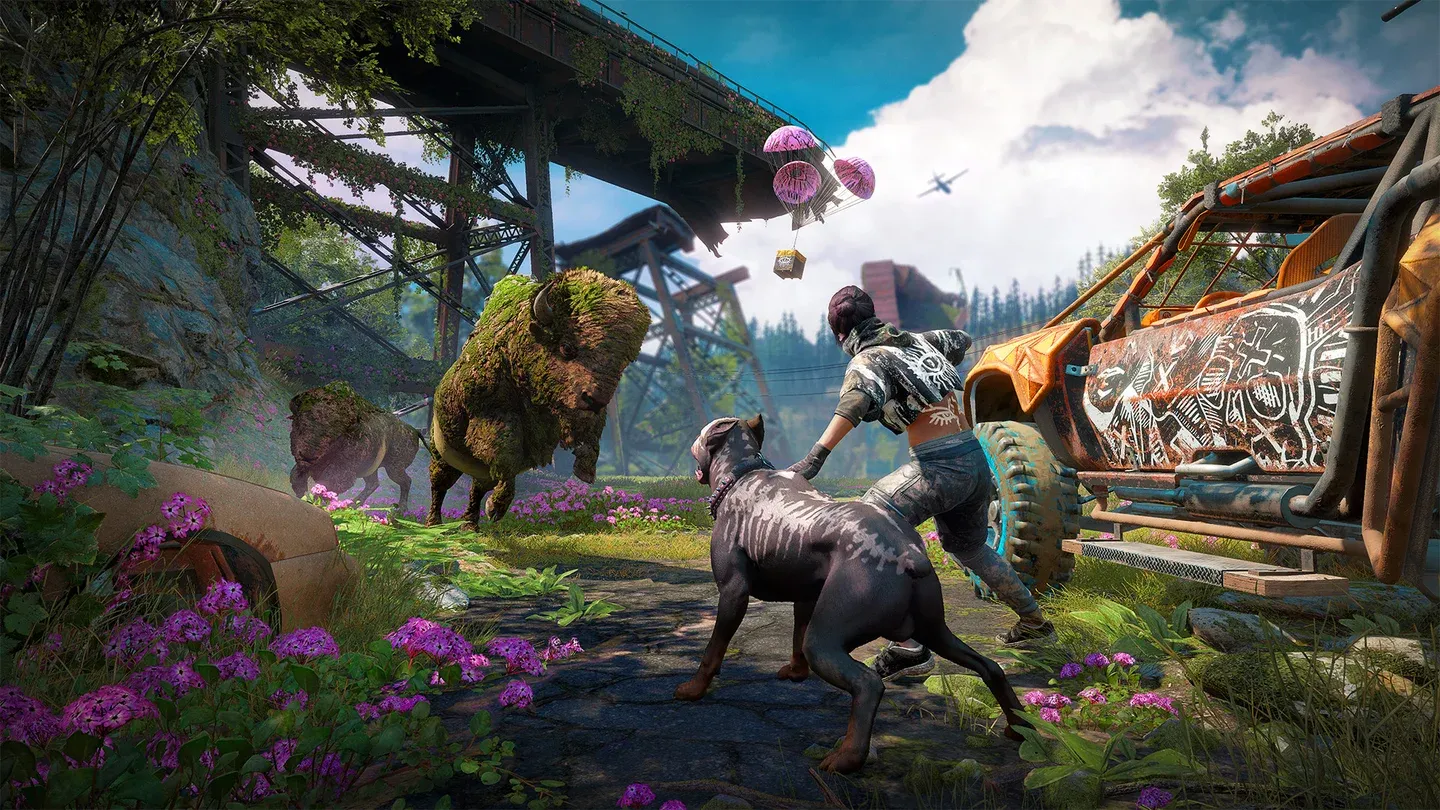
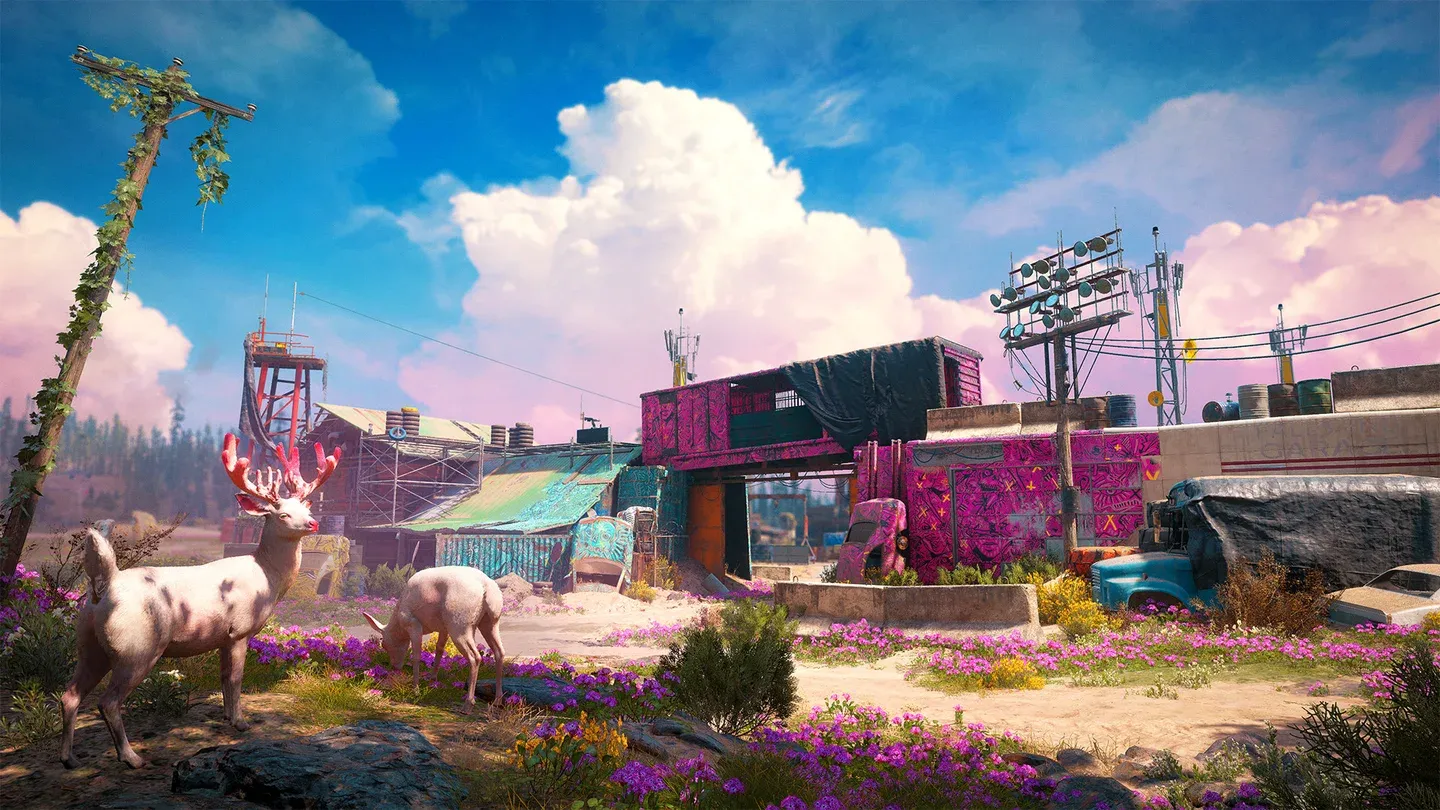
Far Cry New Dawn is a direct narrative sequel to Far Cry 5, developed by Ubisoft Montreal and released in February 2019. Set 17 years after a global nuclear event flattened civilization, the game plants you in a transformed Hope County where nuclear winter has given way to an unexpected superbloom. Lush pink and orange flora now blanket the ruins of Montana, and the survivors who rebuilt here face a new threat: the Highwaymen, a ruthless gang led by twin sisters Mickey and Lou who are stripping the region of every resource they can find.
The tonal shift from Far Cry 5 is immediate and intentional. Where the previous game leaned into grim cult fanaticism, New Dawn trades that in for a neon-tinged wasteland aesthetic that sits somewhere between Mad Max and a fever dream. The world feels genuinely different despite sharing the same geographic bones, and the superbloom color palette gives the game a distinct visual identity that sets it apart from the grayer post-apocalyptic shooters on the market.
Gameplay and mechanics
New Dawn's core loop will feel familiar to anyone who's played Far Cry 5, but the game layers in several systems that change how you approach the open world. The most significant addition is a tiered crafting system built around scavenging resources from the environment and completing Expeditions.
Far Cry® New Dawn content image
Key gameplay systems include:
- Homebase upgrades via recruited Specialists
- Tiered weapon crafting from scavenged materials
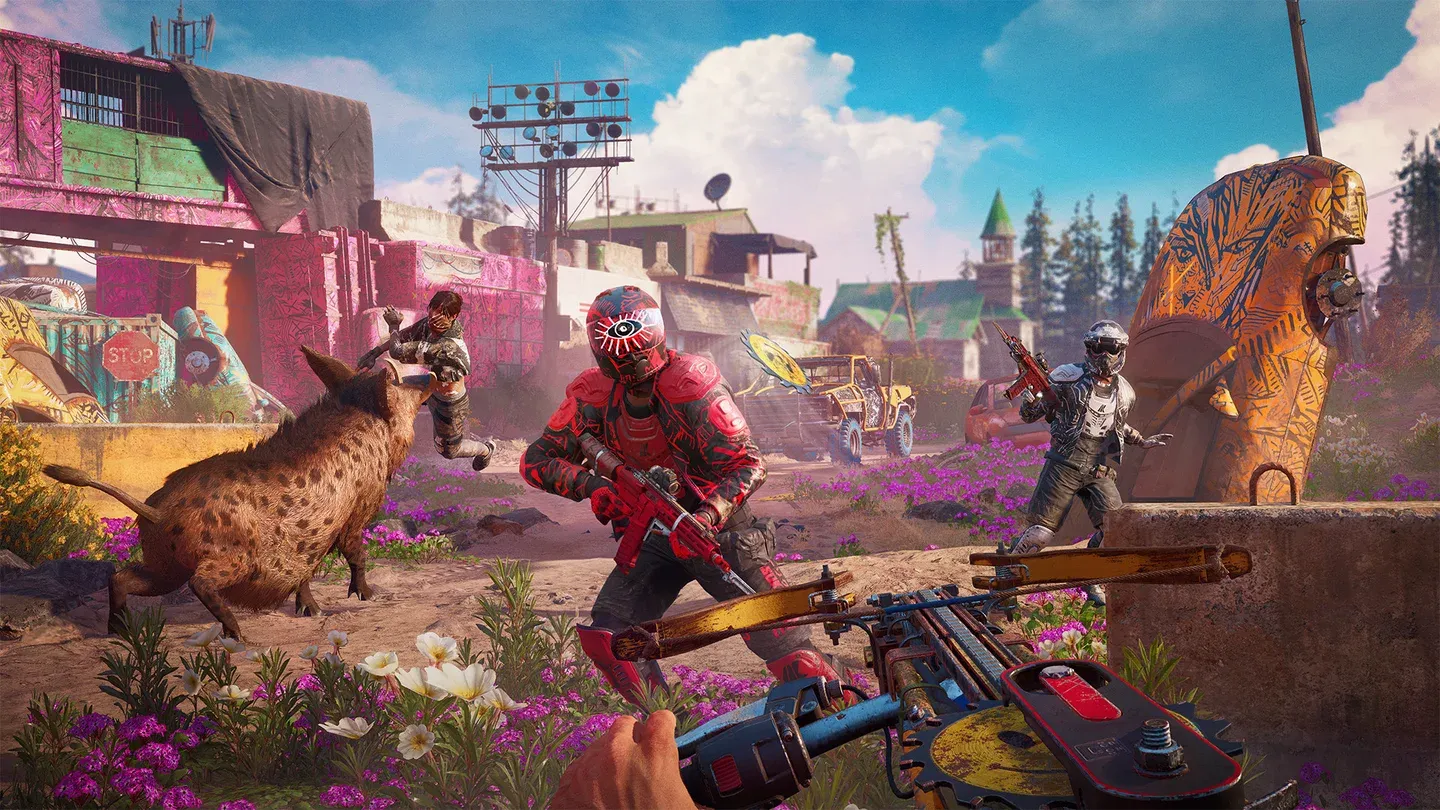
- Turf War outpost assaults with escalating difficulty
- Expeditions to locations across the continental US
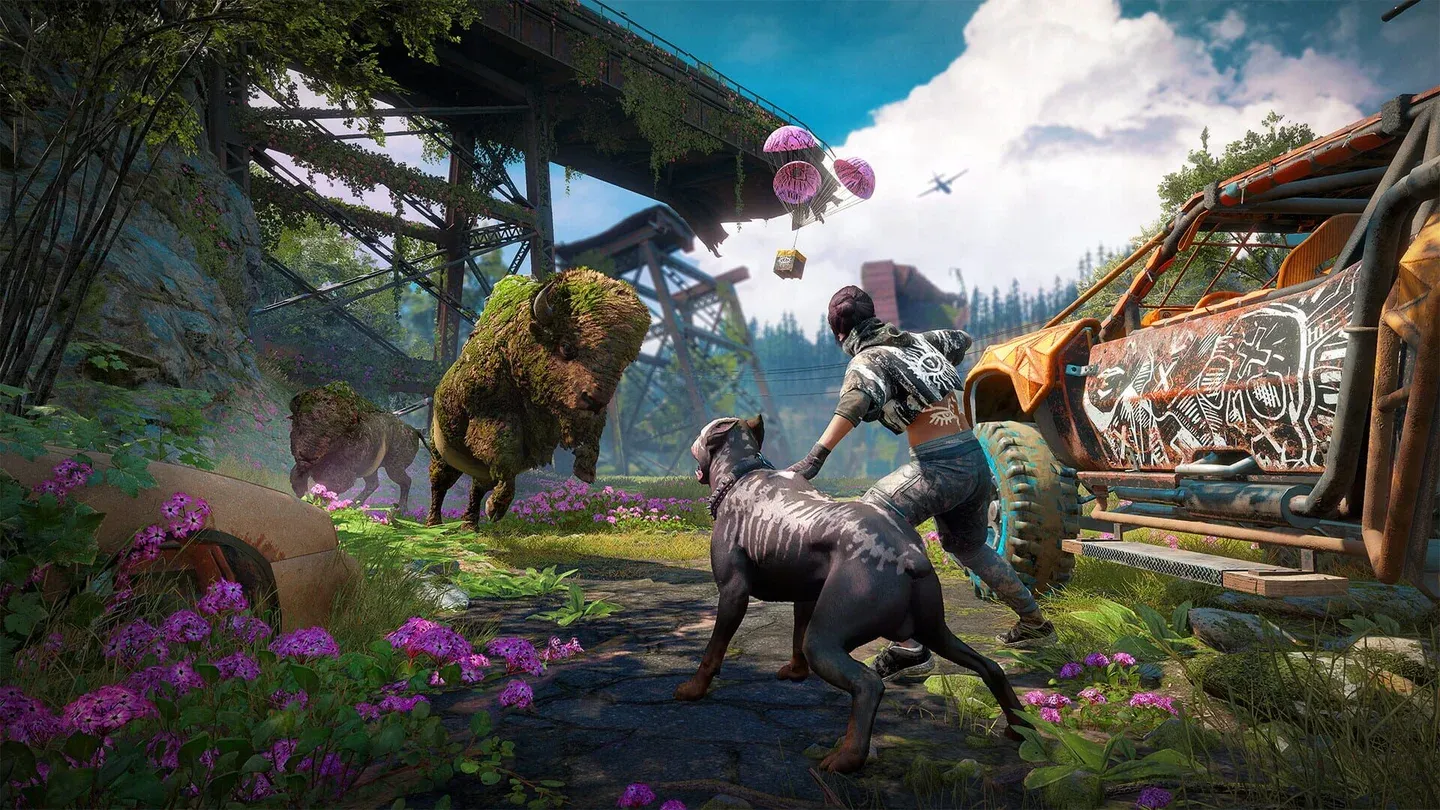
- Guns and Fangs for Hire companion system
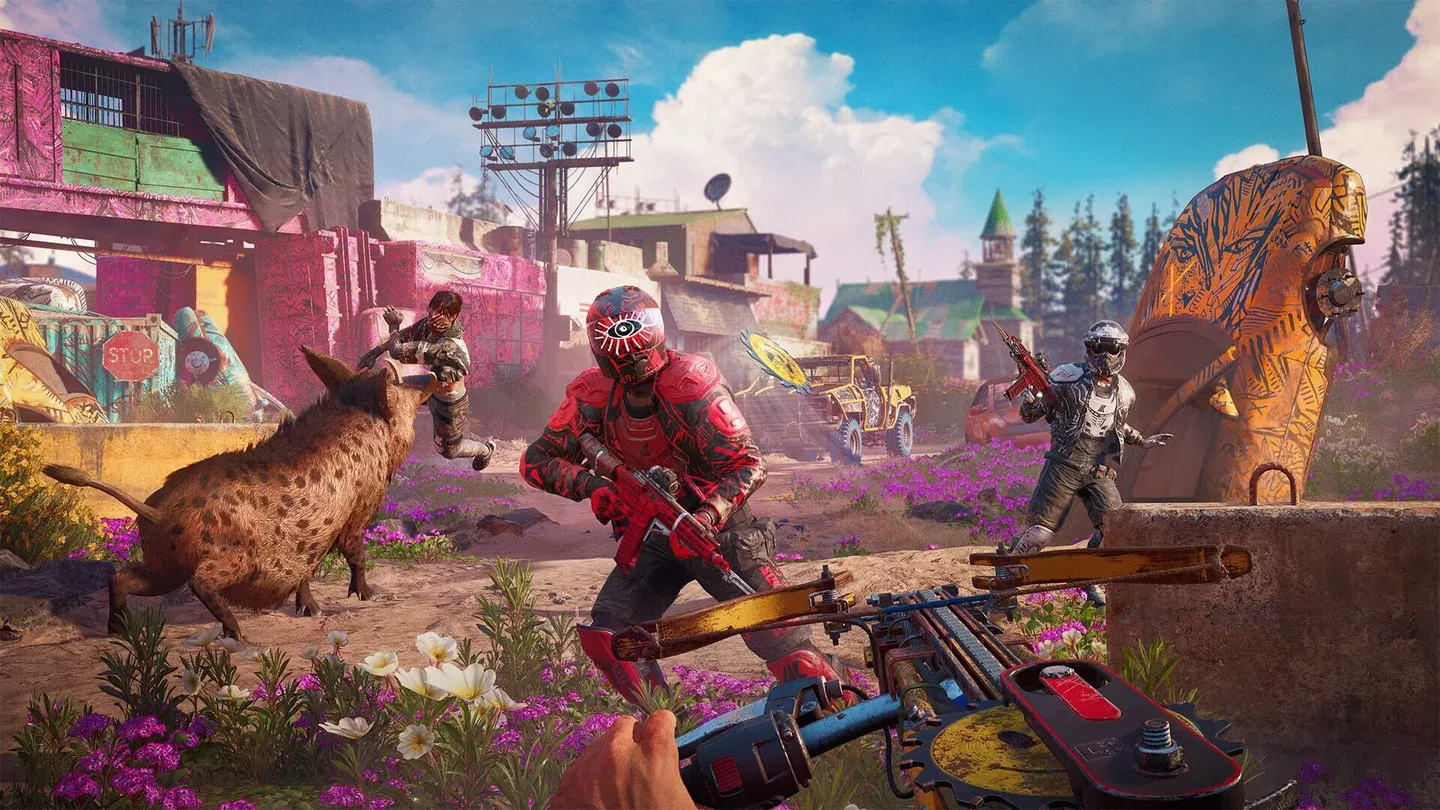
Outposts now have a reset mechanic: once you clear a location, you can choose to scavenge it for extra resources, but doing so raises the difficulty when the Highwaymen inevitably retake it. It's a smart loop that keeps the mid-game from going stale.
Far Cry® New Dawn content image
Two-player co-op survival
The entire campaign supports two-player online co-op, which is where New Dawn tends to shine brightest. Coordinating Turf War assaults with a friend turns what might be repetitive outpost clearing into something worth replaying, especially at higher difficulty tiers where the Highwaymen hit back hard. The Expeditions, which send players to distinct locations around the US like a flooded Louisiana bayou or a beached aircraft carrier, are built with co-op chaos in mind.
Far Cry® New Dawn content image
What makes the Highwaymen different as villains?
Mickey and Lou are a notable departure from the cult-leader-as-messiah template Far Cry has relied on. The Twins operate as pragmatic opportunists rather than ideologues. They're not trying to save anyone or build a paradise. They want resources, and they'll flatten anyone in the way. That straightforward menace gives the story a different rhythm. There's less philosophical posturing and more direct confrontation, which keeps the pacing tighter than Far Cry 5's longer narrative arcs.
Far Cry® New Dawn content image
The game also brings back Joseph Seed from Far Cry 5 in a supporting role that ties the two stories together. Players who completed the previous game will get more out of those scenes, though New Dawn doesn't require prior knowledge to follow the plot.
Content and replayability
New Dawn is shorter than a mainline Far Cry entry by design, sitting closer to a standalone expansion in scope. That's not a criticism so much as a fair expectation to set. The Expeditions add meaningful variety beyond Hope County, the Turf War escalation system gives outpost farming a genuine reason to continue, and the Specialists recruitment tree means there's always a base upgrade to chase. For post-apocalyptic shooter fans who want a tighter, more focused experience than a 60-hour open-world grind, the game delivers a satisfying run without overstaying its welcome.