
Biggest discounts, free games, and limited-time offers across every major gaming store.
Never pay full price again.
Overview
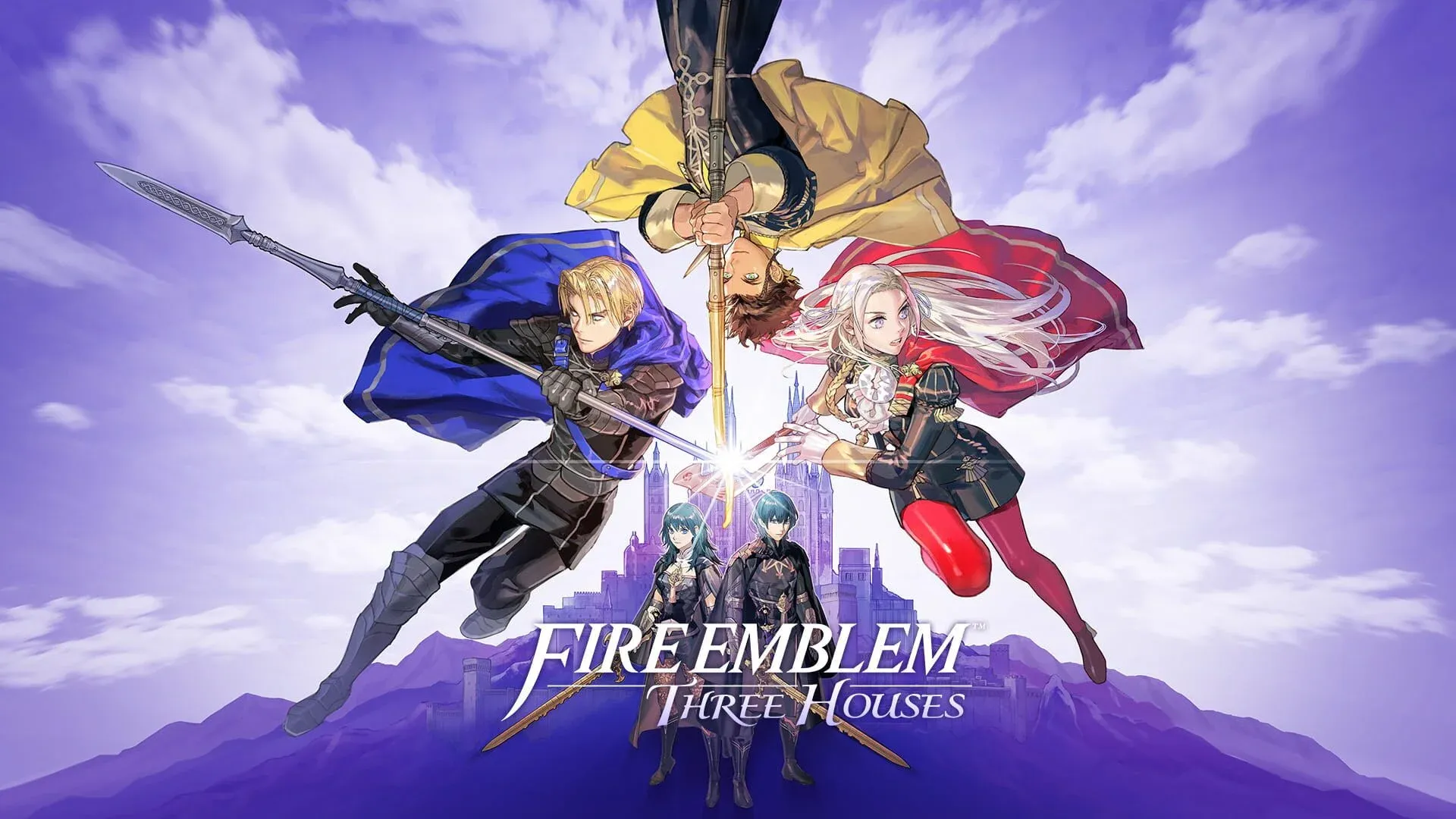
Fire Emblem: Three Houses arrived on Nintendo Switch in July 2019, developed by Intelligent Systems alongside Koei Tecmo. It takes the series' signature turn-based tactical combat and wraps it inside a school life sim structure, giving players a professor character who spends half their time planning lessons and building bonds before deploying students onto the battlefield. The result is a tactical RPG that makes you care about every unit before you ever put them in danger.
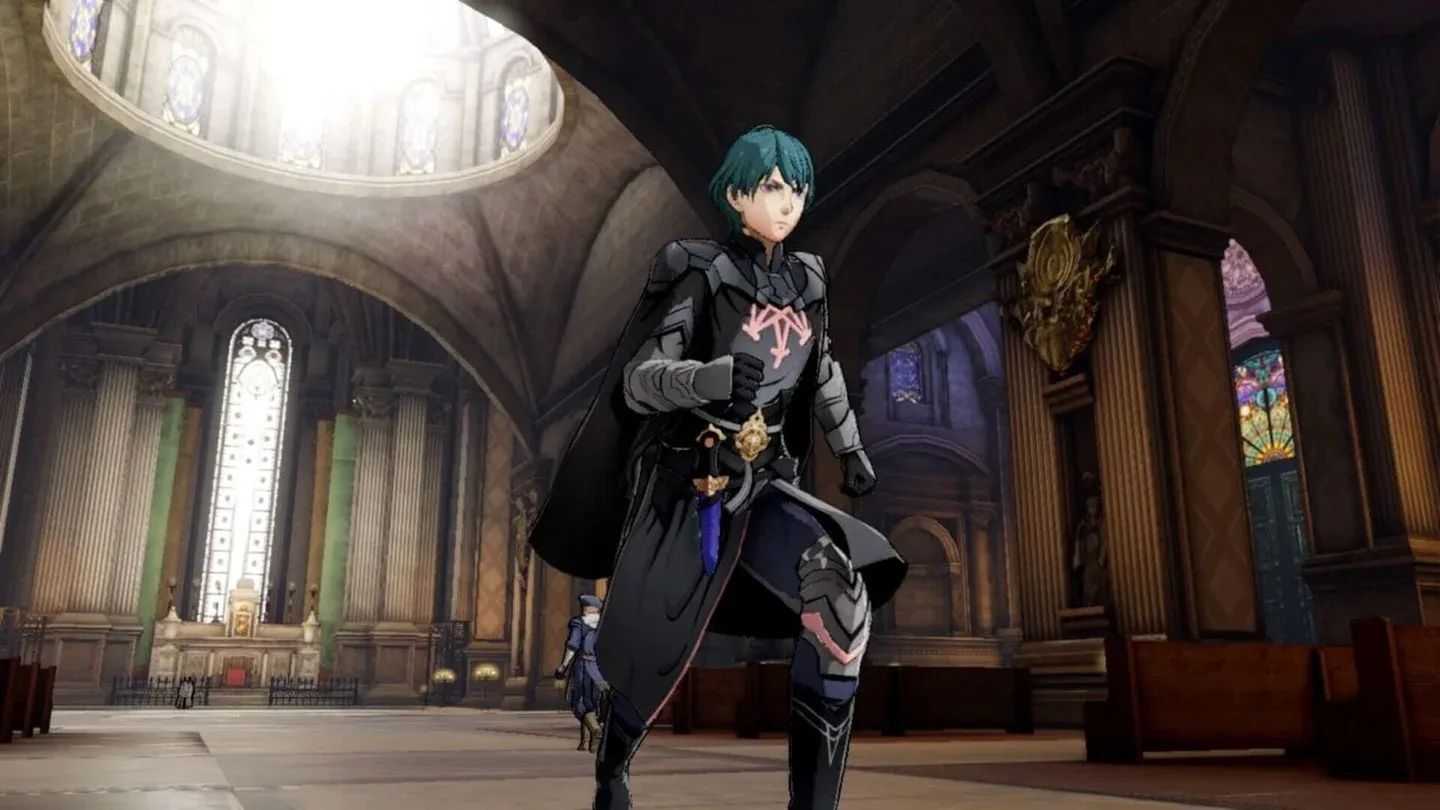
The continent of Fódlan is governed by an uneasy balance between three powers: the Adrestian Empire, the Holy Kingdom of Faerghus, and the Leicester Alliance. Each sends its noble children to the Officer's Academy at Garreg Mach Monastery, sorted into the Black Eagles, Blue Lions, and Golden Deer houses. Picking a house at the start commits you to a specific cast of characters, a specific story route, and a wildly different perspective on the war that eventually consumes Fódlan.
A fourth route, Crimson Flower, unlocks under specific conditions within the Black Eagles path, pushing the total number of distinct playthroughs to four. Each one recontextualizes events from the others, which is exactly why Three Houses holds its replayability so well years after launch.
Fire Emblem: Three Houses content image
Gameplay and mechanics
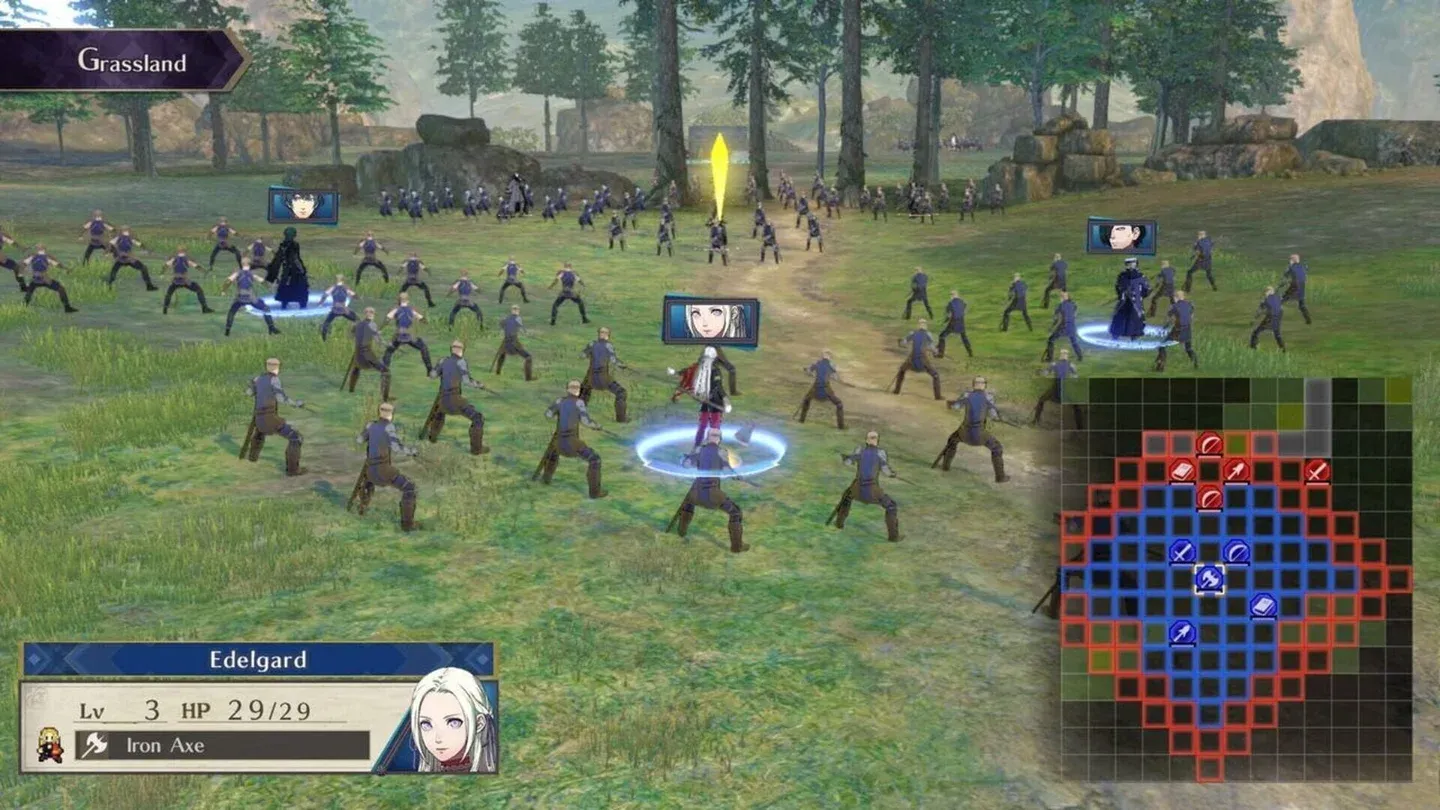
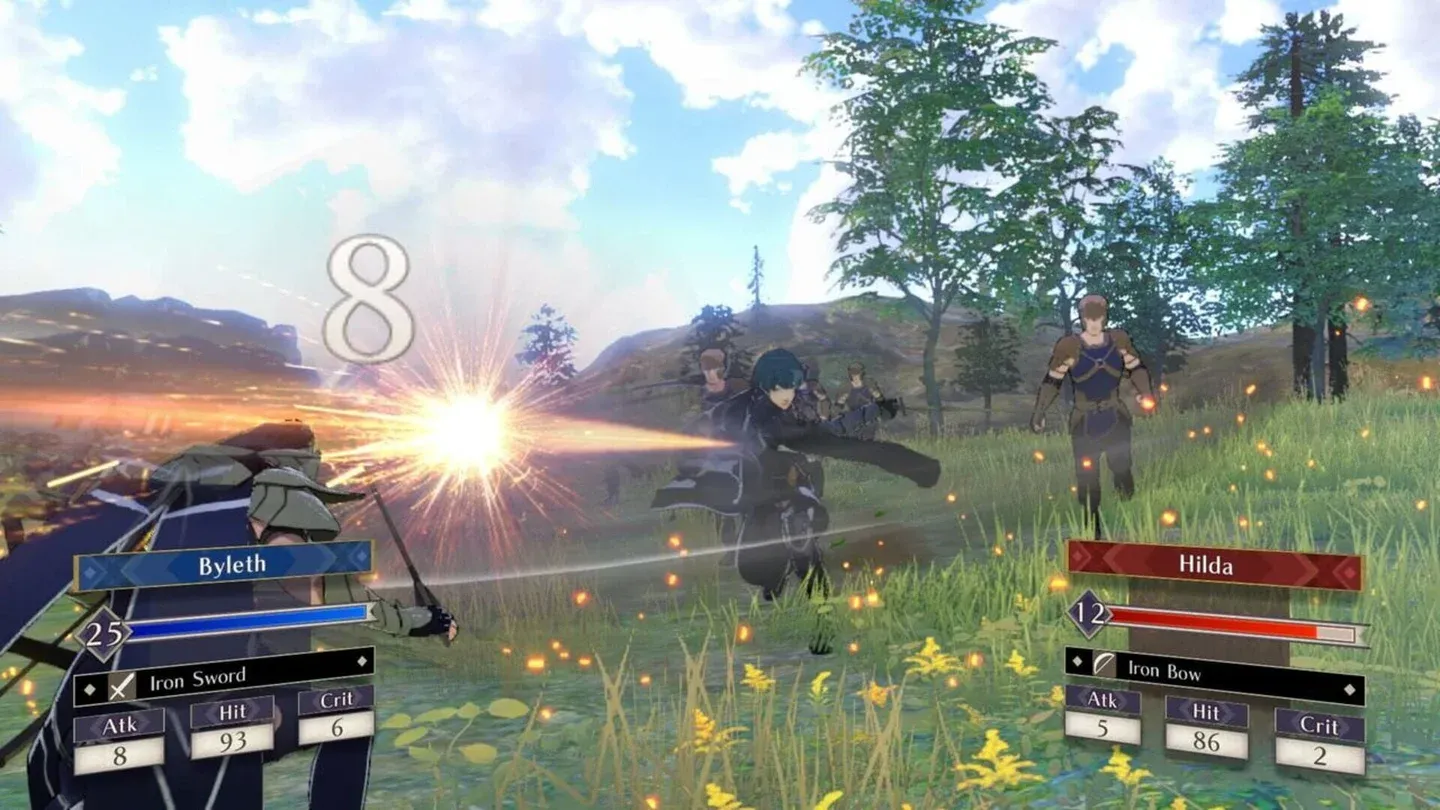
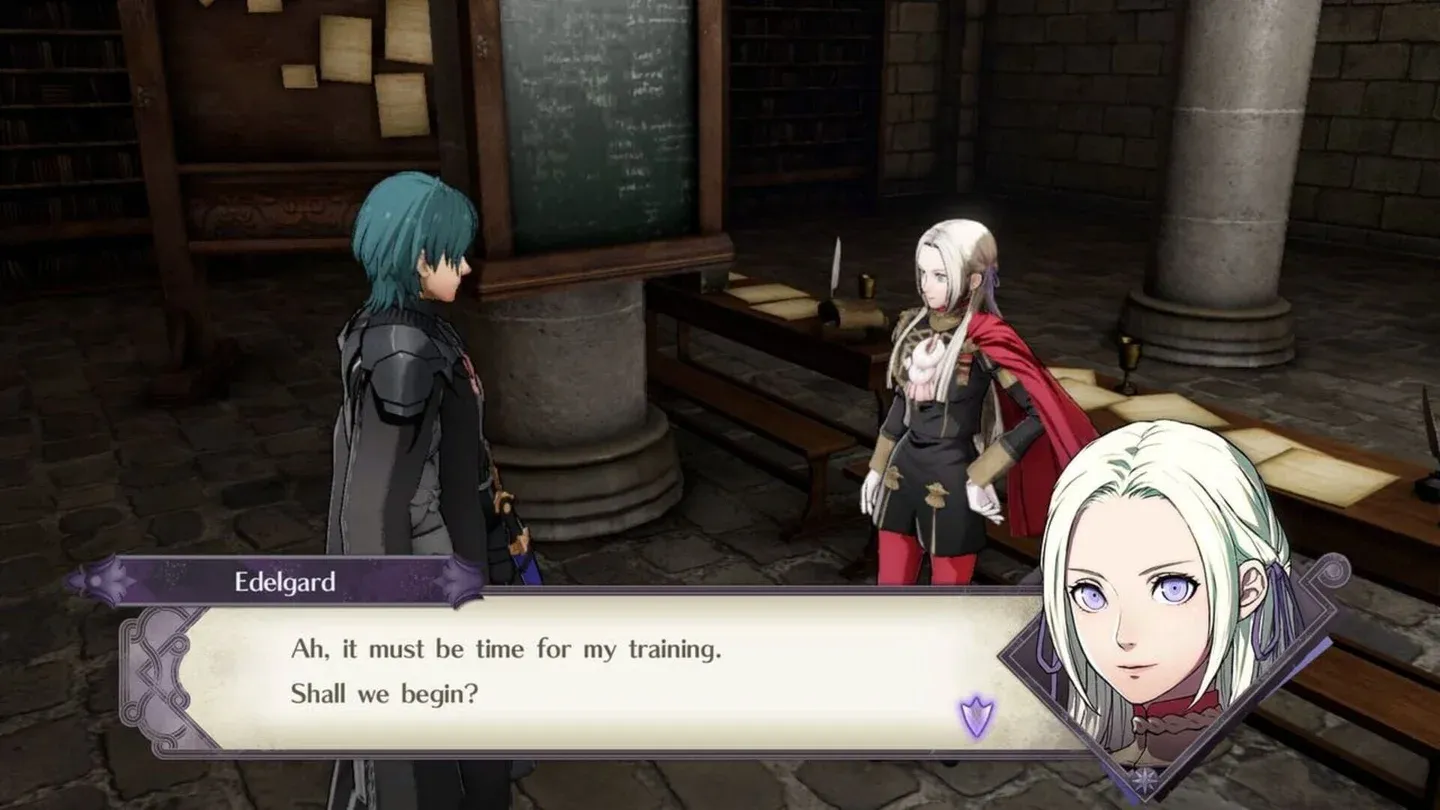
The core gameplay loop splits cleanly into two halves. Between battles, players manage their calendar at the monastery: teaching students to raise skill levels, sharing meals to build support ranks, exploring the grounds, and taking on auxiliary missions. This phase directly feeds into combat performance, since students can only master classes and learn abilities tied to their trained skills.
Fire Emblem: Three Houses content image
Key mechanics include:
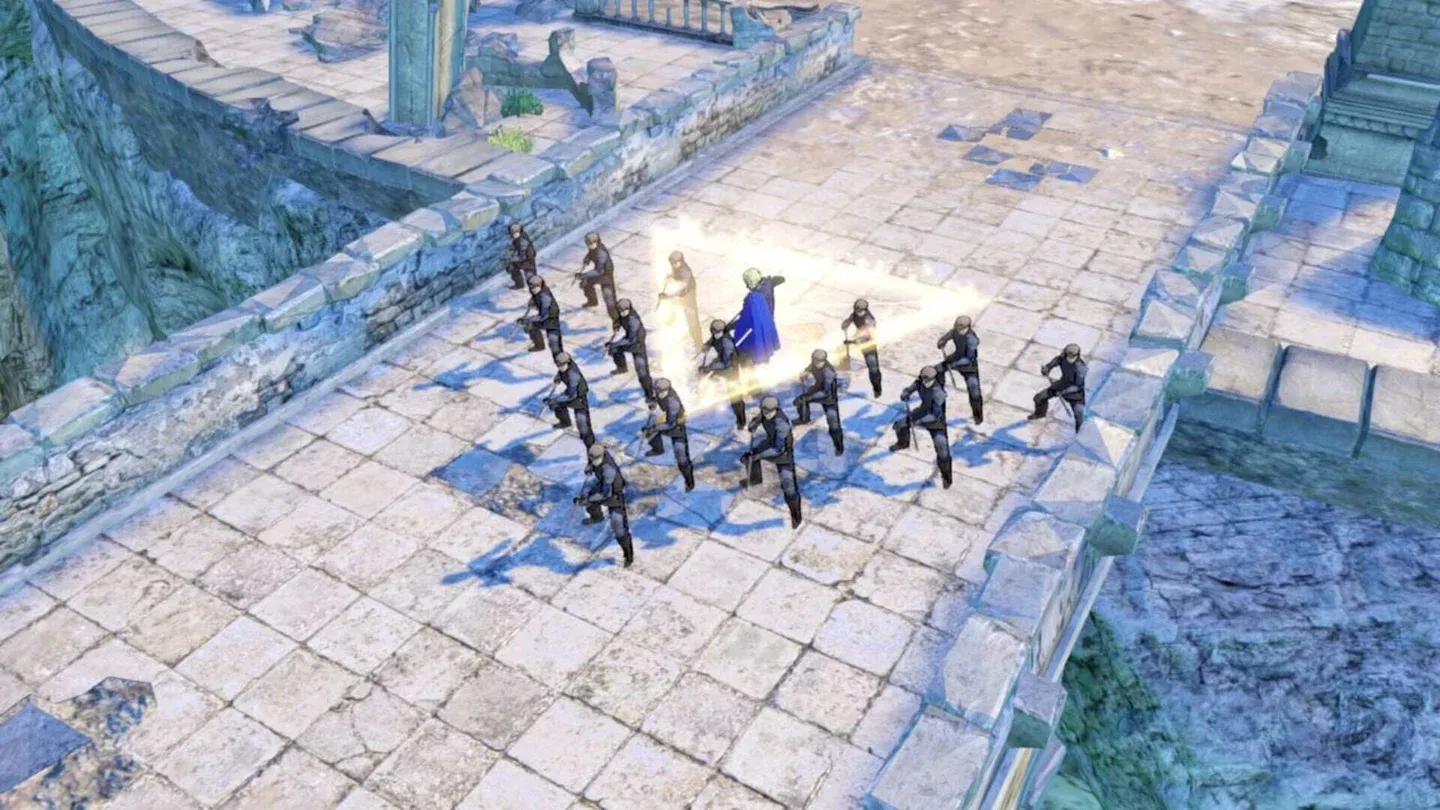
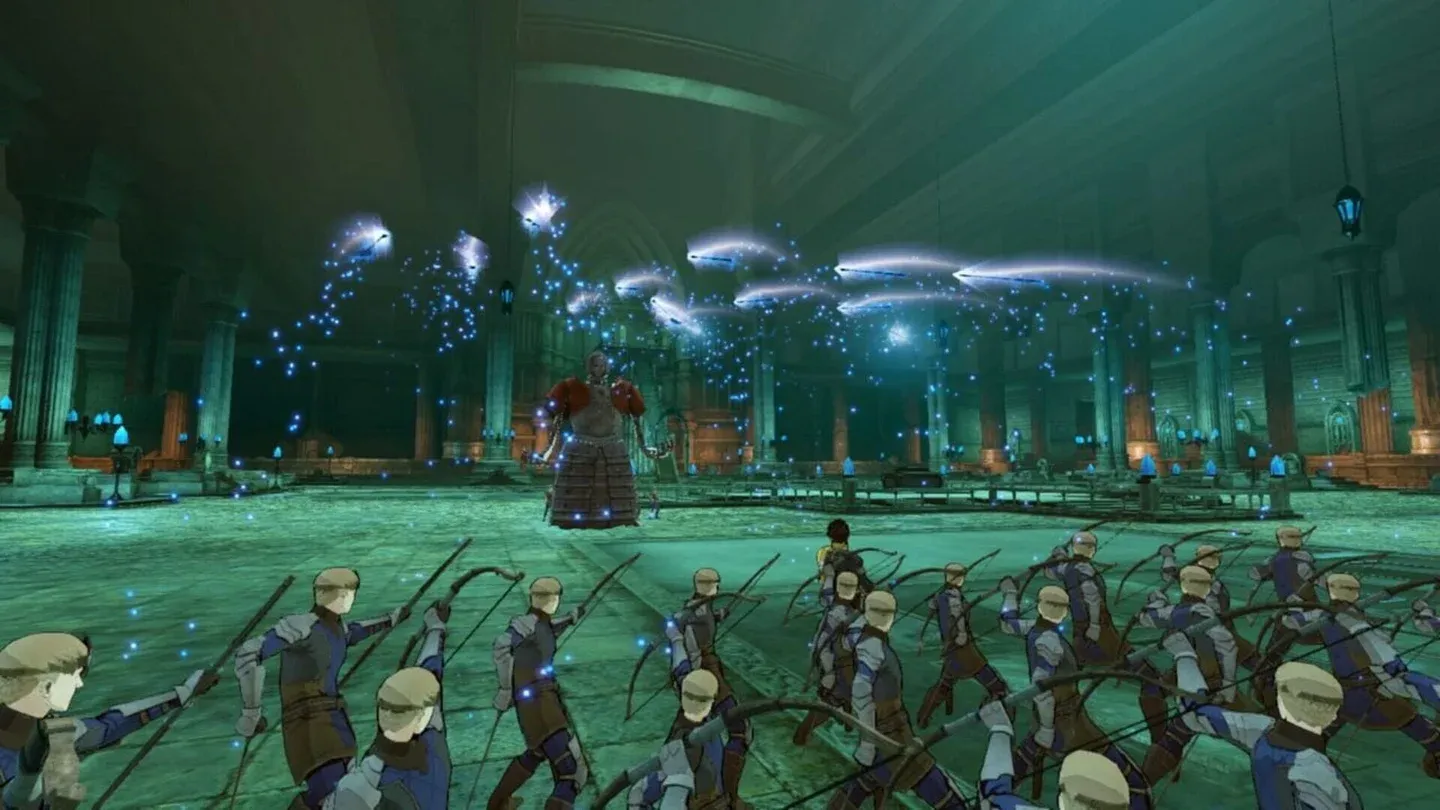
- Gambits: battalion-based area attacks that break enemy formations
- Divine Pulse: a rewind system that lets you undo mistakes mid-battle
- Class mastery: characters earn new abilities by leveling up in specific classes
- Weapon durability: weapons break after extended use, forcing inventory management
- Support conversations: relationship scenes that unlock as bonds deepen
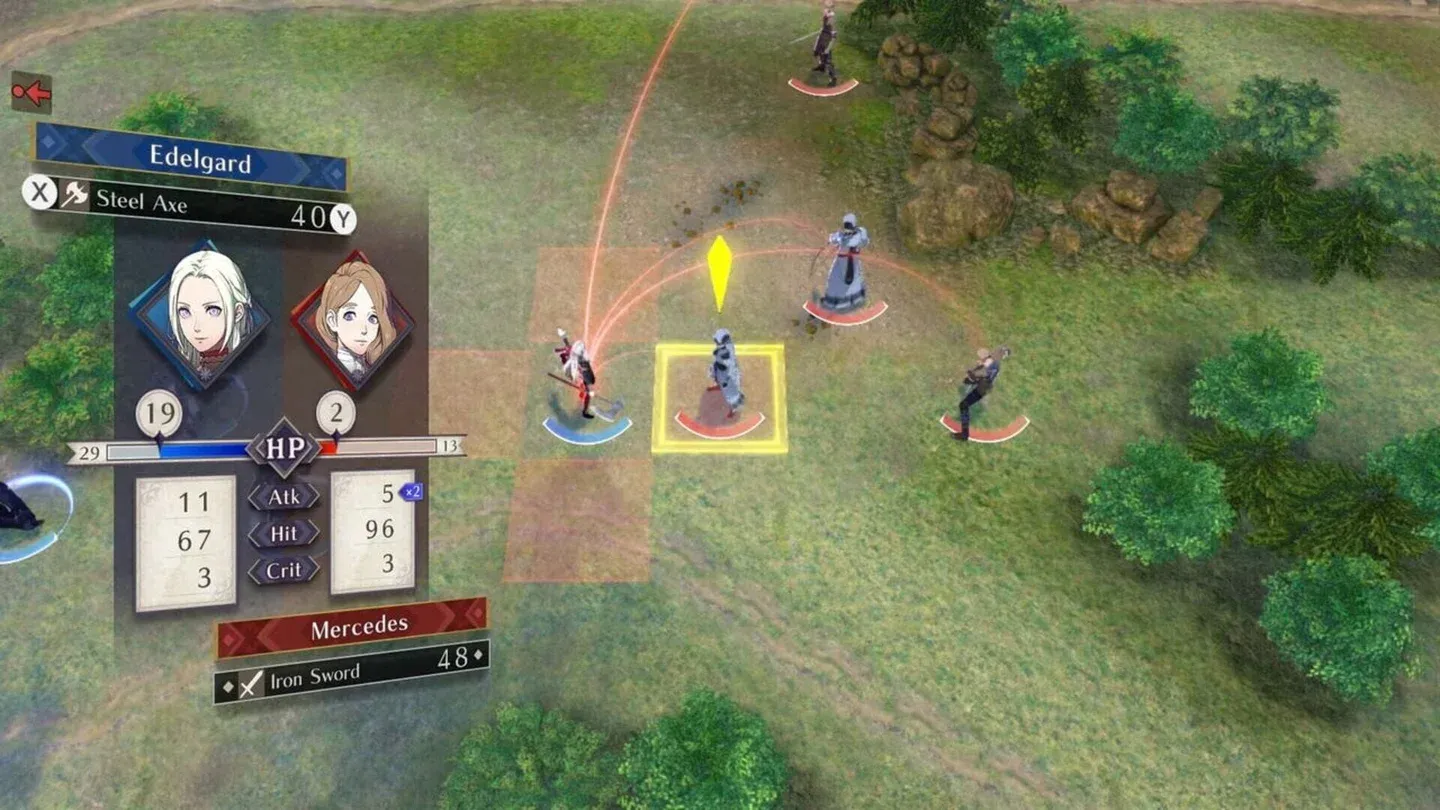
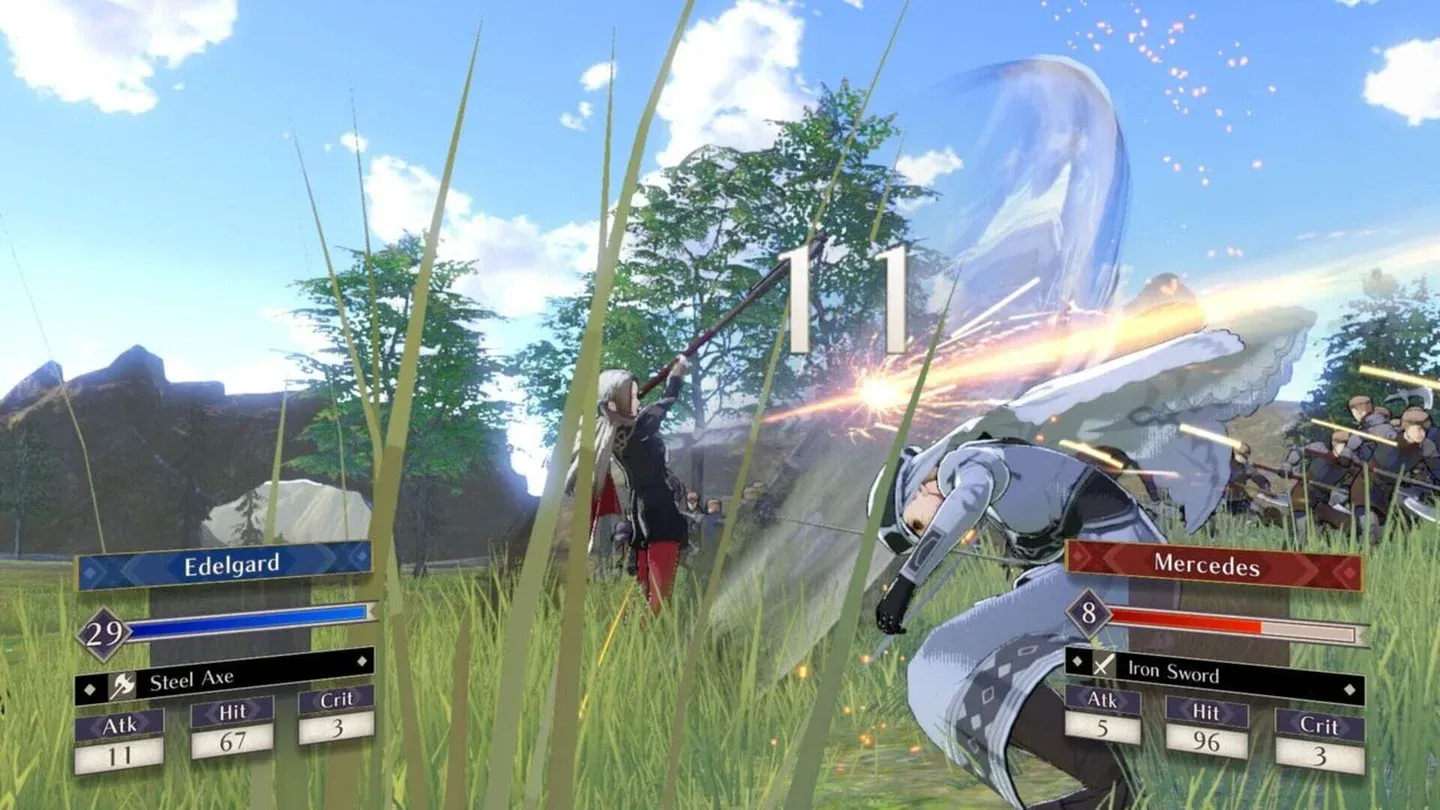
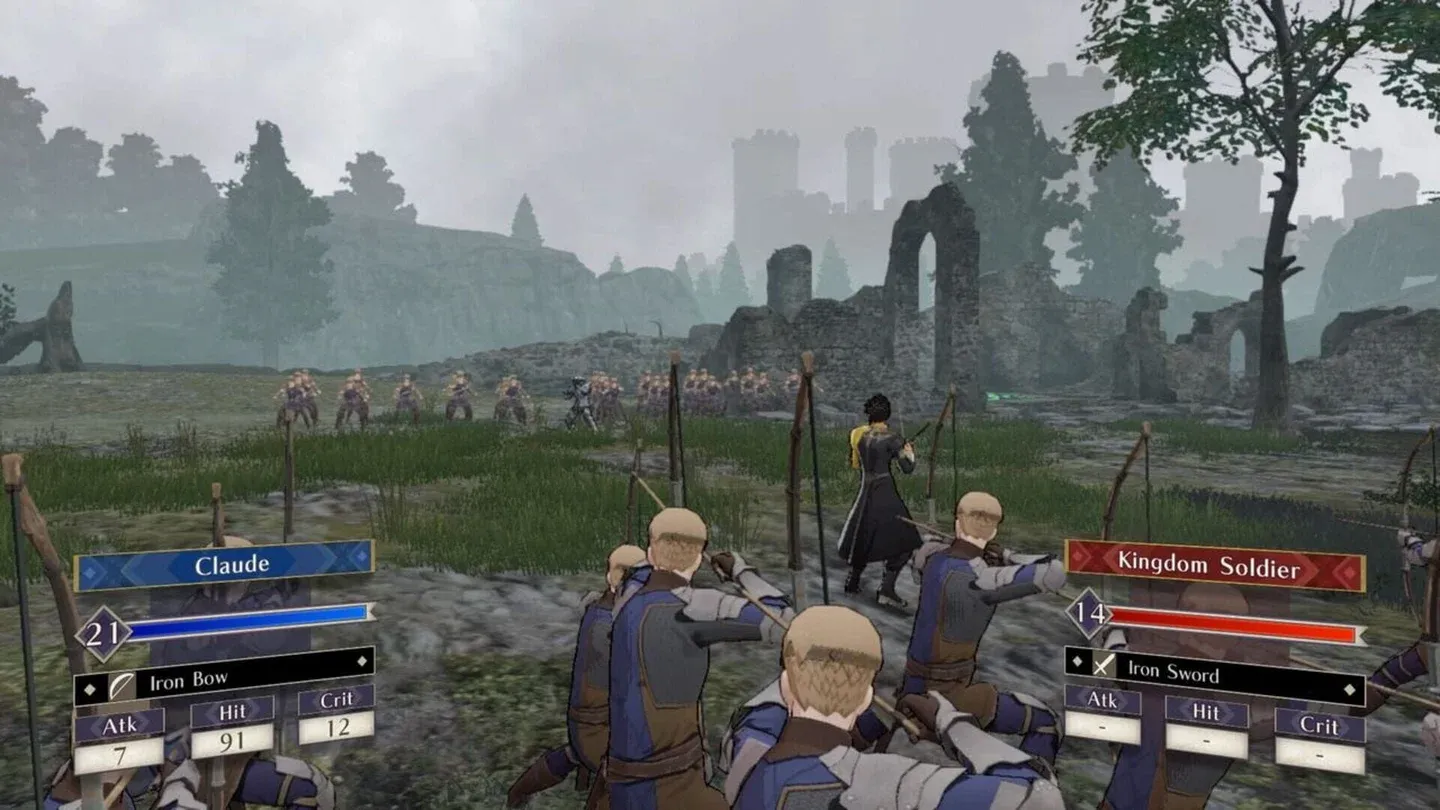
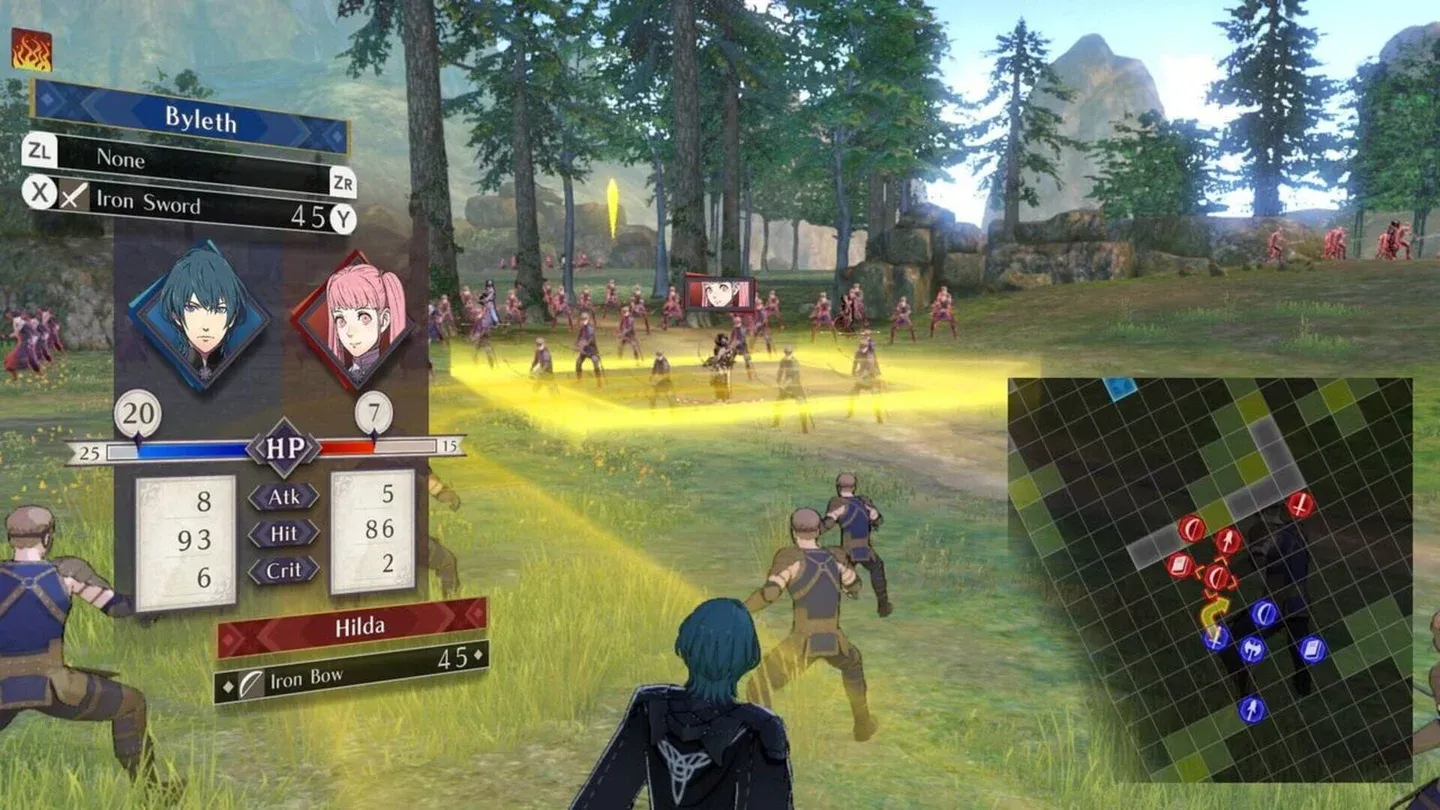
The turn-based battles themselves use a grid map format familiar to Fire Emblem veterans, but the battalion system adds a layer of tactical depth. Every unit commands a group of soldiers who absorb some damage and enable Gambits, which can stagger enemies and break their guard. Positioning matters more than ever when you factor battalions into your approach.
Fire Emblem: Three Houses content image
World and setting
Fódlan is one of the more carefully constructed settings in the series. Its three nations each have distinct cultures, political tensions, and histories shaped by the Church of Seiros, whose influence over the continent is central to every story route. The monastery itself functions as a hub world, and spending time there reveals lore through item descriptions, NPC dialogue, and library books that most players won't fully absorb in a single run.
The story's first half, set during the academy phase, focuses on character development and low-stakes conflicts. The second half, set five years later during the war, reframes everything established earlier. Characters who were classmates become enemies. Alliances shift. The tonal shift between halves is stark enough that Three Houses essentially tells two connected stories in one game.
Fire Emblem: Three Houses content image
Content and replayability
Three Houses has substantial post-launch content through the Cindered Shadows DLC, which adds a side story set beneath the monastery and introduces the Ashen Wolves, a secret fourth house with four playable characters who can be recruited into your main route. The DLC also adds new classes and items that carry over into the base game.
The Expansion Pass bundles Cindered Shadows with cosmetic and quality-of-life additions, but the side story is the main draw. It runs roughly four to six hours and offers some of the game's more mechanically demanding battles in a condensed format.
For a tactical RPG with turn-based strategy at its core, Four routes, dozens of recruitable characters, and a lore structure designed to reward repeat playthroughs give Three Houses a lifespan that holds up. The monastery never fully gives up its secrets in a single run, and that's by design.