Overview
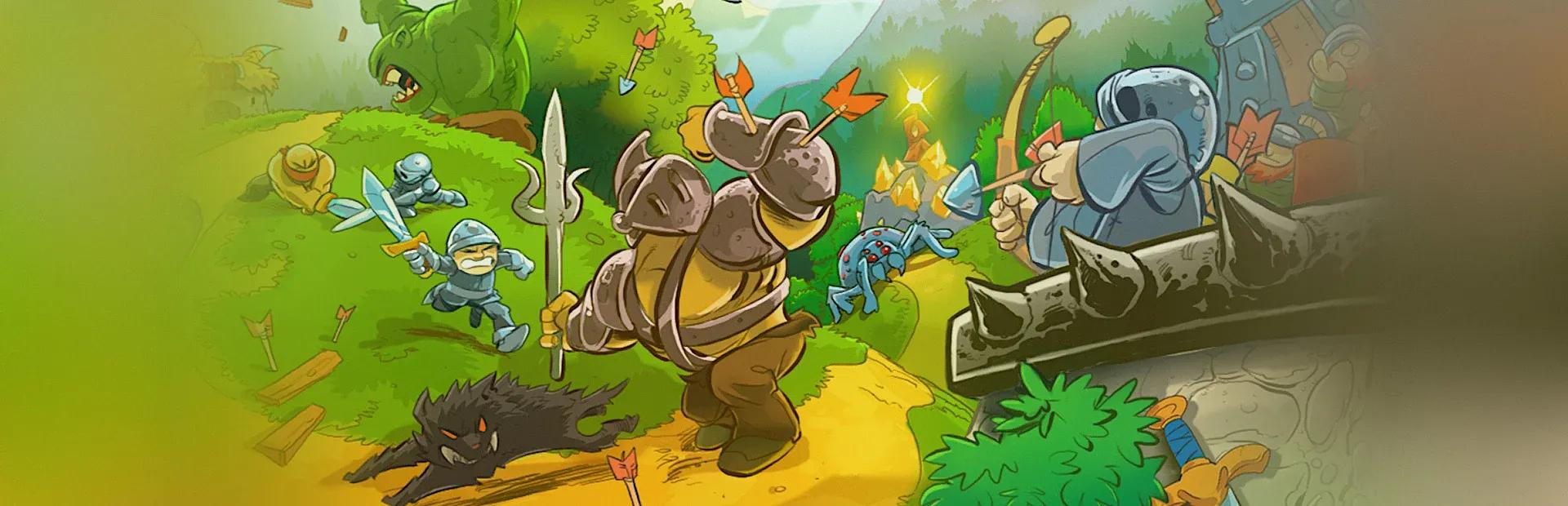
Kingdom Rush arrived in December 2011 and immediately set the standard for tower defense games on both mobile and PC. Ironhide Game Studio built something deceptively simple on the surface: place towers, stop enemies from reaching the exit, repeat. But the depth underneath that loop is what made it stick. Four tower types branch into 8 distinct upgrade paths, each with active abilities that reward attentive play rather than passive watching.
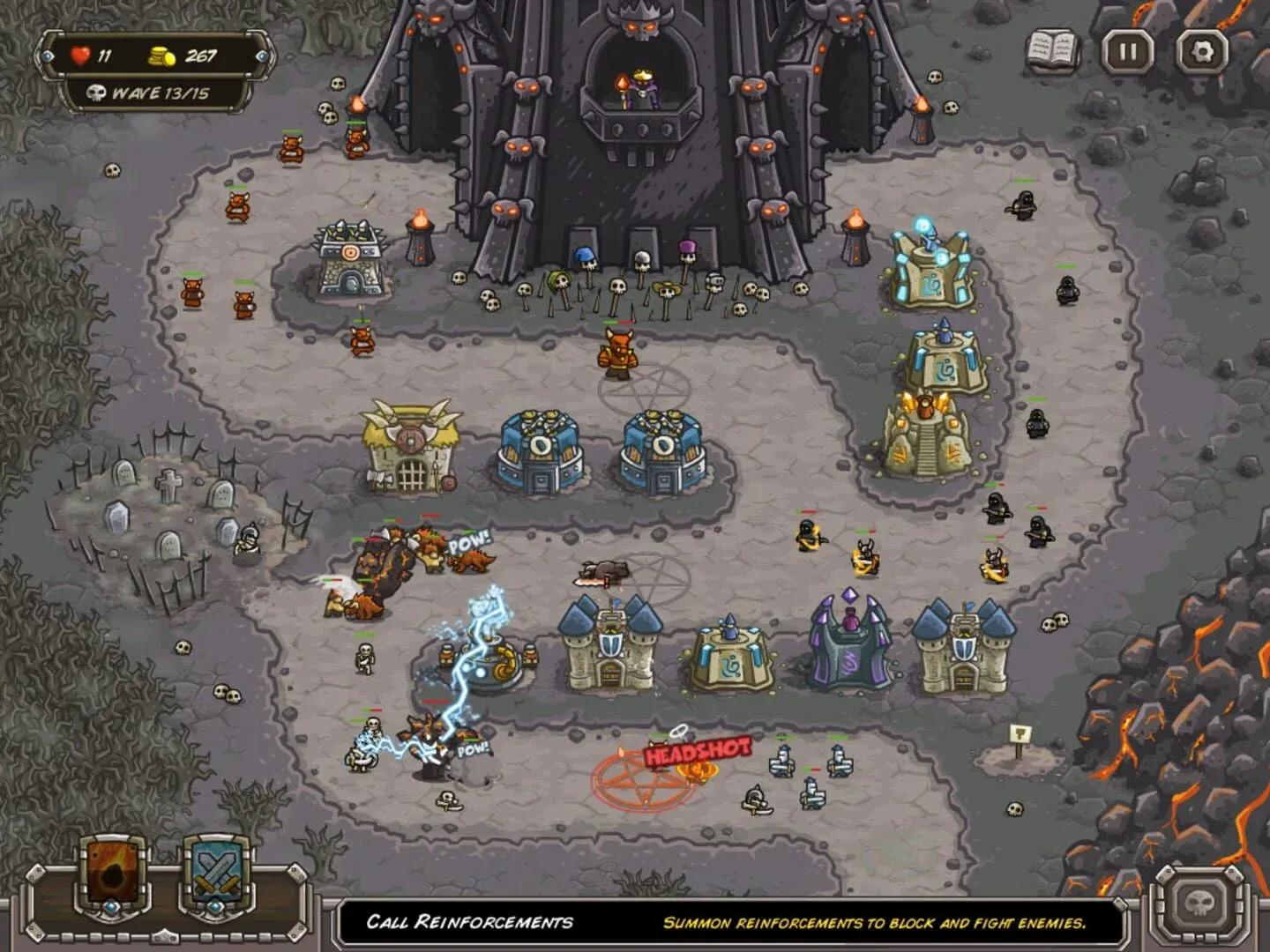
The core campaign runs 12 stages set across forests, mountains, and wastelands, with three additional mini-campaigns and bonus stages pushing the total to well over 20 maps. Enemies range from basic goblins to armored demons, with 45-plus distinct types that each behave differently and punish lazy tower placement. Seven boss fights punctuate the campaign, and they're the kind of encounters that actually require you to rethink your setup mid-wave.
Kingdom Rush content image
Gameplay and mechanics
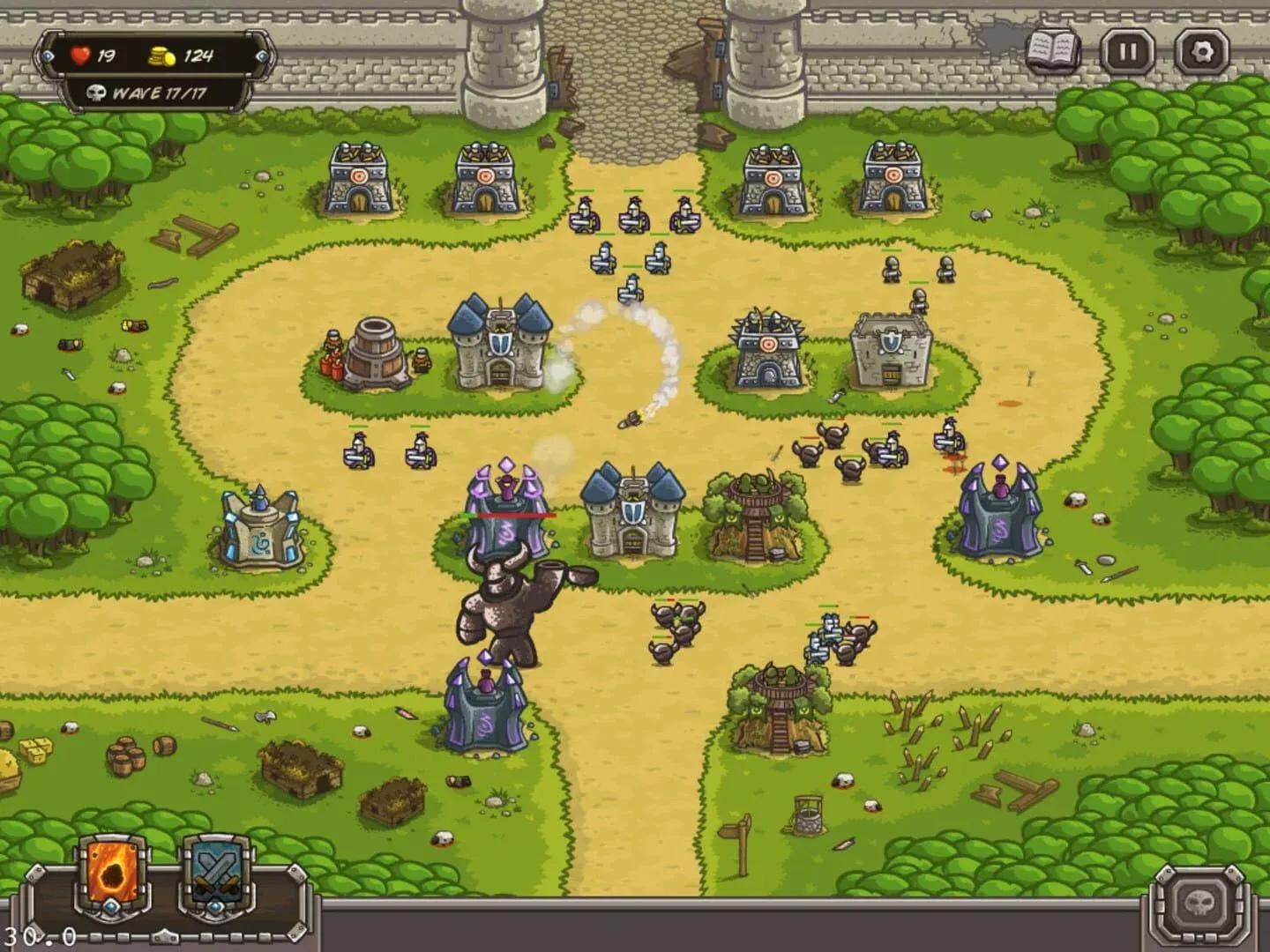
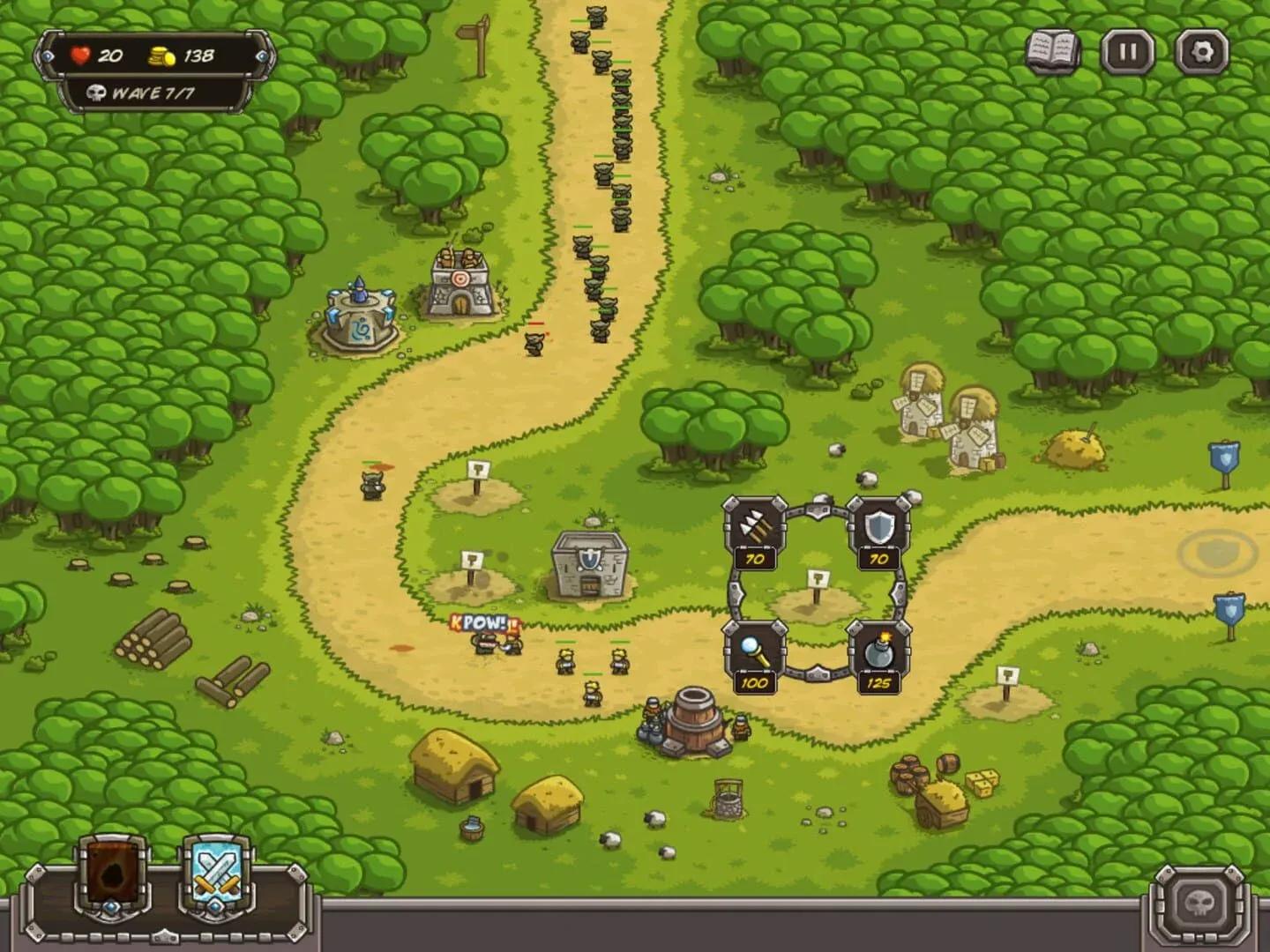
The tower system is where Kingdom Rush earns its reputation. The four base tower types cover the usual archetypes:
Kingdom Rush content image
- Archer towers for sustained ranged damage
- Barracks for deploying ground soldiers
- Mage towers for magic and crowd control
- Artillery for area-of-effect splash damage
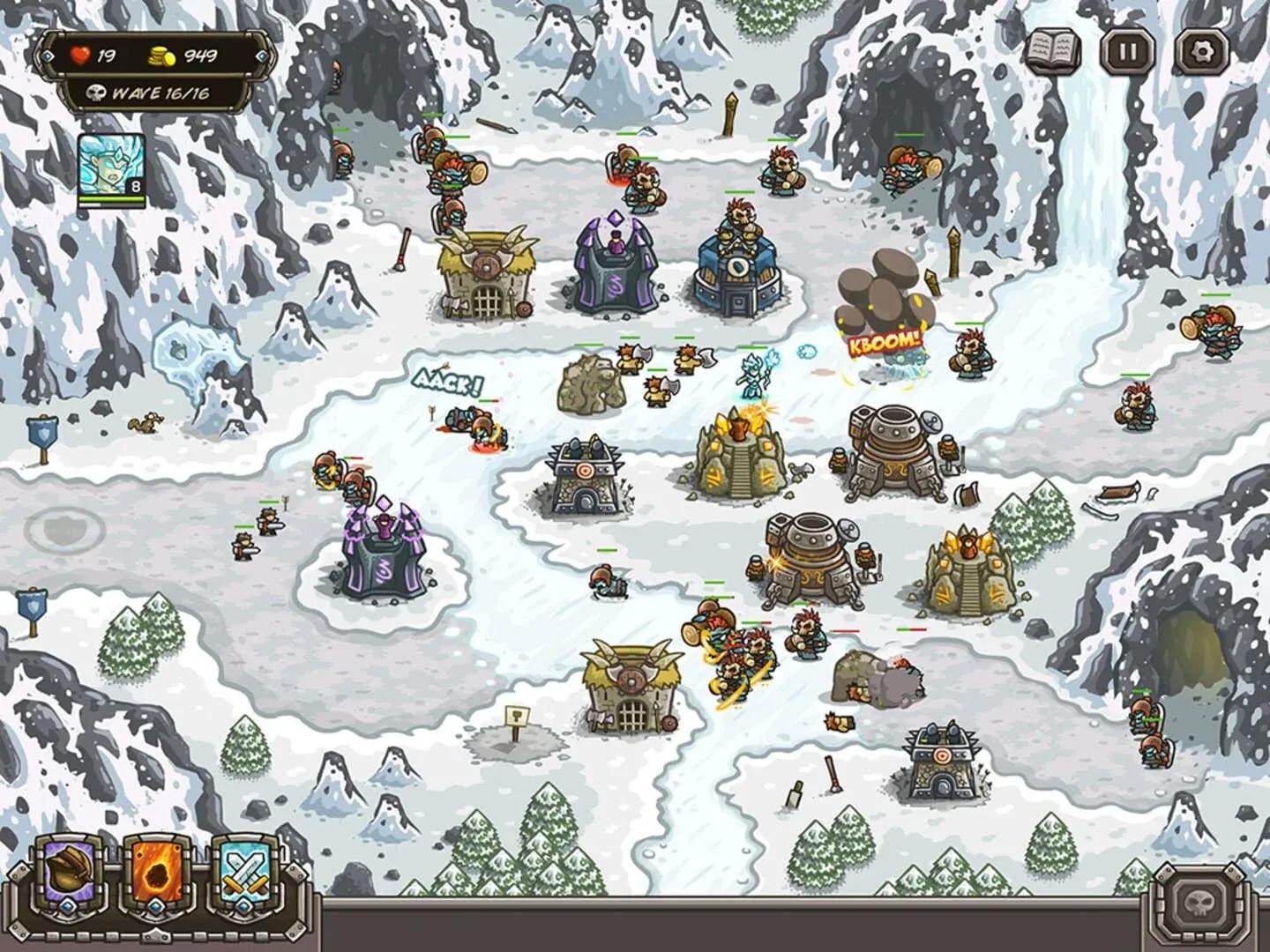
Each of these branches into two specialized upgrades at the top tier. Barracks can become Barbarian Mead Halls or Paladins; Mage towers split into Arcane Wizards or Sorcerers that polymorph enemies into harmless sheep. The variety means no two players approach the same stage identically, and replaying on higher difficulty changes which combinations actually work.
Kingdom Rush content image
Reinforcement troops can be called in at any chokepoint, and a hero unit accompanies your defenses on each map. All 12 heroes are unlocked without additional cost, each with unique stats and abilities that shift how you approach specific stages.
What makes Kingdom Rush stand out from other tower defense games?
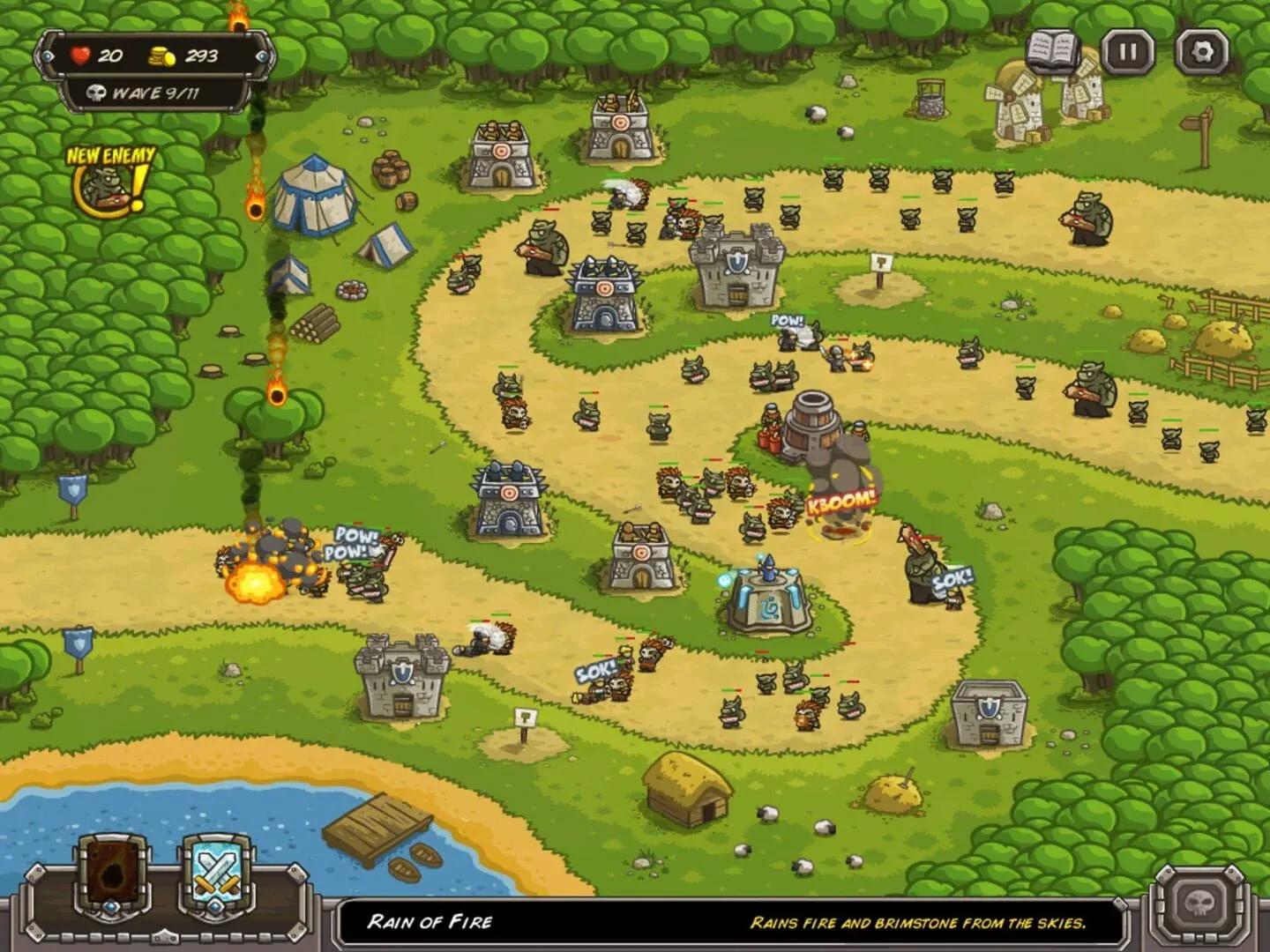
Most tower defense games ask you to optimize a build and watch it execute. Kingdom Rush keeps demanding active input. The Reinforcements button drops two soldiers anywhere on the path; the Rain of Fire ability lets you call artillery strikes manually. Both have cooldowns, so timing matters. The result is a game that feels more like real-time tactics than passive management.
Kingdom Rush content image
The illustrated cartoon art style aged far better than the realistic aesthetics many contemporaries chased. Characters have personality in their animations, enemy death sequences are satisfying, and the maps read clearly at a glance without sacrificing visual charm. The audio matches that tone, with voice lines for each tower type that become genuinely funny after a few hours.
Content and replayability
Beyond the main campaign, Kingdom Rush includes Iron Challenge and Heroic Challenge modes for most stages, which add hard restrictions on tower placement or strip out specific unit types. These modes extend the strategic puzzle considerably and are where veteran players spend most of their time. Over 50 achievements track progression across all modes.
The Curse of Castle Blackburn campaign adds 4 stages with a darker tone, while the Winter Storm and Rise of the Bandits mini-campaigns each contribute 2 more maps. Combined with the 4 bonus stages, the total content package is substantial for a game that launched in 2011 and has since expanded to Windows, macOS, iOS, Android, Nintendo Switch, and Xbox.
Kingdom Rush remains the clearest entry point into the series and into the tower defense genre as a whole. Its difficulty curve is fair, its systems are learnable without being shallow, and the harder challenge modes give experienced players plenty of reason to stay.