
Pick Warrior if you want a forgiving first character in MapleStory Classic World. Its high HP gives you more room to learn, but that recommendation changes if your real goal is party healing, ranged weapons, or throwing stars. All four starter classes unlock at level 10, including Magician, and their second-job choices open at level 30. The useful comparison is how you want ordinary fights to work and which supplies you are willing to keep buying. A durable class can still have an expensive potion habit.
Which starter class matches your priorities?
Warrior is the default recommendation for durability, Magician is your route to party healing, Bowman suits deliberate ranged combat, and Thief rewards movement. Your level 30 destination should help settle any close decision.
| Starter class | Primary stat | Weapons | Main reason to choose it | Main trade-off |
|---|---|---|---|---|
| Warrior | STR | Swords, axes, blunt weapons, spears, and polearms | High HP and straightforward melee combat | Short attack range and contact damage |
| Magician | INT | Wands and staves | Ranged spells, with Cleric available later | Low HP and heavy reliance on MP |
| Bowman | DEX | Bows and crossbows | Physical attacks at a distance | Needs firing space and arrows |
| Thief | LUK | Claws with throwing stars, or daggers | Mobile ranged combat or a melee dagger route | Lower durability, plus branch-specific supply costs |
The choice between Warrior and Magician is partly about first-job safety versus your later role. Warrior gives you more health immediately. Magician gives you the option to become a Cleric at level 30, which matters much more if your regular group wants healing.
Should you choose party healing or melee durability?
Magician: choose it with your second job in mind
Magician starts with ranged attacks such as Energy Bolt and Magic Claw. Its higher MP growth supports spellcasting, while its lower HP makes careless positioning more punishing than it is for Warrior.
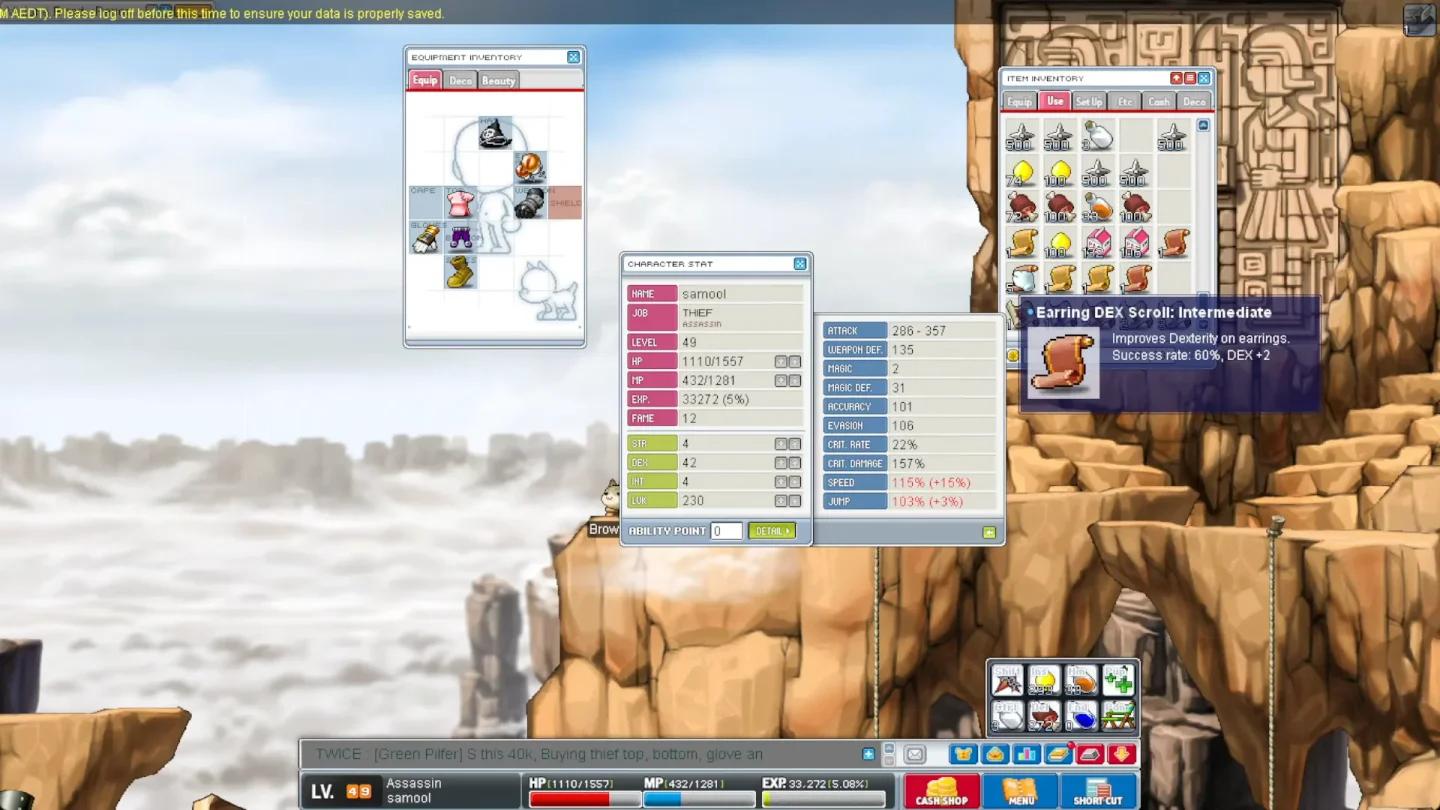
Magic Guard adds another resource consideration: it shifts some incoming damage onto MP. That means the same pool pays for attacks and helps you survive. Watch your MP even when your HP bar looks comfortable.
Magic Guard shares your MP pool
At level 30, Magician offers three different directions:
- Cleric: Choose this if healing and supporting a regular party are your priorities. You still need a plan for training when your friends are offline.
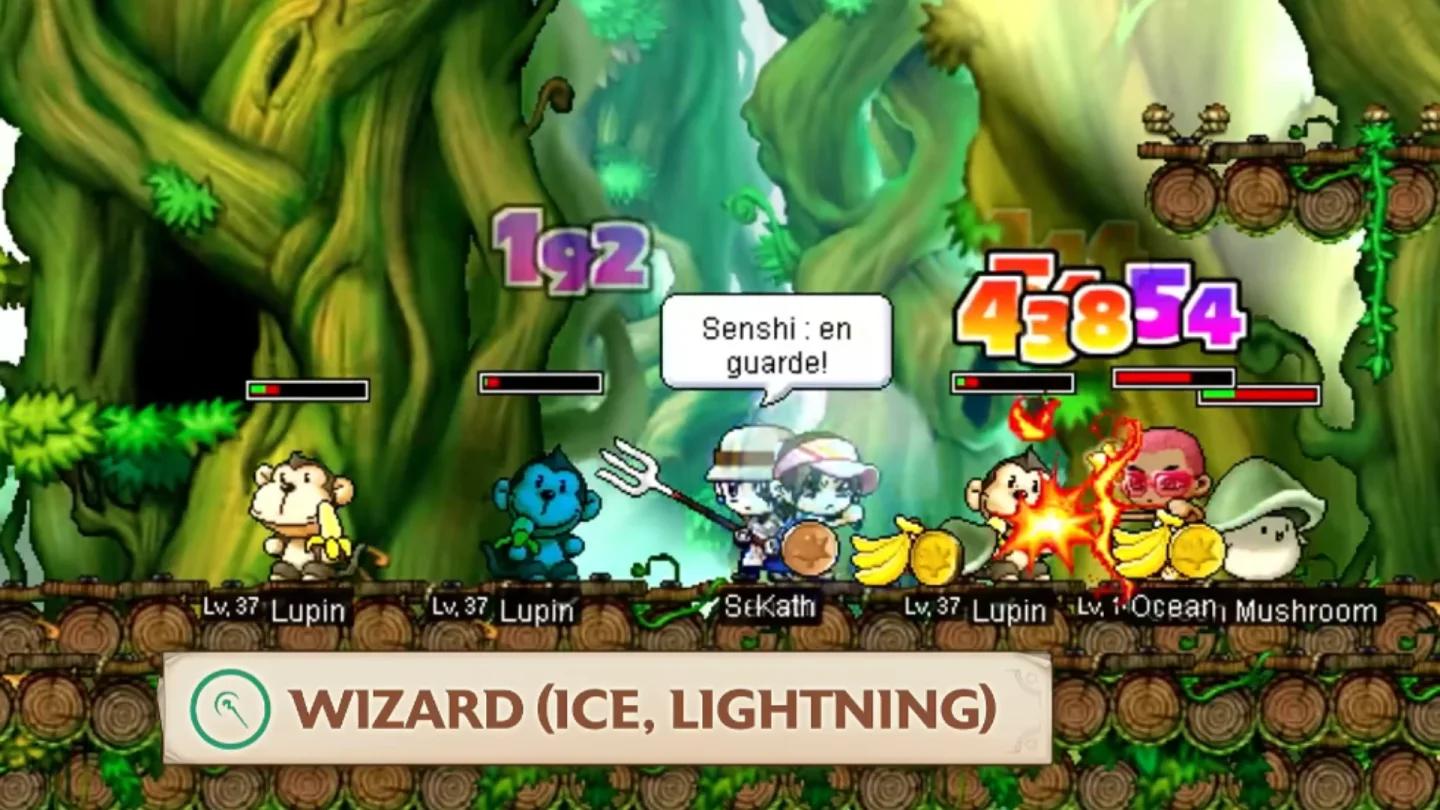
- Ice/Lightning Wizard: Cold Beam handles individual targets, while Thunder Bolt gives you an option for groups within its reach.
- Fire/Poison Wizard: Choose this for fire and poison spells, with attention to elemental matchups and suitable targets.
For a player who already wants to heal friends, Magician into Cleric is the clearest recommendation. For a player who simply wants ranged damage, compare the Wizard routes with Bowman and Assassin before committing.
Warrior: choose it for a more forgiving melee start
Warrior has the highest HP growth of the four starter branches. Power Strike and Slash Blast establish its direct approach to fighting, while recovery and defensive skills give you ways to support that close-range routine.
The catch is that high HP does not fix poor hit rate. If the combat display repeatedly shows MISS, reconsider the monster you are fighting and your equipment before spending permanent stat points to solve one awkward training map.
Warrior's level 30 branches change your weapon direction and utility:
- Fighter: Uses swords or axes. Rage raises attack at the expense of some Weapon Defense.
- Page: Uses swords or blunt weapons. Threaten lowers enemy Speed and Weapon Defense.
- Spearman: Uses spears or polearms for greater reach, with Iron Will providing a personal defensive option.
The October 21, 2026, version 1.0.0 update also strengthened two first-job Warrior skills. Their revised values matter when you decide how much SP to commit to recovery and defense.
| Warrior skill | Version 1.0.0 starting value | Version 1.0.0 maximum value |
|---|---|---|
| Improved HP Recovery | 20% increased item-based HP recovery at skill level 1 | 50% at skill level 15 |
| Iron Body | 20% increased Weapon Defense at skill level 1 | 40% at skill level 20 |
Improved HP Recovery is relevant to potion use, while Iron Body supports physical defense. Neither replaces the need to consider your attack skills and intended second job. Balance updates can change these priorities, so check the skill descriptions in your current client before following an older SP plan.
Which ranged physical class should you choose?
Bowman: choose it if you enjoy controlling distance
Bowman suits you if keeping a clear firing position sounds more appealing than trading hits. Its first-job attacks include Arrow Blow and Double Shot, with Critical Shot supporting its ranged damage identity.
Distance only helps while you can maintain it. Bowman still needs arrows, awareness of enemy movement, and room to shoot. Getting surrounded removes much of the comfort that made the class attractive in the first place.
Your level 30 choice is also a choice between different enemy arrangements:
- Hunter: Continues with bows. Arrow Bomb suits enemies grouped closely enough for its explosion.
- Crossbowman: Continues with crossbows. Iron Arrow suits enemies lined up along the path of its piercing shot.
Arrow Bomb rewards enemy grouping
Choose Bowman because you enjoy its positioning requirements, rather than assuming every ranged fight will be safe. Hunter and Crossbowman both depend on having a workable firing position.
Thief: choose it for movement, stars, or daggers
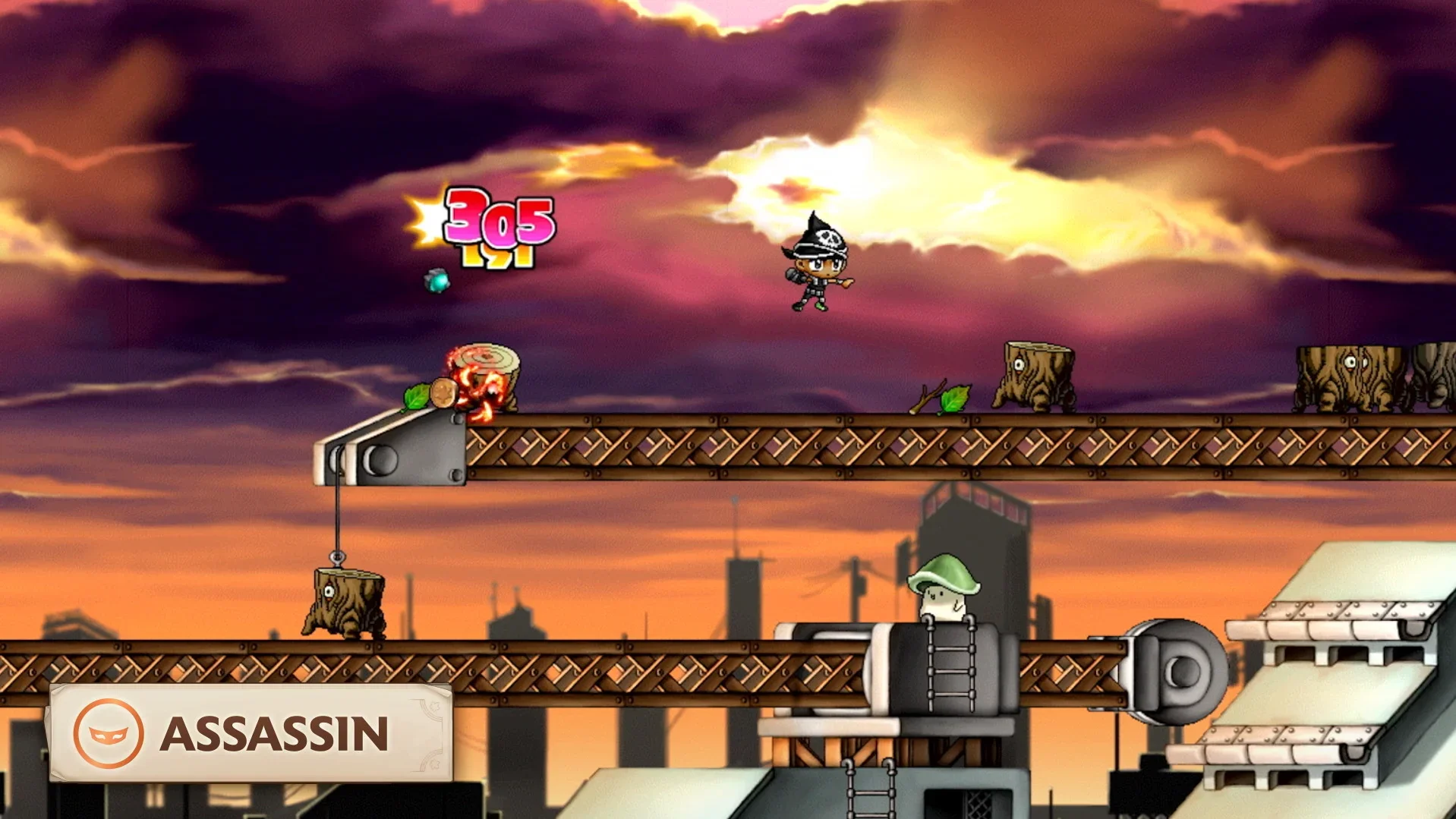
If repositioning between attacks is what you enjoy in action games, take a close look at a claw Thief. Lucky Seven supports ranged attacks, Keen Eyes extends throwing range, and Nimble Body improves accuracy and evasion. You can attack while jumping and move between throws instead of repeatedly standing in contact range.
Thief also demands an early decision about your intended weapon. Lucky Seven and Keen Eyes suit the throwing-star route, while Double Stab is the more relevant starting attack for a dagger-focused character. Build toward the branch you actually want at level 30.
| Thief branch | Combat direction | Useful skills | Preparation |
|---|---|---|---|
| Assassin | Ranged claw and throwing-star attacks | Claw Mastery, Critical Throw, and Drain | Carry enough rechargeable star sets for your training session |
| Bandit | Close-range dagger attacks | Savage Blow and Steal | Prepare a usable dagger and budget for contact damage and MP use |
Drain gives Assassin a way to recover HP through damage. Bandit trades that ranged routine for direct dagger combat, and a one-handed dagger also lets you equip a shield.
Second-job Thieves can learn Haste, which increases movement speed and jump height for you and nearby allies. That is a good reason to choose Thief for mobility, but its lower HP still leaves less room for mistakes than Warrior.

Lucky Seven supports ranged attacks
How do class supply costs compare?
Your equipment budget is only part of the decision. Warrior takes contact damage, Magician spends MP on spells and potentially defense, and ranged weapon classes need ammunition planning. Assassin and Bandit spend their Mesos differently despite sharing the Thief starting job.
| Class or route | Supplies to plan around | What can increase your spending |
|---|---|---|
| Warrior | HP and MP recovery items | Frequent contact damage during melee training |
| Magician | MP recovery, plus HP supplies | Repeated casting and MP lost through Magic Guard |
| Bowman | Arrows and recovery items | Ammunition use and damage taken when enemies close in |
| Assassin | Rechargeable throwing-star sets and recovery items | Better star upgrades and trips to replenish sets |
| Bandit | HP and MP recovery items | Melee contact damage and frequent skill use; max-level Savage Blow costs 28 MP per use |
Assassin can have manageable early equipment costs while becoming more expensive as you pursue stronger throwing stars. Bandit avoids star upkeep, but its potion use means that no ammunition does not automatically mean cheap training.
For Warrior, compare missed attacks and incoming damage during an ordinary outing. For Magician, pay attention to how quickly repeated casts and Magic Guard drain MP. Those recurring costs are more useful for your budget than a class's reputation for being inexpensive.
Where do you advance at levels 10 and 30?
Every first-job branch becomes available at level 10 in Classic World, including Magician. Visit the instructor for your chosen family to begin advancement.
| First job | Instructor | Town |
|---|---|---|
| Warrior | Dances with Balrog | Perion |
| Magician | Grendel the Really Old | Ellinia |
| Bowman | Athena Pierce | Henesys |
| Thief | Dark Lord | Kerning City |
At level 30, revisit that family's instructor to start second-job advancement. Reaching the level opens the process; you still need to complete the advancement before continuing as your chosen branch.
What should you settle before committing?
Use these decisions to turn the class comparison into a character plan:
- Pick your level 30 destination, such as Cleric, Spearman, Hunter, or Assassin.
- Match your first-job attack and weapon direction to that destination, especially for claw and dagger Thieves.
- Keep a supply budget separate from equipment money.
- If two starters still appeal to you, try their early combat before making a large investment. Use the levels before 30 to judge the routine you will be repeating.
Warrior is the practical starting point if you want durability without ammunition management. Choose Magician for a Cleric goal, Bowman for bows or crossbows, or Thief when stars, daggers, and movement are the attraction. Once your level 30 route is settled, explore the MapleStory guide collection to plan your next steps.