
Building the strongest possible team in Monster Hunter Stories 3: Twisted Reflection takes more than hatching rare eggs and hoping for the best. The real depth of the game lives inside the gene system, a layered mechanic that determines every skill and passive bonus your Monsties bring into battle. Once you understand how genes work, how to arrange them for Bingo bonuses, and how to farm rainbow eggs using Paintballs, you will have a clear path toward an optimized squad that can handle anything the game throws at you.
What Are Genes and Why Do They Matter?
Every Monstie carries a gene grid made up of nine slots arranged in a 3x3 pattern. These slots hold Active and Passive skills that define what a Monstie can do in combat. Two Monsties of the same species can perform very differently depending on the genes they carry, since one might have offensive elemental skills while another holds defensive stat boosts.
Genes fall into several categories based on attack type and element. The type and placement of each gene within the grid matters enormously, not just for the skills themselves but for the Bingo bonus system described below.
Because genes can be transferred between Monsties through the Rite of Channeling, farming eggs is not just about getting a particular monster. It is about collecting the exact gene combinations and grid placements that fit your planned build.

How Does the Rite of Channeling Work?
The Rite of Channeling is the core gene-transfer mechanic in Monster Hunter Stories 3: Twisted Reflection. It lets you move genes from one Monstie into another, giving you three main approaches:
- Directly swap all genes from one Monstie to another in one action.
- Manually pick individual genes to transfer one at a time.
- Select both the source Monstie and the specific genes you want moved.
After each channeling session, you can continue adjusting until all nine slots are filled. The goal is not simply to fill the grid, but to fill it with the right genes in the right positions.
What Is the Bingo Bonus and How Do You Activate It?
This is where gene placement becomes critical. When you align three genes of the same type in a row, whether horizontally, vertically, or diagonally, your Monstie activates a Bingo. Each Bingo grants a 5% bonus damage to all Power attacks of that type.
Here is the key detail most players miss: you receive the Bingo bonus even if the element and attack type of the individual genes do not match each other. However, if they do match, a single row can trigger multiple Bingos at once, stacking the damage bonus further.
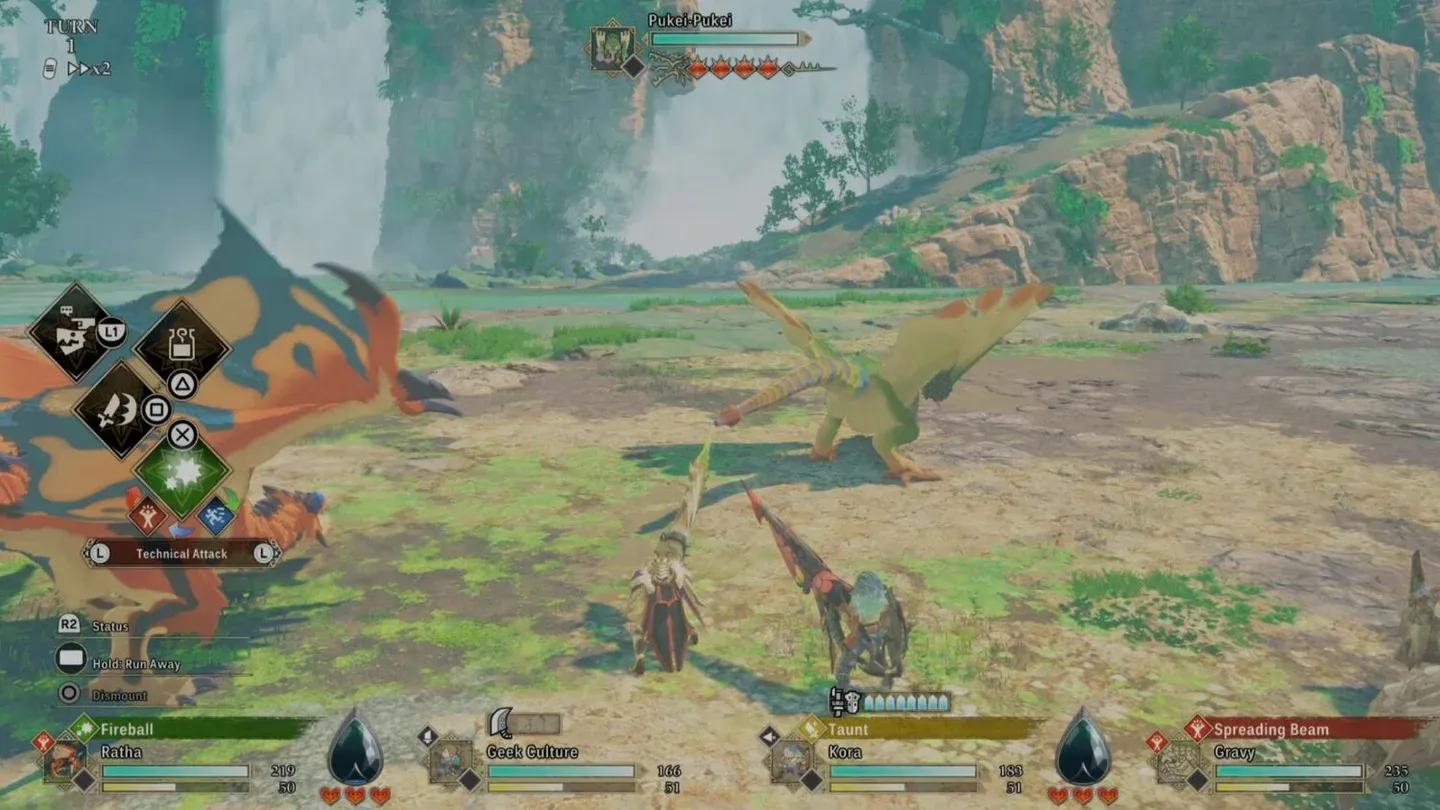
Bingo bonus alignment screen
Gene Types at a Glance
| Gene Type | Bingo Bonus Effect | Notes |
|---|---|---|
| Power | +5% damage to Power attacks per Bingo | Stacks with element matches |
| Speed | +5% damage to Speed attacks per Bingo | Diagonal alignment valid |
| Technical | +5% damage to Technical attacks per Bingo | Mix types to hit multiple Bingos |
| Elemental | Varies by element | Matching element doubles bonus |
How to Farm the Best Eggs and Gene Combinations
Finding a Monstie with ideal genes requires more than entering a random den and grabbing the first egg you see. The egg farming loop in Monster Hunter Stories 3 has several layers worth understanding.
How Does Egg Glow Indicate Gene Quality?
When you pull an egg from a nest, it may glow. The glow level directly signals the gene quality of the Monstie inside:
- No glow means standard gene combinations with nothing exceptional.
- Gold glow indicates above-average gene potential, worth keeping in many situations.
- Rainbow glow is the top tier, signaling the highest possible gene quality for that species.
For players focused on optimization, the target is always the rainbow glow egg from the specific monster they want. Normal eggs are generally not worth your time once you know this system.
Why Does Monster Behavior Affect Egg Farming?
This is the part of the system that separates casual players from efficient farmers. Dens have limited egg pulls depending on the state of the monster that lives there:
- Monster roaming outside the den: You get one or two pulls before your companion warns you the monster is returning.
- Monster asleep inside the den: Similar limit applies. The monster wakes up quickly, cutting your session short.
- Monster retreated after battle: No pull limit. You can cycle through eggs indefinitely until you find the glow you want.
The third scenario is the foundation of efficient gene farming.
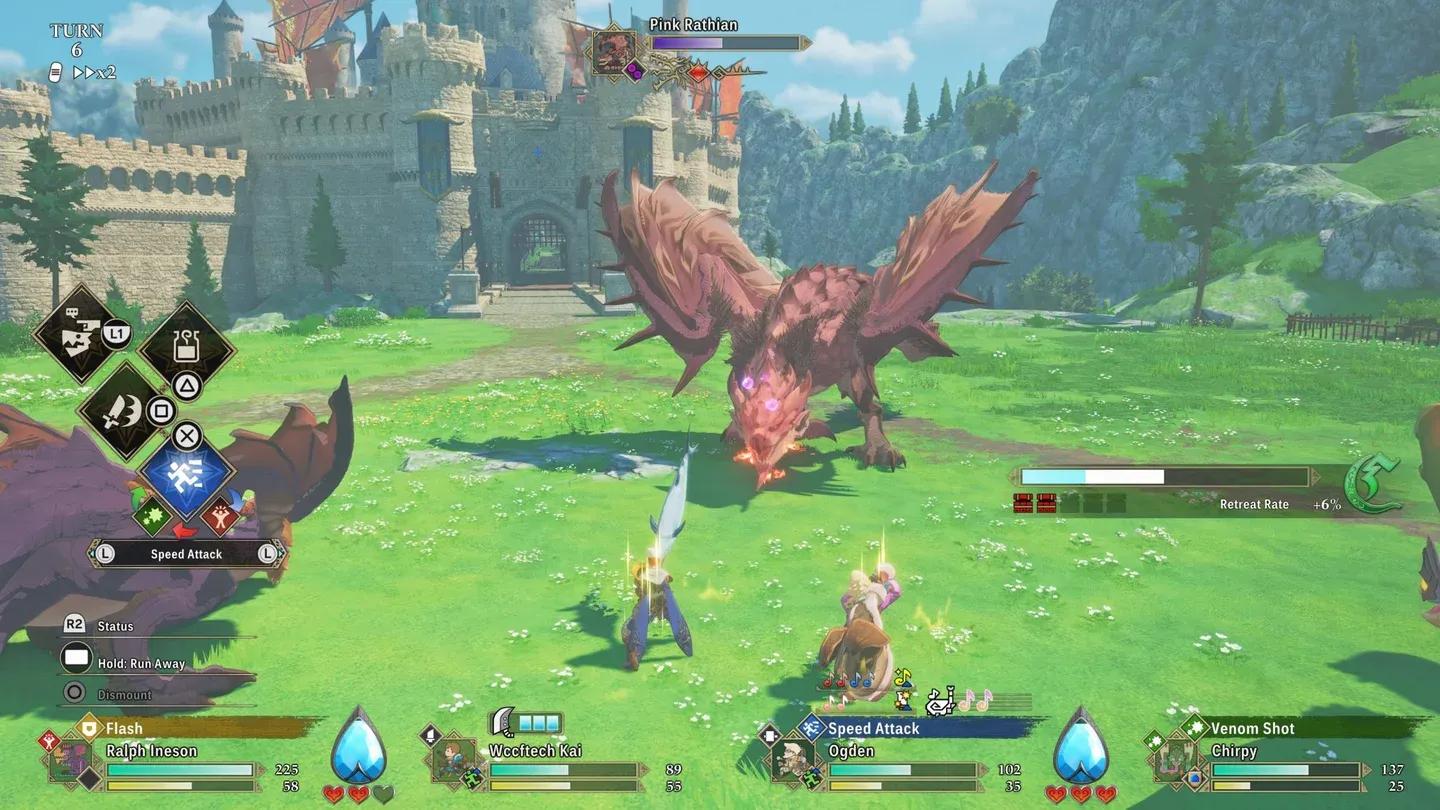
Paintball forces monster retreat
How Do You Force a Monster to Retreat?
The Paintball item is your primary tool here. The farming loop works like this:
- Locate the monster species you want eggs from in the overworld.
- Start a battle and reduce the monster's health significantly.
- Throw a Paintball before finishing the fight. This increases the chance the monster retreats to its den instead of being defeated outright.
- Track the monster back to its den.
- Interact with the nest repeatedly until a gold or rainbow glowing egg appears.
Once your Rider and Monsties are strong enough, the Quick Finish mechanic becomes available for encounters against weaker monsters. This lets you start a fight, throw a Paintball, and instantly end the battle without sitting through every turn. It dramatically speeds up the farming loop.
What If the Monster Is Rare or Hard to Find?
For monsters that do not appear frequently in the overworld, there is a reliable workaround. Release an egg of that species back into the wild through the habitat system. This forces the monster to spawn as an overworld creature, making it available for the Paintball retreat method. From that point, you can farm rainbow eggs from it consistently.
How Do Excursions Improve Your Monstie Further?
Beyond genes and Bingo bonuses, Excursions add another layer of power to your Monsties. Sending a Monstie on an Excursion grants stat bonuses and can teach it Environment Skills tied to specific regions.
To send a Monstie on an Excursion, you need a Training Talisman, purchasable from the Melynx Emporium. These are expensive, so spend them carefully. Only one Monstie can be on an Excursion at a time.
How Do Environment Skills Work?
Environment Skills are region-specific abilities your Monstie can learn if it has a connection to that habitat. Each skill has three ranks: B, A, and S. Your Monstie must have an Ecosystem Rank that matches the region's grade to access higher-tier skills.
The ultimate target is having three S-rank Environment Skills active simultaneously, which is the maximum any Monstie can hold. You can also Awaken each Environment Skill if your Monstie carries the required genes, adding yet another reason to chase specific gene combinations.
| Excursion Factor | Details |
|---|---|
| Required item | Training Talisman (Melynx Emporium) |
| Max Environment Skills | 3 per Monstie |
| Skill ranks available | B, A, S |
| Concurrent Excursions | 1 Monstie at a time |
| Skill Awakening | Requires matching genes |
Putting It All Together: The Optimal Monstie Build Loop
Building a top-tier Monstie in Monster Hunter Stories 3: Twisted Reflection follows a repeatable process once you know each system:
- Identify the monster you want using the Monsterpedia gene search to confirm it carries the genes you need.
- Farm rainbow eggs using the Paintball retreat method, cycling through nest pulls until the rainbow glow appears.
- Hatch and evaluate the gene grid. Check whether the gene positions support the Bingo patterns you planned.
- Use Rite of Channeling to fill empty slots and align genes for maximum Bingo bonuses.
- Send on Excursions to add S-rank Environment Skills and Awaken them with the right genes.
- Repeat for donor Monsties whose genes you want to transfer onto your main squad members.
This loop is iterative by design. Expect to farm the same monster multiple times, since even rainbow eggs from the same species can produce different gene combinations and grid placements. Each run gets you closer to the exact build you are targeting.