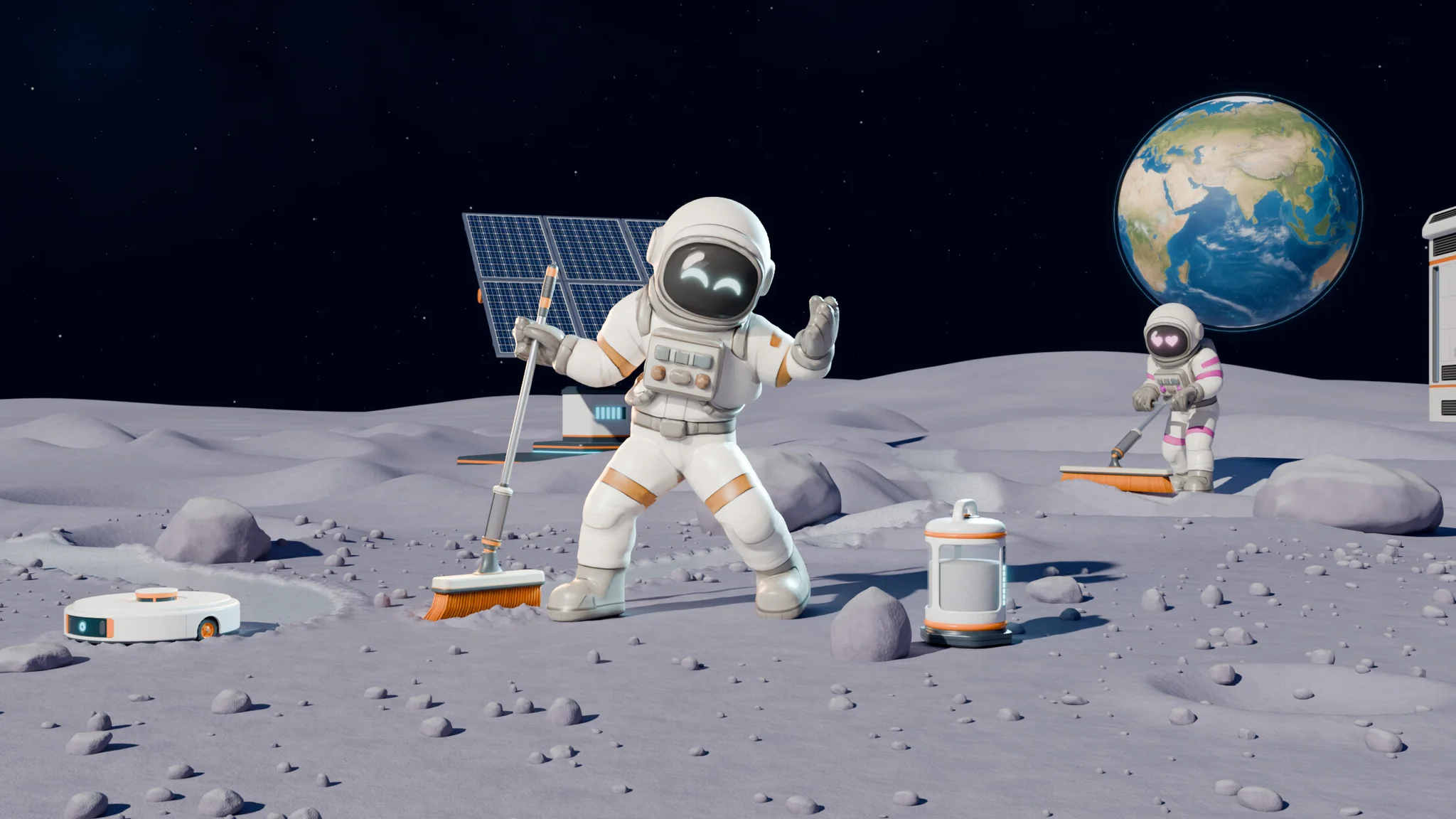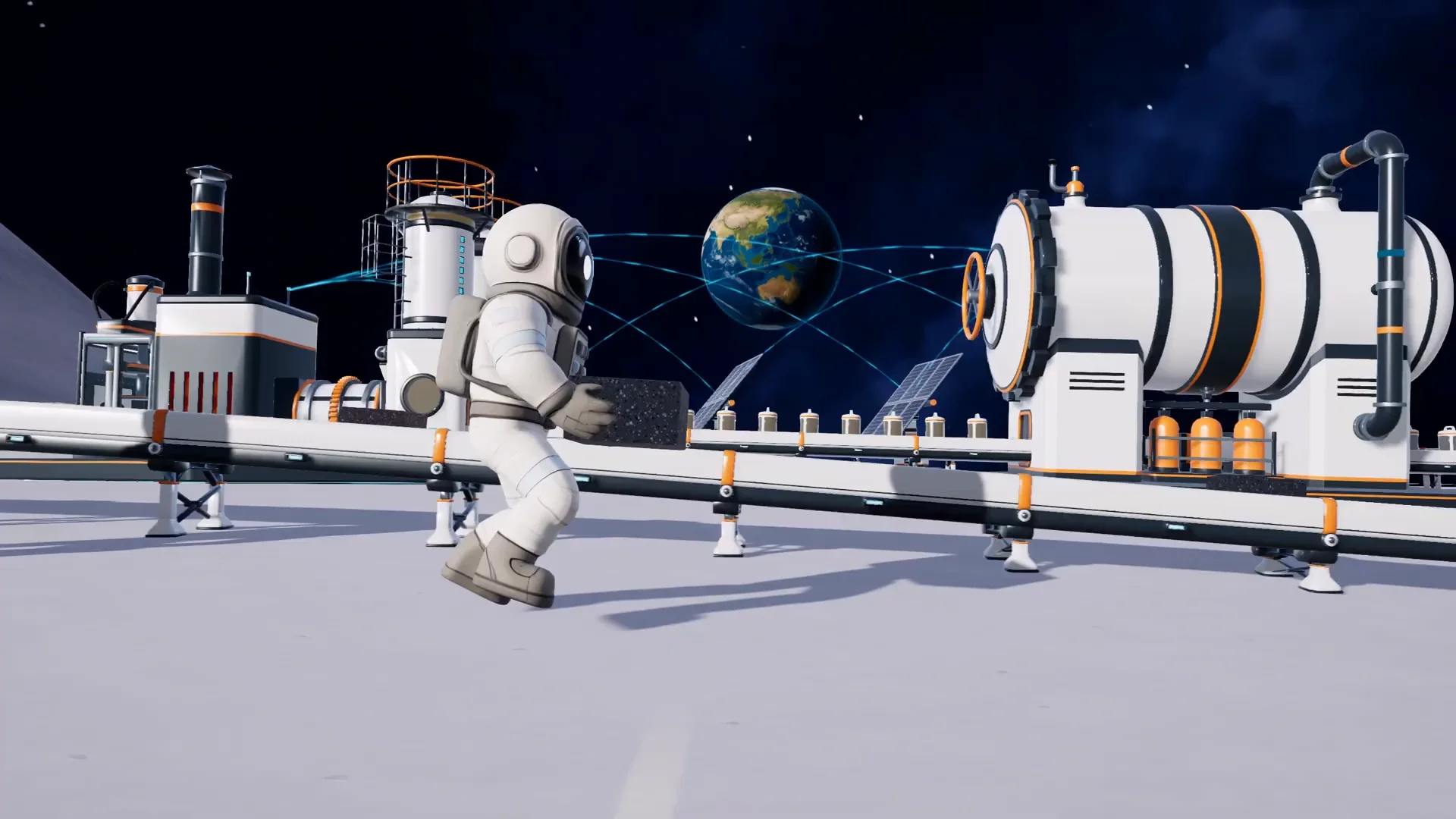

The starting Toothbrush in Moon Sweepers is exactly as bad as it sounds. It holds 0.5 kg of dust and covers 12 cm of ground per sweep. The good news is that DragDrop Games built a layered upgrade system across four distinct stations, and spending your dust money in the right order makes the difference between a slow grind and a genuinely efficient lunar operation. This guide breaks down every confirmed upgrade, what each one actually does, and which to prioritize.
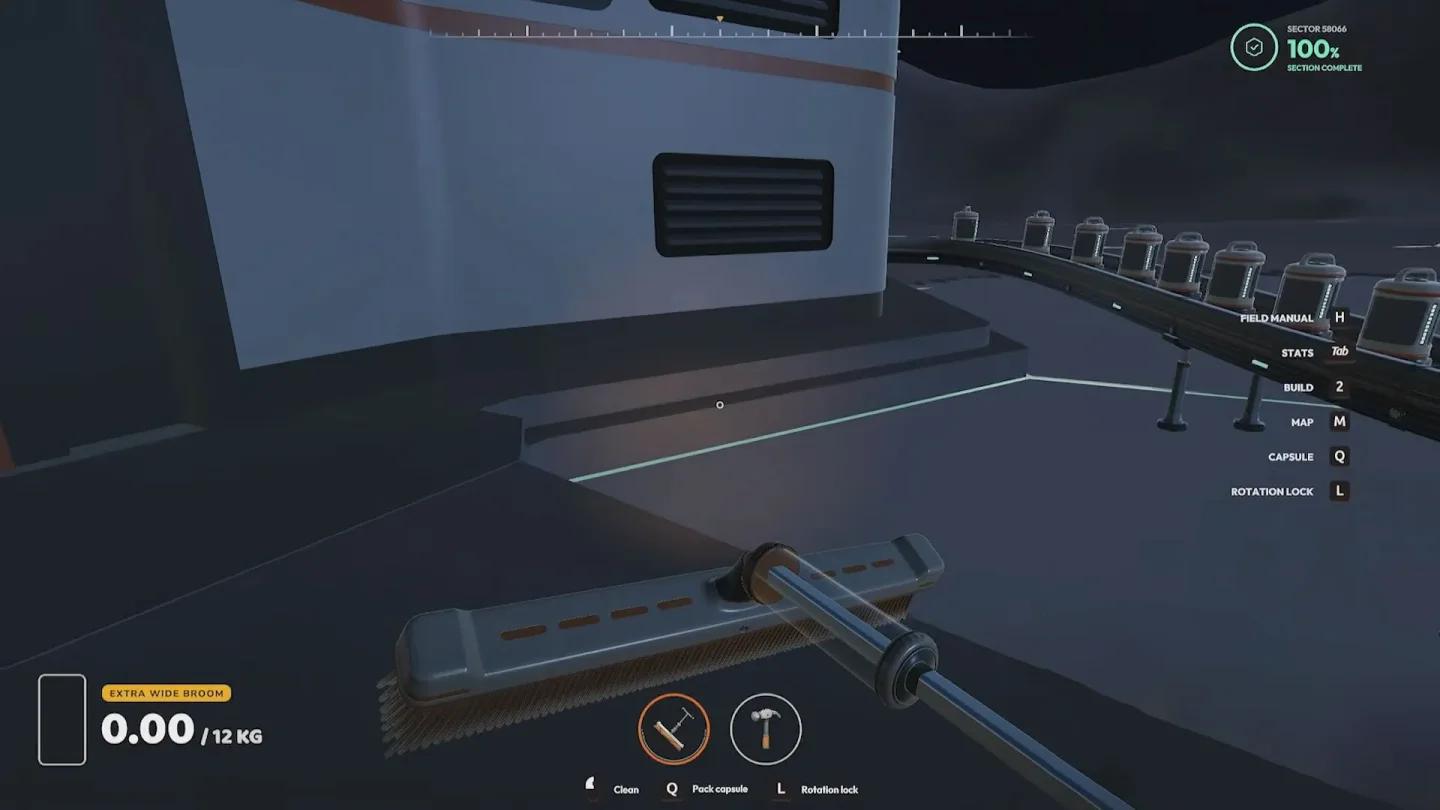
Supply Wall tool selection
The four upgrade stations explained
Before spending a single dollar, you need to know where upgrades live. Each station handles a different part of your operation, and some are locked behind purchases at earlier stations.
Supply Wall
The Supply Wall sits at Lunar Stations near the deposit area. This is where you buy new handheld cleaning tools, extra Tool Belt slots, and suit gear like Gravity Boots, the Forward Jetpack, and Night Vision Goggles. The Tool Belt second slot costs $15 and the third costs $30, with the belt holding up to six tools total. That flexibility matters when you want to switch equipment without trekking back to base.
Gravity Boots ($250) toggle Earth-like gravity with B, which helps with movement control on the lunar surface. The Forward Jetpack ($300) gives a forward boost on a double-tap of Spacebar. Night Vision Goggles ($350) were added in a recent patch and cycle between the helmet lamp, goggles, and no lighting by pressing N.
Upgrade Matrix
The Upgrade Matrix is the holographic terminal at your station. It covers five categories: Containers, Cleaning, Suit, Logistics, and Economy. These perks improve tools you already own rather than replacing them. Key distinction: upgrades here, like Wide Heads and Dust Compactor, do not increase a vehicle's cleaning width or hopper capacity. For vehicle improvements, you need the Garage.
Building Tool
The Building Tool ($50, purchased from the Supply Wall) unlocks construction. You need it to place Packagers, Splitters, and Mergers, and it is also a prerequisite for building the Garage. Skipping this early is a common mistake that locks you out of automation entirely.
Garage
Once you have the Building Tool, build the Garage ($200) to access vehicles and their specific upgrade slots. Vehicle upgrades are separate from everything in the Upgrade Matrix, so do not expect crossover.
What should you buy first in Moon Sweepers?
The answer depends on where your time is going. Every collection cycle has three phases: cleaning, filling storage, and delivering to a depot. Whichever phase takes longest is costing you the most money. Upgrade that phase first.
That said, the early game has a clear priority path because the starting tools are so limited.
Early-game tool priority
The Household Broom ($25) is the single best early purchase. It widens your sweep from 24 cm (Hand Brush) to 43 cm and triples base capacity to 3 kg. The Wide Broom ($75) pushes that to 65 cm and 6 kg, which is a meaningful jump for manual cleaning. The Extra Wide Broom ($150) reaches 98.8 cm and 12 kg, but at that price point you should weigh it against how close you are to affording your first vehicle.
| Cleaning Tool | Price | Sweep Width | Base Capacity |
|---|---|---|---|
| Toothbrush | Free | 12 cm | 0.5 kg |
| Nail Brush | $5 | 18 cm | 0.75 kg |
| Hand Brush | $10 | 24 cm | 1 kg |
| Household Broom | $25 | 43 cm | 3 kg |
| Wide Broom | $75 | 65 cm | 6 kg |
| Extra Wide Broom | $150 | 98.8 cm | 12 kg |
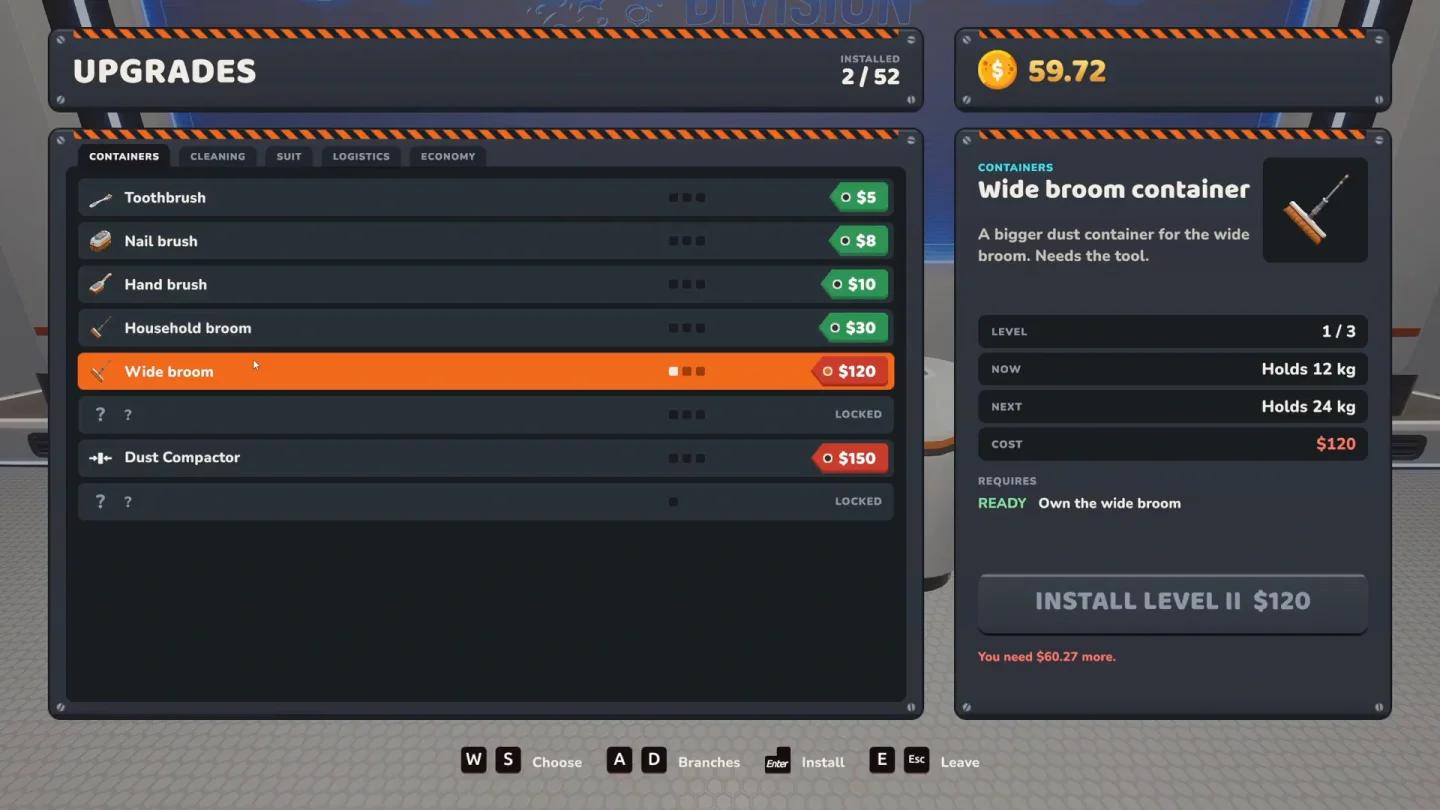
Upgrade Matrix category overview
Best Upgrade Matrix perks to unlock
The Upgrade Matrix is where long-term earning power lives. The Economy category is the most impactful for overall income.
Market Contracts costs $120 at Level 1 and adds a 6% global launch multiplier to all dust sales. Level 2 costs $400 and Level 3 costs $1,100. After reaching Level 3, Lunar Exchange ($2,500) unlocks and adds another 10% payout bonus on top. That compounding effect makes the Economy tree the strongest long-term investment in the Matrix.
For manual cleaning, Wide Heads ($40 at Level 1) adds 8% cleaning width to handheld tools. Dust Compactor ($150) increases handheld container capacity by 15%. Auto Packer automatically creates capsules when your tool fills, though you still need to transport those capsules to conveyor belts manually, which limits its usefulness compared to a placed Packager.
Rapid Transfer ($30 at Level 1) speeds up dust deposits and transfers, which helps if delivery is your bottleneck. Servo Stride improves movement speed. Region Bounty increases rewards for completing cleaned sections. These three are situational rather than essential.
Best vehicles and when to buy them
Vehicles are where Moon Sweepers' efficiency really opens up. The Push Sweeper ($300) is your entry point once the Garage is built, holding 100 kg compared to the 12 kg ceiling of the Extra Wide Broom. From there, the capacity jumps are dramatic.
| Vehicle | Price | Capacity |
|---|---|---|
| Push Sweeper | $300 | 100 kg |
| Ride-On Sweeper | $1,000 | 500 kg |
| Crew Transport Van | $2,000 | Crew transport only |
| Lunar Sweeper | $2,500 | 1,200 kg |
| Mega Vacuum Rover | $6,000 | 3,000 kg |
For vehicle-specific upgrades from the Garage: Suction Control widens cleaning coverage at the cost of some driving speed. Big Hopper increases storage. Quick Release speeds up unloading. Tuned Motors and Turbo Kit both improve speed, which matters on longer routes.
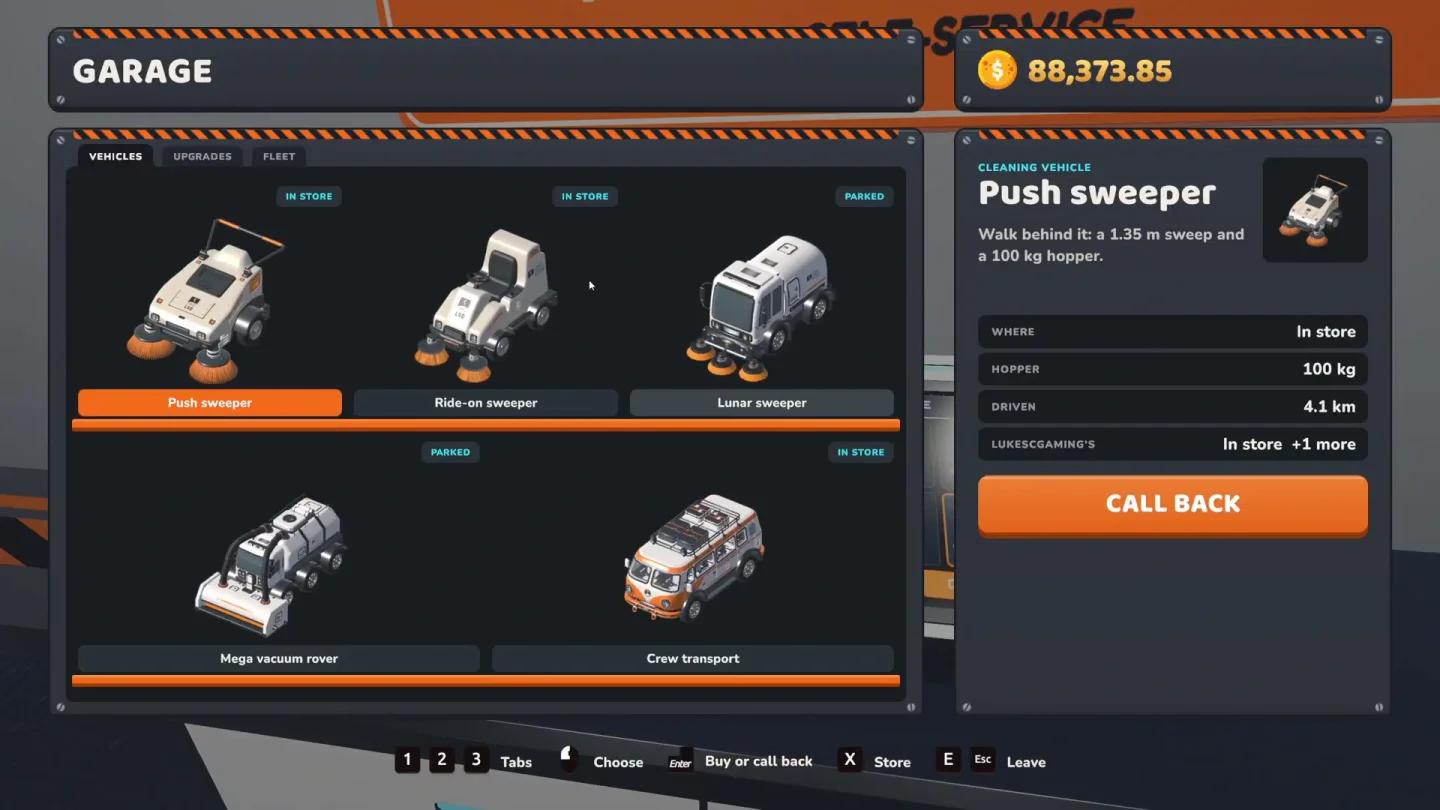
Garage vehicle upgrade options
How does co-op affect upgrades?
Since patch 1.0.3, the host's Upgrade Matrix is shared across the entire crew. Any crewmate's purchase upgrades everyone on the team. Older saves automatically carry forward the highest upgrade level any crew member had previously bought. This changes co-op planning significantly: a crew of players can split the cost of the Matrix tree rather than each person funding it independently.
Note that this sharing applies to the Upgrade Matrix specifically. Check the rules for other ownership categories before assuming everything carries over.
Late-game automation: robots and J.O.O.N.A.S
Once manual cleaning and vehicles are humming, automation takes over. The Robot Vacuum Mk1 ($250) handles a limited area around its dock automatically. The Mk2 ($500) covers more ground and holds more dust.
The endgame centerpiece is J.O.O.N.A.S ($20,000). It operates independently across the entire moon and launches dust capsules toward the nearest Capsule Catcher ($1,500). As of the most recent patch, J.O.O.N.A.S has double its previous cleaning speed and keeps working even when you are far from the area. The catch is that the logistics chain needs to be ready before you deploy it. Buying J.O.O.N.A.S without Capsule Catchers and a functioning conveyor network in place is a fast way to waste $20,000.
The Packager ($100) is the construction purchase that ties automation together. Unlike Auto Packer, it is a physical building that converts loose dust into capsules for conveyor transport. Pressure Chamber and Stone Press production machines can further increase the value of materials before they ship.
Full upgrade priority summary
| Priority | Upgrade | Cost | Why |
|---|---|---|---|
| 1 | Household Broom | $25 | Massive early efficiency gain |
| 2 | Building Tool | $50 | Unlocks Packagers and Garage |
| 3 | Wide Broom | $75 | Doubles capacity over Household |
| 4 | Market Contracts Lv. 1 | $120 | 6% payout boost on all sales |
| 5 | Garage | $200 | Access to vehicles |
| 6 | Push Sweeper | $300 | First vehicle, 100 kg capacity |
| 7 | Ride-On Sweeper | $1,000 | 500 kg, major step up |
| 8 | Market Contracts Lv. 2-3 | $400 / $1,100 | Stacks toward Lunar Exchange |
| 9 | Lunar Exchange | $2,500 | Extra 10% payout bonus |
| 10 | J.O.O.N.A.S | $20,000 | Full automation, late game only |
For more strategies covering the full collection and selling loop, the Moon Sweepers guides collection has everything from depot placement to multiplayer progression in one place. Moon Sweepers sits in the broader action games space but plays more like a management sim once automation kicks in, so the upgrade order matters more here than in most genres.