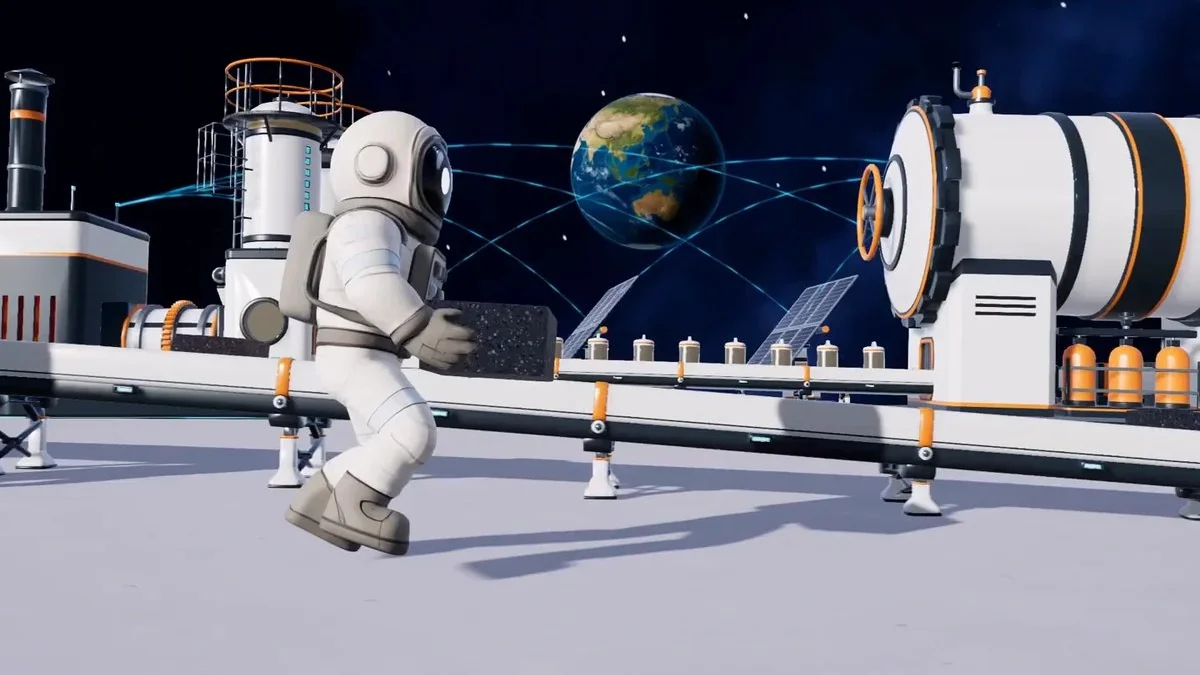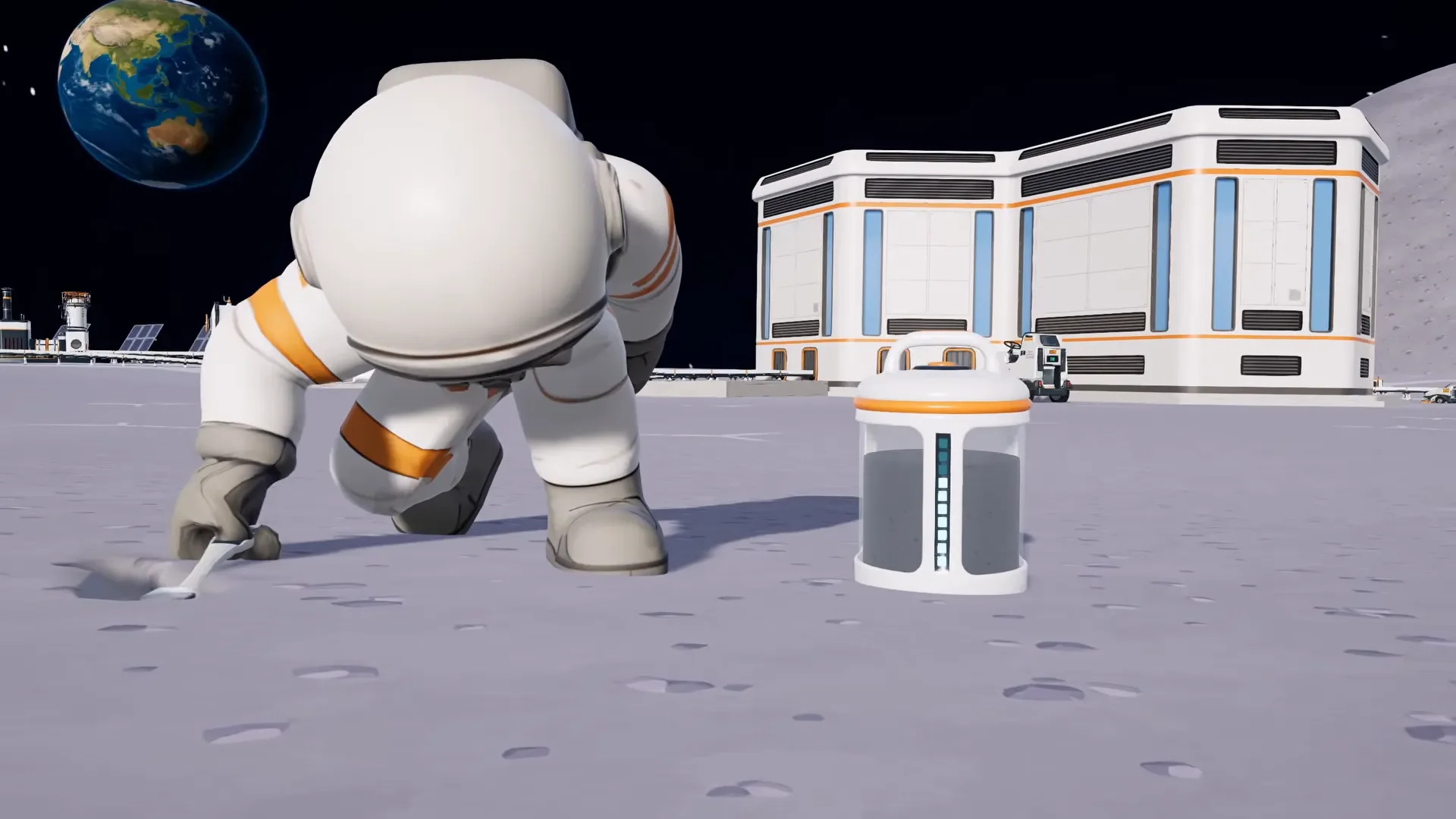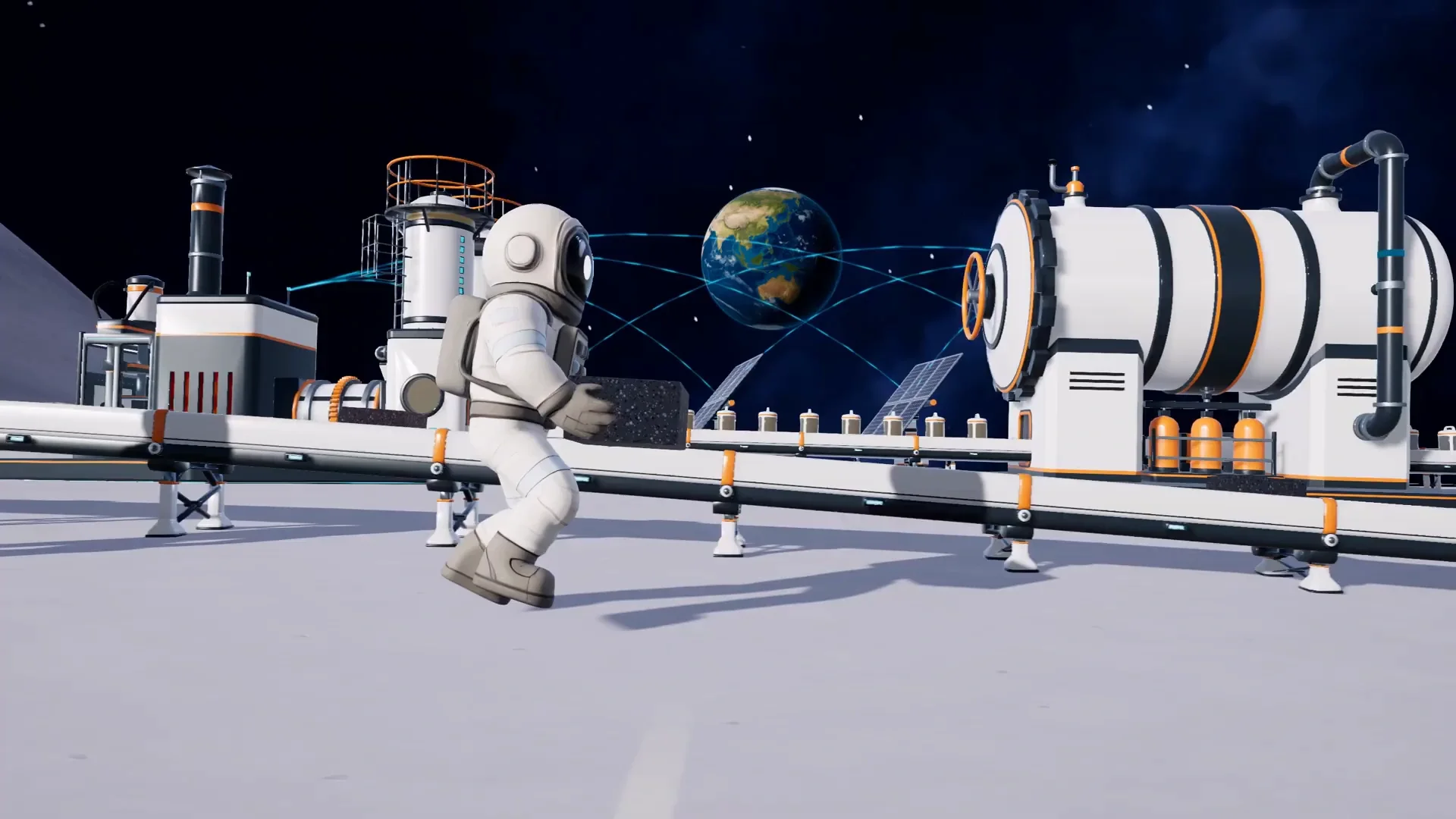

Moon Sweepers gives you a lot of manual work early on, but the moment you can afford J.O.O.N.A.S., your operation shifts from hands-on grinding to genuine automation. Short for Just One Overpriced Nonessential Automated Sweeper, this six-armed robot moves across the Moon's surface on its own, clears dirty sectors, and launches collected dust into capsules without you touching a vehicle. The catch? It costs $20,000, the game barely explains how to set it up, and there's a known bug that can make it stop working the moment you walk away. This guide covers everything you need to get J.O.O.N.A.S. running correctly.
How to buy J.O.O.N.A.S. in Moon Sweepers
J.O.O.N.A.S. is not available from the start. You purchase it through the Services menu, where it appears as the third option in the list. Click on it, confirm the $20,000 purchase, then open the Build menu to place the unit. You'll see an outline of the robot that you can position wherever you want it to start working.
Before placing J.O.O.N.A.S., also budget $1,500 for a Capsule Catcher. The total minimum spend is $21,500, not counting conveyor belts or any other infrastructure you need to route the collected material. Trying to run J.O.O.N.A.S. without a catcher in place means launched capsules have nowhere to land, which breaks the whole automated loop.

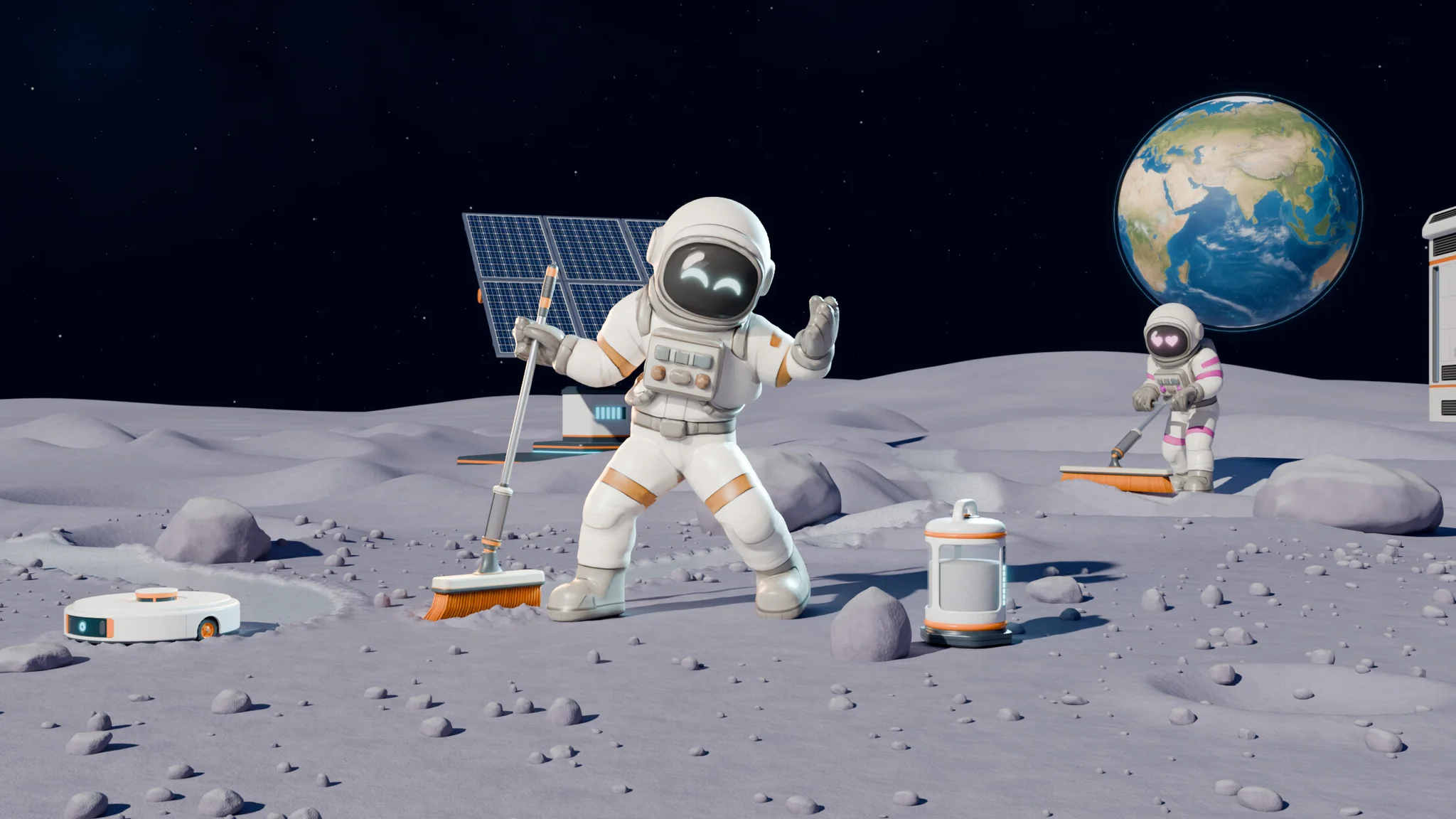
How does J.O.O.N.A.S. work?
Once deployed, J.O.O.N.A.S. moves autonomously between dirty sectors and cleans them one at a time. When its internal dust container fills up, it ejects a capsule toward the nearest Capsule Catcher and continues its cleaning cycle without stopping.
This is what separates it from the standard Robot Vacuums. The Robot Vacuum Mk I covers 19 hexes around its dock, and the Mk II covers 37. Once those areas are clean, neither unit can travel further to find new work. J.O.O.N.A.S. has no such restriction: it seeks out dirty sectors across the Moon rather than staying anchored to a dock.
The movement pattern can look erratic. J.O.O.N.A.S. does not always travel in a straight line or follow an obvious grid path, so do not assume something is wrong just because it appears to wander.
Setting up the Capsule Catcher
The Capsule Catcher ($1,500 from the Services menu) is the piece that turns J.O.O.N.A.S. into a money-making tool rather than just a cleaning robot. Without it, the capsules J.O.O.N.A.S. launches have no destination.
The simplest working setup follows this path:
J.O.O.N.A.S. → Capsule Catcher → Conveyor Belt → Depot
If you already have a Pressure Chamber in your production line, you can route the catcher's output into that instead, which converts the lunar dust into sand for further processing. For a first setup, connect straight to the Depot and confirm capsules are arriving before adding complexity.
Where to place the Capsule Catcher
J.O.O.N.A.S. always targets the nearest Capsule Catcher when it launches a capsule. This matters more than most players realize, especially once you have multiple J.O.O.N.A.S. units running.
If three robots are all operating near the same base, they may all send capsules to a single catcher rather than distributing them across several. That one catcher then needs a conveyor line capable of handling all that throughput. Building additional catchers does not automatically split the load: proximity determines which catcher receives each capsule.
Plan your catcher placement around where the robots are actually cleaning, not just where it's convenient to build.
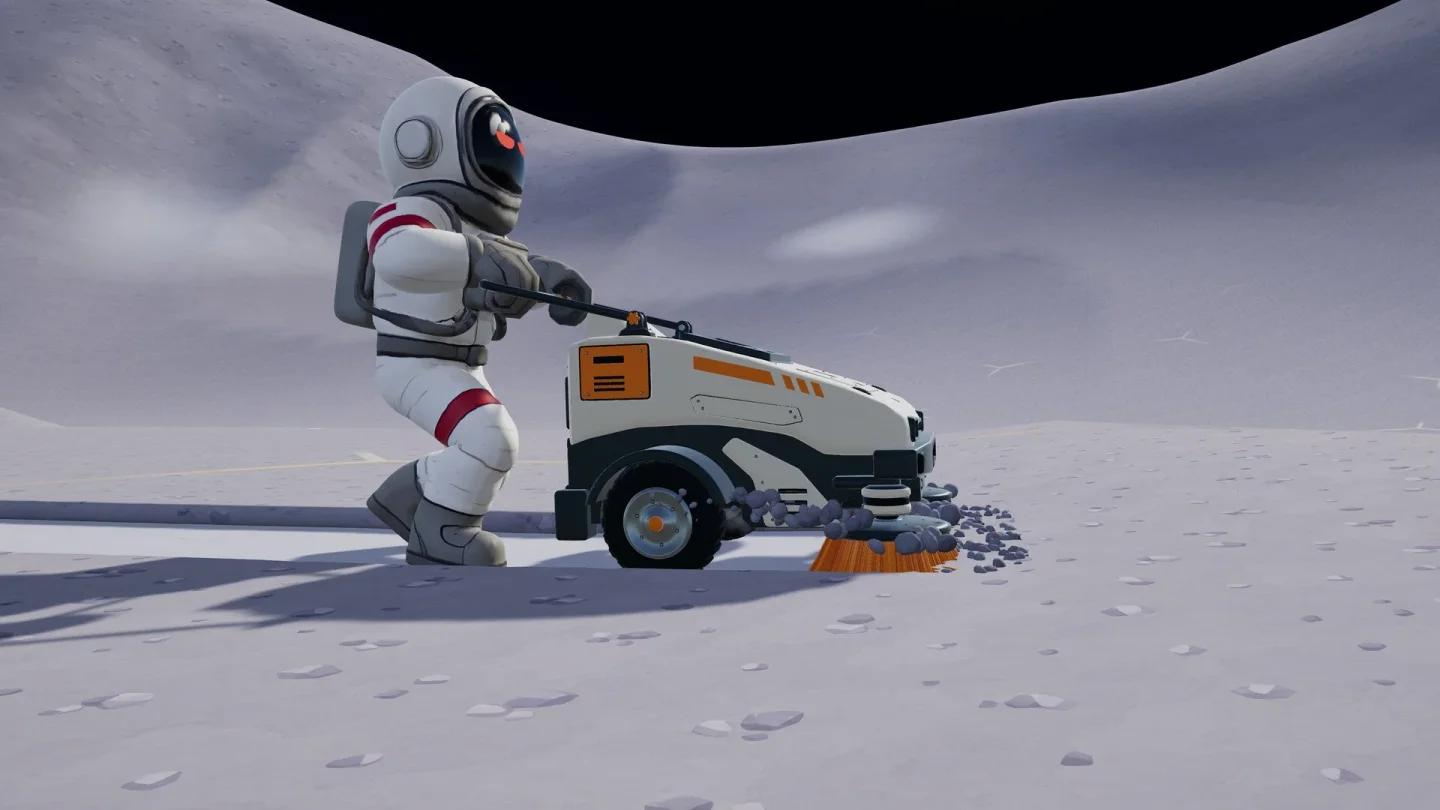
Capsule Catcher connected to Depot
Step-by-step setup checklist
Follow this sequence to get J.O.O.N.A.S. fully operational:
- Save $21,500 (one J.O.O.N.A.S. at $20,000 plus one Capsule Catcher at $1,500).
- Purchase the Capsule Catcher from the Services menu and place it near your conveyor network.
- Connect the Capsule Catcher's output to a conveyor belt leading to your Depot or processing equipment.
- Purchase J.O.O.N.A.S. from the Services menu and deploy it near dirty sectors.
- Watch J.O.O.N.A.S. complete at least one full cleaning cycle and launch a capsule.
- Confirm the capsule reaches the Capsule Catcher and travels through the conveyor to its destination.
- Only after confirming the loop works should you consider buying a second unit.
Troubleshooting J.O.O.N.A.S. problems
J.O.O.N.A.S. has known bugs at launch, and the most disruptive one involves distance. The robot can stop cleaning entirely when you travel too far from it. DragDrop Games flagged this as a priority issue on October 24, 2026. Patch 1.0.3 did not include a confirmed fix.
The table below covers the most common problems and what to check first:
| Problem | What to check |
|---|---|
| J.O.O.N.A.S. stops cleaning after you leave | Return to the robot and watch whether it resumes on its own |
| No capsules arriving at the catcher | Confirm which catcher is closest to J.O.O.N.A.S. |
| Capsules going to the wrong factory | Recheck catcher placement relative to your robots |
| Capsules reach catcher but stop there | Inspect the outgoing conveyor connection and direction |
| Capsules arrive at Depot but show no payout | Patch 1.0.3 addressed a Depot display bug; update the game |
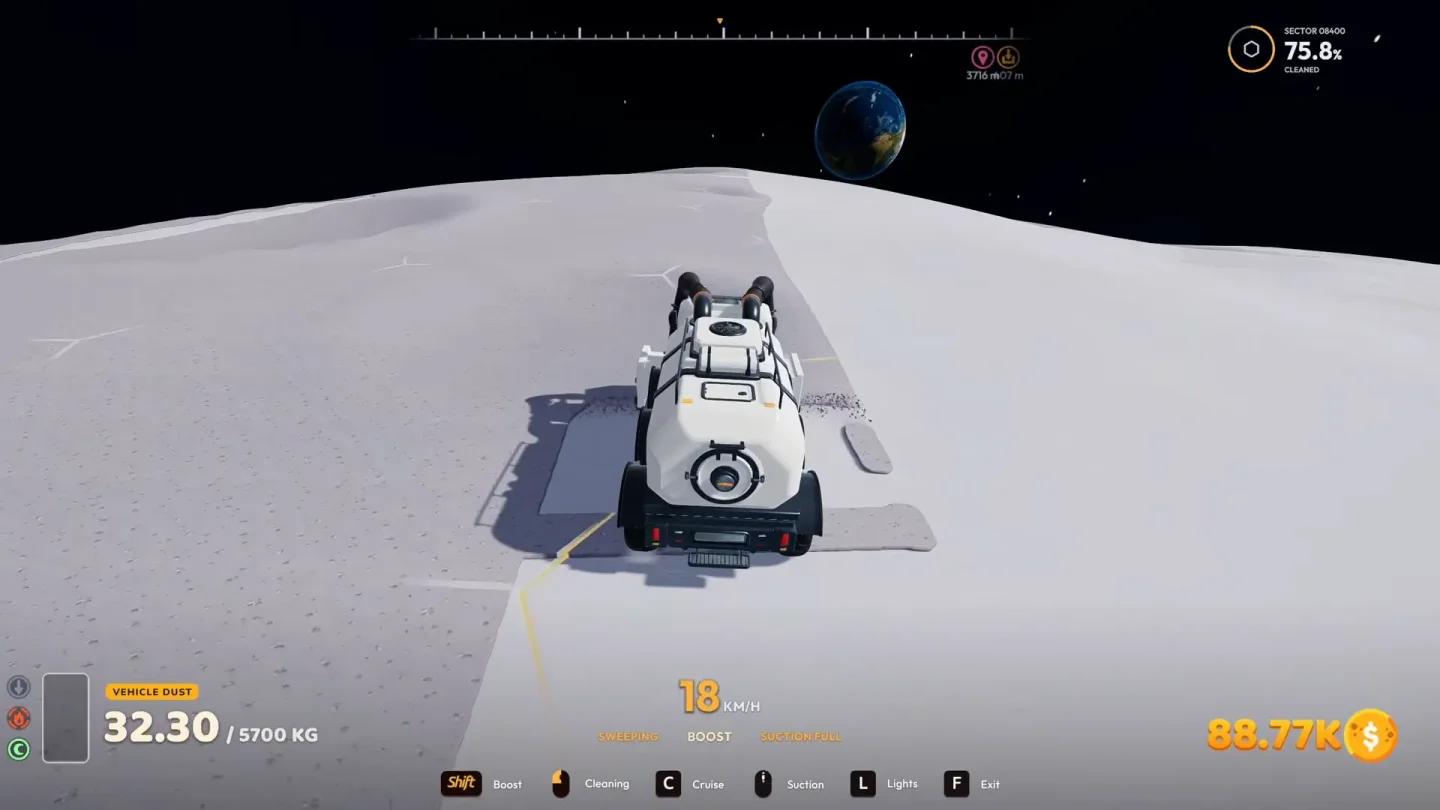
J.O.O.N.A.S. cleaning dirty sectors
What to do if J.O.O.N.A.S. is cleaning but dust isn't reaching the Depot
If the robot is visibly moving and launching capsules but nothing arrives downstream, work through the chain from the catcher outward. Check that the Capsule Catcher is receiving launches, that the outgoing belt connects to the correct input port, and that any intermediate machine (Pressure Chamber, Stone Press) has power and the required input materials. A broken link anywhere in that chain stops the whole flow.
Is J.O.O.N.A.S. worth the $20,000?
For late-game automation, yes. The ability to clean new sectors without manually driving a sweeper is genuinely valuable once your existing Robot Vacuums have cleared their dock areas. J.O.O.N.A.S. fills the gap by seeking out work across the entire Moon.
The honest caveat is the distance bug. Until DragDrop Games patches it, J.O.O.N.A.S. works best as a supplement to your existing vehicles rather than the backbone of your cleaning operation. Treat it as an efficiency boost, not a set-and-forget solution.
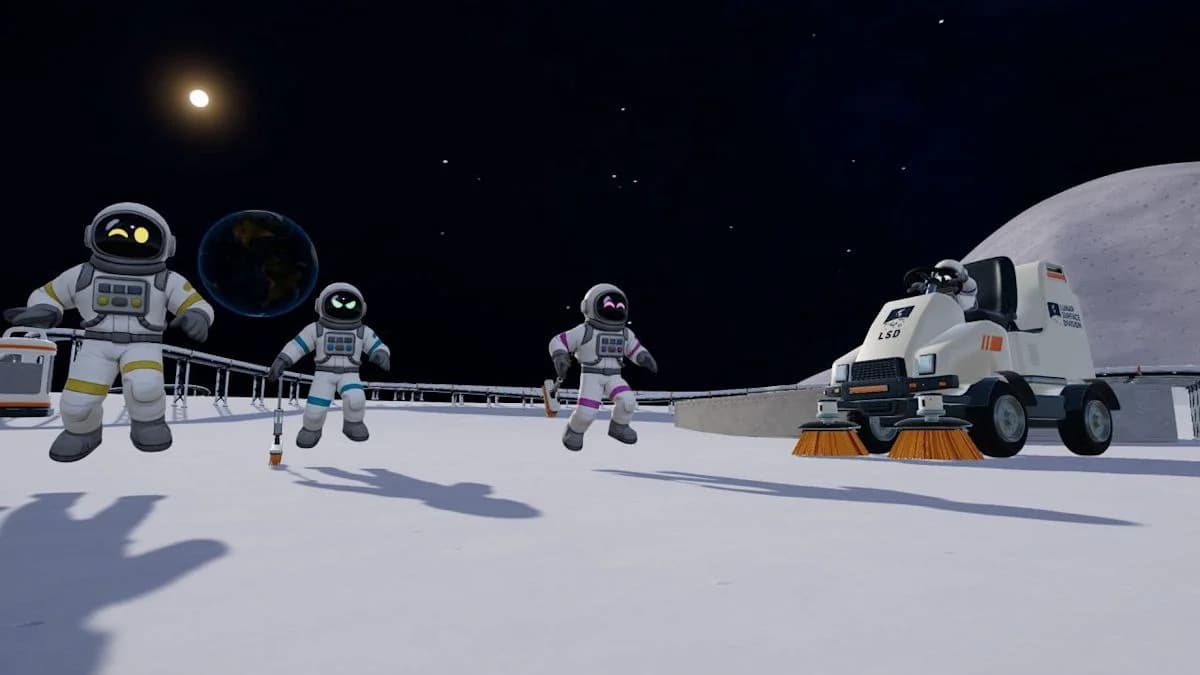
J.O.O.N.A.S. in the Services menu
Should you buy multiple J.O.O.N.A.S. units?
Not until the first one proves reliable. Run one robot through several complete cycles, confirm capsules are landing at the right catcher, and check that it keeps cleaning when you move away. If it passes those checks, a second unit makes sense. If the distance bug is stopping it, buying more robots multiplies the problem rather than solving it.
With multiple units, the nearest-catcher mechanic becomes the main thing to manage. Several robots converging on one catcher can overwhelm a single conveyor line. Make sure your infrastructure can handle the incoming volume before expanding.
For more strategies and system guides, the full Moon Sweepers strategy guides collection covers production lines, power setups, and progression in detail. Moon Sweepers sits squarely in the action games space where management and automation mechanics reward players who plan their layouts carefully, and J.O.O.N.A.S. is one of the clearest examples of that payoff when everything clicks into place.