Aethir, a Singapore-based provider of decentralized GPU infrastructure, has announced a $40 million initiative to launch Tactical Compute (TACOM). This collaborative effort, supported by Beam Foundation, Sophon Foundation, and Permian Labs, aims to address the growing demand for scalable computing power required for AI-driven applications, blockchain systems, and adaptive gaming technologies.
Key Takeaways
- Aethir and partners invest $40M in Tactical Compute (TACOM) to enhance compute infrastructure for AI and blockchain.
- TACOM leverages decentralized GPU networks and tokenized solutions to address the growing demand for high-performance computing.
- Strategic collaborations with Beam Foundation, Sophon Foundation, and Permian Labs bring innovative solutions to market.
- Aethir's scalable infrastructure supports the rapid growth of web3 and AI startups while addressing supply-side challenges.

Aethir Reveals $40 Million Initiative for AI and Blockchain
Market Worth $197 Billion by 2030
The global AI infrastructure market is projected to exceed $197.39 billion by 2030, driven by the rapid expansion of AI-powered consumer applications and decentralized technologies. TACOM bridges traditional computing economics with tokenized, distributed solutions. The initiative taps into underutilized GPUs to tackle the shortage of high-performance computing resources that AI startups and emerging web3 gaming projects face.
Daniel Wang, CEO of Aethir, highlighted the compute challenges facing AI startups and decentralized systems: "The web3 side of the industry has seen a plethora of new AI startups that have managed to raise capital, but it has been a struggle for them to get access to high-performance compute on demand."

Aethir Cover Banner and Logo
The Role of Decentralization
TACOM introduces a tokenized framework for accessing GPU resources, similar to cloud credits but decentralized. The platform focuses on compute-related opportunities like hardware financing, yield arbitrage, and network bootstrapping. This approach tackles unpredictable infrastructure costs while delivering scalable solutions for AI and web3 startups.
Aethir's decentralized GPU network runs on advanced technology, including Nvidia H100 and H200 GPUs. These GPUs power innovative use cases like token farming and testnet bootstrapping for emerging blockchain protocols, while promoting monetization of GPU resources.
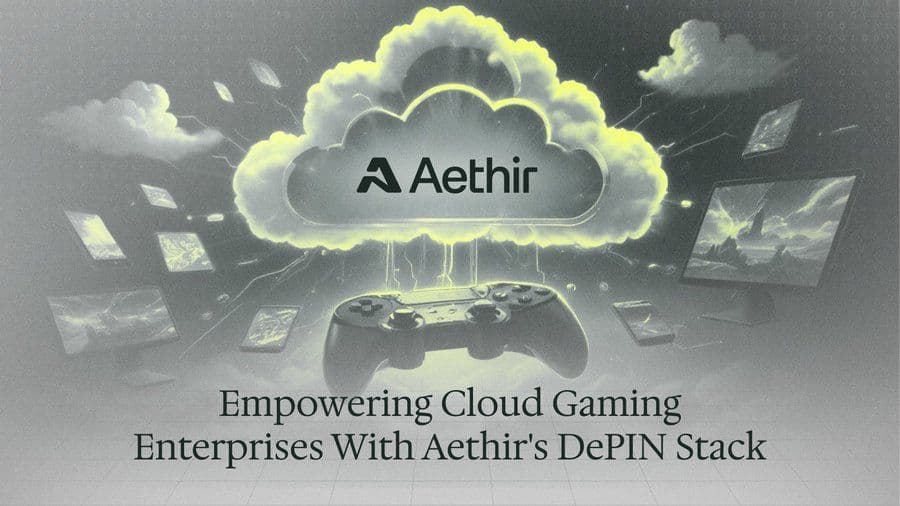
Empowering Cloud Gaming
Strategic Partnerships
Beam Foundation, known for advancing decentralized technology adoption, plays a key role in TACOM. Permian Labs contributes through its MetaStreet Protocol, which develops DeFi primitives for GPU and node financing. This collaboration boosts liquidity for compute hardware, driving the expansion of decentralized networks. Sophon Foundation complements the effort by deploying infrastructure and integrating TACOM's solutions into consumer-facing AI and gaming applications.
Enabling Growth in AI and Web3
The $40 million capital will help onboard additional GPU resources, addressing critical supply-side bottlenecks. Aethir's infrastructure offers a cost-effective alternative to traditional computing providers while supporting over 200 companies with its scalable solutions.
Despite the volatile web3 landscape—where 93% of projects reportedly fail—Aethir has demonstrated resilience with $50 million in annual recurring revenue and a strong financial foundation. The decentralized network positions Aethir as a key player in enabling the next wave of technological innovation.
Aethir Joins Nvidia Inception Program
Future Outlook
As traditional cloud providers like Amazon Web Services increasingly engage with blockchain infrastructure, Aethir's decentralized approach offers a complementary solution. Wang anticipates a future where centralized and decentralized providers collaborate to meet surging compute demands.
TACOM sets a new standard for compute resource distribution and monetization, unlocking opportunities across AI, gaming, and blockchain sectors. This initiative demonstrates how decentralized technology can reshape the future of scalable networks.