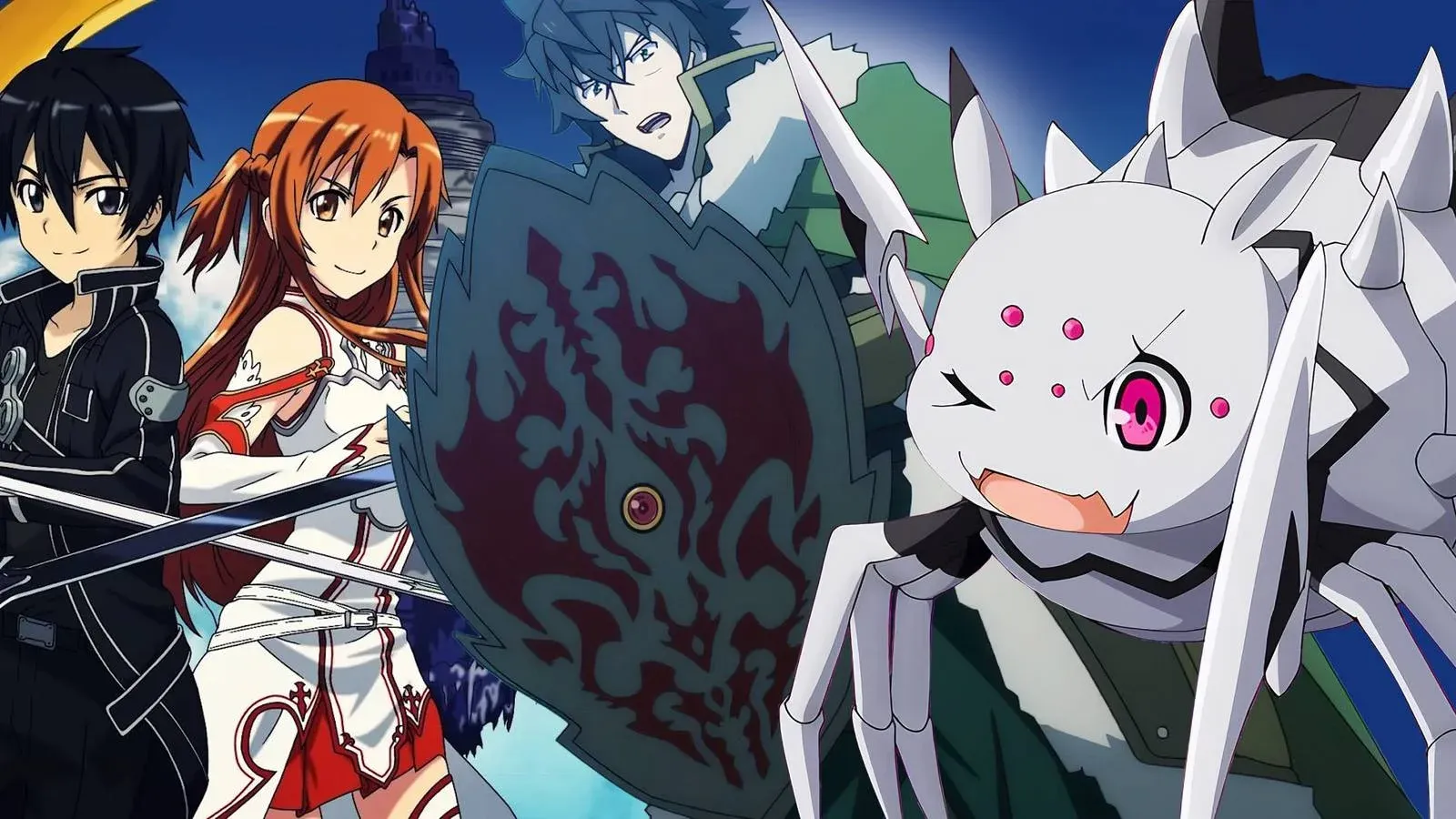


The appeal is simple: watch a character start from nothing, grind their way up, and eventually become unstoppable. Isekai anime that bake leveling mechanics into their storytelling scratch the same itch as a good RPG, and the genre has produced some genuinely great examples of the formula.
Here's the lowdown on 7 isekai series that actually do leveling systems well, ranked from solid to essential.

Use code TRYHARD33 at checkout to redeem this offer before code expires again.
Get 33% Off GAMES+ Subscription
The underdog that earns every level
The Rising of the Shield Hero remains one of the most satisfying power progression stories in the genre. Naofumi Iwatani starts as the Cardinal Hero with the worst possible weapon, gets betrayed almost immediately, and has to claw his way up through sheer stubbornness. Every level he earns feels genuinely earned because the show puts real obstacles in his way. Three seasons in, his growth from exiled outcast to one of the world's most capable defenders holds up.
At number 6, Villainess Level 99 takes a different angle entirely. Yumiella Dolkness is reincarnated into an otome RPG and, remembering her past life, immediately starts dungeon grinding before the main story even begins. She maxes out at level 99 before the plot can catch up with her. The result is a comedy-action series where the supposed villainess is so overpowered that she accidentally becomes a protector rather than a threat.
Grinding from the bottom up
So I'm a Spider, So What? might be the most committed execution of the leveling concept on this list. The protagonist wakes up reincarnated as a weak spider monster inside a deadly labyrinth, with no allies and no starting advantages. She survives by fighting increasingly dangerous enemies, gaining experience, unlocking skills, and evolving into stronger forms. The grind here is literal and constant, and the show makes it compelling rather than repetitive.
Hell Mode: The Hardcore Gamer Dominates in Another World With Garbage Balancing is newer to the conversation, having debuted in January 2026 and already earning a second-season renewal. Allen reincarnates as a summoner and builds power through a creature collection system, starting with basic insect companions and scaling up to monsters capable of matching the world's most dangerous enemies. Each summon boosts his stats and unlocks new skills, making the progression feel genuinely strategic.
Strategy and social systems count too
Log Horizon earns its place because it treats leveling as one tool among many rather than the whole point. Shiroe arrives in the world of Elder Tale with 8 years of gaming experience already banked, but surviving means more than raw levels. He has to build adventurer guilds, form political alliances, and outthink enemies as much as outfight them. The experience grind is real, but the show understands that influence and strategy scale alongside stats.
The number 2 pick is My Status as an Assassin Obviously Exceeds the Hero's, released in 2025 and genuinely underrated. Akira Oda is transported alongside his classmates and awakens as an assassin-class hero with stealth-based combat, darkness magic, and abnormal stats. The comparison to Solo Leveling's Sung Jinwoo is hard to avoid, but Akira carves out his own identity through relentless dungeon grinding and a mysterious plot that rewards attention. The animation quality is notably strong for a series that flew under many radars.
If you enjoy anime-inspired games with similar progression loops, the Anime Overload trait tier list is worth checking out for games that capture the same power fantasy.
The gold standard for isekai leveling
That Time I Got Reincarnated as a Slime tops this list for good reason. Rimuru Tempest begins as a formless slime with a single broken ability: the predator skill, which lets him absorb enemies, gain their powers, and level up in ways no traditional class system allows. The progression is both mechanically satisfying and emotionally resonant because Rimuru's goal isn't just personal power. He wants to build a world where humans and monsters coexist, and every level gained pushes that ambition forward.
The skill tree in TenSura scales from basic intrinsic abilities to unique skills and eventually ultimate skills, giving the power progression a ceiling that keeps getting raised. After multiple seasons and a film, the series remains the benchmark for how isekai leveling should feel.
What separates the best from the rest
The series on this list share one quality: the leveling system actually matters to the story. It isn't decoration. When Naofumi gains a level, it reflects something he survived. When Rimuru absorbs a new ability, it opens a narrative door. The worst isekai leveling shows treat power progression as a number going up. These seven treat it as character development with stats attached.
For players who want to take that progression mindset into actual games, the guide to getting stronger fast in Seven Deadly Sins: Origin covers the same upgrade priority logic that makes isekai protagonists so satisfying to watch.